Erin Espelie
Directing
Biography
Erin Espelie (US) is a filmmaker and writer based in the fire-prone foothills of the Rocky Mountains. She co-directs NEST (Nature, Environment, Science & Technology) Studio for the Arts at the University of Colorado Boulder and serves as editor in chief of Natural History magazine.
Known For
An orb-weaver spins its web, captures prey, and filters light. How does other light get filtered or created? Digitally and energetically, light and its origins drive our circadian rhythms, our internal clocks, and affect the retina. Blue light, in the realm of 400 to 500 nanometers, has become increasingly pervasive, just as our light sources have homogenized. How does this ownership of the eye, of light, of the world, unwind us?
A Net To Catch The Light

Underwater creatures—snapping shrimp, bearded seals, sperm whales—populate the soundscape here, alongside the ghost voice of biologist Lynn Margulis, who rails against authority, societal amnesia and easy answers to explain the beauty of complex inheritances.
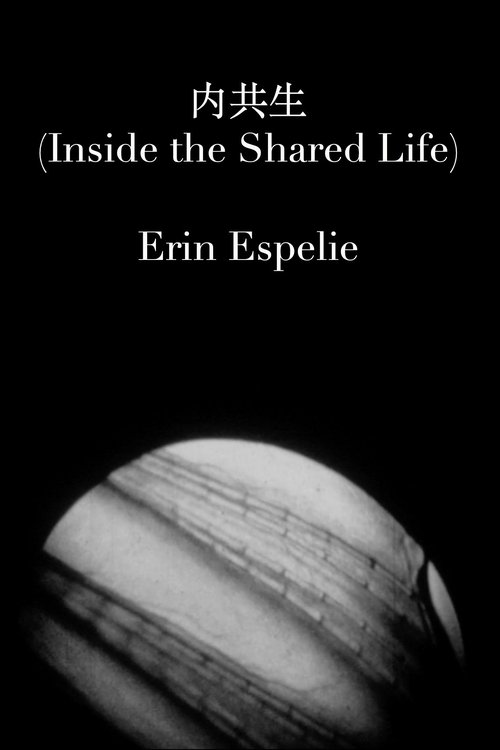
内共生 (Inside the Shared Life)
In his introduction to the 1909 edition of The Golden Bowl, Henry James wrote, "My instinct appears repeatedly to have been that to arrive at the facts retailed and the figures introduced by the given help of some other conscious and confessed agent is essentially to find the whole business—that is, as I say, the effective interest—enriched by the way." In this film, James acts as the confessed agent, and the glass through which every image is reflected or filtered takes on a kind of consciousness.
Facts Told at Retail
Using found sound from Disney's 1940-50s nature documentaries, this trilogy creates a mismatch between the digital image and historic/histrionic voiceover. It confounds traditional nature documentaries by adhering to strict time and spatial limits, and ratchets up false expectations about wildlife; continuity editing begins to break down to reveal a necessarily condensed representation of the natural world.
True Life Adventures I, II, & III

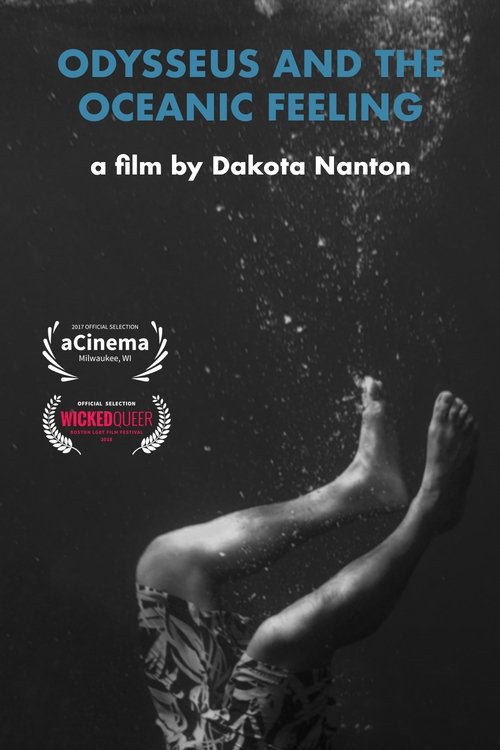
A queer contemporary re-imagining of the Odyssey. Odysseus wracked with guilt for the loss of his crew returns home in search of a lost love. An experimental narrative told through still photographs, collage, video, found footage and animation.
Odysseus and the Oceanic Feeling

what am I to do with my imagination—& the person in me trembles—& there is still innocence, it is starting up somewhere even now, and the strange swelling of the so-called Milky Way, and the sound of the wings of the bird as it lifts off ... what is coming, what is true, & all the blood, millennia, drained to stave off the future, stave off, & the armies on the far plains, the gleam off their armor now in this bird’s eye, as it flies towards me then over, & the sound of the thousands of men assembled at all cost now the sound of the bird lifting, thick, rustling where it flies over—only see, it is a hawk after all, I had not seen clearly, it has gone to hunt in the next field, & the chlorophyll is coursing, & the sun is sucked in, & the chief priest walks away now where what remains of the body is left as is customary for the local birds. —Jorie Graham, “Embodies” (excerpt)
A Free Inquiry Into Air: 110721
This installation, like so many others, is outdoors. It cannot really be seen, for its primary object, will, if looked at directly, burn, damage, even ruin the eyes. You look, instead, around the place. You see that object, that light, reflected in others—on their skin, in their hair, like illuminated masks or veils. This, for some, is enough. For others, it causes only frustration. Wanting to get to the origin of this light, this heat, but unable, some will approach these others not as secondary and adequate sources of light, but instead as objects in the way. “Viewers” will, therefore, do one of two things: either they will admire one another, or they will seek to destroy one another. Meanwhile, the installation, the source, burns on, unseen. Julie Carr, Real Life: An Installation
B-Roll of the Sun
Our imagination is equally confounded, said the 18th-century Swiss naturalist Charles Bonnet, by the infinitely great and by the infinitely small. Confounding, too, can be the instruments and empirical mechanisms we have to gauge immensity, particularly in their seemingly insurmountable limitations. A look at the universe, from chaos theory to canker worms, with explanations from three astrophysicists, including Dr. Kate Sholberg.
Beyond Expression Bright

Humans have used moss for at 1,000 years to help heal their injuries. --Smithsonian Magazine, 2017. Mosses and other small beings issue an invitation to dwell for a time right at the limits of ordinary perception. --Robin Wall Kimmerer, 2003. The world now sacrifices everything to speed. Quiet seems to be regarded as a detestable condition to be expurgated by any means which applied science can devise.--F. Percy Smith (dir. Gathering Moss, 1933)
Gathering Moss

A film for A.R. Ammons, author of Garbage: A Poem (1993), and baculovirologist Lois Miller. 10 quintillion insects live on the planet—that is, 300 pounds of insects for every pound of human flesh. They drive decomposition, dissolution, and decay that makes way for the new. Specifically, darkling beetle larvae, Tenebrio molitor (roughly translated as "death spirits" and "millers"), better known as yellow mealworms, are capable of digesting Styrofoam by way of their gut microbiome, biodegrading the plastic waste into carbon and hydrogen. Their lives run counter to ours, which revolve around accumulation and accretion.
Tenebrio molitor

Boletus, amaryllis, anolis, listeria, wisteria, nematoceara: nothing is linear in evolution, nor in life nor in light. We radiate out on waves, then flux along the spokes of an orb-weaver’s web, the barbs of a boundary fence. Species in a constant state of exchange: elements, acids, sugars, viruses, ideas.
What Part of the Earth is Inhabited

20 min, HD video, color, sound
Sacred Mountain
A distillation of references to the sea in James Joyce's Ulysses, and a tangible look at the material effects of an aging Super8-mm camera.
The Sea Seeks Its Own Level
Try as we might, we cannot autopsy (from Greek, to see for oneself) the whole natural world. As diversity of life reduces, we further lose the ability to be amphibious (from Greek, to lead dual lives), to be above a surface and below, not to mention "achieving focus" in a single plane. Texts include A Treatise on Optics (1845) by David Brewster; Atlas of Nerve Cells (1896) by Moses Allen Starr; and The Microscope (1899) by Simon Henry Gage.
Silent Springs
Valleys of Fear weaves together disparate histories, stories, pathologies, in order to find commonalities with current realities and to explore the pull between the rational and irrational: the human impulse to make “scientific and objective” judgments about the world around us, in opposition to our inability to prevent the personal from intervening—be that political, romantic, or physical.
Valleys Of Fear
(made for video exhibition loop, MediaMatic Gallery)
Automorphic

Three years ago, honeybees started to disappear. Today there are at least 33% fewer bees in the U.S., and with bees helping to pollinate one in every three bites that we eat, everyone is at risk. We set out to discover what was plaguing these hives and learn how non-commercial beekeepers keep healthy bees alive.
Every Third Bite
10 quintillion insects live on the planet—that is, 300 pounds of insects for every pound of human flesh. They drive decomposition, dissolution, and decay that makes way for the new. They run counter to the Anthropocene, which is about accumulation, consumption, and unsustainable accretion.
The Millers

A collision between the macro-collapse of ecosystems and the minutiae of cellular colonies in a story about unrestrained growth, waltzing mice, entropy, and the creatures that made Earth rich in oxygen while contaminating their own air.
Ideas of Order

Here, a group of women tell of how they came to arrive at an isolated ashram atop a mountain and what life there has been like both before and after the death of their guru.