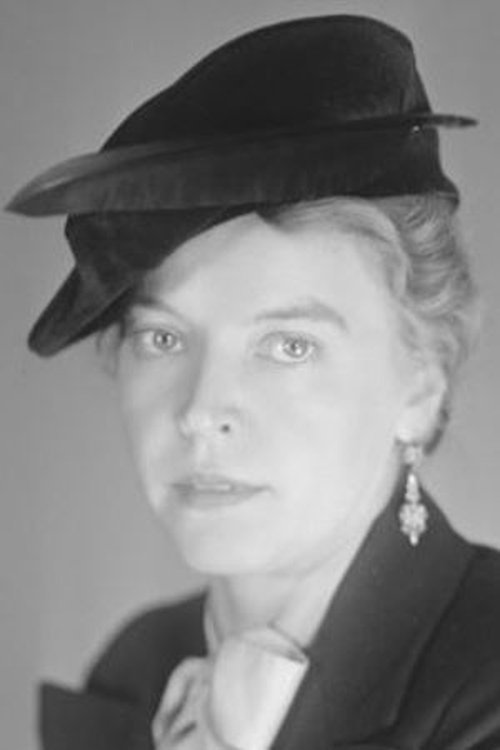
Henny Valjus
Acting
Known For

Tuula's husband Jukka takes care of all domestic chores. Tuula seems to have no idea that her husband spends his evenings working as a major league ice hockey referee. She also finds out about his extra-marital affair with a female rally driver. In revenge, Tuula starts seeing her gynecologist Timo Paasi, a married man with six children.
Sixtynine
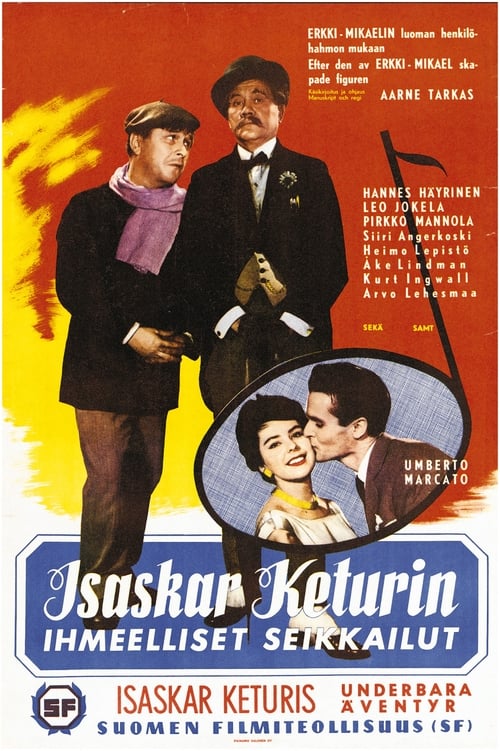
The unlucky layabout Isarkar Keturi brings a criminal gang to heel with the help of his assistant Mikael. He frees Irma, the daughter of mining magnate Tömstet, from captivity and a forced marriage to Kurt. Irma achieves her dream of becoming a pop star, with Isaskar's help.
Isaskar Keturin ihmeelliset seikkailut
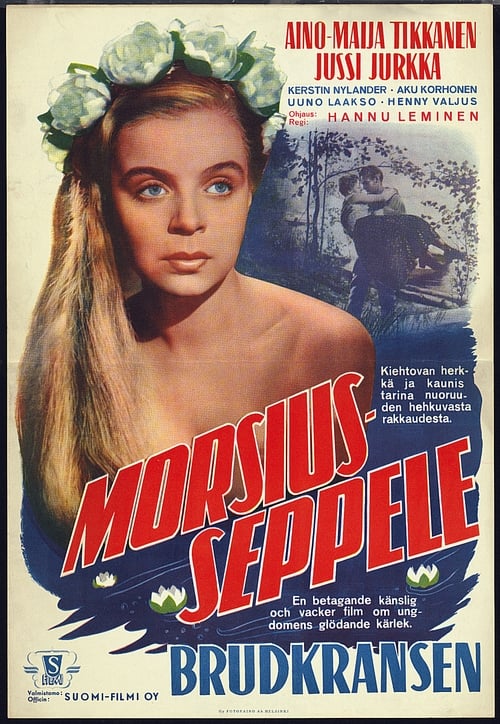
A story about an upper-class student and a poor servant girl who fall in love despite everyone being against it.
The Bridal Wreath
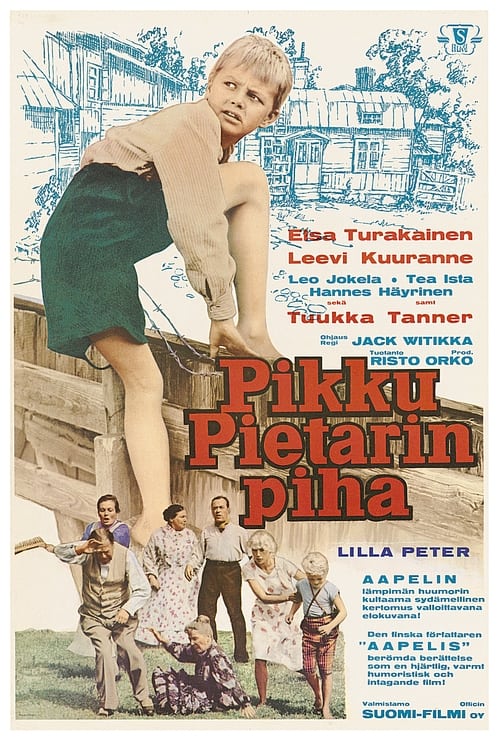
A little orphan boy is the focus of attention, as well as his stepmother whose special qualities engender a certain mystery around her person – and hint at magical powers.
Pikku Pietarin piha
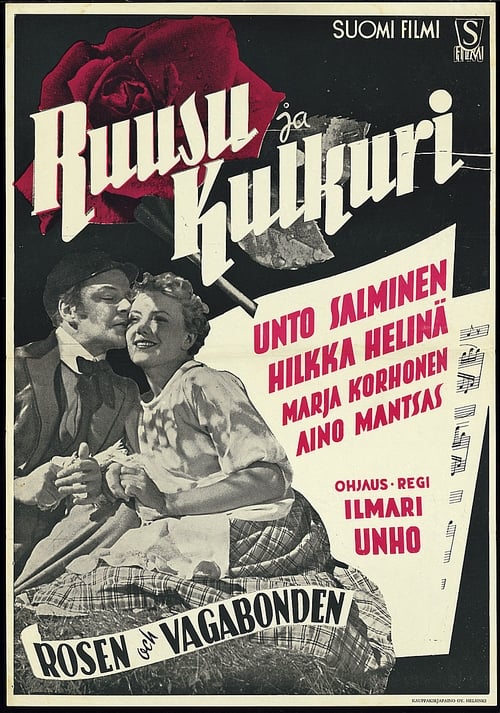
The story of Finnish singer Abraham 'Aappo' Ojanperä, who was born in the late 1850s. On his journey from a crier boy from Liminga to an international singing star, Aappo never forgets his first love Katri, who faithfully waits in Liminga for his return.
Ruusu ja kulkuri

Anni, the daughter of the Heikkilä family, is forced by her father to give up her plans to marry her beloved farmhand, Matti Väliportti. Anni's life becomes a struggle when her father's choice of husband for her, Toivo Erkkilä, turns out to be a violent alcoholic.
Taistelu Heikkilän talosta
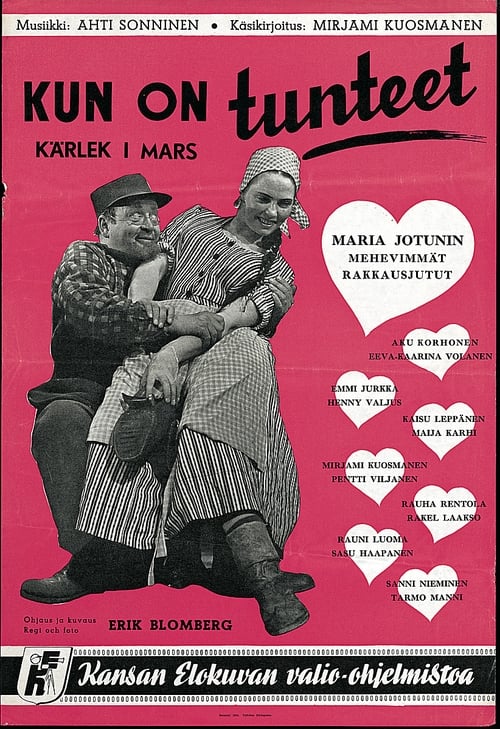
Based on short stories by early 20th century feminist writer Maria Jotuni, the film is a series of lively dialogue scenes between men and women, young and old, living in a small Finnish town. Most episodes evolve into humorous battles between the sexes. The film's central character is a young maid played by Maija Karhi.
Kun on tunteet
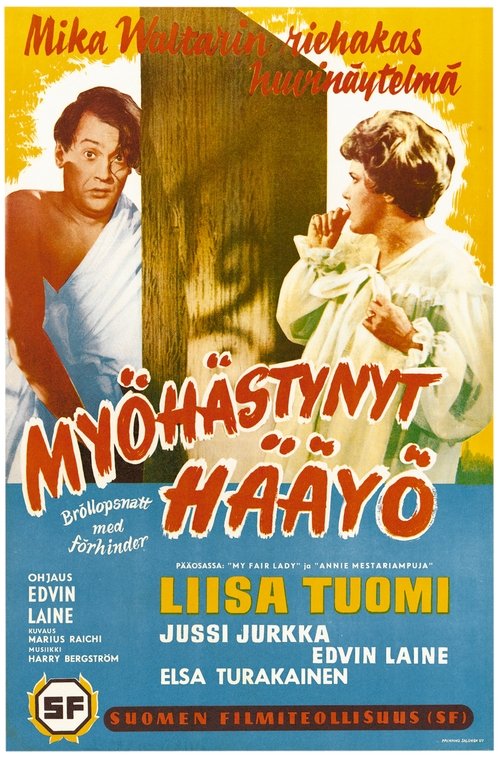
Otto and Kaija have celebrated their surprise wedding, but after a coctail party nothing between them is the same as Otto does not remember what actually happened, and the mess is ready when Otto's American uncle who hates women comes for a visit.
Myöhästynyt hääyö
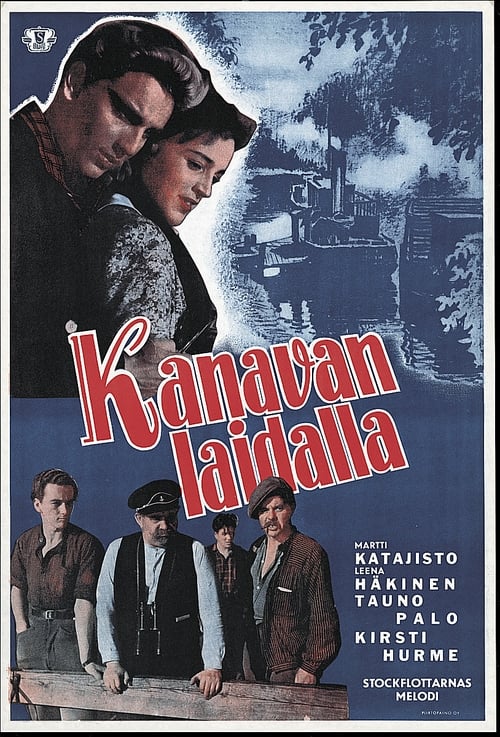
Eerikki Lind, a young university student working as a sailor, falls in love with the beautiful Kirsti on the canal. The budding Midsummer romance between the young people is overshadowed by jealousy and the tragic love story of Kirsti's parents.
Kanavan laidalla
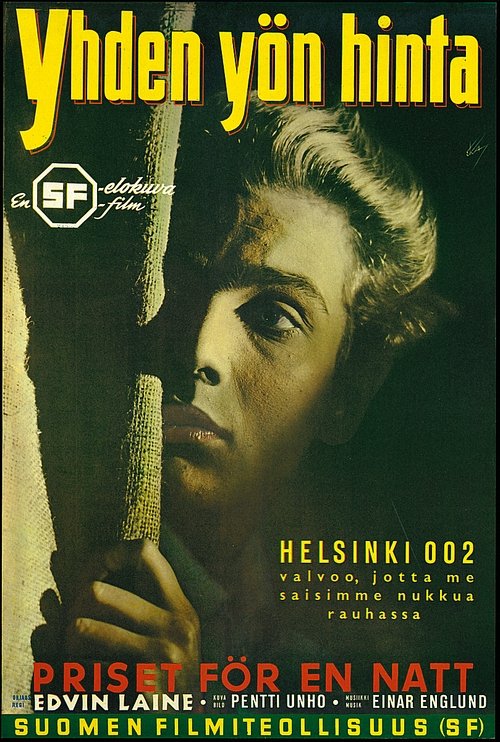
The streets of Helsinki, Finland, at night. Violence mixed with incidents and everyday life. Reported by police officers on the graveyard shift.
Yhden yön hinta
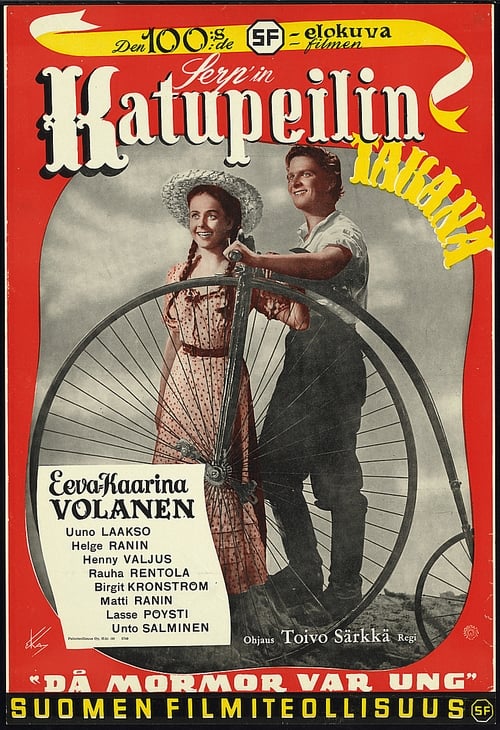
1892. Vappu Biörcke and Kaarlo Härkönen get to know each other during the summer in the countryside at the birthday of Vappu Jalle-sedä. In Helsinki, the young people continue their courtship under the supervision of Vapu's aunt, Moster Mella. However, Vapu's father, business advisor Ossian Biörcke, is not as accepting when his daughter's actions begin to be revealed.
Katupeilin takana
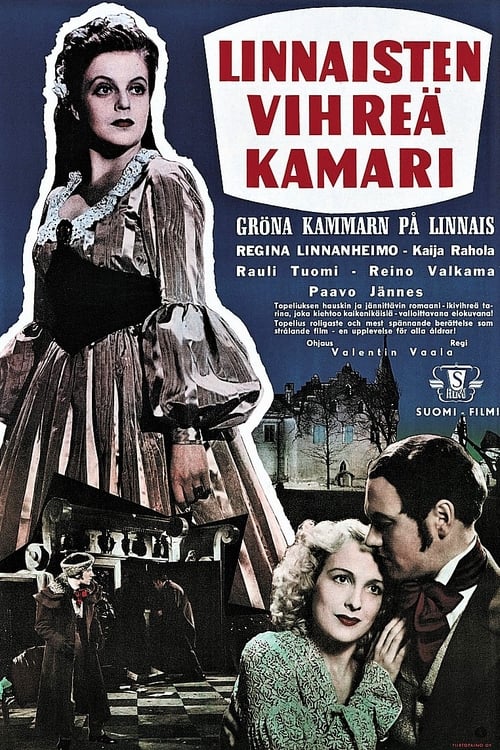
A nobleman in 1830's Finland has to contend with stuck-up relatives, his daughters' suitors, dark secrets from his family's past, mistaken identities and a haunted wing of his mansion.
Linnaisten vihreä kamari
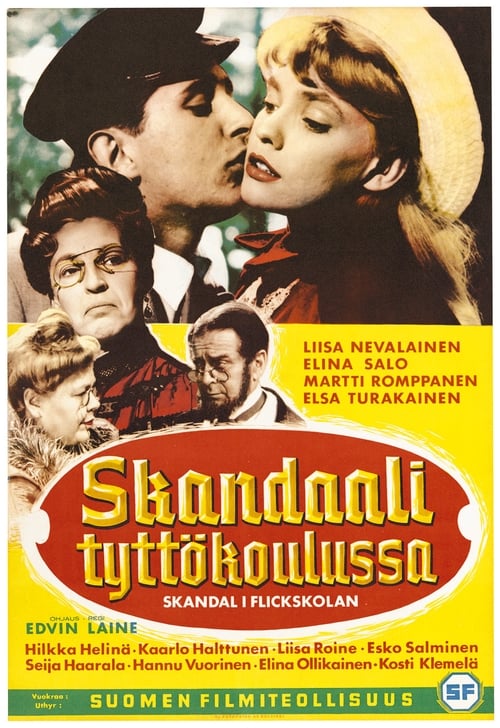
The headmaster of a private girls' school is doing her best to maintain strict discipline in the school. In addition to the loosening morals of the students, the warm relationship between two girls is a causing concern.
Scandal in the Girls' School

A radio reporter from Helsinki arrives in the village of Kankkula just before Midsummer to conduct interviews. The old sheriff demands that his nephew Lauri, who serves as the village policeman, continue the generations-old tradition of arresting the old master of Tippavaara, whom the sheriff believes to be brewing moonshine. However, Lauri is in love with the old man's niece Leena, and the couple's plans to get engaged conflict with Lauri's duties.
Kankkulan kaivolla
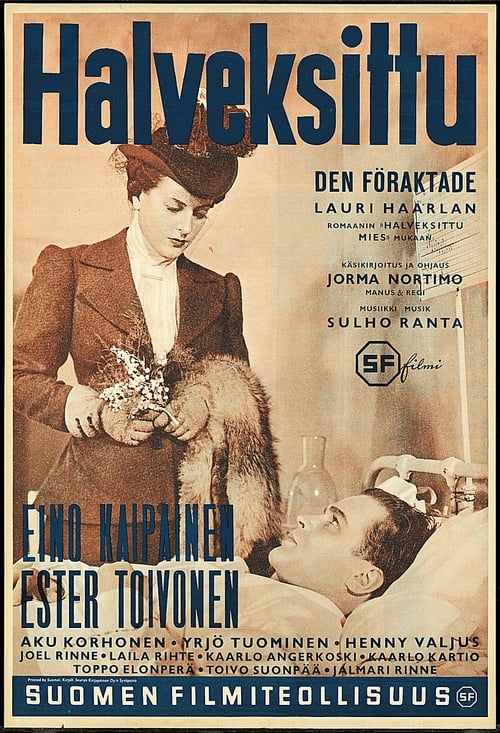
Merchant Iivari encounters significant challenges in his entrepreneurial career when Merthen, a commercial counselor, attempts to prevent his success. Merthen's daughter Verna falls in love with the honest Iivari, who is not acceptable as a son-in-law to the Merthen family.
Halveksittu
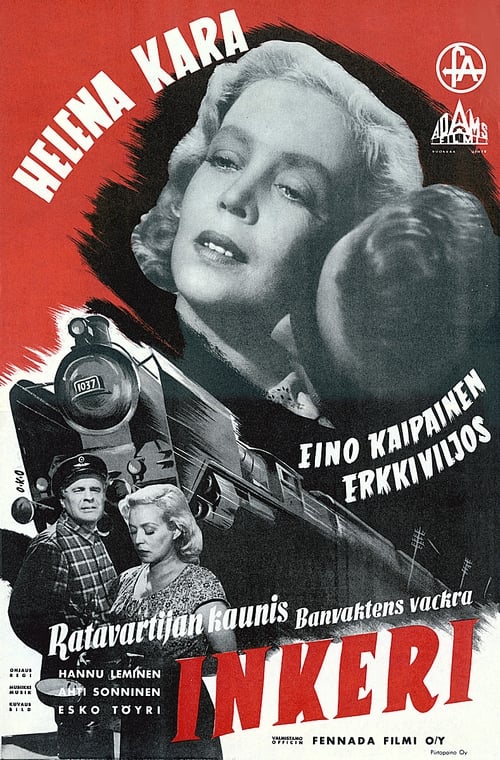
Train driver Ilmari Perttula falls in love with Inkeri, the young wife of his elderly friend, railway guard Iikka Junkkari. Meanwhile, Martta, the daughter of a colleague, pursues Ilmari. Over time, Iikka becomes aware of the relationship between Inkeri and Ilmari.
Ratavartijan kaunis Inkeri
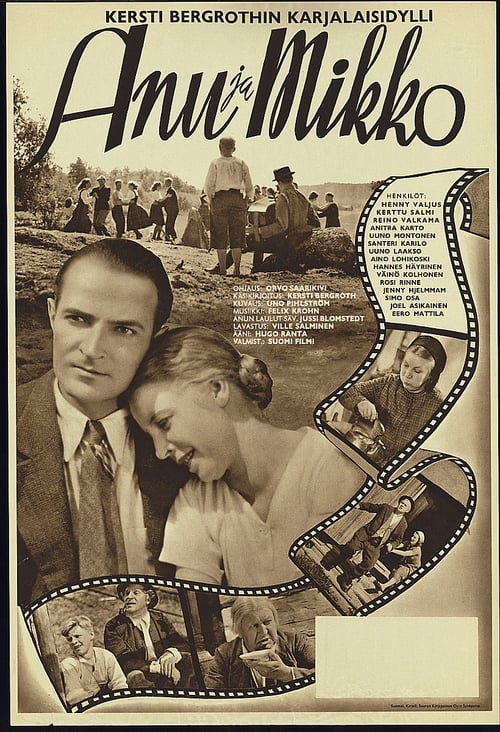
Before her death, Anu's mother promises her daughter to the wealthy Junu of Ukonmäki. Anu loves the carpenter Mikko, who, upon hearing of Junu's engagement, leaves for Helsinki. However, Mikko misses Anu and his homeland, to which he returns with modern ideas of factory work and efficiency.
Anu ja Mikko
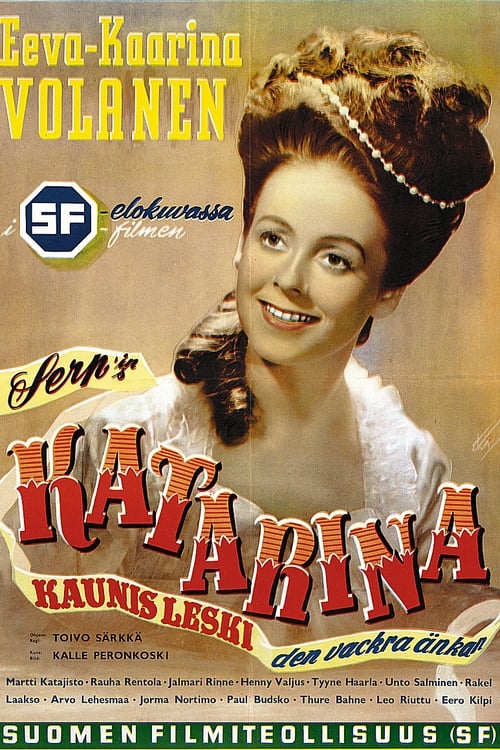
1790 Turku. After Katarina Thorwöst becomes a widow, there are many suitors, but her heart belongs to the fencing teacher lieutenant Carl-Magnus Schildt.
Katarina kaunis leski
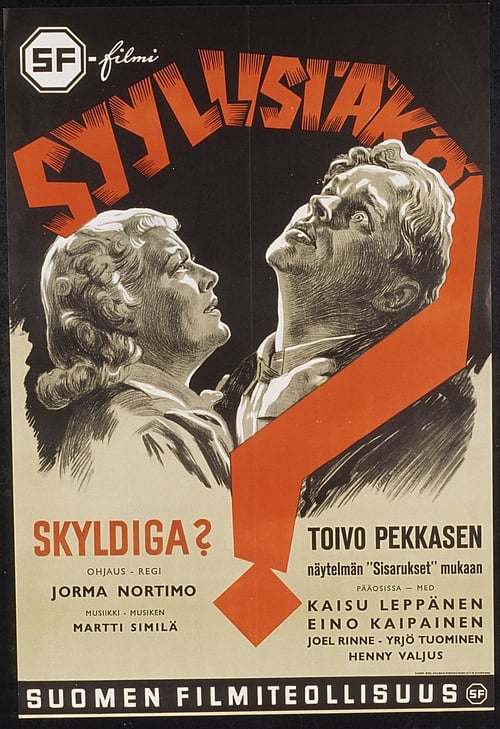
Lecturer Aarre is dating Emmi, a saleswoman at a fabric store. The small-town social circles do not approve of relationships that cross class boundaries, and neither do Emmi's mother and her brother Erkki, who works at the factory.
Syyllisiäkö?
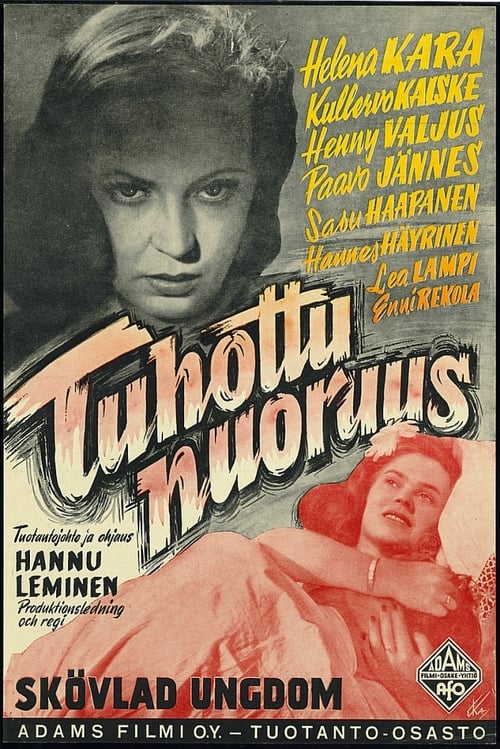
Kirsti works as a reception assistant to Dr. Varjo and is secretly clinging to the doctor's son, Eino, who is studying to become an architect. Even though the film reflects early social problems and class jokes, there is no humor about describing everyday life.