Jean Duvignaud
Writing
Biography
Jean Duvignaud (22 February 1921 – 17 February 2007) was a French novelist, sociologist and anthropologist. He was born in La Rochelle, Charente-Maritime, on February 22, 1921. Duvignaud was a secondary school teacher first at Abbeville, then at Étampes (1947–1956), where he taught Georges Perec. After submitting his doctoral thesis, he taught at the University of Tours. In 1972, he founded the magazine Cause commune with Georges Perec and Paul Virilio. For a time he was in a relationship with Clara Malraux, the ex-wife of novelist André Malraux. He died (aged 85) in La Rochelle on February 17, 2007. Source: Article "Jean Duvignaud" from Wikipedia in English, licensed under CC-BY-SA 3.0.
Known For

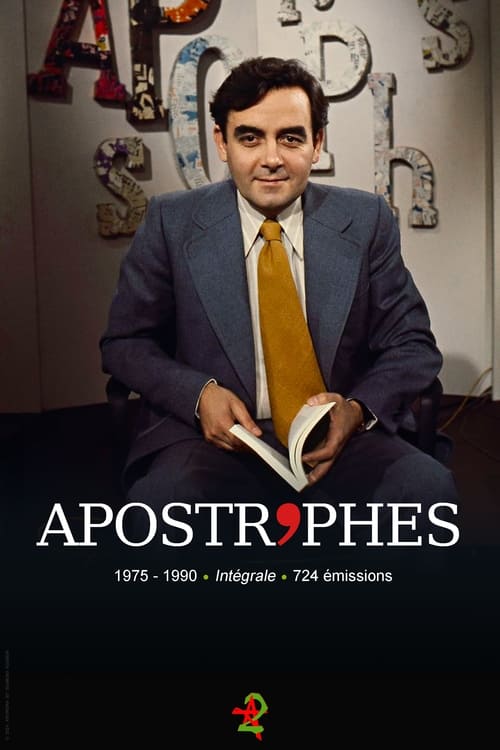
Apostrophes was a live, weekly, literary, prime-time, talk show on French television created and hosted by Bernard Pivot. It ran for fifteen years (724 episodes) from January 10, 1975, to June 22, 1990, and was one of the most watched shows on French television (around 6 million regular viewers). It was broadcast on Friday nights on the channel France 2 (which was called "Antenne 2" from 1975 to 1992). The hourlong show was devoted to books, authors and literature. The format varied between one-on-one interviews with a single author and open discussions between four or five authors.
Apostrophes

A woman from a bourgeois family marries a loveless man. She remembers (or dreams?) a life of adventure and smuggling, hijacking ships at night. She is kidnapped by the leader of the enemy gang, with whom she falls in love.
Hung Up

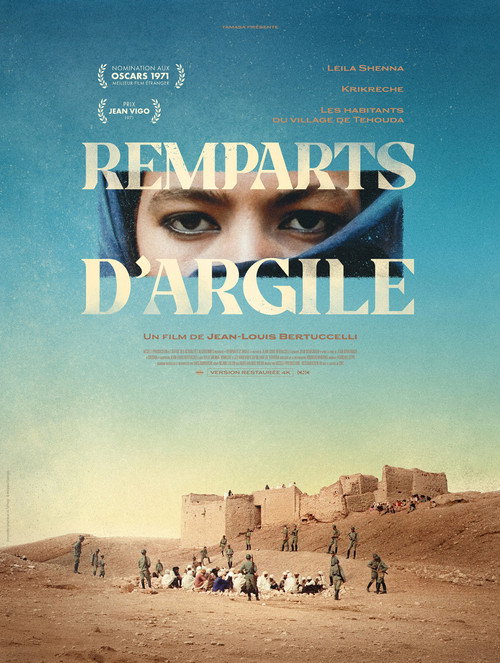
In a village on the edge of the Sahara, Rima, a 19-year-old orphan, dreams of learning, of discovering, of living free while the men of the salt mine go on strike. The authorities react by sending the army, Rima decides to help the strikers by trapping the soldiers. Co-produced with the Office des Actualités Algériens and shot in the region of Téhouda, 50 kilometers from Biskra, this Franco-Algerian film is fully part of the cinematographic heritage of both shores of the Mediterranean. Bertuccelli adopts the technique of cinema verite, with non-professional actors from the village itself, giving the film a striking documentary texture and a rare force of authenticity. Carried by the moving interpretation of Leila Shenna in the role of Rima, the actor Krikèche and lulled by the music of Taos Amrouche, the film questions female emancipation, social resistance and the relationship with the territory.