Temistocle Solera
Writing
Biography
From Wikipedia, the free encyclopedia - https://en.wikipedia.org/wiki/Temistocle_Solera. Temistocle Solera (25 December 1815 – 21 April 1878) was an Italian opera composer and librettist. He was born in Ferrara. He received his education at the Imperial College in Vienna and at the University of Pavia. Throughout his life he actively participated in anti-Austrian resistance. At one point, he was incarcerated for his activities. He completed several literary works, including the novel Michelino, his style influenced by Alessandro Manzoni. He then found work as a librettist; his collaboration with the composer Giuseppe Verdi began in 1839 and lasted for a few years. Solera then found work as the impresario for the Royal Theatre in Madrid. He died in Milan in 1878.
Known For
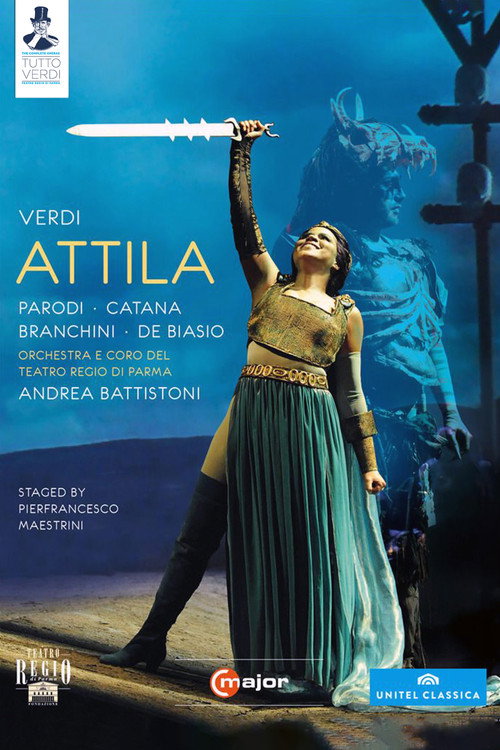
In Aquileia, around the middle of the 5th century. Odabella, daughter of the city’s lord, lost her family during the sacking carried out by Attila and intends to take revenge by killing him (Santo di patria indefinito amor). She herself was spared by Uldino, one of Attila’s slaves. Impressed by her courage, Attila gives her his sword. General Ezio, sent from Rome, proposes to Attila a deal to divide the Empire (Avrai tu l'universo, resti l'Italia a me!). But Attila denounces him as a traitor and refuses. Attila is an opera in a prologue and three acts by Giuseppe Verdi, with a libretto by Temistocle Solera based on Zacharias Werner’s tragedy, Attila, König der Hunnen, and premiered at the Teatro la Fenice in Venice on March 17, 1846. From the box set of 27 Verdi operas, “Tutto Verdi.” Recorded live at the Teatro Verdi in Busseto on October 21 and 25, 2010.
Verdi: Attila
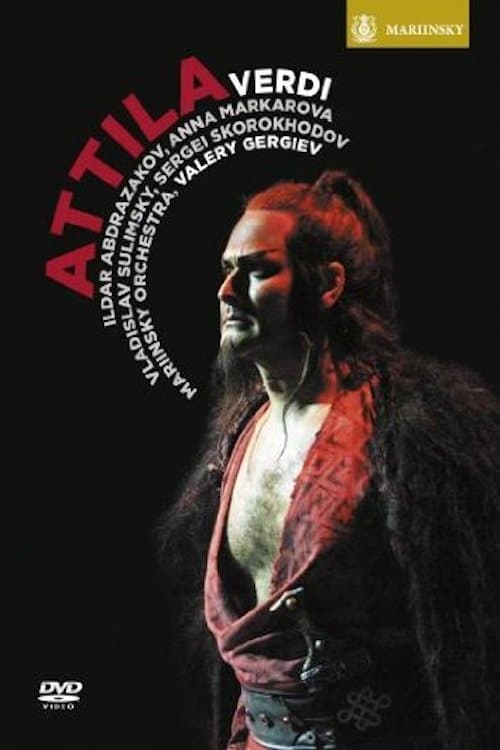
In celebration of Verdi's anniversary year, the Mariinsky label presents a high-definition video recording of Verdi's Attila, led by maestro Valery Gergiev, produced by Arturo Gama and featuring acclaimed Russian bass Ildar Abdrazakov in the title role. A two-time GRAMMY Award winner for his Verdi readings, Abdrazakov has quickly established himself as one of opera's most sought-after basses. Since making his La Scala debut in 2001 at only 25, the Russian singer has become a mainstay at leading houses worldwide. Filmed in the Mariinsky Opera House, the DVD includes a stunning picture gallery of scenes from the performance. As is the case with many of Verdi's operas, Attila is imbued with the spirit of Risorgimento, the national liberation movement of the Italian people against foreign rule and for the unification of Italy. Looking ahead, Atilla is the first of four opera DVDs that are planned for release on the Mariinsky label in 2013.
Attila
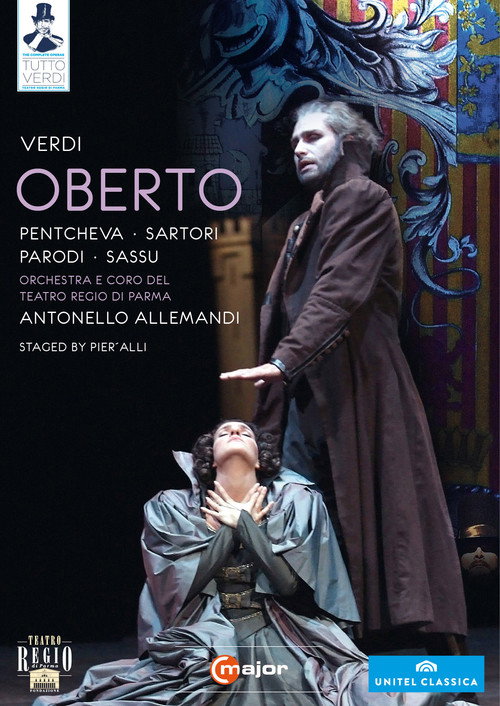
Part of Tutto Verdi series - Oberto (2007) Parma. Oberto was the first of Verdi’s operas to be staged and was heard for the first time at La Scala, Milan, in November 1839. As a young and unknown composer, Verdi was subject to the rules then governing the opera industry in Italy. Even so, there are already many scenes in this early work that reveal unmistakable signs of the composer’s individual style.
Verdi: Oberto
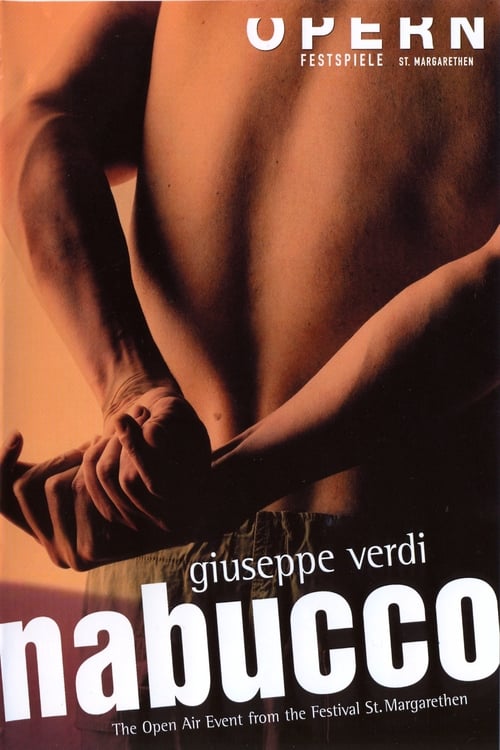
St. Margarethen is a magnificent structure and a grand setting for Nabucco. This venue, along with the gorgeous costumes, spectacular lighting, lasers and pyrotechnics made for one grand, five star production! This is reason enough to see it and it must be an advantage to view it on DVD.--It would probably be harder to digest the whole spectacle if you were actually sitting in the audience, as there is so much to take in. The whole cast was in great form, both in singing and acting. Simon Yang as Zaccaria and Igor Morosow as Nabucco were excellent. Gabriella Morigi was a convincing Abigail who got better and better. Bruno Ribeiro as Ismaele and Elisabeth Kulman as Fenena were great, too.
Nabucco
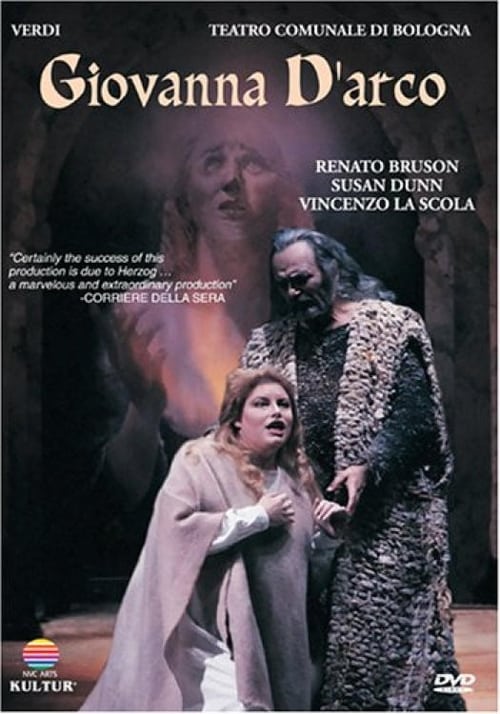
Director Werner Herzog, one of the most highly acclaimed German film makers, joins forces with the great Italian conductor Riccardo Chailly to effect a masterful rendition of this rarely-performed opera involving spectacular scenes of alternating light and dark, pageantry and intimacy. Staged and recorded at Teatro Comunale di Bologna in Bologna, Italy.
Giovanna d'Arco
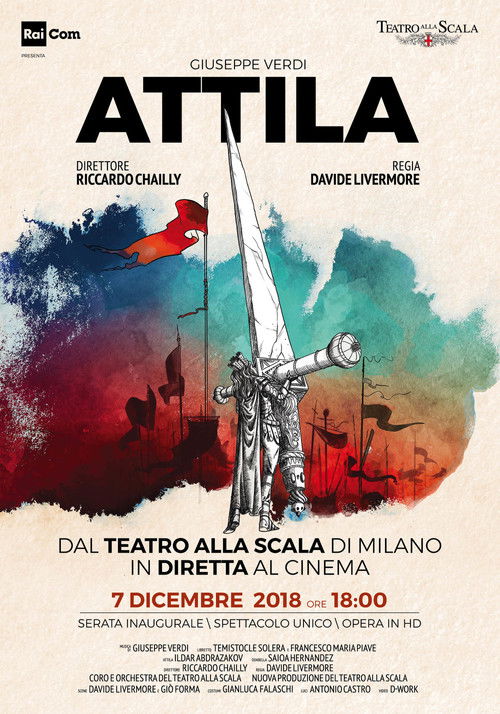
First staged at the Teatro La Fenice in 1846, Verdi’s ninth opera, Attila, returns to the stage of La Scala on December 7th. Following the inauguration of the 2015-2016 Season with Giovanna d’Arco and in anticipation of Macbeth, with Attila Musical Director Riccardo Chailly continues his study of Verdi’s early works, renewing a successful collaboration with creative director Davide Livermore that began with his acclaimed production of Donizetti’s Don Pasquale for La Scala. In this complex opera Verdi experiments with fresh perspectives, featuring spectacular historical settings, introspective angles and moral uncertainties. Attila demands of its performers not only passion and confidence, but also the ability to find subtle accents and psychological nuances.
Attila
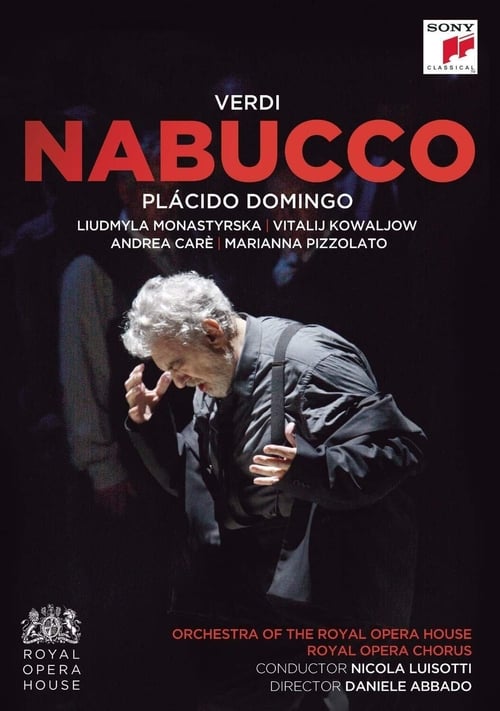
NABUCCO may be Verdi's first masterpiece, and not just because of that amazing Chorus of Hebrews which is justly beloved by everyone who hears it. Dramatically, this opera is tightly constructed, with believable characters in an intense conflict over values and beliefs. And Verdi's music, however early in his career, however distant from triumphs like LA FORSA DEL DESTINO or AIDA, is highly animated, revealing inner turmoil and outer passions with beauty and economy. The ensembles are especially impressive, building to satisfying heights of emotional release for the singers and the audience. And Placido Domingo is a wonder to behold and hear. Even though his original voice was baritone, which he managed to transform into a tenor voice, he doesn't SOUND like a baritone to me. B-U-T his performance is so committed, so deeply interfused with Verdi's music, so generously integrated to the younger singers around him, that the waters part.
Verdi Nabucco
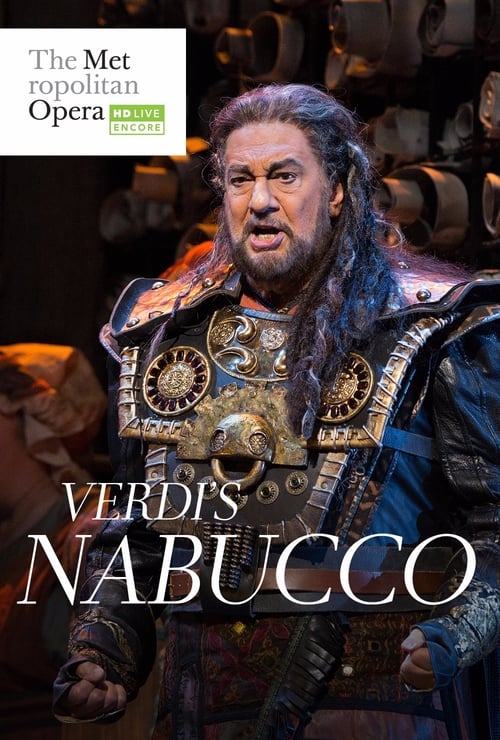
The legendary Plácido Domingo brings another new baritone role to the Met under the baton of his longtime collaborator James Levine. Liudmyla Monastyrska is Abigaille, the warrior woman determined to rule empires, and Jamie Barton is the heroic Fenena. Dmitri Belosselskiy is the stentorian voice of the oppressed Hebrew people.
Verdi: Nabucco
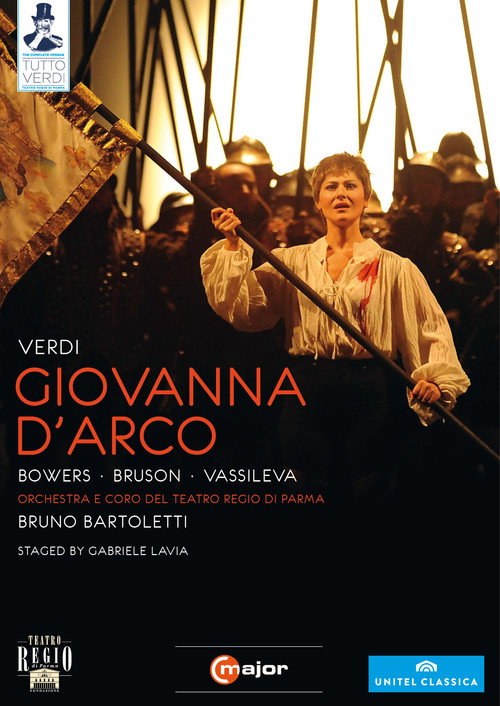
In Domrémy, in 1429, Charles VII (Carlo) informed the King of England of his intention to abdicate or to cease fighting, as the Virgin Mary had appeared to him in a dream and ordered him to lay down his arms in a wood. When the king recounted this dream, he was told of a chapel dedicated to the Virgin Mary situated in that very wood. He decided to go there and lay down his arms. In the same forest, there was also a small sheepfold where Jacques (Giacomo) and his daughter Jeanne (Giovanna) lived. Jeanne returns from the little chapel of the Virgin Mary, disheartened at being unable to fight for France, which is increasingly under English rule. Good spirits visit Jeanne and tell her that her greatest wish is about to come true: she will finally be able to fight, but must not succumb to any worldly love. Premiered on 3 November 1844. From the box set ‘Tutto Verdi’ featuring 27 of Verdi’s operas. Recorded live at the Teatro Regio in Parma on 7 and 17 October 2008.
Giovanna d'Arco
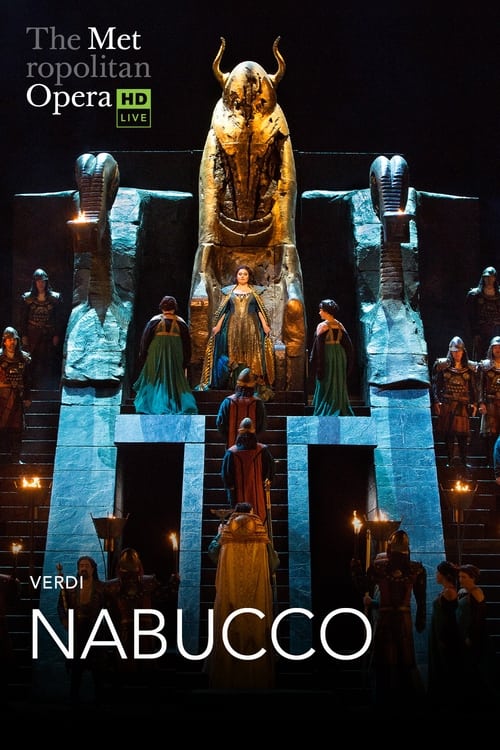
The success of Verdi’s third opera, a stirring drama about the fall of ancient Jerusalem at the hands of Nebuchadnezzar (Nabucco), catapulted the 28-year-old composer to international fame. The music and Verdi himself were subsumed into a surge of patriotic fervor culminating in the foundation of the modern nation of Italy. Specifically, the Chorus of the Hebrew Slaves ('Va, pensiero'), in which the Israelites express their longing for their homeland, came to stand for the country’s aspirations for unity and that exciting era in Italian history, the Risorgimento, or 'Resurgence'.
The Metropolitan Opera: Nabucco
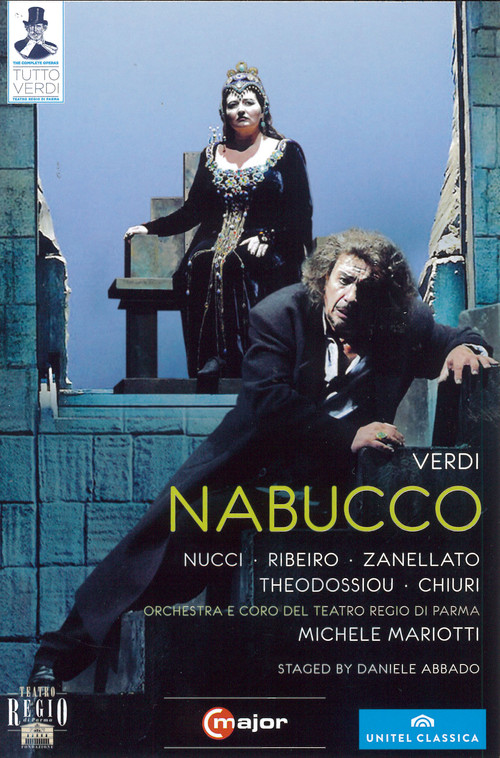
‘Nabucco’, or ‘Nebuchadnezzar’ (Italian: Nabucco), is an opera by Giuseppe Verdi with a libretto by T. Solera, based on events described in the Bible. (Nabucco is a shortened Italian rendering of the name of King Nebuchadnezzar II). It was this opera, the third in Verdi’s oeuvre, that brought him true fame. It tells of the tribulations of the Jews, their captivity by the Babylonians, and their subsequent release to their homeland by Nebuchadnezzar, King of Babylon. Giuseppe Verdi’s opera ‘Nabucco’, is a monumental work that tells the story of the enslavement of the Hebrew people by the Babylonian king Nebuchadnezzar (Nabucco) and their journey towards redemption. The premiere took place on 9 March 1842 at La Scala in Milan. The first performance of the final version was held at the Teatro San Giacomo in Corfu in September 1844. From the box set of 27 Verdi operas, ‘Tutto Verdi’. Recorded live at the Teatro Regio in Parma, 12–14 October 2009.
Verdi: Nabucco
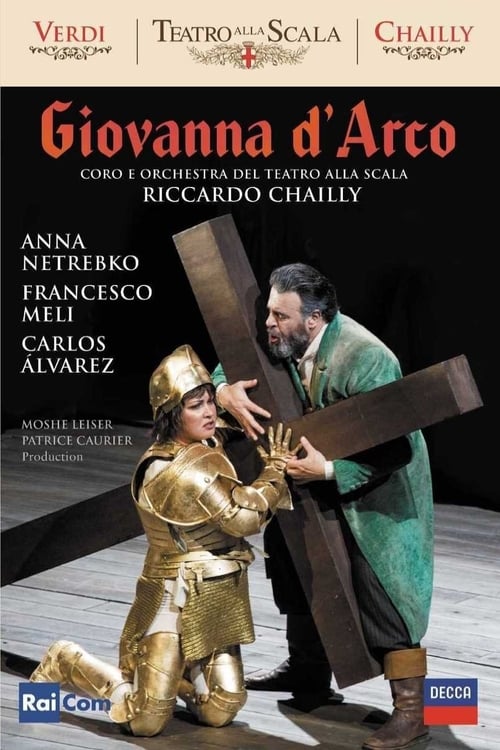
"Giovanna d'Arco; ossia, la pulzella d'Orléans" is an operatic dramma lirico with a prologue and three acts by Giuseppe Verdi to an Italian libretto by Temistocle Solera. The opera partly reflects the story of Joan of Arc and is based on a play by Friedrich von Schiller, although claimed by the librettist to be "an entirely original Italian drama." If the thought of Anna Netrebko strutting her stuff in a suit of armour and tin hat sets your factor tingling then this is a must. It's an inconsistent opera but has some quite wonderful music along the way. The rest of the cast is good and the production won't offend either. Get it for Ms Netrebko's incredible performance alone.
Teatro alla Scala: Joan of Arc
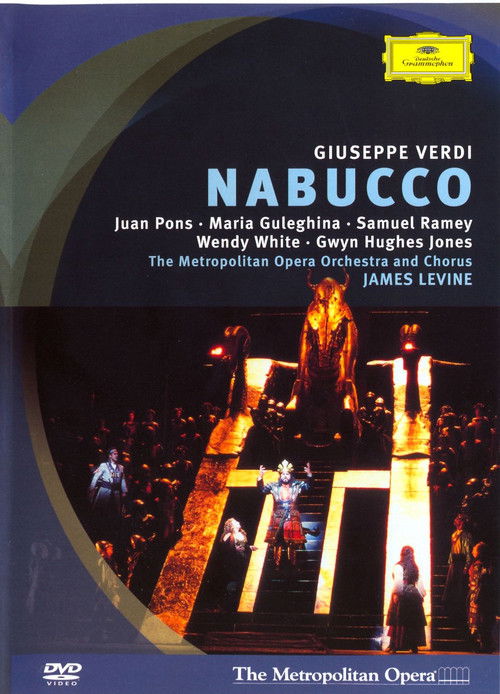
Nabucco - live from Metropolitan Opera, June 2002. On its surface, Nabucco is about the epic struggle of Zaccaria and the Jews suppressed by Babylon’s King Nebuchadnezzar and his vengeful daughter, Abigaille. But to Italians fighting for their freedom from Austria, Verdi’s first great opera was an inspiring call to arms.
Nabucco
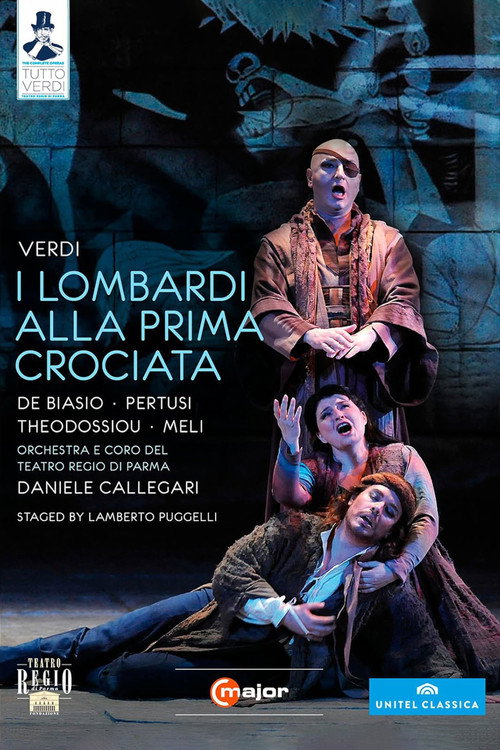
I Lombardi alla prima crociata (The Lombards on the First Crusade) was Verdi’s fourth opera and received its first performance at La Scala, Milan, in February 1843. The grandiloquent subject matter is fleshed-out with broad-brushed musical and dramatic effects and lavish choral scenes created a correspondingly impressive impact. A great success in Milan, it spread to the rest of Europe within a matter of only a few years.
Verdi: I Lombardi alla prima crociata
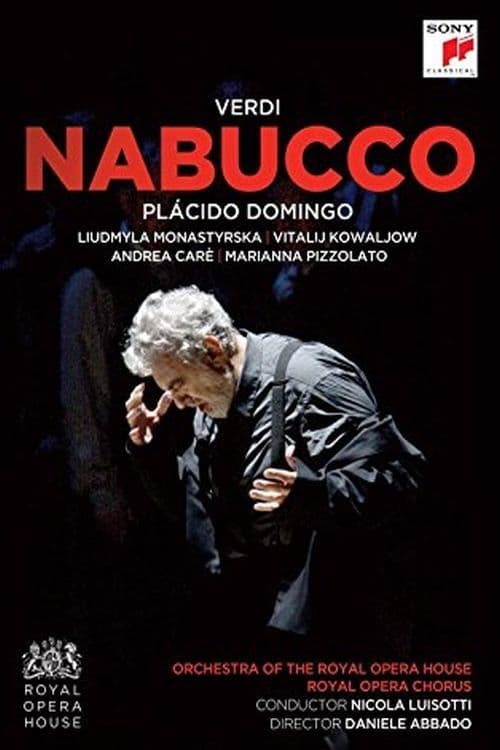
Nabucco, King of Babylon, takes Jerusalem in his war with the Israelites – but his daughter Fenena loves the Israelite Ismaele. She releases their prisoners, leading her vengeful half-sister Abigaille to plot to take power. Nabucco declares himself a god and is struck by a bolt of lightning. Abigaille tricks the now feeble king into signing a death warrant for the Israelites, including Fenena and Ismaele. Nabucco prays to the God of Israel for forgiveness; his sanity is restored and he saves the prisoners from death. He converts himself and his people, while Abigaille commits suicide.
The ROH Live: Nabucco
Wiener Staatsoper Live at Home - 14 May 2015
Nabucco
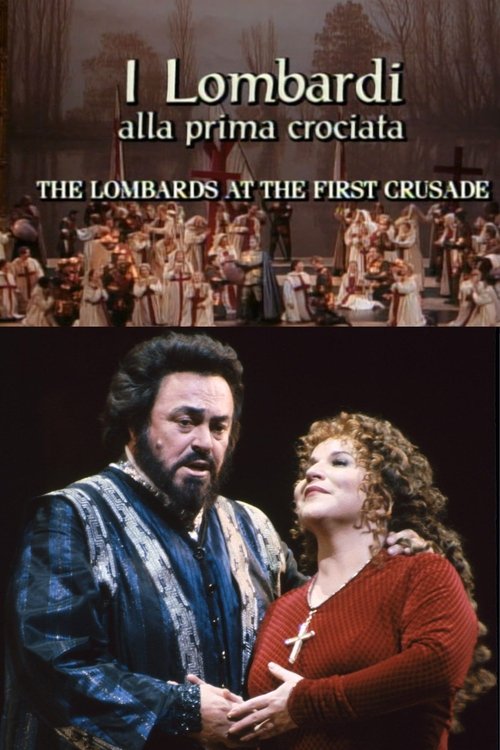
James Levine’s love for this seldom-heard score infuses every measure of Verdi’s music. Superstar Luciano Pavarotti heads the cast as the Muslim warrior prince Oronte who converts to Christianity out of love for the Italian Giselda (Lauren Flanigan)—before dying of the wounds he received in battling the Crusaders. Samuel Ramey is the Crusader-turned-hermit Pagano. Mark Lamos’s striking production has sets by John Conklin and costumes by Dunya Ramicova.
I Lombardi - The Met
Live performance from Teatro dell'Opera di Roma, March 2011.
Nabucco
Oberto - live performance from Ópera de Bilbao - January 2007.
Oberto
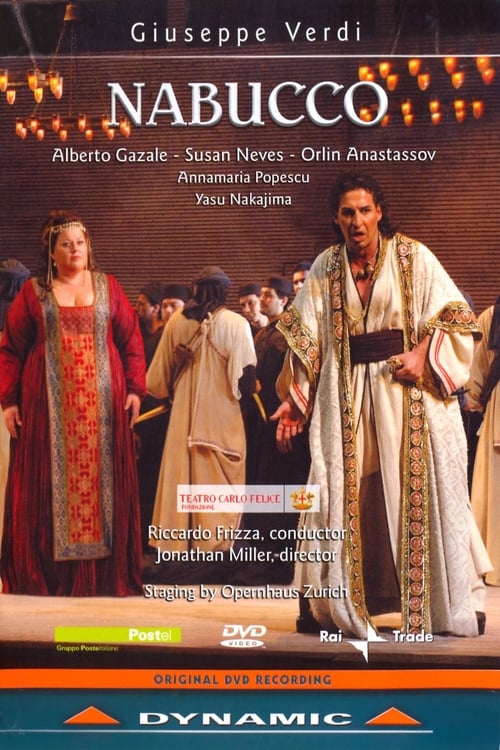
Live performance at Teatro Carlo Felice di Genova, June 2004. Original stage production by Operhaus Zurich. DVD: Dynamic, live recording Cat: 33465. Nabucco (short for Nabucodonosor, English Nebuchadnezzar) is an opera in four acts by Giuseppe Verdi to an Italian libretto by Temistocle Solera, based on the Biblical story and the 1836 play by Auguste Anicet-Bourgeois and Francis Cornue. It is VerdiÕs third opera and the one which is considered to have permanently established his reputation as a composer. Nabucco follows the plight of the Jews as they are assaulted, conquered, and subsequently exiled from their homeland by the Babylonian King Nabucco (in English, Nebuchadnezzar). The historical events are used as background for a romantic and political plot.