Directing
No description available.
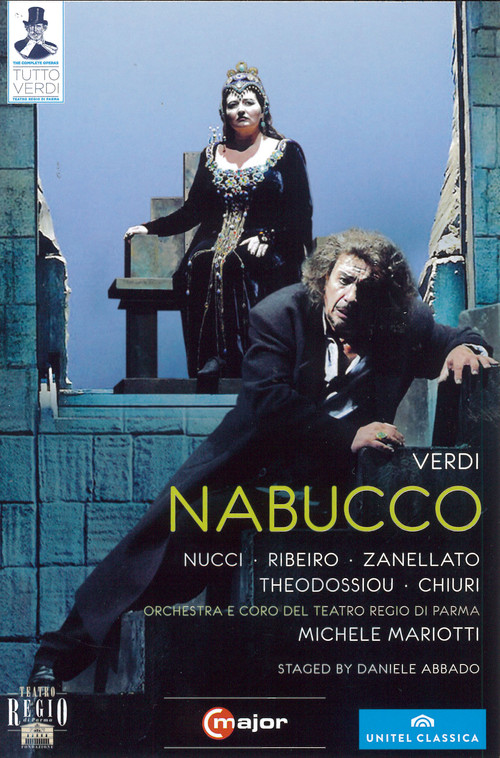
‘Nabucco’, or ‘Nebuchadnezzar’ (Italian: Nabucco), is an opera by Giuseppe Verdi with a libretto by T. Solera, based on events described in the Bible. (Nabucco is a shortened Italian rendering of the name of King Nebuchadnezzar II). It was this opera, the third in Verdi’s oeuvre, that brought him true fame. It tells of the tribulations of the Jews, their captivity by the Babylonians, and their subsequent release to their homeland by Nebuchadnezzar, King of Babylon. Giuseppe Verdi’s opera ‘Nabucco’, is a monumental work that tells the story of the enslavement of the Hebrew people by the Babylonian king Nebuchadnezzar (Nabucco) and their journey towards redemption. The premiere took place on 9 March 1842 at La Scala in Milan. The first performance of the final version was held at the Teatro San Giacomo in Corfu in September 1844. From the box set of 27 Verdi operas, ‘Tutto Verdi’. Recorded live at the Teatro Regio in Parma, 12–14 October 2009.
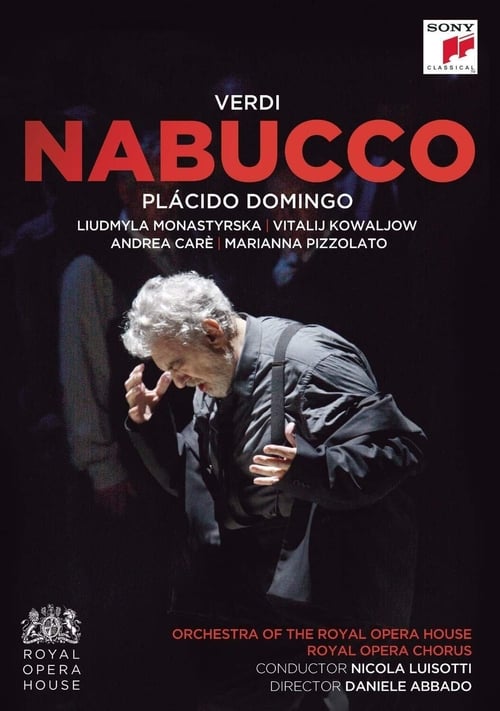
NABUCCO may be Verdi's first masterpiece, and not just because of that amazing Chorus of Hebrews which is justly beloved by everyone who hears it. Dramatically, this opera is tightly constructed, with believable characters in an intense conflict over values and beliefs. And Verdi's music, however early in his career, however distant from triumphs like LA FORSA DEL DESTINO or AIDA, is highly animated, revealing inner turmoil and outer passions with beauty and economy. The ensembles are especially impressive, building to satisfying heights of emotional release for the singers and the audience. And Placido Domingo is a wonder to behold and hear. Even though his original voice was baritone, which he managed to transform into a tenor voice, he doesn't SOUND like a baritone to me. B-U-T his performance is so committed, so deeply interfused with Verdi's music, so generously integrated to the younger singers around him, that the waters part.
Nabucco, King of Babylon, takes Jerusalem in his war with the Israelites – but his daughter Fenena loves the Israelite Ismaele. She releases their prisoners, leading her vengeful half-sister Abigaille to plot to take power. Nabucco declares himself a god and is struck by a bolt of lightning. Abigaille tricks the now feeble king into signing a death warrant for the Israelites, including Fenena and Ismaele. Nabucco prays to the God of Israel for forgiveness; his sanity is restored and he saves the prisoners from death. He converts himself and his people, while Abigaille commits suicide.
Live performance at Teatro La Fenice, Venice, September 25-28 2010. Myung-Whun Chung conducting Orchestra e Coro del Teatro La Fenice. Directed for the stage by Daniele Abbado.