Acting
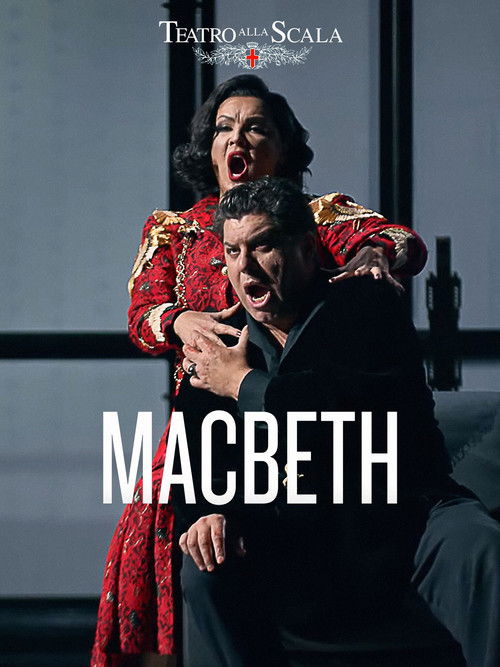
As per tradition, the 2021/22 season opened in December at La Scala in Milan, this time with a new production of Giuseppe Verdi's 'Macbeth' directed by Davide Livermore and conducted by Riccardo Chailly. Verdi's Shakespeare drama features a star-studded cast: Anna Netrebko and Luca Salsi embody the regicide Macbeth and his lady.
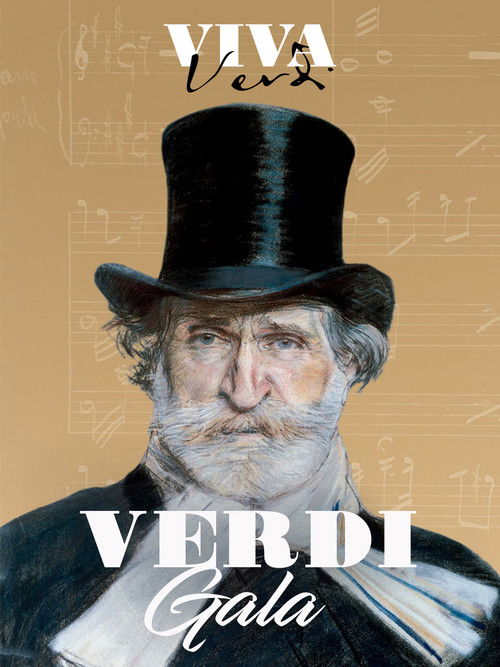
As part of the Viva Verdi initiative organized by the Ministry of Culture, the Teatro Comunale di Bologna presents an evening dedicated to the masterpieces of Giuseppe Verdi at the Comunale Nouveau venue. Conducted by Daniel Oren.
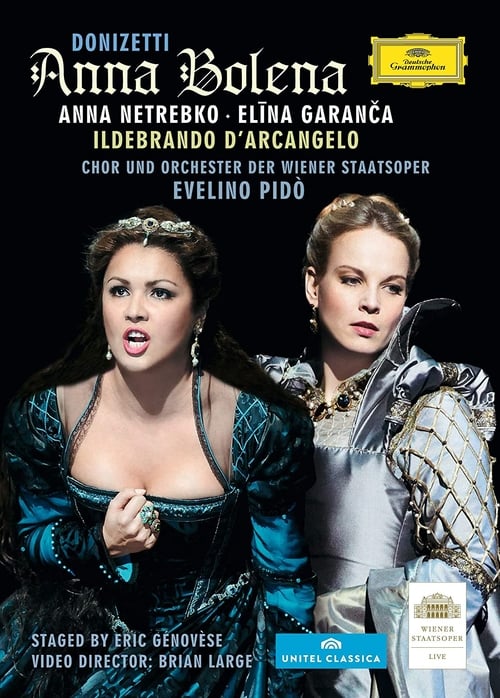
Gaetano Donizetti and his librettist Felice Romani kept the focus of their opera ANNA BOLENA on the personal rather than the political in this fictionalized Tudor tale: Henry VIII of England wants to get rid of his second wife, Anne Boleyn, so that he can marry her lady-in-waiting, Jane Seymour. He brings Lord Richard Percy, Anne's first love, back from exile so that he can find an excuse to accuse her of adultery. With the unwitting aid of Smeaton, a court musician, and Lord Rochefort, Anne's brother, the trap is easily sprung. This 2011 live recording from the Wiener Staatsoper showcases Anna Netrebko as she "scored a personal triumph" in her debut as the hapless Tudor Queen, while her stage partners - notably Elīna Garanča as Jane Seymour and Ildebrando D'Arcangelo as Henry VIII - were likewise showered with critical acclaim.
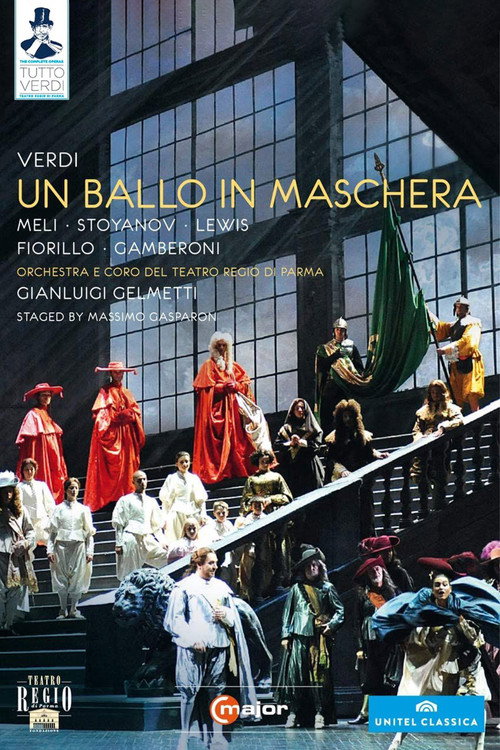
In Boston, at the governor’s palace. The courtiers, divided into friends and foes—including Tom and Samuel—await the arrival of the governor, Count Riccardo di Warwick. He makes his entrance, and his page, Oscar, hands him the guest list for the masked ball scheduled for the following day. Among the guests is Amelia, whom he secretly loves, but who is the wife of his adviser and friend Renato. Renato arrives and believes he has guessed the cause of his master’s visible distress: a plot being hatched against his life. But Riccardo wishes to ignore this plot and its instigators; in vain does Renato implore him not to take the matter lightly... ‘Un ballo in maschera’ is an opera by Giuseppe Verdi, with a libretto by Antonio Somma based on a story by Eugène Scribe. It premiered on 17 February 1859 at the Teatro Apollo in Rome. From the ‘Tutto Verdi’ box set of 27 Verdi operas. Recorded live at the Teatro Regio di Parma on 1, 5, 9, 13, 20 and 23 October 2011.
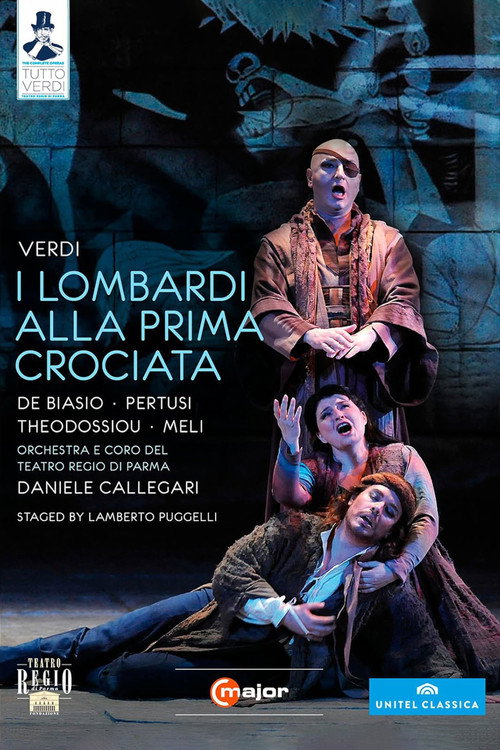
I Lombardi alla prima crociata (The Lombards on the First Crusade) was Verdi’s fourth opera and received its first performance at La Scala, Milan, in February 1843. The grandiloquent subject matter is fleshed-out with broad-brushed musical and dramatic effects and lavish choral scenes created a correspondingly impressive impact. A great success in Milan, it spread to the rest of Europe within a matter of only a few years.
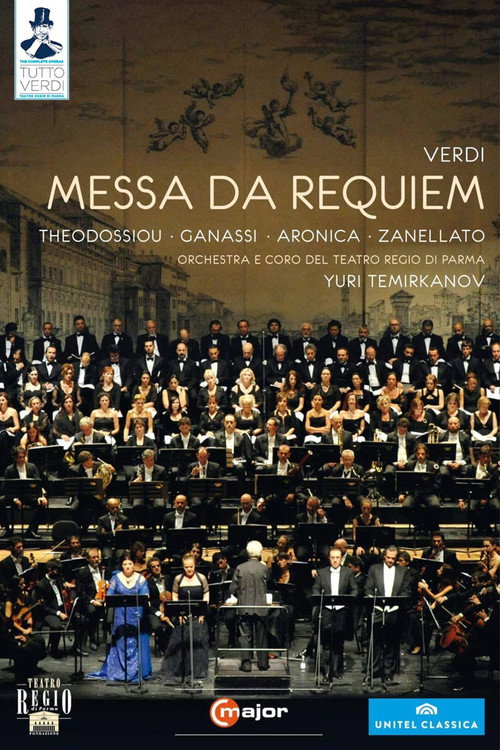
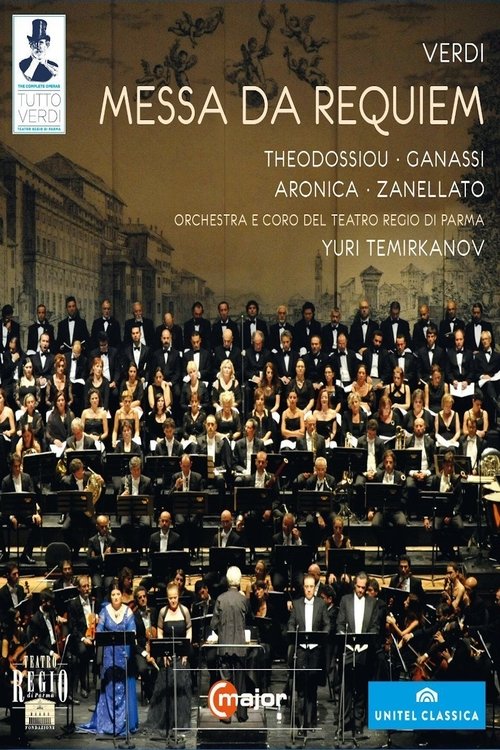
A requiem inspired by the death, on May 22, 1873, of the Italian poet and writer Alessandro Manzoni, author of the novel “The Betrothal”. Giuseppe Verdi’s “Messa da Requiem” (more commonly known as the “Verdi Requiem”) is a requiem mass for soloists (soprano, mezzo-soprano, tenor, and bass), double choir, and orchestra, premiered on May 22, 1874, at the Church of San Marco in Milan. The Requiem is Verdi’s only major composition not intended for the opera. From the 27-opera Verdi box set “Tutto Verdi.” Recorded live at the Teatro Farnese in Parma on October 8, 2011.
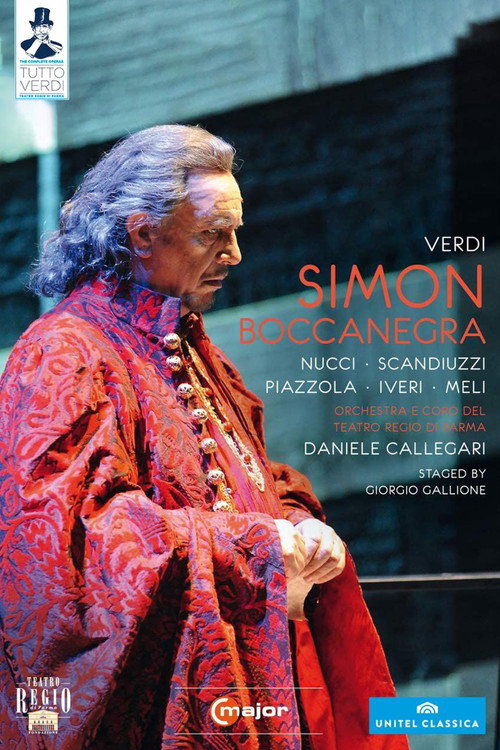
In the 14th century, Genoa was torn apart by strife between the patricians and the plebeians. The sailor Simon Boccanegra and his lover Maria Fiesco bore the brunt of these internal conflicts: Maria’s father was none other than the city’s doge, the patrician Jacopo Fiesco. When he learnt that Maria had borne Simon a child, he placed his daughter under house arrest. The two lovers had entrusted their daughter to an elderly servant, but she died, and the child mysteriously disappeared. ‘Simon Boccanegra’ is an opera in a prologue and three acts by Giuseppe Verdi, with a libretto by Francesco Maria Piave based on a play by Antonio García Gutiérrez. The first version premiered on 12 March 1857 at La Fenice in Venice. A second version, with a libretto revised by Arrigo Boito, premiered 24 years later, on 24 March 1881, at La Scala in Milan. From the box set of 27 Verdi operas, “Tutto Verdi”. Recorded live at the Teatro Regio in Parma on 23, 25 and 28 March 2010.
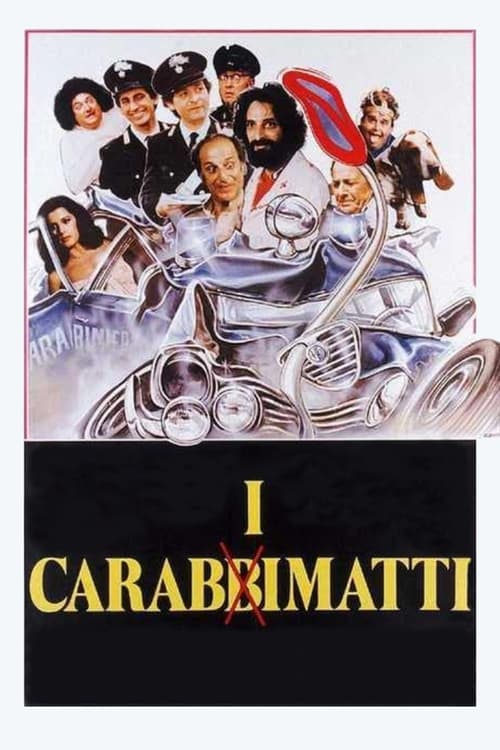
Two fools eventually become Carabinieri, and jump from a trash situation to another.
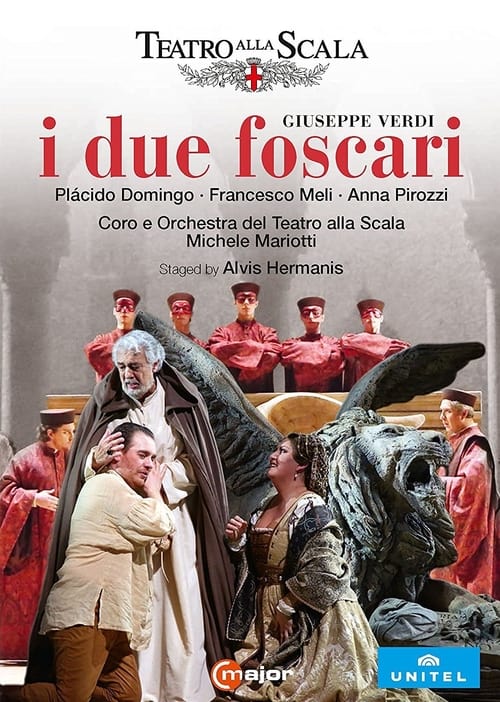
In 15th-century Venice, Jacopo Foscari, son of the Doge of Venice Francesco Foscari, is to be tried by the Council of Ten for a crime of which he claims to be innocent. The Foscari family’s sworn enemy, the vindictive Jacopo Loredano, treacherously secures his sentence of exile. Despite the pleas of Lucrezia, Jacopo’s wife, the unfortunate father is forced to sign his son’s banishment order, even though he is convinced of his innocence. The young man dies of despair just before the real murderer comes forward. Loredano secures the removal of Francesco Foscari, who collapses, lifeless. "I due Foscari" is an opera in three acts by Giuseppe Verdi, with a libretto by Francesco Maria Piave, which premiered at the Teatro Argentina in Rome on 3 November 1844.
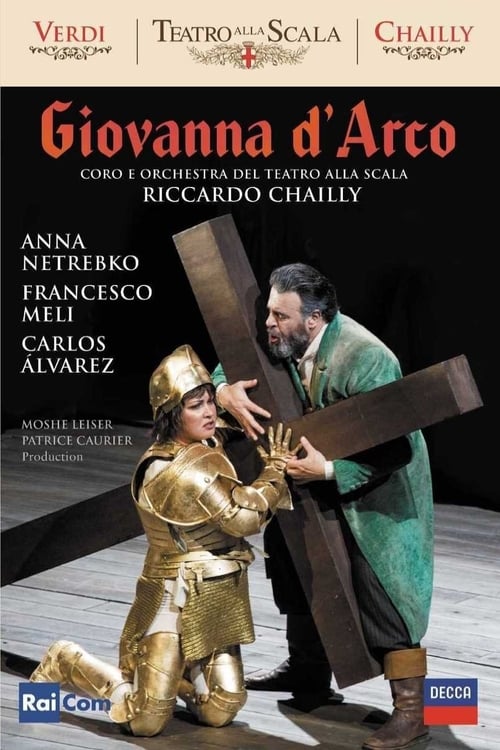
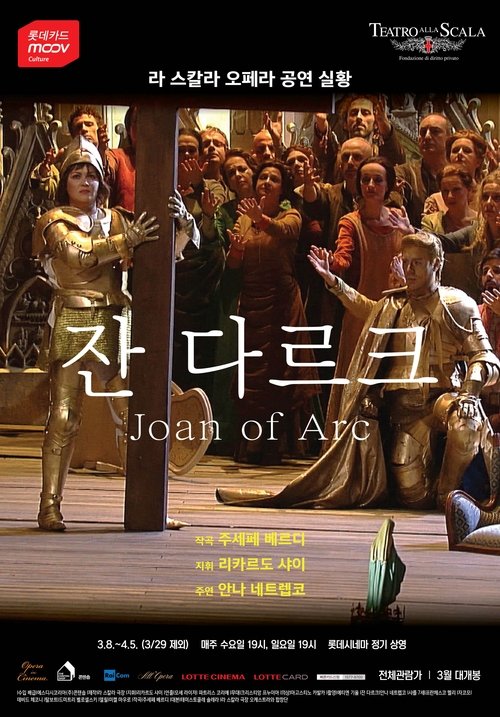
"Giovanna d'Arco; ossia, la pulzella d'Orléans" is an operatic dramma lirico with a prologue and three acts by Giuseppe Verdi to an Italian libretto by Temistocle Solera. The opera partly reflects the story of Joan of Arc and is based on a play by Friedrich von Schiller, although claimed by the librettist to be "an entirely original Italian drama." If the thought of Anna Netrebko strutting her stuff in a suit of armour and tin hat sets your factor tingling then this is a must. It's an inconsistent opera but has some quite wonderful music along the way. The rest of the cast is good and the production won't offend either. Get it for Ms Netrebko's incredible performance alone.
The recording took place in Teatro Farnese di Parma, a kind of "mini-Verona" stage, but under roof. Probably good acoustics. But that doesn't rescue this perfomance of the Requiem mass, the fault is mainly being the conductor's, Yuri Temirkanov. He doesn't at all seems inspired of this work and not interested in whats happens on stage, if judged by the video. Particularly, he seems unintersted in the choir. The tenor, Francesco Meli, delivers a very inspired Ingemisco, but the other soloists are probably affected by the conductor.
The Count Di Luna believes that his younger brother was murdered years before by a vengeful gypsy but still hopes that he may be alive. When he attempts to court the beautiful Leonora, he is enraged to discover that she has a lover – the troubadour, Manrico. Manrico and the Count duel, and afterwards Manrico reveals to Azucena, the woman he believes to be his mother, that when he had the opportunity to kill the Count he felt something holding him back.
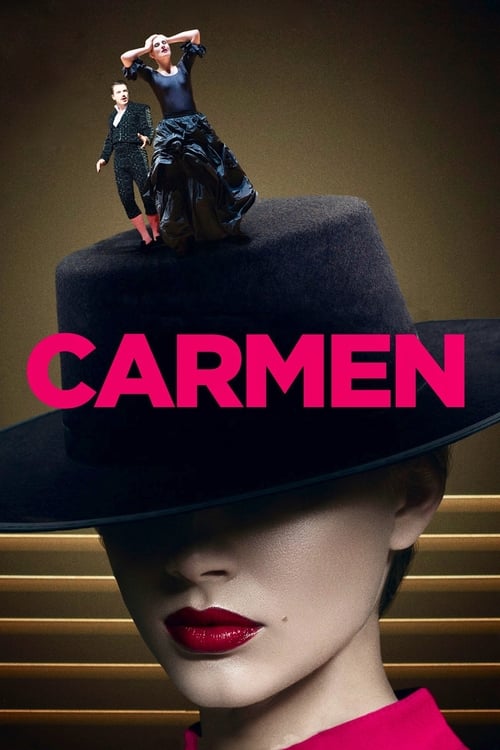
This ever-popular opera is given a fresh point of view in Barrie Kosky’s highly physical production, originally created for Frankfurt Opera. The Australian director is one of the world’s most sought-after opera directors, whose Royal Opera debut with Shostakovich’s The Nose in 2016 was greeted with delight. For Carmen he has devised a far-from-traditional version, incorporating music written by Bizet for the score but not usually heard, and giving a new voice to the opera’s endlessly fascinating central character.
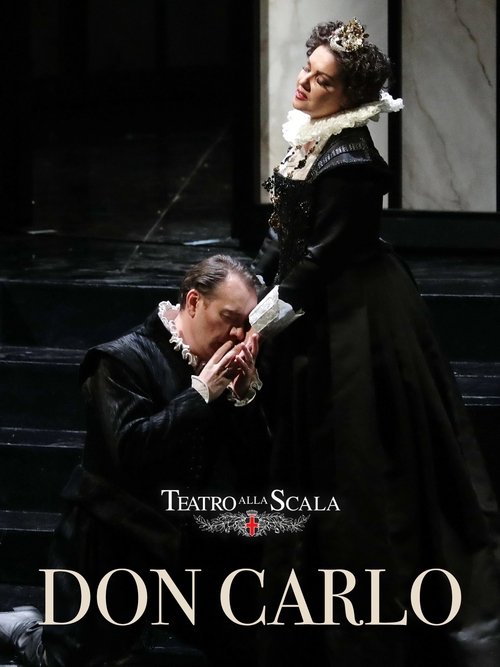
Premiere of the 23/24 season at the Teatro La Scala of Milan, broadcast live. The story of Verdi's opera is based on conflicts in the life of Carlos, Prince of Asturias (1545–1568). Though he was betrothed to Elisabeth of Valois, part of the peace treaty ending the Italian War of 1551–59 between the Houses of Habsburg and Valois demanded that she be married instead to his father Philip II of Spain.
As Aragon descends into unrest, a count jealously fights for a noble lady's heart. But she has already given it to a passionate troubadour whose mother holds a terrible secret. This Verdi masterpiece overflows with dramatic tension and musical geniality, resulting in a story that increases in intensity throughout. Maria Agresta plays the unfortunate Leonora alongside Ludovic Tézier and Francesco Meli as her rival admirers in this new production at the Teatro Real.
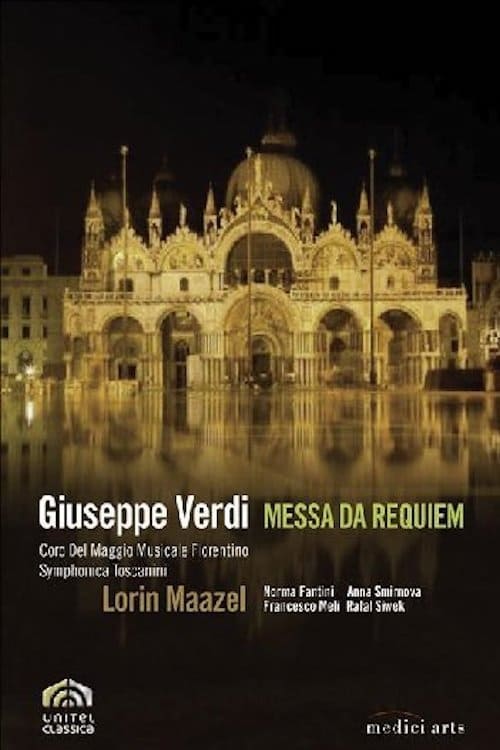
The production itself is quite beautiful: recorded in the Basilica di San Marco in Venice in November 2007, it highlights the cathedral's splendor, the reverent audience, the soloists, orchestra and chorus with near-perfect cinematography. The soundtrack is also acceptable, which may have been quite a task to achieve, given the Basilica's over-reverberant acoustics. Alas, the performance itself does not rise to the occasion. Despite the occasional minor insecurity in ensemble and a visible lack of joy, the Symphonica Toscanini musicians play well, the Coro del Maggio Musicale Fiorentino members sing equally well, and the soloists are more than adequate, almost tangibly trying to excel.
No description available.
Andrea De Rosa's production of Guiseppe Verdi's Liguria-set masterpiece about the eponymous 14th century Doge of Genoa. Ludovic Tezier is the Doge, Andriy Yurkevych conducts.