Luca Ferri
Directing
Biography
Luca Ferri is a self-taught Italian filmmaker, photographer and writer. His films have screened in festivals and galleries internationally.
Known For
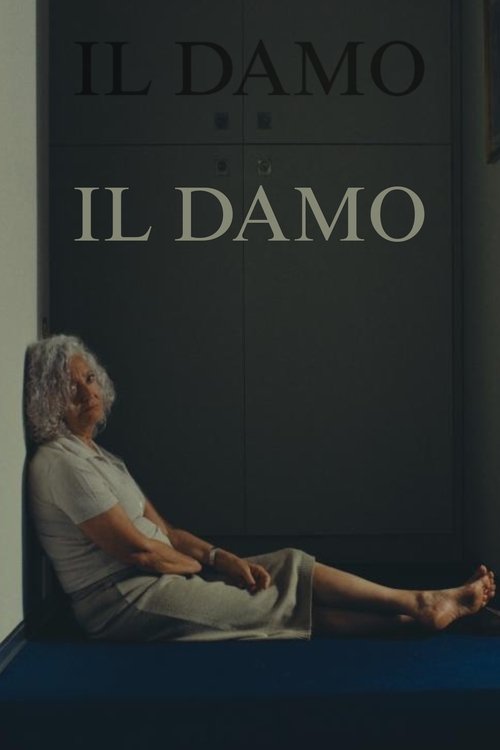
For eight years, Ferdinando has stopped speaking with people. In the solitude of his Milan apartment, he cooks, practices singing, and does an improbable form of gymnastics. He is paid to keep company to Genziana, a wealthy and cultured lady, who needs to connect with a deep soul akin to her own. Ferdinando reads her passages of literature. She narrates the happy fragments of her life, now vanished: she is a widow, her children are far away, the house is empty and silent. In his free time, Ferdinando visits modernist architecture and spiritual places. His isolation is interrupted by calls from Domenico, an eccentric who rambles about lofty subjects, aware that he cannot break his friend's mutism.
Il Damo
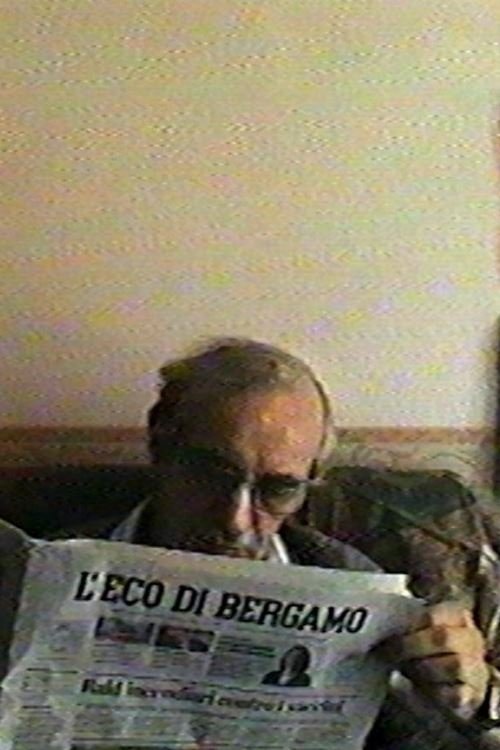
This documentary is the result of a series of visits the filmmaker makes over the course of a year to the house of Pierino, a cinephile and a fascinatingly organized man.
Pierino

Marco Belelli, aka Divino Otelma, is a well-known Italian philosopher and television personality. He has 6 degrees and owes his notoriety to his past career as a magician, chansonnier, politician. He is also the founder of the Theurgical Order of Elios and the Church of the Living, a cult with more than 20,000 followers, in which he has the role of a self-proclaimed God. Obstructed in the first stages of its production by the Covid-19 pandemic, the film unfolds over one long year of exchanges at distance between the director and the “Divine”, through Skype conversations in which the manifold topics relating to his multifaceted existence are treated. Significant figures who have been variously connected with his earthly life are also involved in this long journey of knowledge, contributing with their precious testimonies and blurring further our understanding of such a complex and layered figure.
The Last Life of Otelma the Divine
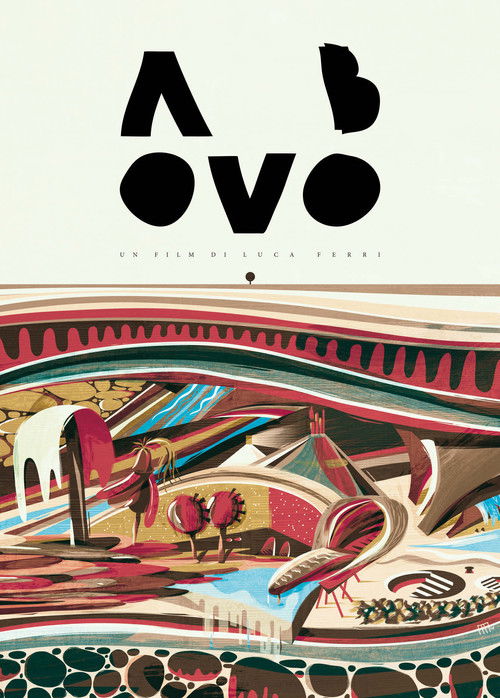
In a desert and hostile paradise, between mountains of sand and solitary camels in perpetual journey, life is renewed with a promise of love in the shade of a lone tree. Adam and Eve have a chance. The last chance to heal and create a new progeny of more decent human beings.
Ab ovo
A pair of lovers spend together a century old while the mode, objects and films are followed in a slow and inexorable descent toward the horror. Their obsession with octagonal knob of the coffee and the anonymous design will accompany them along the passing of decades. Aging and slowly losing his strength, but never the clarity, prefer to exclude the world, obscuring and sealing the shutters of their homes and turning in on themselves, leafing through old encyclopedias of extinct animals.
Colombi
Franco Piavoli in his world.
Habitat [Piavoli]

Abacuc lives in a railway house, with a garden circumscribed by the train tracks. He doesn’t speak a word, but distant voices can be heard from the phone. He spends his days walking around the cemetery, the only comforting place that seems to shelter him from the city. The man wanders among the tombstones corroded by time, seeking long forgotten names that bring him back to a time forever gone. He’s “the last man,” maybe a survivor.
Abacuc
No description available.
Sì

A man, inside his kitchen, is preparing his packed lunch. He has decided to visit the Brion Tomb, a monumental funeral complex designed and built by the Venetian architect Carlo Scarpa. It was commissioned by Onorina Brion Tomasin to honour the memory of her deceased and beloved relative Giuseppe Brion, founder and owner of the Brionvega company and is located in the small cemetery of San Vito in the hamlet of Altivole in the province of Treviso.
A Thousand Cypresses
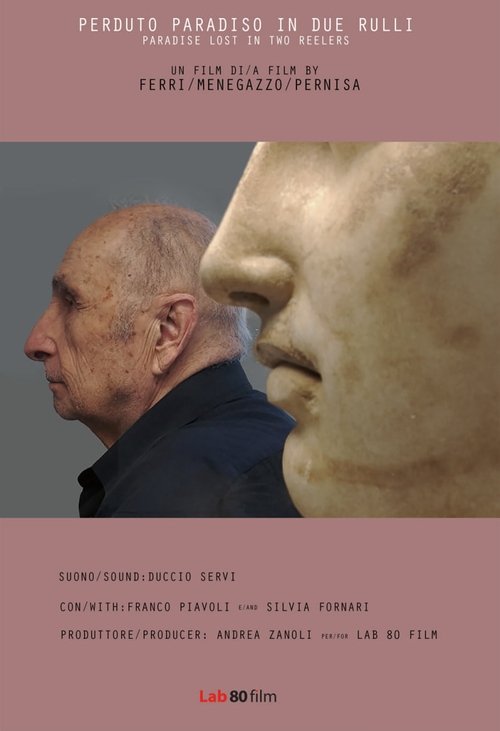
Franco Piavoli is one of the most important directors among Italian independent panorama. Through the years, He built one unique and authentic cinematographic grammar. Born in 1933, He spent his whole life in Pozzolengo, a small village near Garda’s lake. There, He imagined, wrote and - for the most part - shot his own works. We visited him in his house, with us only two reels in super 8mm, and asked him to tell us about his next movie.
Paradise Lost in Two Reelers

This documentary film is a portrait of a film critic as seen by a filmmaker. While contemporary cinema manipulates reality by hiding itself, this experiment manifests the opposite in an explicit and evident way. The film critic has been asked to travel to the city of Bergamo to participate in a 70-minute film experiment: savoring 2 kg of oysters and drinking 2 bottles of wine, while simultaneously answering 15 general knowledge questions and 15 solicitations of a private and personal nature. The outcome is a ruinous game in which the meaning of filming and the fragility of a human being merge into a melancholic testament.
Ludendo docet
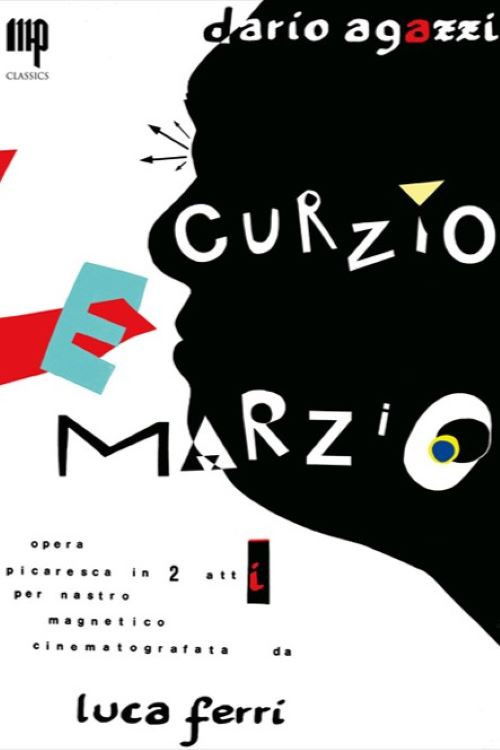
Curzio and Marzio are two picaroons who represent two sides of the same coin: the first one with moustaches, the second one with hats. Unknowingly dead, the picaroons meet in the first act and, after the introductions, they understand they are both looking for S. Alessio. At whatever time Curzio and Marzio appear, they change moustaches and hats. In the second act, the picaroons understand they are dead, and meeting S. Alessio they will discover he has their same face. A fanfare, instead of a funeral march, will end the work and their existence.
Curzio e Marzio
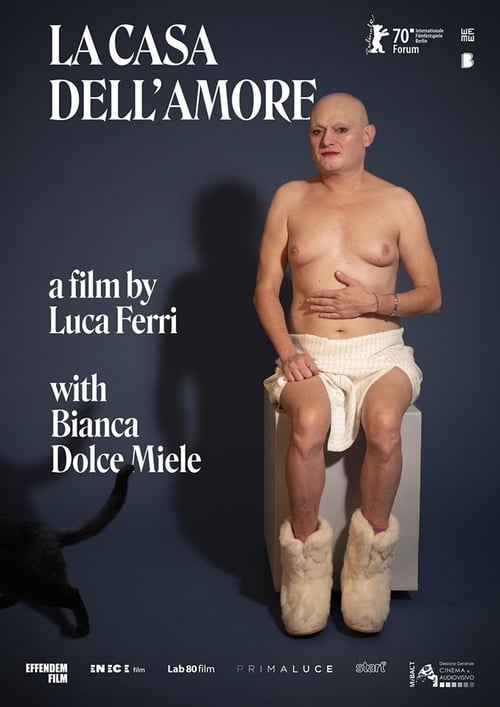
Bianca is a trans sex worker, whose life and work play out in her Milan flat. The camera follows her into her tiny realm: phone calls with clients, philosophy, sex and cigarettes, sing-songs with friends, conversations with her faraway girlfriend.
The House of Love
three granddaughters with the same mechanical voice write a letter to their “dear grandpa”. maybe they are twins, surely they resemble each other like sisters. they find themselves in different countries, yet in the same place. they confess their miserable and paralyzed lives to their octogenarian despot, asking him the reason for his resentment for goethe, calvino and wallace and the reason for his unmentioned and unmentionable love-hate for stravinsky. the appearance of the grandfather will clarify all doubts.
Dear grandpa

Little René lives in a house in the woods of Slovenia. He spends his summer holidays playing alone, fantasising about defending the national borders from an enemy attack. The child designs and builds wooden toy weapons and then immerses himself in nature, hiding in abandoned bunkers from the Second World War and staging imaginative battles.
René Goes to War

An old man takes his beloved dog to a severe hospital run by a Russian doctor who looks like Adorno. His quadruped’s blood has to be cleaned by some automated machines. During his long and draining wait, he observes the medical procedures and all the assistants’ actions reflecting on the pleasure he feels in relying on the automatisms of the mechanical procedures.
Cane Caro
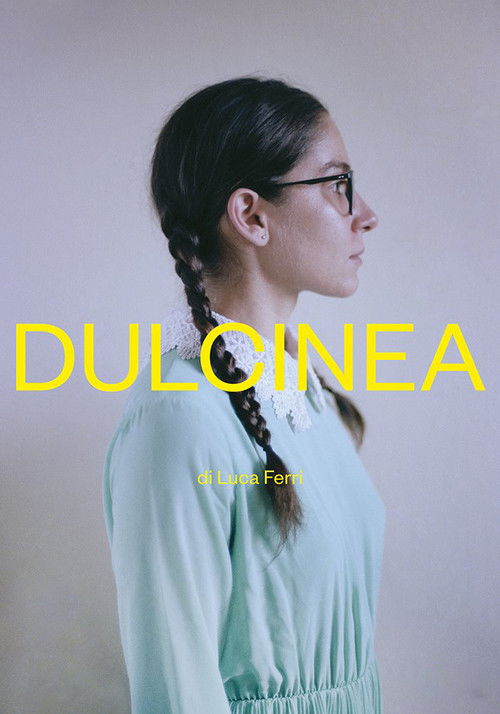
A young girl is getting ready to welcome a client at her apartment.The man, transposition of Don Quixote, following a precise ritual, devotes himself to the maniacal cleaning of four rooms. The girl, personification of Dulcinea, eats, reads, paints her nails and smokes. She dress up and she get undress as if Don Quixote is not present there and as if there is no relationship between them. The client, following a pathological scheme, steals some girl’s objects, he puts them in a plastic bag and than inside a small briefcase. Sometimes the objects he fetishizes are destroyed like victims of maniacal bursts. This mechanism leads to the repetition of a celibate and solitary rite.
Dulcinea
![Magog [o epifania del barbagianni]](https://image.tmdb.org/t/p/w500/cbnAnMz78JHGo98EXw23tztpr7E.jpg)
the po valley as place of the absurd. architectural stratifications and building failures. palms, urban voids, urban fullness and neon palms. pools built up in 5 days. neo-gothic villages reconstructed. the external meaning of this consumption is the same internal failure of its flesh puppets. words stolen by a recorder, in secret. the masquerade of reality as simulacrum of the truth, humans and their artifacts are put on stage.
Magog [o epifania del barbagianni]
A circular urban symphony, flanked by the original music score "16/49 (rondeau) per organo sintetico 2014" by the composer dario agazzi. Using black and white super8 film, the directors intend to investigate the work of the architect Luigi Mattioni, a leading figure in the transformation of milan after world war II. Ridotto Mattioni approaches both architectural and musical elements in a recursive way, retracing the signs of change of a city that is defining its identity once again.
Ridotto Mattioni
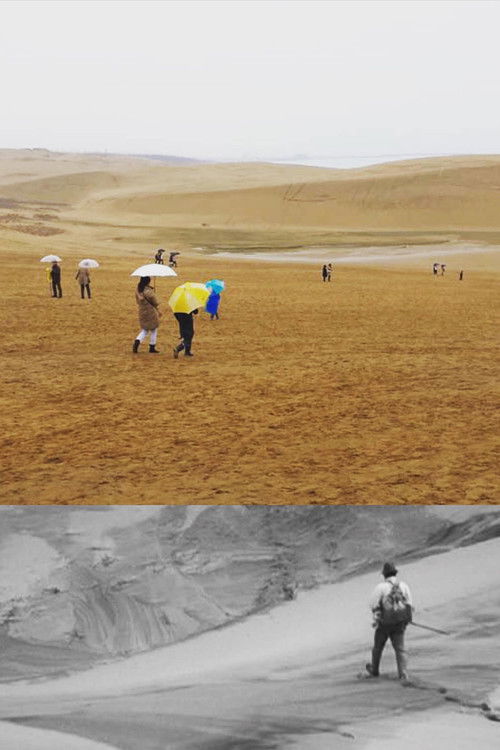
In Tottori, Japan, the smallest desert place in the world, where Hiroshi Teshigahara directed his film “Woman in the Dunes” (1964) every year more than two million people come to visit the place, and through their natural movements reflect constantly changing nature of this unusual landscape and its history.