Directing
Short film.
Video art by George Barber.
Thirsty? The longing created by advertising is satirised in this remix of Schweppes advertising.
The inside story of the long-running Hovis TV advertisement as Barber’s voice-over highlights the psychological emptiness of the narratives delivered daily by consumer culture.
On the left side of this video diptych sequences of a typical Hollywood movie of the genre "airplane catastrophy" are showing, while on the right side a man liying in a bath tub talks about how he gradually came to terms with the actual trauma of such a catastrophy and his fear of water. Not only by the contrast of documentary interview and fictional processing of the same topic, but by the redundancies of sound and images between both "panels", telling itself and being told has come to the point.
Made using footage from USA Olympics in Los Angeles 1984 and snippets of Alistair Cooke's America: A Personal History of the United States. The footage was combined at Goldsmith's Art Department using an unusual Grass Valley mixer that had oscillating wipes which created the signature colours and wiggly lines. (Modern Art Oxford) Barber was always the most polished of the Scratch video artists, and Tilt shows his ability to make seductive, easy-viewing pieces, while maintaining a subversive undercurrent.
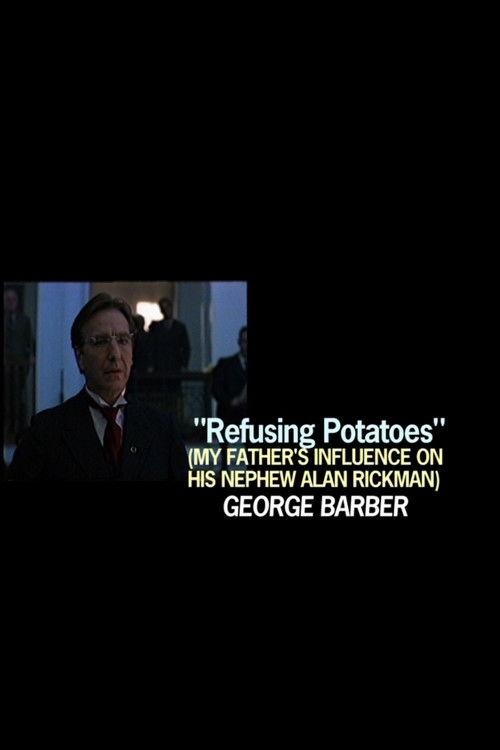
Barber constructs a curious biography around his father's relationship to his nephew Alan Rickman who he dislikes one Christmas for refusing to eat potatoes – and the Barber family are later shocked at the Premiere to find that Rickman has ripped them off and used their father's speech in the movie Michael Collins.
This revolves around Tim West, an advertising executive who is developing a Channel 4 programme on cooking for terrorists. Disillusioned by the hyper-reality of the media world, he joins Robert de Niro evening classes, but also falls under the pastoral influence of Johnny Morris. From the opening images of night-time, car-ridden streets accompanied by languorous sax on the soundtrack, through to the sub-Chandleresque voice-over narration, Taxi Driver II strikes you with its clever knowingness. But it's more than just a clever nod in the direction of contemporary film noir, just as it's more than an incestuous joke at the expense of the London based media world: it's a telling comment on the contemporary media culture of postmodernism.
Actor Brian Hickey performs a parody of a TV weatherman in a film which reminds us just how mannered most weather presentations are.
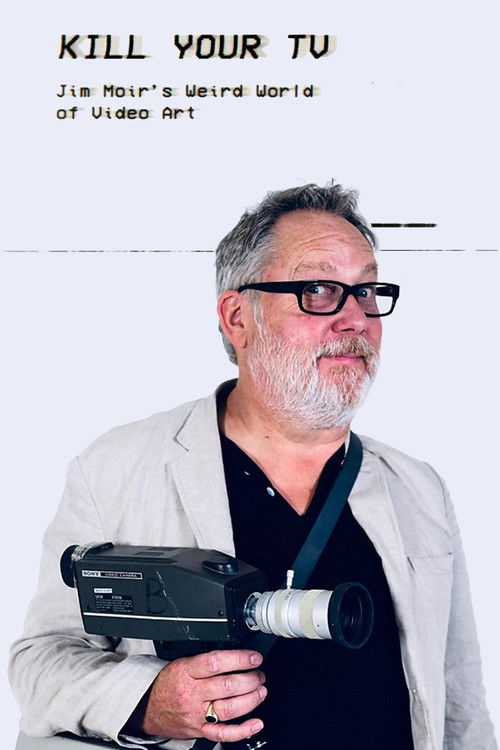
Jim Moir (aka Vic Reeves) explores Video Art, revealing how different generations ‘hacked’ the tools of television to pioneer new ways of creating art that can be beautiful, bewildering and wildly experimental.
A film about the discrepancy between the random and the intended. Chance meetings, chance adventures, holiday anecdotes and the slowed down inevitability of an eagle catching a fish.
George Barber deconstructs two feature films, The Blue Lagoon and The Deep, pillaging ‘moments’ which when re-edited constitute a new totality.
A comic monologue, I Was Once In A Shit Show is a recollection of an imaginary art event that tallies with what most artists experience when they are involved in putting on an unfunded group show.
A meditation on product history. A lo-fi dramatisation of Vidal’s Sassoon’s momentous, groundbreaking invention of the shampoo Wash & Go.
Following Your Heart uses off-air adverts and minor films. The central conceit is to take found footage and manipulate it into a new artistic experience. The adverts all relate to the heart in some way, either through health or in the usual capitalistic fashion asking people to consume by appealing to their emotions. A variety of adverts are used, ranging from the mobile campaigns, credit cards, bread, new DVDs, to Fantastic Voyage, the classic film about a miniature craft inserted into some poor souls blood stream. Yet, as the piece intimates, following your heart does have consequences – it is not something we can always do – in shops or in life. The messages start to collide and contradict.
Scratch Free State has great energy and straddles an interesting line between a popular culture and fine art sensibility. This piece was made at the same time as Tilt. It is probably the best example of what an artist can do re-cutting and processing David Attenborough's Life On Earth programmes.
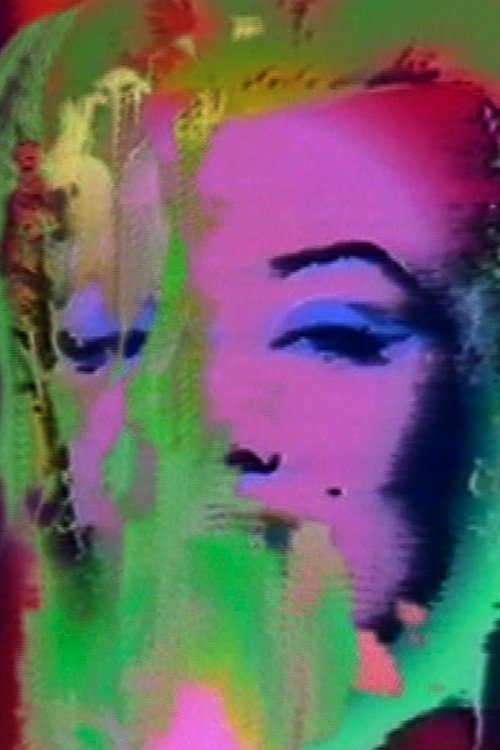
A remixing of Warhol’s Marilyn Monroe prints.