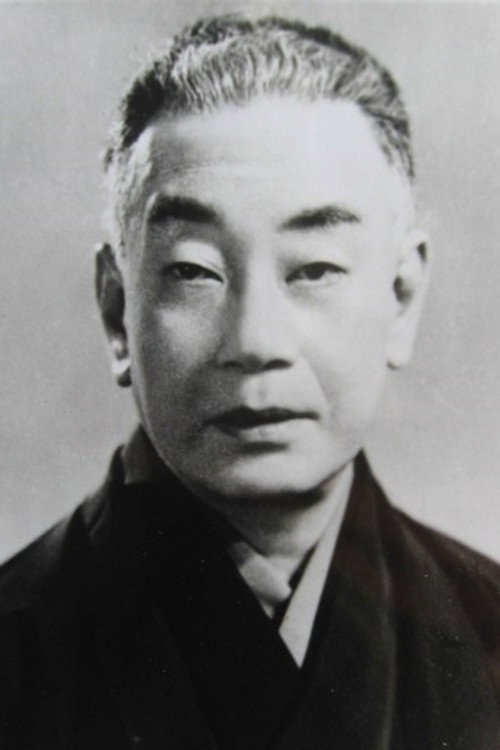
Ganjirō Nakamura II
Acting
Biography
Nakamura Ganjirō II was a Japanese kabuki and film actor. He appeared in more than 70 films between 1941 and 1980, directed by notable filmmakers such as Yasujirō Ozu, Kenji Mizoguchi, Akira Kurosawa, and Mikio Naruse.
Known For

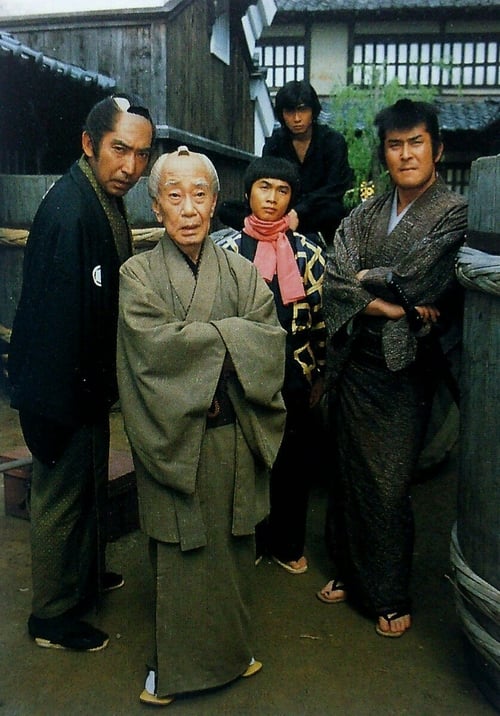
Nakamura Mondo was relegated to a post in Hachioji from the Minamimachi Bugyōsho and he has retired from professional assassin. But one day he was ordered to return to the Minamimachi Bugyōsho. Shikazō worked behind the scenes to get Mondo back to the Minamimachi Bugyōsho. Shikazō asks Nakamura Mondo to kill a man, once Mondo refuses but he is blinded by big money and eventually take the offer. Mondo restarts killing villains again with Kazarishokunin no Hide and Nawate Samon.
Hissatsu Shigotonin

Yahagi Michiko is accosted and raped walking home one evening. From there she maneuvers the logistics of the police, hospital, and criminal justice system while balancing her home life including romantic relationships.
The Rape

Taking its title from an archaic Japanese word meaning "ghost story," this anthology adapts four folk tales. A penniless samurai marries for money with tragic results. A man stranded in a blizzard is saved by Yuki the Snow Maiden, but his rescue comes at a cost. Blind musician Hoichi is forced to perform for an audience of ghosts. An author relates the story of a samurai who sees another warrior's reflection in his teacup.
Kwaidan

Residents of a rundown boardinghouse in 19th-century Japan, including a mysterious old man and an aging actor, get drawn into a love triangle that turns violent. When amoral thief Sutekichi breaks off his affair with landlady Osugi to romance her younger sister, Okayo, Osugi extracts her revenge by revealing her infidelity to her jealous husband.
The Lower Depths

Keiko, whom everyone calls Mama, narrates her story: she's a hostess on the Ginza, 30, a widow. She describes life's vicious cycle: acting cheerful around drunks, dressing and living well to convey confidence, needing money for these expenses and for her demanding mother and brother, and knowing she's growing older.
When a Woman Ascends the Stairs

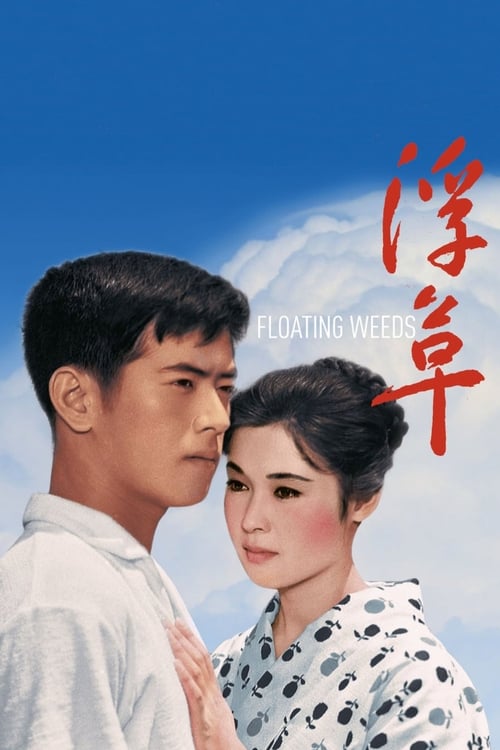
A theater troupe master's visit with his old flame unintentionally sets off a chain of unexpected events with devastating consequences.
Floating Weeds

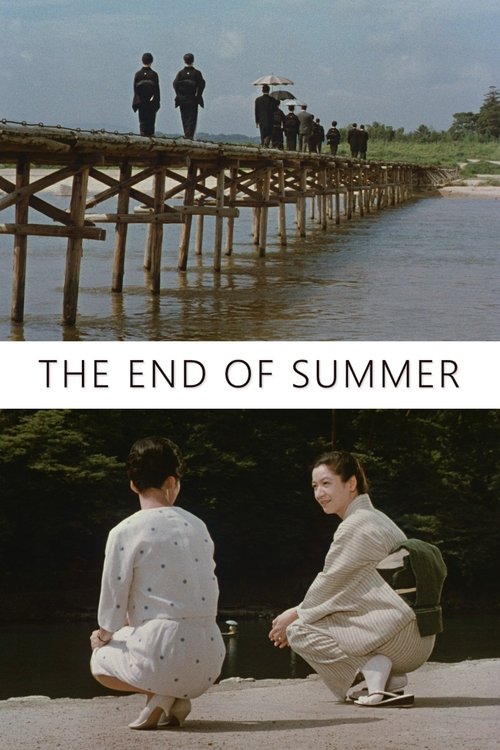
The family of an older man who runs a small sake brewery become concerned with his finances and his health after they discover him visiting an old mistress from his youth.
The End of Summer

A war widow with a young boy manages a farm with her bossy mother-in-law. When a reporter comes to interview her, the two begin an affair. He turns out to be married and won't leave his wife. Her older brother tries to marry off his children and hang on to/ extend his farm through an advantageous marriage in the face of threatened land confiscation and the desire of his children to get comfortable urban jobs instead of the backbreaking work in the paddy fields under parental control.
Summer Clouds

An Indian prince leaves his world of comfort and riches behind to wander and meditate for six years in search of spiritual enlightenment. Siddartha (Cojoin Hong) turns his back on the old religion when people are starving needlessly and holy rituals include human sacrifices. During his meditations, he is tempted by erotic dancing women, demons, and the evil machinations of his criminal cousin. Devastate to attain the spiritual perfection and become the Buddha. He travels to convert followers by his kindness and wisdom, gaining a multitude of believers when he stops an elephant from crushing a local priest. Buddha of course goes on to become one of the great religious leaders of the world.
Buddha

The legend of the birth of Shintoism. In Fourth Century Japan, the Emperor's son Ouso expects to succeed his father on the throne, but Otomo, the Emperor's vassal, prefers Ouso's stepbrother, and conspires to have Ouso die on a dangerous mission he has contrived. But Ouso prevails in the mission and returns to his father's castle under a new name, Prince Yamato Takeru. Otomo plots to have the Prince sent into even greater danger, but Otomo is unaware that the gods have favored the Prince and the outcome is far from what any of them expected.
The Three Treasures

A middle-aged husband of a younger woman finds her youth intimidating to the point that he cannot become aroused. His solution involves the introduction of his daughter's lover to his wife.
Odd Obsession

Satoko is a mistress by trade or fate: when her master, the silkscreen artist of the Kohoan Temple in Kyoto, dies, she is given to the temple's lascivious head priest Kikuchi. She is drawn to a melancholy young acolyte, Jinen, who has observed the profligacy of his cruel master and Satoko's utter dependence on the man. Jinen is both fascinated and disturbed by Satoko's interest in him; he is similarly caught between loathing of Kikuchi and of the dark circumstances of his birth and his own moral weakness. The story unfolds in a dreamlike manner—a flashback inspired by a now-infamous image on a silkscreen in the souvenir shop at the so-called Temple of the Wild Geese.
The Temple of Wild Geese

A tea master and his daughter Ogin are both Christians in feudal Japan. Ogin falls in love with a married feudal prince who shares her faith. When the Shogun bans Christianity, the situation worsens.
Love Under the Crucifix

Subu makes pornographic films. He sees nothing wrong with it. They are an aid to a repressed society, and he uses the money to support his landlady, Haru, and her family. From time to time, Haru shares her bed with Subu, though she believes her dead husband, reincarnated as a carp, disapproves. Director Shohei Imamura has always delighted in the kinky exploits of lowlifes, and in this 1966 classic, he finds subversive humor in the bizarre dynamics of Haru, her Oedipal son, and her daughter, the true object of her pornographer-boyfriend’s obsession. Imamura’s comic treatment of such taboos as voyeurism and incest sparked controversy when the film was released, but The Pornographers has outlasted its critics, and now seems frankly ahead of its time.
The Pornographers

In 221 BC, Qin Shihuangdi conquered the rest of China. Qin's great accomplishments and also his serious faults are showed in this film. Qin adopted autocratic dictatorship and led a luxurious life: abolition of feudalism and the centralization of power in the form of a now-hereditary bureaucracy loyal to himself; burning books and burying scholars; the construction of a sumptuous palace for his concubines and also the Great Wall.
The Great Wall

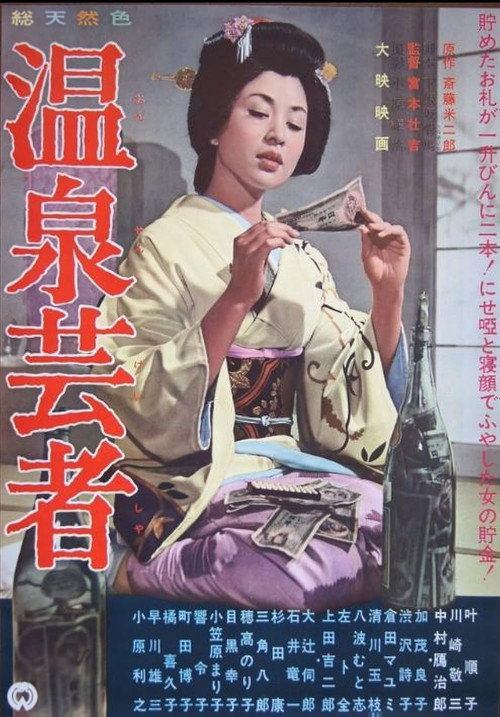
About small-time gangster Asakichi's chaotic life in the 1930s. His gambling addiction means that he must not continue working in the family business. Instead he supports himself by arranging cockfights. He becomes ex-geisha Okinu's patron and lover, and falls directly into disfavor with the yakuza.
Akumyo: Notorious Dragon

Seppuku Day 17 Ako ronins, including Kuranosuke Oishi, who were entrusted to the Hosokawa family, and the events of the two days before are depicted as a tragic romance between one of the ronins, Jurozaemon Isogai, and Omino. An adaptation of Seika Mayama play "Genroku Chusingura, the Last Day of Oishi", which tells about the torments of life and death of samurai living in feudal times.
Last Days of the Samurai

In Edo Japan, a kabuki actor seeks revenge against the three men who drove his parents to their deaths years ago.
An Actor's Revenge

No description available.
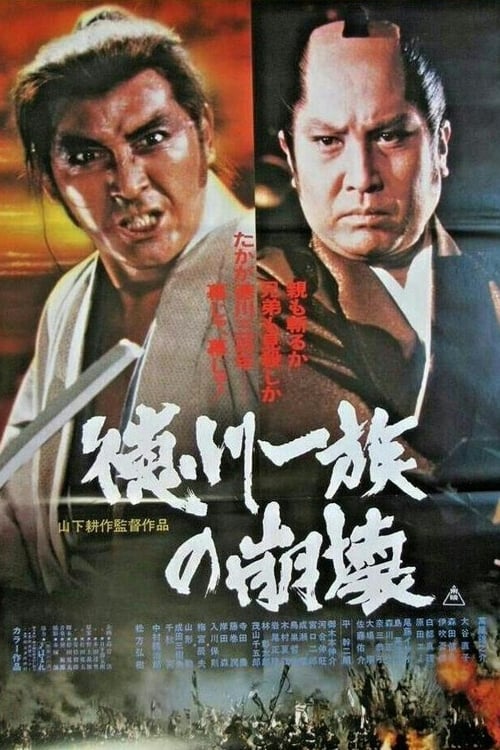
Tokugawa Ichizoku no Houkai

A touching story following young shamisen string maker, Saku. Beautiful Saku moves to Lake Yogo, known for its production of quality shamisen strings, only to find her peaceful life turned upside down when a master musician takes personal interest in her.