FEEL IT.STREAM
Christophe Cotteret

Christophe Cotteret

Directing

Biography

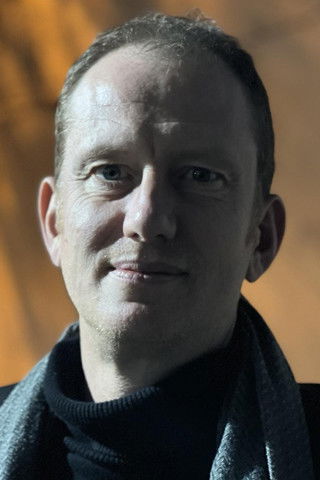
Christophe Cotteret is a French filmmaker and theater director known for his politically engaged documentaries and his sustained exploration of contemporary Middle Eastern and African sociopolitical movements. His work, marked by a deep attention to historical nuance and on-the-ground testimony, has been widely screened internationally and praised for its clarity, complexity, and rigor. Originally a stage director until 2010, Cotteret lived in Beirut from 2002 to 2006. In the aftermath of the 2006 war between Hezbollah and Israel, he initiated Projet Liban, an ambitious cycle of four documentary-theater productions presented across Belgium, France, Lebanon, Algeria, Tunisia, and Jordan. This early work established his commitment to hybrid forms and to documenting political upheaval as it unfolds. Between 2010 and 2012, he directed his first feature-length documentary, Démocratie année zéro, co-signed with Amira Chebli. The film traces the origins of the Tunisian Revolution, returning to the coal basin of Gafsa where the first sparks of revolt emerged. Premiering in 2013 at Visions du Réel in Nyon, the documentary went on to screen in more than twenty-five international festivals across Europe and the United States, later receiving theatrical releases in Belgium and France. Hailed by Positif as one of the most lucid and complex portrayals of the Arab Spring, the film solidified Cotteret’s reputation as a meticulous chronicler of political transition. In 2013, he pursued his investigation of post-revolutionary Tunisia with Ennahdha : Une histoire tunisienne, a documentary examining the Tunisian Islamist movement Ennahdha, winner of the 2011 elections. Following its leaders for over a year, Cotteret captured the internal debates and historical contradictions shaping the country’s fragile political landscape. The film first aired on RTBF, then on Arte and TV5 Monde. Critics, including Jean-Pierre Sereni, praised its ability to convey the full complexity of the moment. Cotteret later co-authored a widely discussed column in Libération, arguing against framing Tunisian politics as a simple opposition between secularists and Islamists. In 2015, he began work in Rwanda on Inkotanyi, a sweeping documentary about Paul Kagame and the politico-military movement FPR (Front Patriotique Rwandais). Premiering in competition at the 30th FIPA in 2017 and later shown at festivals including DOK Leipzig and the Pan African Film Festival in Los Angeles, the film was released in Belgian theaters in June 2017 before airing on RTBF and Arte. Critics such as Télérama and Le Monde commended its breadth, its unprecedented archival materials, and its measured approach to one of the most sensitive and debated chapters in recent African history. In 2024, Cotteret returned to European politics with White Power, au cœur de l’extrême droite, broadcast on RTBF amid the French legislative elections, during a moment when the Rassemblement National emerged as a leading political force. Concurrently, he published an opinion piece in Libération, warning against the racialist worldview underpinning many far-right movements across Europe.

Known For

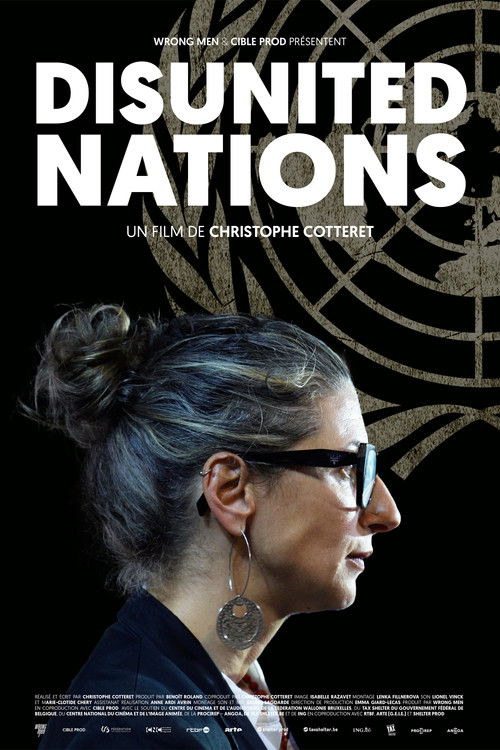
Disunited Nations
8.4

Francesca Albanese, the UN Special Rapporteur on human rights in the occupied Palestinian territories, had already labelled events in Gaza a genocide back in March 2024. Following her lead, this piece takes us deep into the heart of the institution’s crisis, as it struggles with its inability to stop the massacre of civilians.

Disunited Nations

2025
White Power: Inside Europe's Far-Right Movement
5.5

An analysis of the rise of the European far-right, increasingly present in both politics and everyday life: an inquisitive journey through France, Germany and Belgium.

White Power: Inside Europe's Far-Right Movement

2024
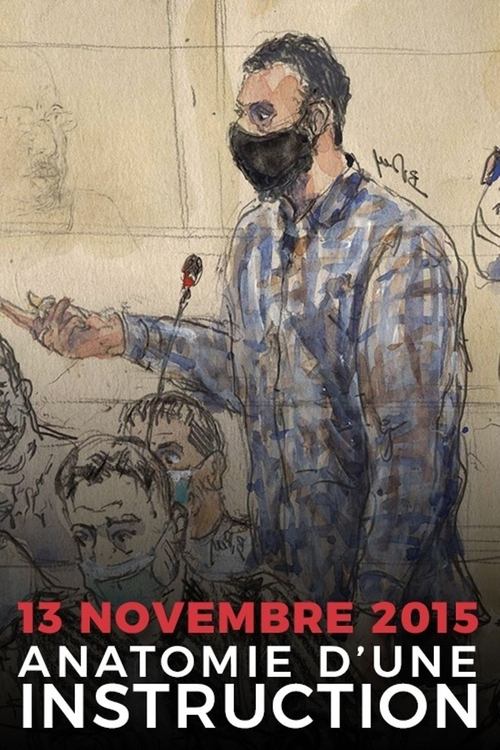
13 novembre 2015 : anatomie d'une instruction
8.0

On November 13, 2015, ten months after the attacks on Charlie Hebdo and the Hyper Cacher at the Porte de Vincennes, three jihadist commandos, divided between the Stade de France, the Bataclan and the terraces of the 10th and 11th districts of Paris, spread death in the capital. How were these men, mostly French and Belgian, some of them actively sought, able to cross Europe and carry out their plans without being worried? Faced with the loopholes revealed by the attacks, fourteen European countries, supported by Europol and Eurojust, the EU's police and judicial cooperation agencies, pooled information and resources on an unprecedented scale to identify and track down the culprits, accomplices and sponsors of these attacks.

13 novembre 2015 : anatomie d'une instruction

2022
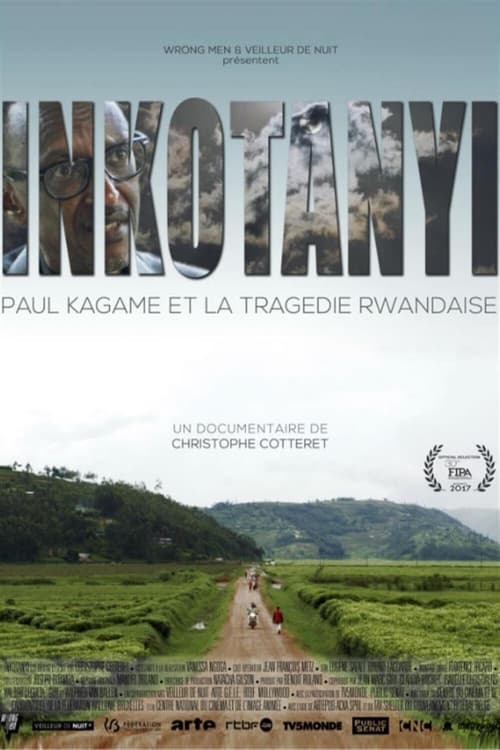
Inkotanyi
6.0

For the first time, light is shed on the Inkotanyi politico-military movement that ended the genocide of the Rwandan Tutsi in 1994 and is led by Paul Kagame, currently President of Rwanda.

Inkotanyi

2017
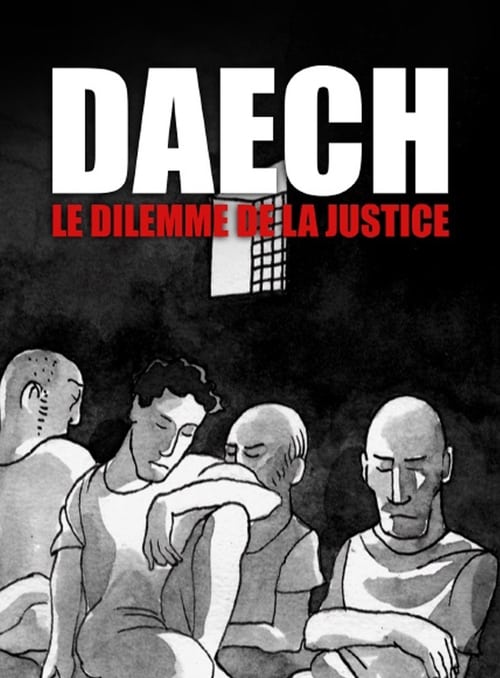
Daech, le dilemme de la justice
N/A

What should we do of former jihadists returning to the country, who have been fed on radical ideologies and extreme violence for the past five years?

Daech, le dilemme de la justice

2019
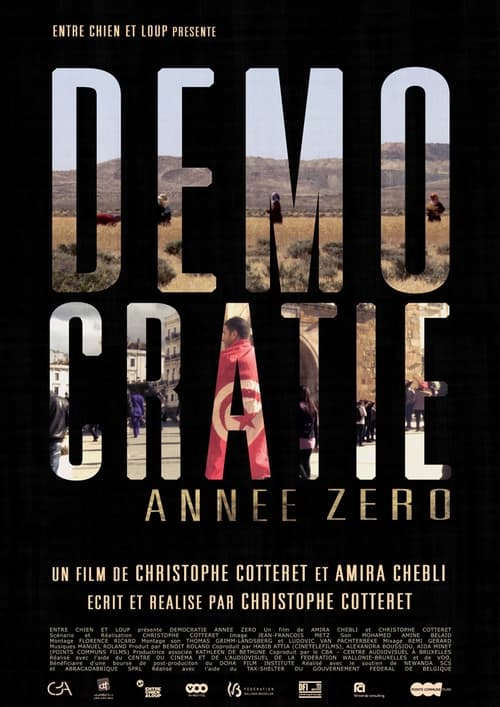
Démocratie Année Zéro
6.2

No description available.

Démocratie Année Zéro

2014