Camera
The ‘Casa do Povo’ cultural centre in São Paulo, an icon of the secular Jewish workers’ movement: a crumbling theatre flanked by staircases, entryways and corridors. Construction noise drones away in the background, clinking crockery, a broom sweeping over tiled floors, an expressive façade of countless adjustable panes of glass covered by a patina. It’s October 2016 and a group of young people are preparing a preview of Bickels [Socialism]. The venue is to form a prologue to the completed film, which tours 22 buildings in Israel designed by Samuel Bickels, most of which for kibbutzim. Dining halls, children’s houses, agricultural buildings, bright structures inserted into the Mediterranean landscape with great ingenuity. An architecture with a sell-by date: That many are now empty or have been repurposed at best is linked to the decline of the socialist ideals they embody.
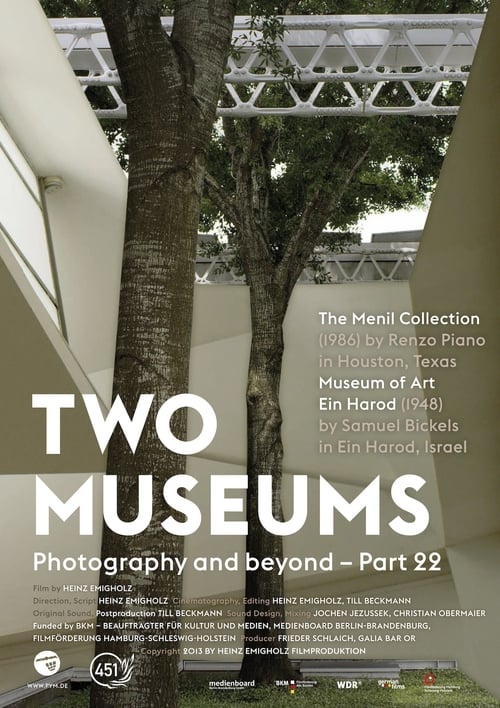
The film juxtaposes/compares two museums: The Museum of Art, Ein Harod, Israel, which Samuel Bickels (1909-1975) built there in 1948, and The Menil Collection in Houston, Texas, built by Renzo Piano (b. 1937) 1986 . The method of natural lighting in Bickels‘s construction was the direct model for Piano, who adopted for his construction at the request of its patroness Dominique de Menil.
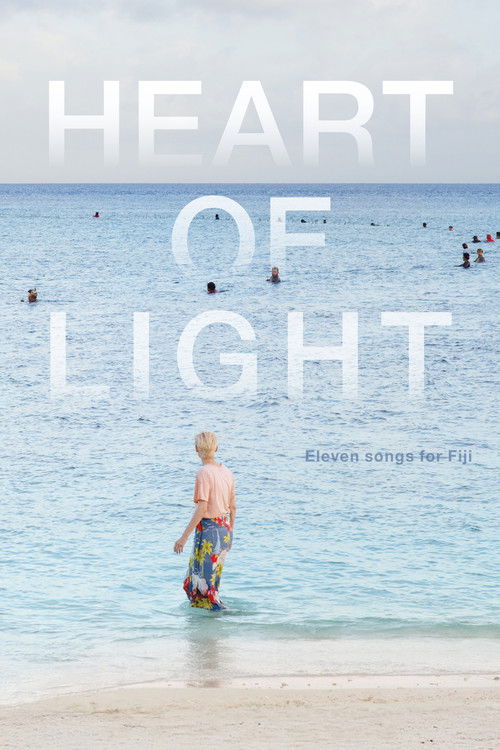
After decades abroad, Iona returns to her childhood home on Fiji, sensing that there she might find the answers to many questions she has about civilisation and its discontent.
A film director confides in his interlocutor. He talks about the working process, about creative blocks, about artistic crises and expressive forces. At some point, the idea takes hold that this conversation could be turned into a film. And this is the very film we’re watching the two of them in.
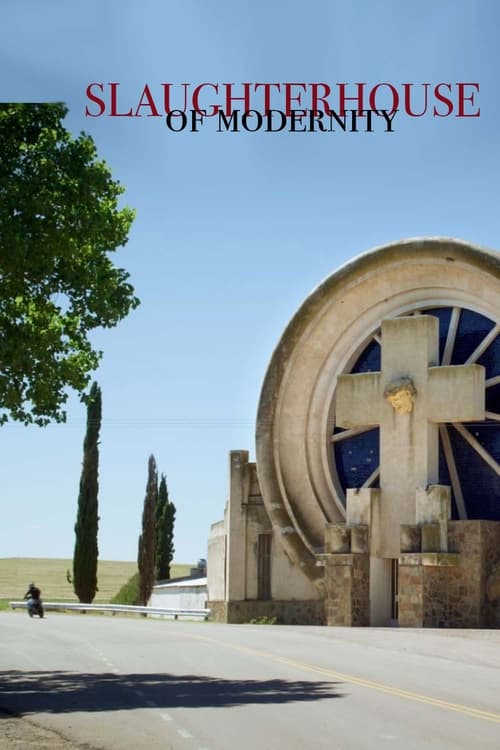
Contemporary cinema’s preeminent chronicler of architecture and its intersection with the ever-present crisis of 20th-century modernity, Heinz Emigholz returns with an alternately mournful and sly treatise on how the presence—and, in some cases, absence—of municipal and communal building architecture is inseparable from capitalist ideology. Focusing mainly on cities and provinces in Argentina, Germany, and Bolivia, Emigholz’s latest film is a work of quiet observation and historical excavation. From slaughterhouses in Salamone to the flooded former spa city of Epecuén to the newly built Humboldt Forum in Berlin, the film demonstrates the effect of capital on public spaces, where creation and destruction go hand in hand, and as always, Emigholz makes the journey one of intellectual force and cinematic beauty.
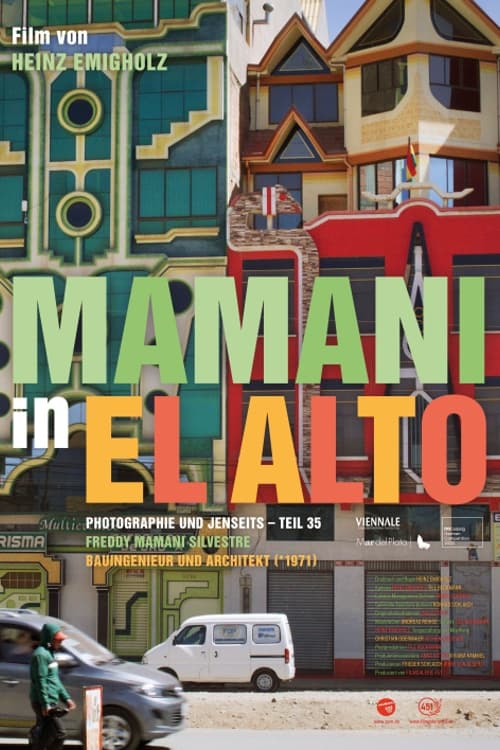
His buildings are garish, colorful and completely overloaded. Columns and glittering chandeliers everywhere, and way too much of everything. The Bolivian civil engineer and architect Freddy Mamani Silvestre (*1971) builds houses in El Alto for a nouveau riche upper class of the Aymara, the largest indigenous ethnic group in Bolivia.
Worn-down pavements, broken paving stones. Trees that jut out of the concrete, casting shadows on to crumbling façades. The centre of Tbilisi in the summer of 2013. Glimpses of side and main streets, over railings and under balconies, of an architectural cacophony. The voiceover spoken by Natja Brunckhorst reflects on the nature of streets and public spaces.
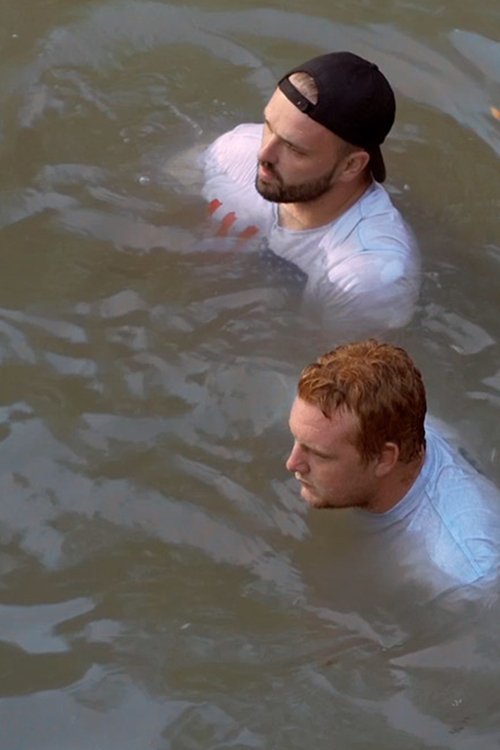
Named after its setting, the French river Vidourle, Yalda Afsah’s film documents a strange and subtly unnerving choreography, capturing a group of young men performing what could be a ritual, a spectacle, a game, or a fight. In their collective movements as well as individual moments of concentration, anticipation and occasional forlornness, the adrenalin-fuelled adolescent protagonists seem to embody the frailty of the human condition awaiting an environmental change, much like an unexpectedly forceful current in a river.
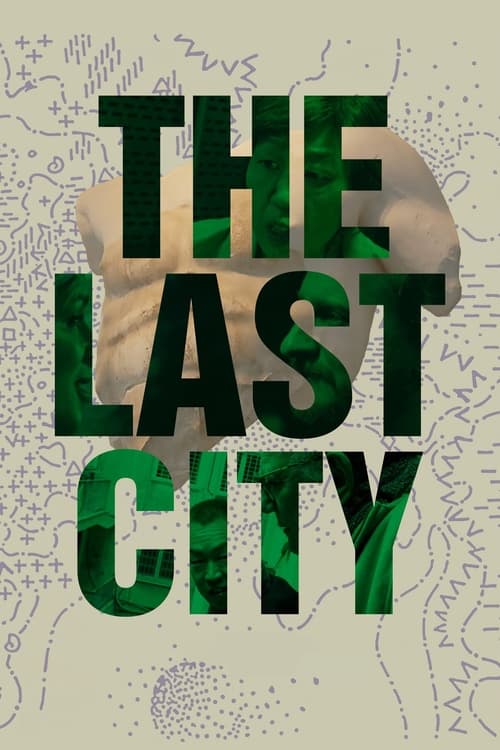
An archaeologist and a weapons designer, who knew each other in a previous life as a filmmaker and a psychoanalyst, meet at an excavation site in the Negev desert and begin a conversation about love and war, which they continue in the Israeli city of Be’er Sheva. A series of encounters with alternating actors in different roles ensues, which leads the viewer through the cities of Athens, Berlin, Hong Kong and São Paulo. Among those appearing are: an old artist who meets his younger self; a mother who lives with her two grown-up sons, a priest and a policeman; a Chinese and a Japanese woman; a curator and a cosmologist.
The film shows the Antivilla built by Arno Brandlhuber in Potsdam, Krampnitz, between 2010 and 2015. The building has the project number 0131 in the catalog of works by Brandlhuber +. The shooting of Antivilla took place on April 4, 2016 in preparation for the feature film Streetscapes [Dialogue].
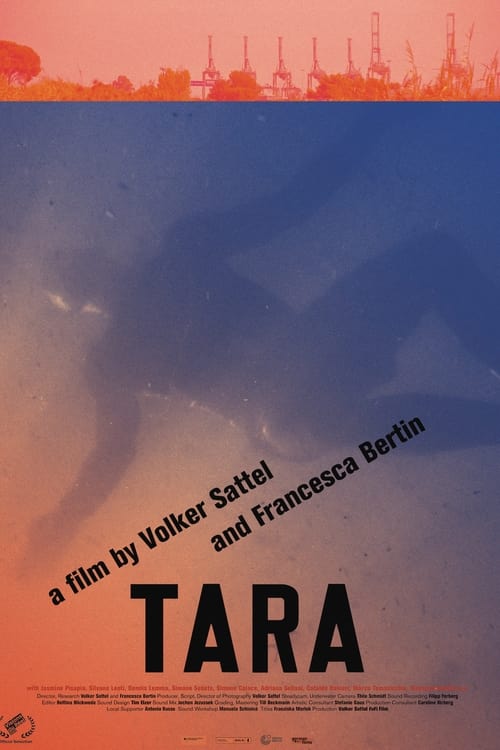
The Tara is a river on the outskirts of Taranto whose waters are believed to have healing properties; bathing there is a tradition for the inhabitants of the city. Starting from this bucolic place, Volker Sattel and Francesca Bertin take us on a journey through a territory where myths clash with reality and where so-called “progress” has taken a heavy toll on nature and society.
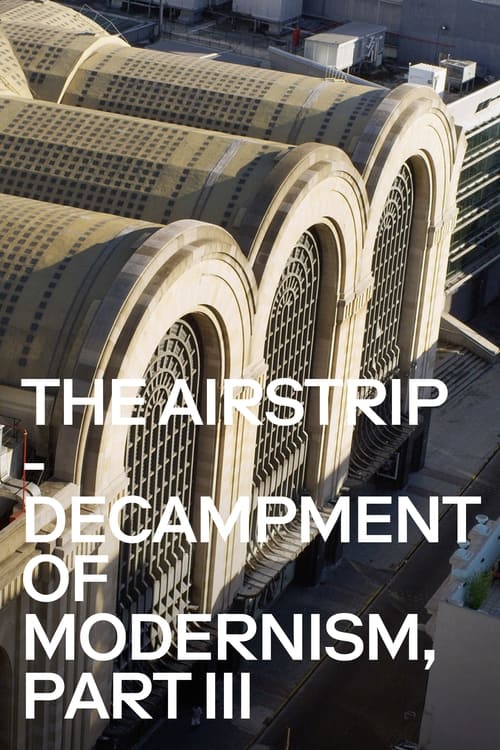
In the 21st part of his Photography and beyond series, Heinz Emigholz projects as usual a series of structures into our brains and from there on to the screen: Airports, motorways and bus stops; department stores, market halls and warehouses.
The final part of Heinz Emigholz’s "Streetscapes" series is again a triptych. A prologue examines three buildings from the 1930s designed by Julio Vilamajó in Montevideo which could have inspired the work of Eladio Dieste, the subject of the main part of the film. The industrial and functional buildings presented span the period from 1955 to 1994; their organic brick construction is astonishing and inspiring.
No description available.
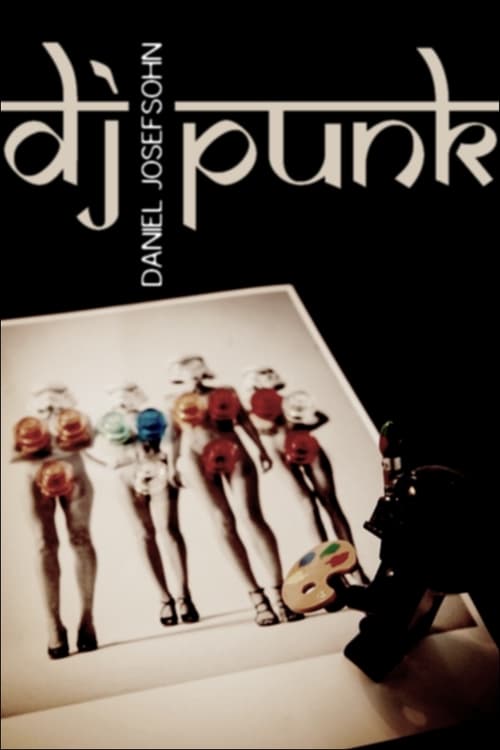
Nobody captured the atmosphere of 1990s Berlin better than German photographer Daniel Josefsohn, who died in 2016 at the age of 54, leaving his mark in advertising with his irreverent aesthetic and punk sensibility. It was his spontaneous, imperfect images shot for an MTV campaign in 1994 that first made him famous.
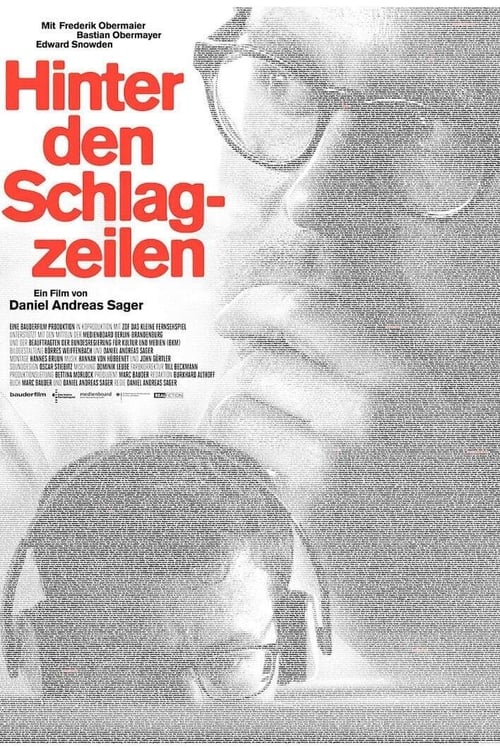
Two years after the Panama Papers scandal, two investigative journalists at Germany’s largest newspaper, Süddeutsche Zeitung, are ready with a series of new revelations while researchin the assassination of Maltese journalist Daphne Caruana Galicia and a mysterious arms dealer linked to the Iranian nuclear missile programme. When a secret video gets leaked to them in 2019, the journalists have the opportunity to uncover a new scandal, today known as ‘Ibiza-Gate’, involving the Austrian Vice-Chancellor Heinz-Christian Strache.
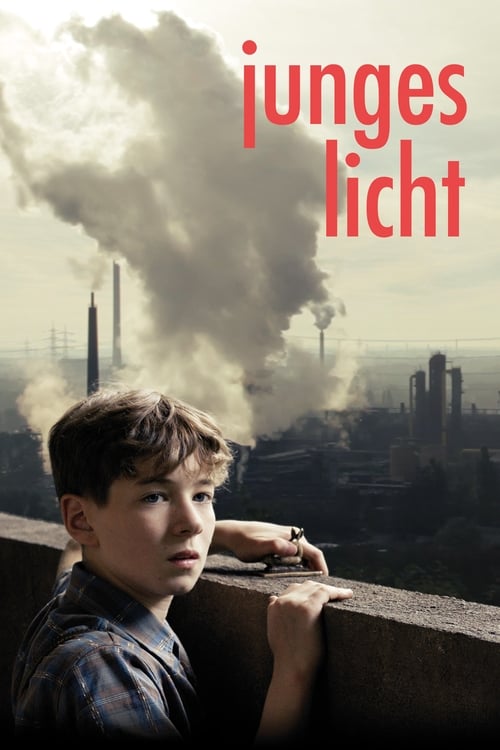
Julian is a 12-year-old boy whose family is just scraping by in the Ruhr industrial region of Germany in the early 1960s . When his mother and younger sister go away for a while, he is left mostly alone in the apartment while his father works in the coal mine. He has to confront the confusing world of adults and older boys and the older girl next door on his own. Finally events build up and threaten to tear the family apart.
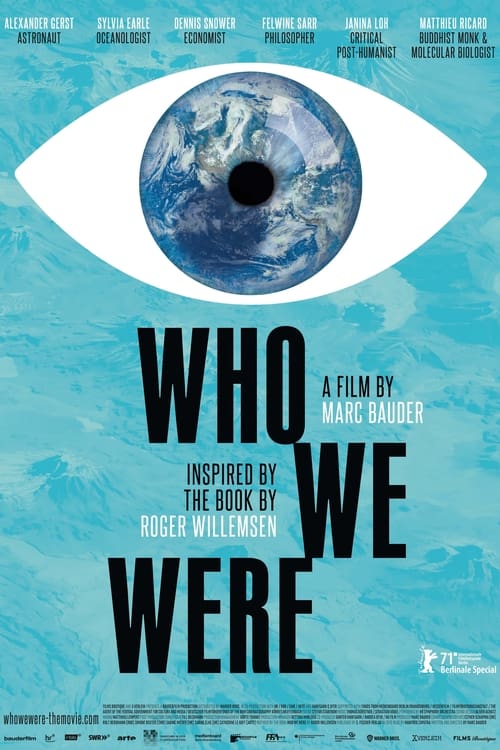
A look at the current state of the world, from the hand of six intellectuals and scientists who reflect on the present and postulate about the future.
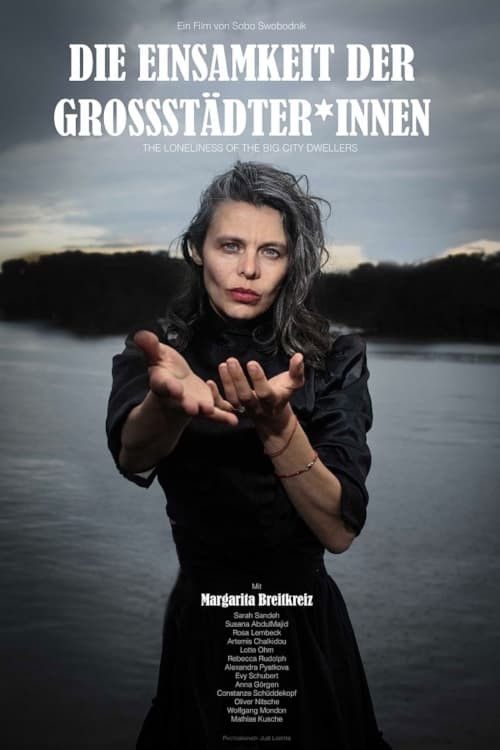
Karate, a forty-year-old woman without a relationship, contacts ten different women via dating apps from Tinder, OkCupid or Badoo and meets some of them to escape the desert of loneliness in this big city during post-pandemic times of crisis and learns a lot about life, complex relationship structures, loneliness and herself during these very different encounters.
In 2019, Union Berlin was promoted to the Bundesliga. Four years later, the traditional East German club qualifies for the Champions League and achieves something that few would have thought possible. Despite all the euphoria over the triumph, the pressure to remain strong in sporting and economic terms also increased, as did the fear of falling into a conflict of identity between tradition and change. The fact that the soccer underdog from Köpenick still manages to retain its magic is primarily down to the people who work behind the scenes to keep things running smoothly and enthusiastically. Always at their side: a loyal fan base that is prepared to follow their club's path unconditionally. Hendel follows the team behind Union for almost two years, right up to their entry into the top flight, and takes a unique, particularly personal and authentic look behind the scenes of the club.
![Bickels [Socialism]](https://image.tmdb.org/t/p/w500/7l3LMzod0pJoDIlOlyne1jwOGYW.jpg)
![Streetscapes [Dialogue]](https://image.tmdb.org/t/p/w500/lbaDCCZJ6xwvNLO5qFDBmjnjaOH.jpg)
![2 + 2 = 22 [The Alphabet]](https://image.tmdb.org/t/p/w500/xZmFnEC2gNQq2NjIpoLYaws5TRO.jpg)

![Dieste [Uruguay]](https://image.tmdb.org/t/p/w500/iXdwycGTb426h8wf5Ogr8PD0UDh.jpg)