FEEL IT.STREAM
Michel Foucault

Michel Foucault

Writing

Biography

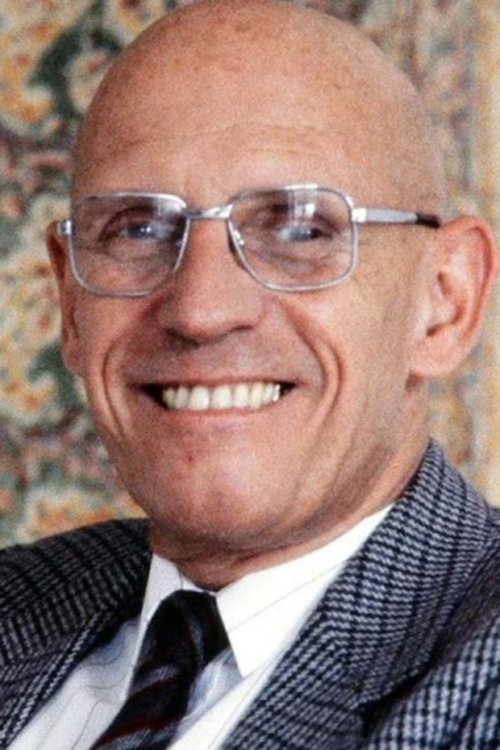
Paul-Michel Foucault (15 October 1926 – 25 June 1984) was a French philosopher, historian of ideas, writer, political activist, and literary critic. Foucault's theories primarily address the relationships between power and knowledge, and how they are used as a form of social control through societal institutions. Though often cited as a structuralist and postmodernist, Foucault rejected these labels. His thought has influenced academics, especially those working in communication studies, anthropology, psychology, sociology, criminology, cultural studies, literary theory, feminism, Marxism and critical theory. Born in Poitiers, France, into an upper-middle-class family, Foucault was educated at the Lycée Henri-IV, at the École Normale Supérieure, where he developed an interest in philosophy and came under the influence of his tutors Jean Hyppolite and Louis Althusser, and at the University of Paris (Sorbonne), where he earned degrees in philosophy and psychology. After several years as a cultural diplomat abroad, he returned to France and published his first major book, The History of Madness (1961). After obtaining work between 1960 and 1966 at the University of Clermont-Ferrand, he produced The Birth of the Clinic (1963) and The Order of Things (1966), publications that displayed his increasing involvement with structuralism, from which he later distanced himself. These first three histories exemplified a historiographical technique Foucault was developing called "archaeology". From 1966 to 1968, Foucault lectured at the University of Tunis before returning to France, where he became head of the philosophy department at the new experimental university of Paris VIII. Foucault subsequently published The Archaeology of Knowledge (1969). In 1970, Foucault was admitted to the Collège de France, a membership he retained until his death. He also became active in several left-wing groups involved in campaigns against racism and human rights abuses and for penal reform. Foucault later published Discipline and Punish (1975) and The History of Sexuality (1976), in which he developed archaeological and genealogical methods that emphasized the role that power plays in society. Foucault died in Paris from complications of HIV/AIDS; he became the first public figure in France to die from complications of the disease. His partner Daniel Defert founded the AIDES charity in his memory. Paul-Michel Foucault was born on 15 October 1926 in the city of Poitiers, west-central France, as the second of three children in a prosperous, socially conservative, upper-middle-class family. Family tradition prescribed naming him after his father, Paul Foucault (1893–1959), but his mother insisted on the addition of Michel; referred to as Paul at school, he expressed a preference for "Michel" throughout his life. ... Source: Article "Michel Foucault" from Wikipedia in English, licensed under CC-BY-SA 3.0.
Known For

Apostrophes
8.5

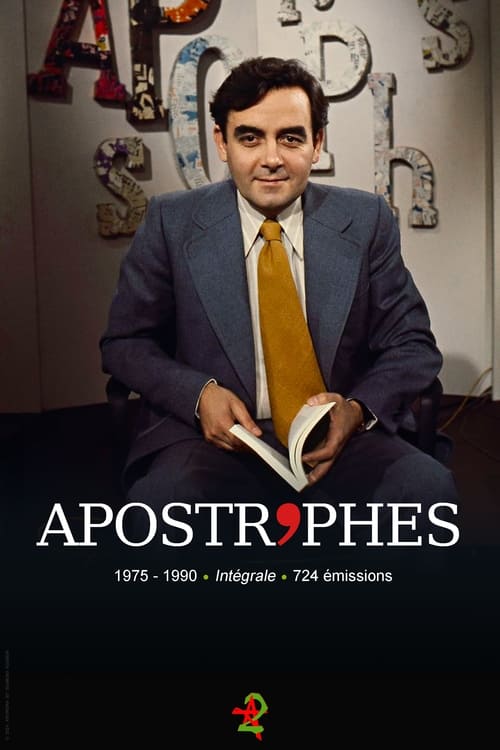
Apostrophes was a live, weekly, literary, prime-time, talk show on French television created and hosted by Bernard Pivot. It ran for fifteen years (724 episodes) from January 10, 1975, to June 22, 1990, and was one of the most watched shows on French television (around 6 million regular viewers). It was broadcast on Friday nights on the channel France 2 (which was called "Antenne 2" from 1975 to 1992). The hourlong show was devoted to books, authors and literature. The format varied between one-on-one interviews with a single author and open discussions between four or five authors.

Apostrophes

1975
Linhas Cruzadas
10.0

No description available.

Linhas Cruzadas

2021
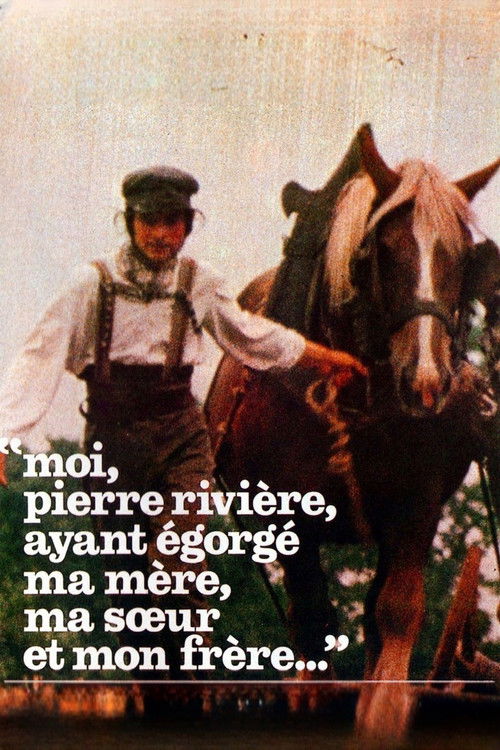
I, Pierre Rivière, Having Slaughtered My Mother, My Sister and My Brother…
6.5

Based on documents compiled by leading French philosopher Michel Foucault, this unique and original film charts the gruesome events which took place in a Normandy village in 1835, when a young man, Pierre Rivière, murdered his mother, sister and brother before fleeing to the countryside. With a cast made up of real-life villagers from the area where the events took place, the detailed re-enactments and careful attention to the gestures of their ancestors serve to create an intense and sometimes disturbing atmosphere of hyper-realism. Details of the crime and of the trial that followed are told from varied perspectives, including the written confession of Pierre himself, and form a rich and complex narrative that interrogates the concepts of “truth” and “history”.

I, Pierre Rivière, Having Slaughtered My Mother, My Sister and My Brother…

1976
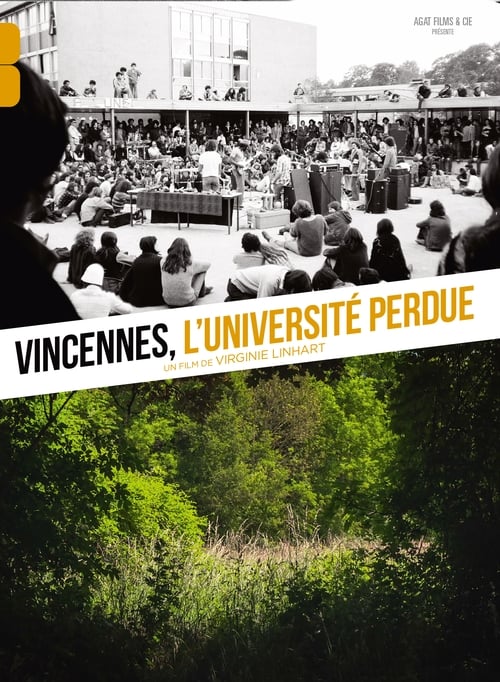
Vincennes, l'université perdue
8.5

Recounts the epic of Vincennes Experimental University Center, from its creation after the events of May 68 until its demolition in the summer of 1980. To talk about Vincennes is to relive unique ten years of intense intellectual and political extravaganza, educational and artistic inventiveness, utopias, hopes, and betrayals that marked the history in a unique place, the forest with the eponymous name.

Vincennes, l'université perdue

2016
Michel Foucault: Knowledge and Power at SOAS and beyond
N/A

An insight into the life and works of Michel Foucault and how his work on Knowledge and Power still has an impact on daily life. This is applied practically to the real world of SOAS University and the online world of Social Media. Presented by Merle Tschirschnitz, Kiran Thomas and Adam Brocklesby

Michel Foucault: Knowledge and Power at SOAS and beyond

2024
Hervé Guibert, la mort propagande
3.7

From this "inexorable disease", Hervé Guibert did not recover. The miracle he had so much hoped for did not happen. But, before his death in 1991, three years after learning of his HIV-positive status, he engraved in his literary and photographic work "the places of [his] suffering", "the stations of [his] way of the cross". With his thin body and sunken cheeks, the handsome man with curly hair that he was, the one whose clear gaze radiated from the seaside photos, fought a fierce battle against AIDS. A fight of every moment against the decay of the body, observed and commented with a methodical care in his autobiographical novels, in particular "To the Friend Who Did Not Save My Life" (1990) and "The Compassionate Protocol" (1991), and of which he testified on television on the set of "Apostrophes"...

Hervé Guibert, la mort propagande

2021
Michel Foucault par lui-même
N/A

A voyage to the center of the thought of Michel Foucault (1926-1984), a tireless explorer of the margins, a brilliant and atypical thinker, through excerpts from his books and lectures, and the use of images that resonate with them.

Michel Foucault par lui-même

2003
Michel Foucault: Beyond Good and Evil
N/A

Michel Foucault: Beyond Good and Evil explores the philosopher and his complex and controversial life through interviews with colleagues and biographers and re-enactments of Foucault’s storied exploits in the American counterculture.

Michel Foucault: Beyond Good and Evil

1993
Philosophie et vérité
5.2

A discussion between Jean Hyppolite, Georges Canguilhem, Paul Ricoeur, Michel Foucault and Alain Badiou on the subject of philosophy and truth. Curated by Dina Dreyfus.

Philosophie et vérité

1965
The Chomsky - Foucault Debate: On Human Nature
7.5

The Chomsky–Foucault debate was a debate about human nature, between Noam Chomsky and Michel Foucault in the Netherlands, in November 1971. Chomsky and Foucault were invited by the Dutch philosopher Fons Elders to discuss an age-old question: "is there such a thing as 'innate' human nature independent of our experiences and external influences?"

The Chomsky - Foucault Debate: On Human Nature

1971
Bachelard parmi nous ou l'héritage invisible
10.0

No description available.

Bachelard parmi nous ou l'héritage invisible

1972
No image
N/A

About René Allio's 1973 film, " I, Pierre Rivière…", Pascal Kané interviews the filmmaker as well as Michel Foucault, the scientific editor of Pierre Rivière's text.

À propos de Pierre Rivière

1978
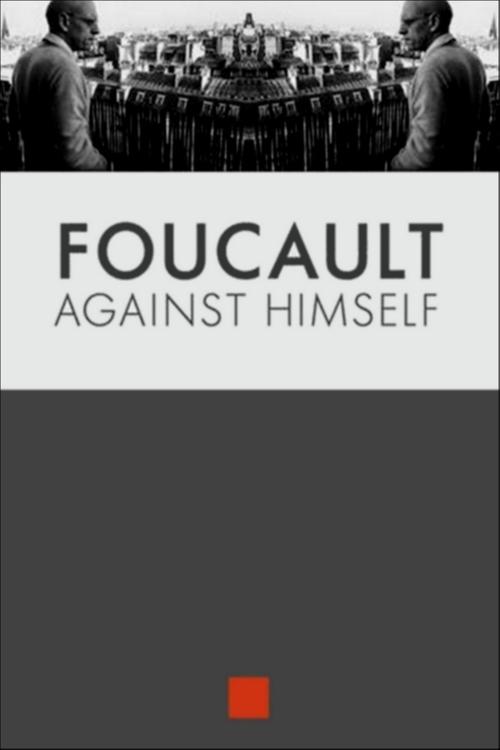
Foucault Against Himself
6.2

In both his private and public life, Foucault often contradicted himself, especially when his ideas collided with the institutions where he worked. Contemporary critics and philosophers reframe their legacy in an effort to build new ways of thinking about his struggle against the mechanisms of domination within society, demonstrating how the conflict lies at the heart of his life and work.

Foucault Against Himself

2014
Philosophie et psychologie
N/A

No description available.

Philosophie et psychologie

1965
The Angst and the Bliss
6.5

One summer’s evening in 1933, the writer Raymond Roussel closes the door of his hotel room in Palermo. He swallows pills, drags the mattress to the centre of the room and lies down on it. The next morning his companion finds his corpse. But is he really dead?

The Angst and the Bliss

2022
Maids of Honor
N/A

Las Meninas is a brilliant essay on illusionism, mirrors and perception in art, life and video, articulated by Downey as a subjective interpretation of Velasquez's eponymous Baroque masterpiece. Through a theatrical reenactment of the painting's pictorial tableau and a re-articulation of its complex perspectival structure, Downey brings to life the spatial dynamics, illustrating the psychological tension of the relationship between viewer and subject. Placing Las Meninas in a historical context, Downey relates the painting's thematics to Spain's economic and political systems of the late 17th century.

Maids of Honor

1975