FEEL IT.STREAM
Madis Kõiv

Madis Kõiv

Writing

Biography

Madis Kõiv (December 5, 1929 – September 24, 2014) was an Estonian writer, philosopher and physicist. Kõiv attended school in Tartu after the second World War, graduating in the early 1950s with a degree in nuclear physics. Kõiv worked as a scientist and lecturer until 1991. Kõiv always entertained a fascination with and love for literature. He wrote mostly for personal entertainment until the 1950s, when he became active in Estonian literary circles. His earliest published works were written with friends from these circles. He also wrote under a pseudonym for several years. His first published work was a play called Küüni täitmine (Filling the Hay Barn) written as a collaboration between Kõiv (using his pseudonym Jaanus Andreus Nooremb) and Hando Runnel in 1978. In 1999, the play was successfully produced for the first time. Kõiv then wrote two pieces with Vaino Vahing. The first was a play titled Faehlmann. Keskpäev. Õhtuselgus. (Faehlmann. Noon. Evening Clarity.) The two also wrote the dialogue novel Endspiel. Laskumine orgu. (Endspiel. Descent into the Valley.) Just before the end of the decade, Kõiv began to publish works he had previously written for his own amusement under his own name. Kõiv became the most essential Estonian playwright of the 1950s and 1960s. In the early 1990s, Kõiv began to gain fame. In 1991 and 1993, he won the Tuglas short story award for Film and The Life of an Eternal Physicus, respectively. He won the annual Estonian literary award in 1991 for The Meeting. He won the annual Estonian literary award again in 1995 for The Philosopher's Day and Return to Father. Kõiv won the award a third time in 1999 for Scenes From the Hundred Years' War. Kõiv had released only 22 of the plays he had written and said that these comprise half of the dramatic literature he has created. Kõiv was also the author of several novels. Widow and Aporia of Attica, Tragedy of Elea are two of his best known. In 1996 he published Aken.[1] Kõiv wrote the novel in the 1960s, but it did not pass during the Soviet occupation of censorship. Madis Kõiv was one of the many proponents of analytical philosophy in Estonia. In 1991, he became one of the initiators of the Seminar of Analytical Philosophy.
Known For

Manslayer/Virgin/Shadow
4.7

The film consists of three chapters. The Manslayer takes place more than a hundred years ago. The leading character Maara is a young bride who is about to start her life in her new family. The Virgin, set in the spring of 1949, tells the story of a young woman called Elina, who has been deported from Ingria into Estonia during the previous war. The Shadow moves in the present, on the border of real life and fantasy. The main character, Luna Lee, has decided to flee from home. Is there anything besides emptiness somewhere? The film is led by the singularity of the leading character - Maara, Elina and Luna Lee are all played by the same actress.

Manslayer/Virgin/Shadow

2017
Letters to Angel
4.2

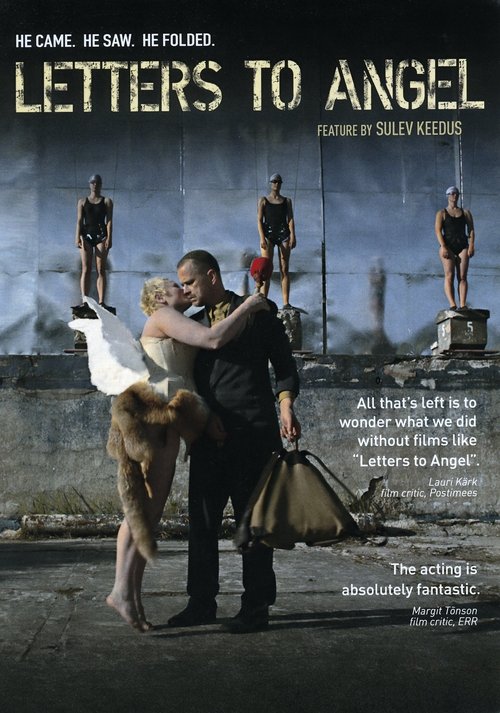
Jeremia Juunas Kirotaja has been fighting in Afghanistan; 21 years later he returns to Estonia to his father's funeral. He has converted to Islam and his only connection to his native land is the sound of his daughter Angel's crying that he heard a long time ago on the phone. Jeremia starts to search for his family. The daily life - if this can be called life in the first place - of the dusty and abandoned town is being run by women since men are almost gone. Nevertheless, the women seem to hope that Jeremia will be able to do something about it in order to remove the paralyzing feeling of emptiness.

Letters to Angel

2011
Georgica
6.0

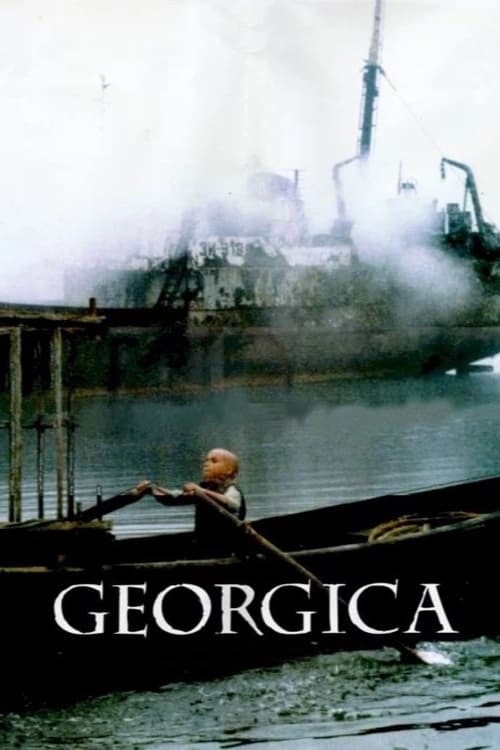
The action takes place in post-World War II Estonia. An old man lives alone on a deserted island which the Soviet fighter planes use for nighttime target practicing. A young neglected boy, who has become mute, is banished from the mainland and sent to the island to keep the old man company. Both are haunted by memories, the boy about his mother and the old man about the years before World War I he spent as a young missionary in Africa

Georgica

1998
Somnambulance
5.6

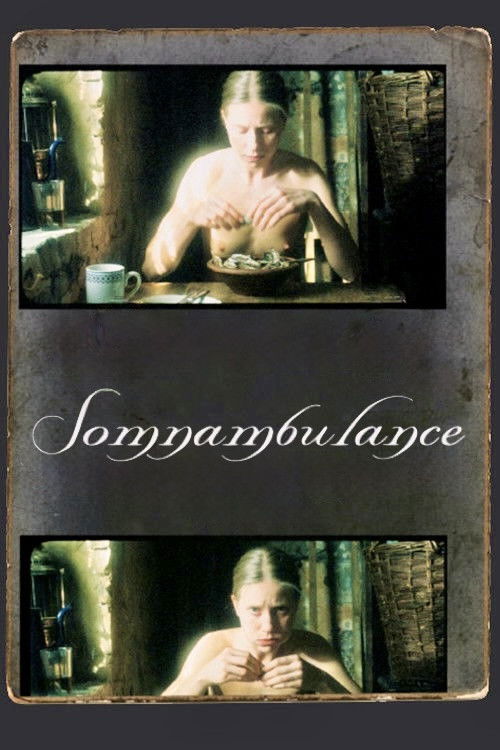
Autumn 1944, Estonia. Tens of thousands of people leave their homeland in fear of approaching frontline. Some seashore villages remain completely empty. A young woman with huge grey eyes gets off the boat. Eetla leaves the last boat, thus giving up her last chance to escape. Defying the cold wind and rain of September, she returns to the lighthouse which is unexpected to her father Gottfrid, the lighthouse keeper, and herself. Eetla's return becomes her self-encounter and self-recognition.

Somnambulance

2003