Naeem Mohaiemen
Directing
Biography
Naeem Mohaiemen combines essays, films, photography, and installations to research the idea of socialism, incomplete decolonization, shifting borders, and unreliable memory. Despite underscoring a historic left tendency toward misrecognition of allies, a hope for a future transnational left as the only possible alternative to current cages of race and religion is a basis for the work. He was a 2014 Guggenheim Fellow, 2018 Turner Prize finalist, and was shortlisted for the 2019 Herb Alpert Award. His films have been programmed at film festivals internationally. He is the author of “Midnight’s Third Child” (Nokta, forthcoming) and “Prisoners of Shothik Itihash” (Kunsthalle Basel, 2014), as well as co-editor of several other volumes. His work has been shown in solo exhibitions and biennales around the world and is housed in the permanent collections of Kiran Nadar Museum, Delhi, Museum of Modern Art, New York and Tate Modern, London, among others. He has a PhD in Anthropology from Columbia University.
Known For
Two Meetings and a Funeral explores Bangladesh’s historical pivot from the socialism of the 1973 Non-Aligned Movement (NAM) meeting in Algeria to its ideological counterpoint, the emergence of a strong Islamic perspective at the 1974 Organisation of Islamic Countries (OIC) meeting in Lahore. Centred on Bangladesh’s navigation of these two historic meetings, as well as its fight for United Nations recognition (vetoed by China, acting as a proxy for Pakistan), the film considers the erosion of the idea of the Third World as a potential space for decolonialism, liberation theology and socialism. In particular, it looks at how a transnational Islamic ‘ummah’ concept was used against socialist forces.
Two Meetings and a Funeral

A pilot is trapped in a crumbling, abandoned airport. Naeem Mohaiemen's first fiction film is based on when his father was stranded without a passport in Athens' Ellinikon International Airport for nine days in 1977.
Tripoli Cancelled

September 1977. The Japanese man speaks in halting English; the Bangladeshi negotiator, with the clipped confidence of an army officer. A color scheme suggests order in the exchange: green, red, and the occasional white. The Japanese Red Army had attached to the Palestinian cause, and through that to an idea of global pan-Arabism. The hostage terrain was not an "Islamic Republic," as the hijackers thought, but a turbulent new country ricocheting between polarities and imploding in the process. Instead of being the willing platform for the Japanese Red Army's ideas of "Third World revolution," the actual Third World hit back in unexpected ways, turning the hijackers into helpless witnesses. An eight-year-old watches the television screen with growing confusion-the screen shows an unmoving control tower for hours on end, and he wants his favorite show to start again.
United Red Army (The Young Man Was, Part I)

The film unspools the story of Peter, a Dutch man who arrived in Bangladesh in 1973 to report on revolutionary left movements in the new country, and was eventually imprisoned in 1975 by a new military government. Accused of planning a secret leftist uprising, Peter was released after a year of campaigns by Dutch activists.
Last Man in Dhaka Central (The Young Man Was, Part 3)
A photograph shows men staring out of a window. The stage is a bombed building. All the men wear military uniforms. Taken by a Magnum photographer in 1982, the image proves to be a teasing enigma. Arabic newspapers claim it as evidence of Bangladeshi fighters in the PLO (Fatah faction).
Abu Ammar is Coming

Exploring the revolutionary left in 1970s Bangladesh through a series of inter-connected vignettes, which draw on Jean-Paul Sartre, Joschka Fischer, Rote Armee Fraktion, and the Sarbahara Party.
Afsan’s Long Day (The Young Man Was, Part 2)

In an empty hospital in Kolkata, India, a man faces protocols of blood, a subtly discriminatory office, and a vacant operating theater. His mind is on a loop of the last months of his wife’s life, when a quiet argument developed. When is the end of pharma-medical care, whose life is it anyway?
Those Who Do Not Drown

Grace emerges from Naeem Mohaiemen’s collaboration with Maine resident Karen Wentworth, the second person in the state to legally secure medicine for a dignified end-of-life process. Documenting her daily routines, the film offers a tender and hopeful reflection on autonomy and mortality while posing the question: What does it mean to accept a body’s decline?
Grace
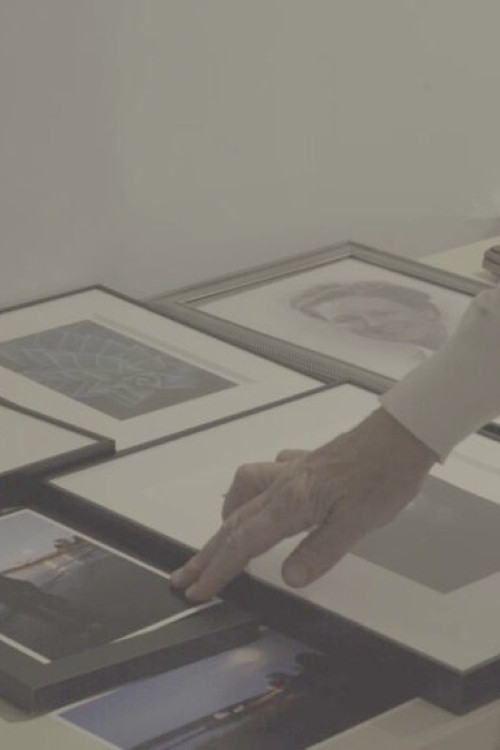
A forgotten box of old photos, the lost memories from the past, and Naeem’s search to know the untold stories by his father evoked the idea of Rankin Street, 1953.
Rankin Street, 1953

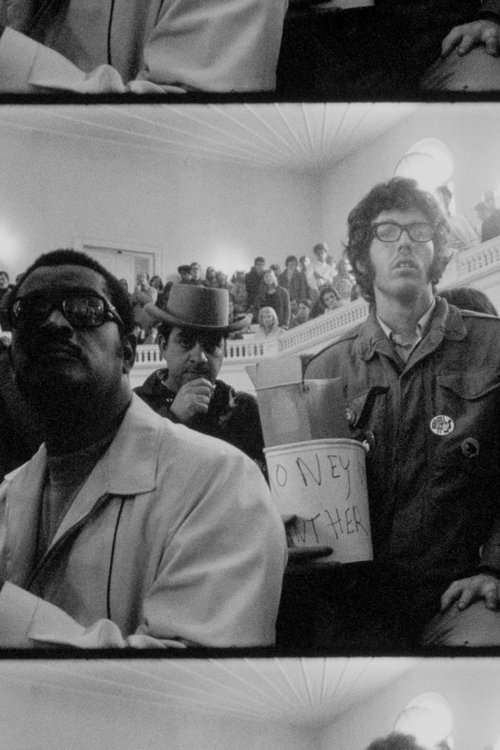
Through a Mirror, Darkly examines the turbulent 1970s, a decade of hopeful rebellions and catastrophic disappointments, via flashpoint moments when American students protesting domestic racism and overseas wars were met by state violence in May 1970. As the Vietnam War came to its bloody end, for the American media, the memory of four American students shot dead at Kent State University was sometimes as emotionally charged as the millions of deaths in Vietnam. In the decades that followed, a memorial community has formed around the “four dead in Ohio.” Yet while the deaths of students Allison Krause, Jeffrey Miller, Sandra Scheuer, and William Schroeder at Kent State, Ohio, are remembered, not many recall Phillip Lafayette Gibbs and James Earl Green, two students killed ten days later by police officers at Jackson State College, Mississippi, a Historically Black College.
Through a Mirror, Darkly
Zahir Raihan was a Bangladeshi writer and filmmaker, best known for his documentary film Stop Genocide (1971), made during the Bangladesh Liberation War and released after his death. Raihan disappeared at the age of 36 shortly after the war’s end. Rumors circulated that there was a missing can of film that contained footage that would have been embarrassing to leaders of the new country. Mohaiemen’s A Missing Can of Film intersperses footage from Raihan’s body of work with contemporary footage shot in the aftermath of the 2024 student uprising in Bangladesh, questioning the carriers—film canisters, dusty equipment—of disputed history.