Kaljo Kiisk
Directing
Biography
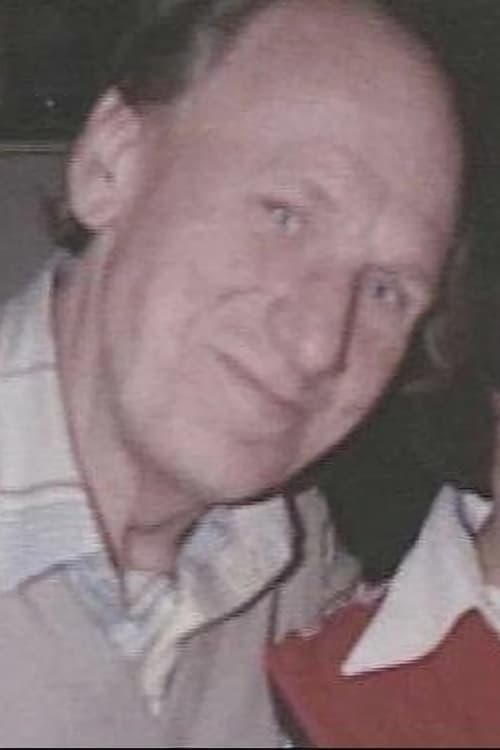
Kaljo Kiisk (December 3, 1925 – September 20, 2007) was an Estonian actor, film director and politician. He was best known for his roles as Kristjan Lible from Spring, Summer and Autumn, film adaptations of Oskar Luts' novels, and as Johannes Saarepera from ETV's long-running Õnne 13. His career spanned over half a century from 1953 to 2007.
Known For

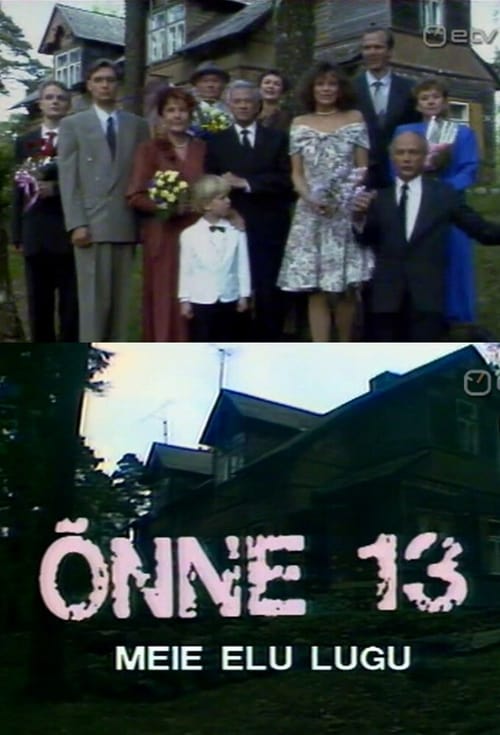
Õnne 13 is an Estonian dramatic TV series that airs on ETV. The series first aired on 30 October 1993 and was written by Astrid Reinla and as of 1996 by Teet Kallas. Since 1997, the series is produced by BEC, which has also produced Pehmed ja Karvased, Kodu Keset Linna and Ohtlik Lend. The series takes place in the fictional town of Morna, and features an ensemble cast.
Õnne 13

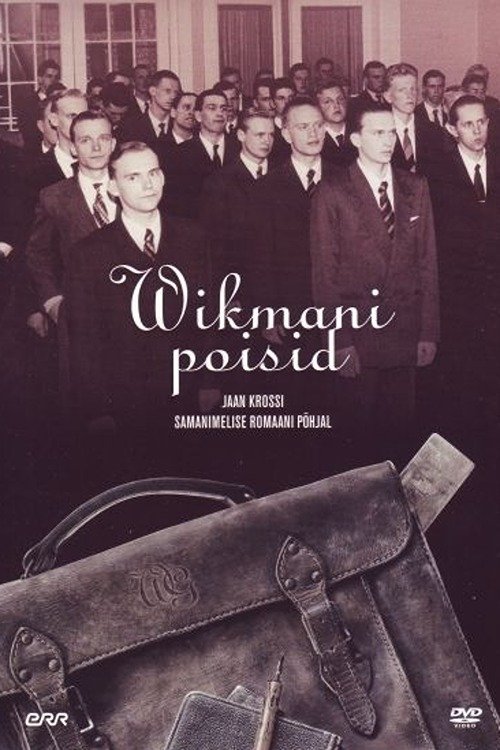
The boys of Wikman is a 1994-year drama serial about the Wikman Private Gymnasium students from 1937 till their mobilization in 1944. The series is based on a 1988 novel Wikmani poisid by Jaan Kross.
The Boys of Wikman

No description available.
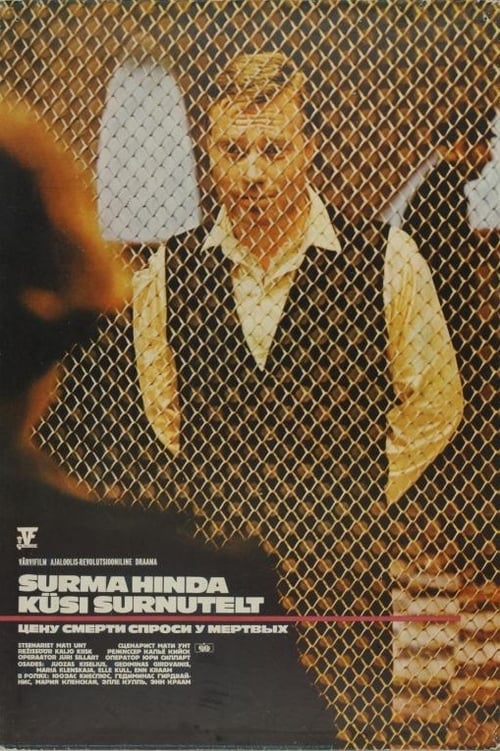
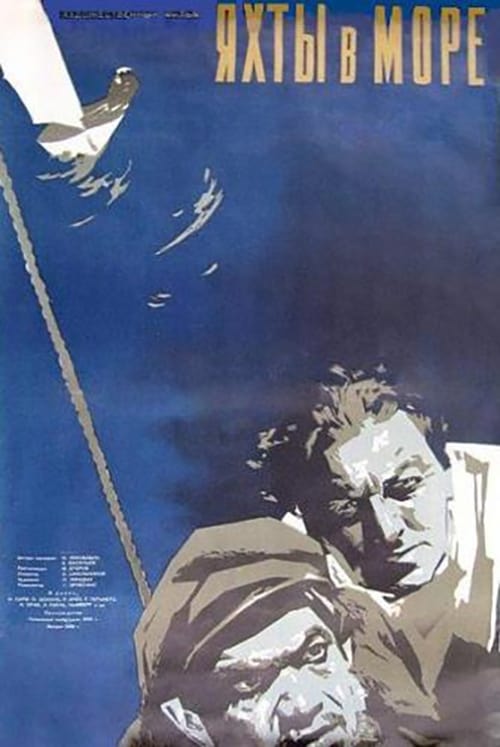
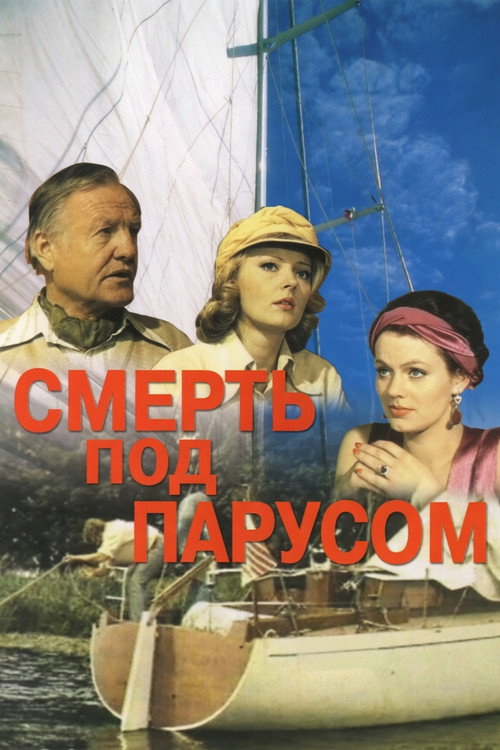
Смерть под парусом

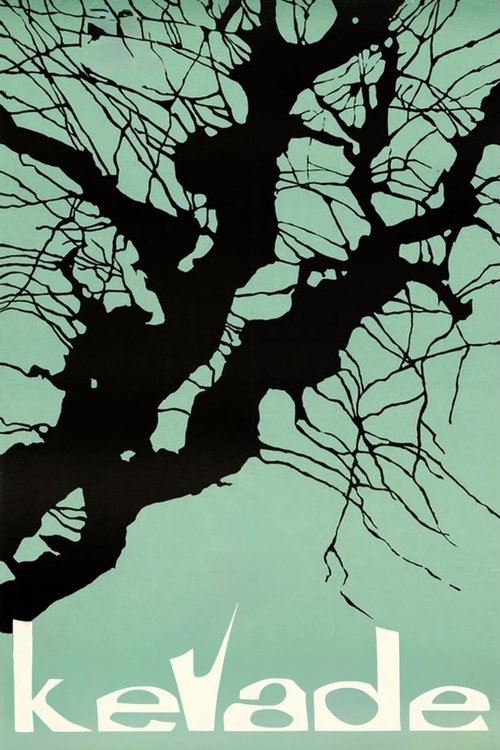
Paunvere parish school students Arno and Teele, Toots and Kiir, Tõnisson and Imelik experience feelings during one school winter, the traces of which they carry throughout their future lives - from true friendship and first love to self-discovery and clarifying life goals.
Spring

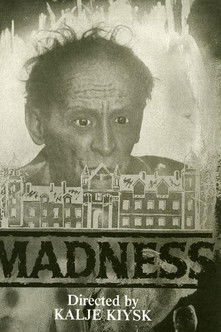
Before the end of the Second World War, a special commando marches into a mental hospital located in a beautiful manor house to eliminate the patients. But the Gestapo has received an anonymous letter saying that an enemy agent is hiding among the madmen. Officer Windisch is tasked with finding a simulant among several hundred mental patients in a matter of days.
Madness

An up-close look into the life of the often misunderstood movie director Grigori Kromanov through the lens of old friends and colleagues.
Grisha

The main character of the film is Paunvere tailor Jorh Adniel Kiir. Two young seamstresses, Juuli and Maali, arrive in Paunvere. At first, Kiir regards them as competitors, but then he establishes friendly relations with them. Kiir marries Juuli, but he is not indifferent to Maali either. The film also follows Kiir's efforts to get his own farm.
Autumn

On Christmas Eve, the residents of Peace Avenue discover that there are military guards in front of their houses. Soon they have to start showing their passports when entering their homes. The residents are told by the authorities that in order to keep the peace they have to be ready to co-operate. It is an order and people stick to it. It is heard that the foreign troops will leave when the snow will be gone - so it won't be long until the everyday life will be normal again. When spring arrives, not only the snow disappears but also lots of residents. Those who stay will look forward to the Midsummer Day.
Peace Avenue

After a long night with his old war buddies, Andres Lapeteus regains consciousness in the hospital. How has confusion, bewilderment and alienation developed between these men who once fought together side by side? Is this the inevitable result of the Stalinist regime, the influence of his social climber wife, or the effect of his personal cowardliness and conformism? What happened to Andres Lapeteus?
What Happened To Andres Lapeteus?

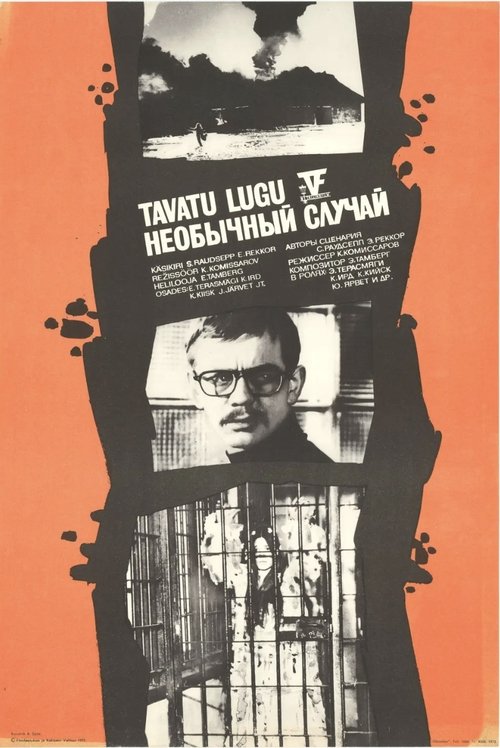
A young investigator fresh from the university gets assigned an arson case. 18-year-old Epp-Kai has admitted to the crime but he cannot see the girl's motive. His partner, an experienced investigator, already has enough work and doesn't think it's necessary to have further conversations with the accused. The young investigator senses however that Epp-Kai is hiding something.
An Unusual Story

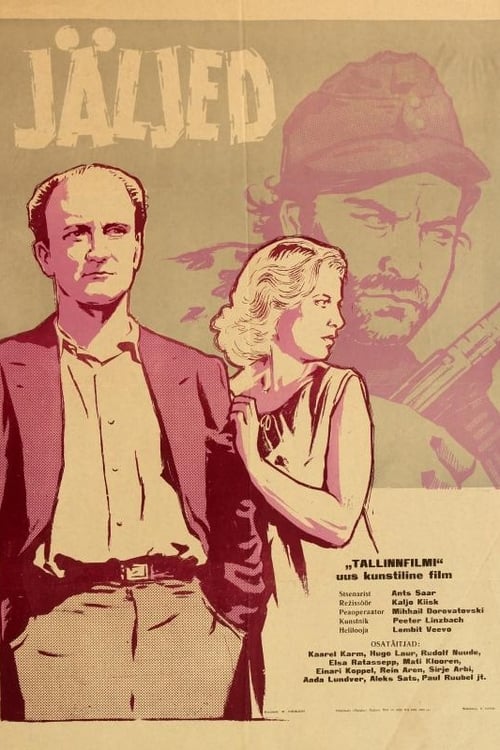
Heino Raagen and his war comrades begin a new battle while arriving at their home village - establishing a collective farm. The sufferings and fears of the war have exhausted people; nevertheless, they still stick together and protect their close ones. Heino's girlfriend Valve hides the plans of her brother Robert hiding in the forest from him; as a result, their relationship will fall apart. Life goes on, but disappointment and anger will take their toll even when years have gone by.
Traces

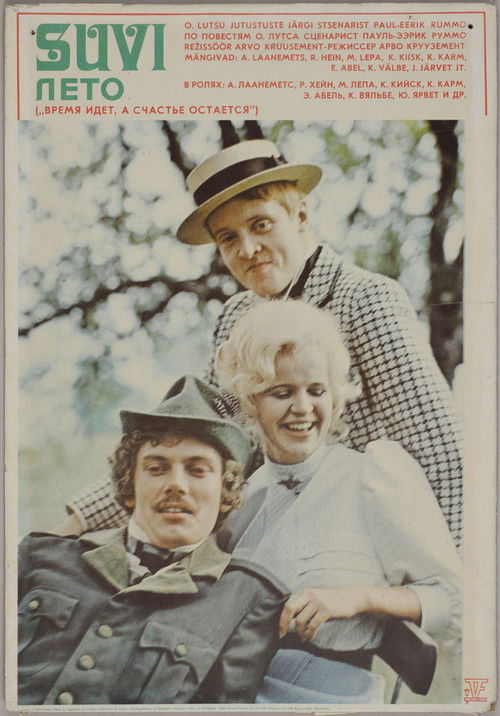
In the beginning of the 20th century, Joosep Toots has returned from Russia, where he learned agriculture. He wants to start reforming his father's farm, Ülesoo. At the same time, he's competing with Kiir to win the love of Teele. Teele has stated that she agrees to marry with a farmer only. So Kiir decides to go to Russia to learn agriculture too.
Summer

The events take place in Estonia in a summer in the 1960s. The Boy and the Girl want to go from mainland Estonia to the island of Saaremaa, but they do not have any money to buy the ticket to the ferry. They manage to hide themselves into a lorry that carries hay. Because they are smoking while they are on the lorry, a fire breaks out. The problem is, that the ferry is in the middle of the sea.
The Midday Ferry

It is the night of March 25, 1949. A full moon hangs over Estonia. Endless rows of cattle cars are waiting to transport thousands of Estonian families, asleep in their homes, to Siberia. The Stalinist regime is ready to treat people like animals.
Awakening

Toomas Simmo is a simple worker who has seen a lot of injustice and carelessness in his life. Yet he has not become bitter or lost the ability to understand and encourage other people who are struggling with their problems. When he lies in the hospital with an amputated leg, her daughter presents him with the most difficult choice of his life.
Old Man Wants to Go Home

A romantic comedy about two rival motorcyclists who are in love with two twin sisters. It is a remake of the 1959 film Naughty Curves and was the first film shot in the Soviet-designed Kinopanorama format.
Dangerous Curves

Two proud fisherman families live on a very small island in Estonia. The two fishermen have always bore a grudge against each other. Their stubbornness and disobedience to German occupiers leads to dramatic events where staying alive is worse than death. Since it is impossible to escape public contempt, they have to decide how to redeem themselves.
Ice Run

This modern western depicting juvenile crime takes as its theme the struggle of an individual against a vicious circle of violence. The spiral of violence and revenge is only broken when one person conquers himself and refuses to continue the vendetta. Siim, a 14-year old who grew up in the streets, is only spared the violence because he has a natural antipathy to it. Ultimately he too is caught up in the fighting when he tries to save money for his girlfriend's Christmas gift and the cash is stolen.
Too Tired to Hate

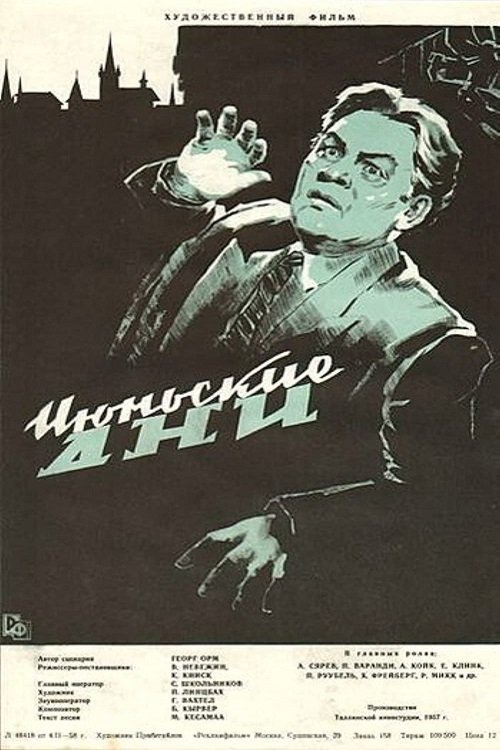
Viktor Kingissepp has been the underground head of the Communist Party of Estonia for three years. He corresponds with Moscow, writes speeches for the members of the Communist Workers' Party and makes leaflets for the events of trade union. His purpose is to overthrow the Republic of Estonia since he does not believe in Estonian independence nor in any national ideals. Yet the clock keeps ticking, tuberculosis spreads rapidly, the world revolution is being postponed. What to do in order to make one's efforts work?
In One Hundred Years in May

A passenger steps off his train during a short stop in a small town called Vernanda in order to buy a loaf of bread. However, the train departs early and the passenger is left to deal with a bread-shaped bomb, strangely behaving townsfolk and an ominous laughter that follows him wherever he goes.