Peeter Oja
Acting
Biography
Peeter Oja (born July 2, 1960 in Tallinn) is an Estonian actor, singer, comedian and media personality. In 1986 he graduated from the Tallinn State Conservatory Stage Art Department. 1986-1989 he worked at Vanemuine Theatre. 1992-1994 he worked at Estonia Theatre. Since 1994 he is a freelance actor. He has been a member of several musical groups, including Kuldne Trio and Bläck Rokit. He has hosted several popular television series, e.g. Kitsas king (1985–1987), the comedy ensemble Kreisiraadio (1997–2003), with whom he appeared as Estonia's entry with at the Eurovision Song Contest 2008, and Ärapanija (2003–2013). Oja has also appeared in a number of prominent roles in feature films.
Known For

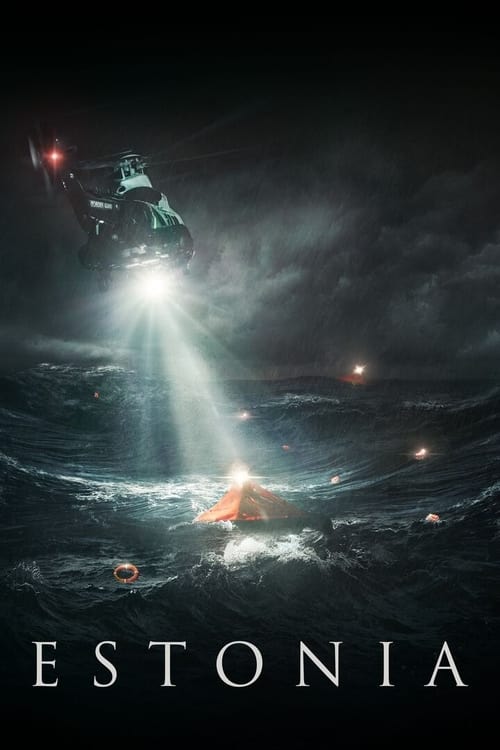
Estonia tells the story of the tragic accident of the car-ferry MS Estonia, which deeply shocked the world in the autumn of 1994. Through the moving personal stories of victims, survivors, loved ones and investigators, the eight-part series explores how it is possible that 852 people lost their lives and no one is held accountable.
Estonia

The opening part of the new season of the comedy series "EnsV" begins in the last days of 1991, when the USSR disappears from the world map. Unexpected guests arrive at the desert home. Living is reminiscent of a collective farm. Money is mixed with the feet. New Year's Eve plans are held in Kukeke and Illar's fantasies know no bounds.
EnsV

A comical triptych about residents in an apartment block district who long for a better life. When a black hole mysteriously appears in a lilac bush, they will have to face aliens, a giant spider, and an Austrian in breeches.
The Black Hole

Rylan Clark-Neal narrates a guide to all things Eurovision and takes a sideways look at the greatest singing contest on the planet. The A-Z of Eurovision features all the disasters, the costume changes and memorable musical moments from 65 years of Eurovision.
The A-Z of Eurovision
No description available.
Lõks

1942. The State of Finland has formed an alliance with Nazi Germany. An elderly man single-handedly tries to stop a secret attempt by the Finnish State Police to hand over Jewish refugees directly to the Gestapo.
Never Alone
Eurolaul was an annual televised competition to select a song to represent Estonia in the Eurovision Song Contest made by the Estonian Public Television Service ETV. For many years the competition differed from the national selections of most other countries in that the outcome was solely determined by an international jury. The rules were changed to entrust the Estonian public with the choice by means of televoting in 2004 and 2005, but due to the disappointing results in the ESC in those years there was a return to the former system in 2006. Eurolaul also selected Tanel Padar and Dave Benton's song "Everybody" in 2001, which went on to win the contest for Estonia. In 2009, Eurolaul was discontinued after a long period of bad results for Estonia in the Eurovision Song Contest and was replaced with a new contest entitled Eesti Laul.
Eurolaul

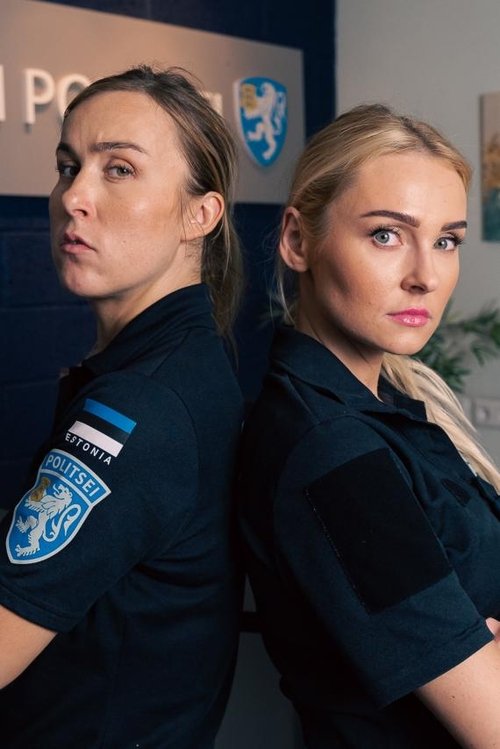
Two completely opposite young ladies are forced to work together and solve very different cases. Kadri (Kristel Aaslaid), who takes police work extremely seriously, and Doris (Grete Kuld), who skilfully manipulates her good looks and feminine charms, want to prove to each other that their methods are the best way to make a career in a man's world.
Women in Uniform

In the summer of 2001, six prominent men moved into an abandoned farmhouse for a week. Following the example of the world-famous reality series "Survivor", everyone was allowed to take only one item they loved. The aim of the men was to test whether it is possible to cope with the minimum wage in today's Estonia, and if so, in what way. "Jürgensonid" is a humorous, fully documentary television study of survivors in local Estonian conditions.
Jürgensonid

It's the early 90's. A new currency is in circulation in Estonia - the kroon. The former federal republic has become a world leader in non-ferrous metal exports. There is a relentless struggle around this criminal business. It brings new victims every day. Estonia ranks first in Europe in terms of the number of killings. This is just the beginning...
Red Mercury

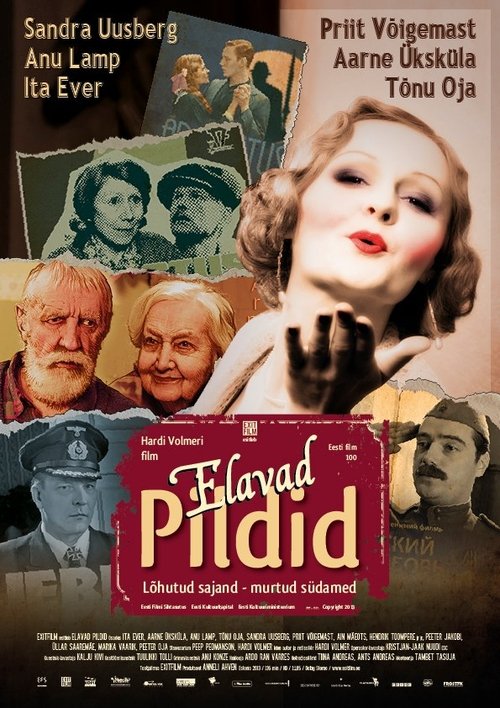
The main character, Helmi, is born into the house of Baron von Strandmann in Old-Town Tallinn, in 1908. The only thing that she knows for sure about her past is that her mother was an Estonian servant girl. Everything else is a discovery during a life that runs the course of a century - a life that has quite a lot of surprises in store for Helmi. In this house she finds happiness and suffering, passion and disappointment. She grows up alongside young Erik and waits for her big love to blossom. But one floor down lives projectionist Julius - a man who is far from indifferent when it comes to Helmi. All of the biggest historical events of the century leave their mark on the house. Its hardwood floors have born soldiers' gruff boots and gentleman's shiny oxfords. Its walls have held the fates of people from far and near, foreigners and locals. Helmi's home becomes a German salon, a revolution museum, and a working class commune. And as freedom comes, real estate crooks start sniffing ...
Living Images

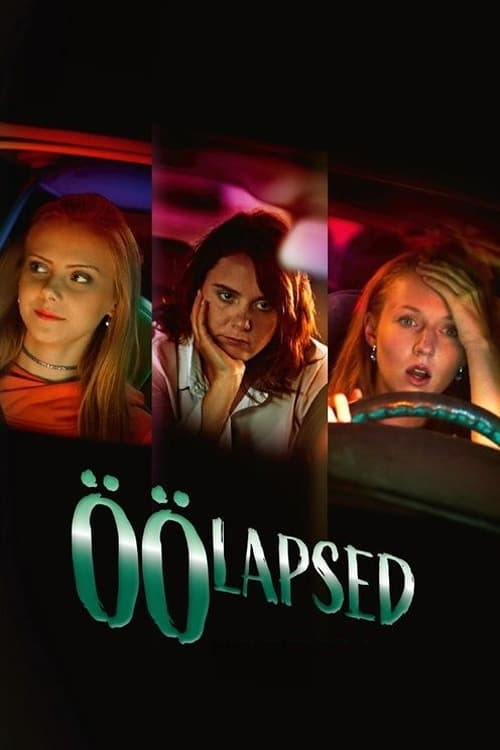
A film about three sisters who have reached different turning points in their lives. Liis, who has just graduated from high school, discovers that the future planned with her boyfriend is not so certain. Elder sister Karin, the first victim of her parents' expectations, tries to cope in today's sexist business environment. Jane, the youngest of the sisters, tries to resist the pressure of her party animal friend to prove herself as someone who she is not. During one fateful night, secrets and feelings that none of them wanted to admit to themselves before are revealed.
Kids of the Night

Somewhere in Europe by a great sea stands a small village, where inventing all manner of domestic gadgets is held in great esteem. Every year the villagers organize an annual competition of new inventions. One of the best inventors in the village is Oskar, Lotte's father. His primary rival is Adalbert, whose wife also partakes in the competition. On the eve of the next competition, Lotte and her friend Bruno find a book soaked in the sea, from which Susumu, a gardener from distant Japan, climbs out. Susumu teaches the villagers some judo throws before a big judo competition, which the latter will eagerly use to facilitate their daily lives.
Lotte from Gadgetville

Based on Andrus Kivirähk's books "Poo and spring", "Carnival and Potato Salad" and "Ghost and Facebook", the film tells about longing, friendship, love, family and fears, which often have big eyes. The adventures of the strange characters are spiced with the characteristic warm and bold humor of Kivirähk, wittily weaving together the boundless fantasy of children and the living conditions of the modern world.
Poop, Spring and Others

The first film in the Seto language in the world speaks about the brightest heroine of a small people, the folk singer Hilana Taarka, a woman who lived her whole life as an outcast in a small chimney-less hut; as an unmarried mother of children in poverty, begging her bread, doing odd jobs and singing. She always sang the truth, sometimes bitter, sometimes funny, sometimes cruel. She was feared, despised and coveted. Taarka sang throughout her remarkable life, throughout her fate, from a small Seto village to international fame. And she sang well. Really well. Taarka became the Mother of the Song, a legend. But as a woman, as a member of the community, the Seto people never really accepted her. Taarka - a despised woman and a worshiped singer.
Taarka

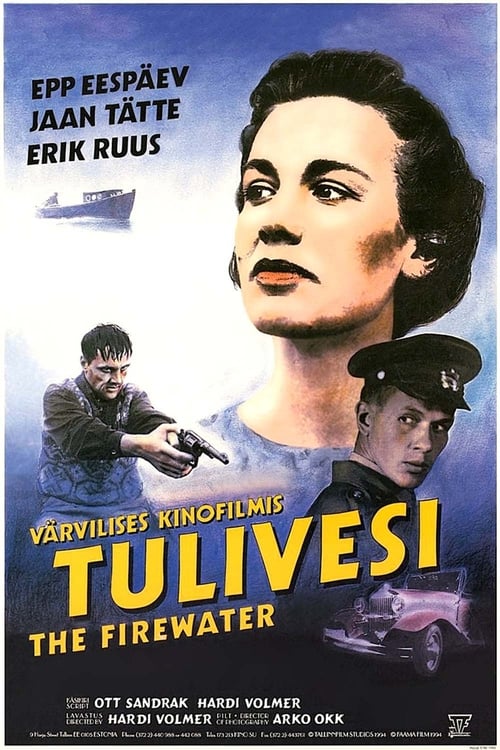
At the end of the 1920-s the Finnish government proclaimed dry law which lasted 12 years. Estonian bootleggers living on the neighboring coast of the Gulf of Finland profited from prohibition......
The Firewater

Two young ladybirds Tim and Mia are unexpectedly taken into a human family’s house together with a Christmas tree on Christmas Eve. Tim and Mia set about seeking the way back to the forest.
Ladybirds' Christmas

A wide range of relatives and acquaintances have traveled to a funeral, and as is typical of Estonians, the sad event turns into a comical one as the evening develops. The primordial disputes that arise among the Estonians take on hyperbolic dimensions as events unfold, creating misunderstandings.
Estonian Funeral

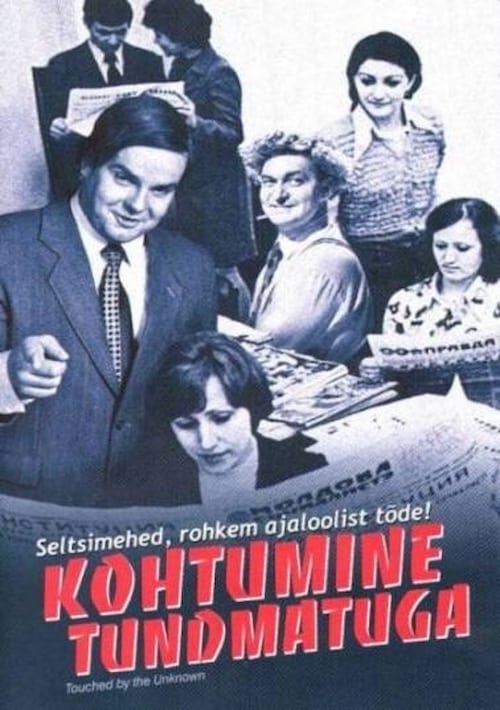
Mati is an assistant in TV studio. Patiently he has waited for his time to become a TV star but seems that he has to wait forever. One day an alien called Tipp is sent on Earth (by its chief Tapp) to find out the purpose of Estonian children's TV show "Tipp and Tapp". Tipp nestles himself inside Mati's brains that leads the man to unpredictable actions.
Touched by the Unknown

In August, 1991, Estonia reclaims its independence from the USSR and brings to its national bank nearly $1 billion in gold bullion hidden in Paris for 50 years. Russian mobsters have a bold plan to hijack the gold after shutting down the capital's power at midnight