FEEL IT.STREAM
Miklós Jancsó

Miklós Jancsó

Directing

Biography

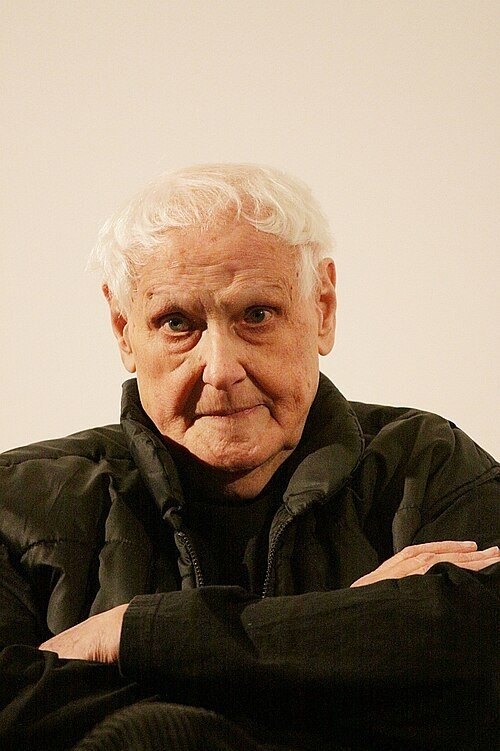
Miklós Jancsó (27 September 1921 – 31 January 2014) was a Hungarian film director and screenwriter. Jancsó achieved international prominence from the mid-1960s onwards, with works including The Round Up (Szegénylegények, 1965), The Red and the White (Csillagosok, katonák, 1967) and Red Psalm (Még kér a nép, 1971).  Jancsó's films are characterized by visual stylization, elegantly choreographed shots, long takes, historical periods, rural settings, and a lack of psychoanalyzing. A frequent theme of his films is the abuse of power. His works are often allegorical commentaries on Hungary under Communism and the Soviet occupation, although some critics prefer to stress the universal dimensions of Jancsó's explorations. Towards the end of the 1960s and especially into the 1970s, Jancsó's work became increasingly stylized and overtly symbolic. He received five nominations for the Best Director Award at the Cannes Film Festival. winning for Red Psalm in 1972. In 1973 he was awarded the prestigious Kossuth Prize in Hungary. He received awards for his life work in 1979 and 1990, at Cannes and Venice respectively. Description above from the Wikipedia article Miklós Jancsó, licensed under CC-BY-SA, full list of contributors on Wikipedia.

Known For

Private Vices, Public Virtues
5.3

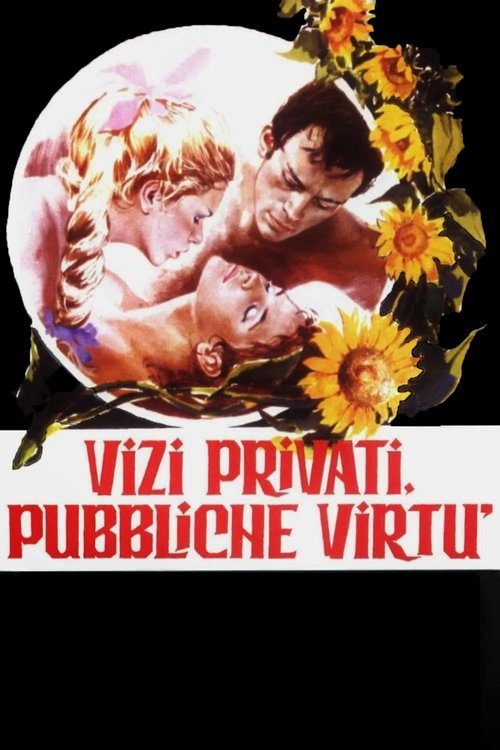
The setting is a Central European kingdom, near the turn of the century. Bored by his very proper wife, the youthful heir to the throne spends his time in amorous dalliances at a sprawling country estate. His wife departs at the arrival of his friends, and they organize a celebration which becomes a wild orgy and culminates in death and tragedy.

Private Vices, Public Virtues

1976
Decameron '69
4.0

Inspired by Giovanni Boccaccio's 14th-century collection of novellas known as The Decameron, this innovative film combines short works from seven directors who set out to interpret Boccaccio's masterwork for the modern age. The result is an assortment of titillating tales ranging from the erotic to the tragic.

Decameron '69

1969
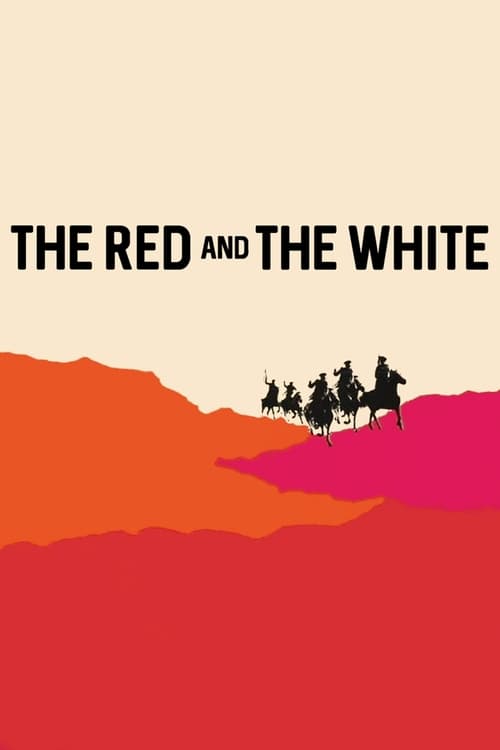
The Red and the White
7.0

In 1919, Hungarian Communists aid the Bolsheviks' defeat of Czarists, the Whites. Near the Volga, a monastery and a field hospital are held by one side and then the other.

The Red and the White

1967
Hungary 2011
N/A

Anthology film made as an act of protest against Hungarian government of Viktor Orban.

Hungary 2011

2012
The Confrontation
6.5

In post-WWII Hungary, a group of Communist college students arrive at a Catholic seminary hoping to engage in peaceful debate with its students.

The Confrontation

1969
The Round-Up
7.2

After the failure of the Kossuth's revolution of 1848, people suspected of supporting the revolution are sent to prison camps. Years later, partisans led by outlaw Sándor Rózsa still run rampant. Although the authorities do not know the identities of the partisans, they round up suspects and try to root them out by any means necessary.

The Round-Up

1966
The Pacifist
5.0

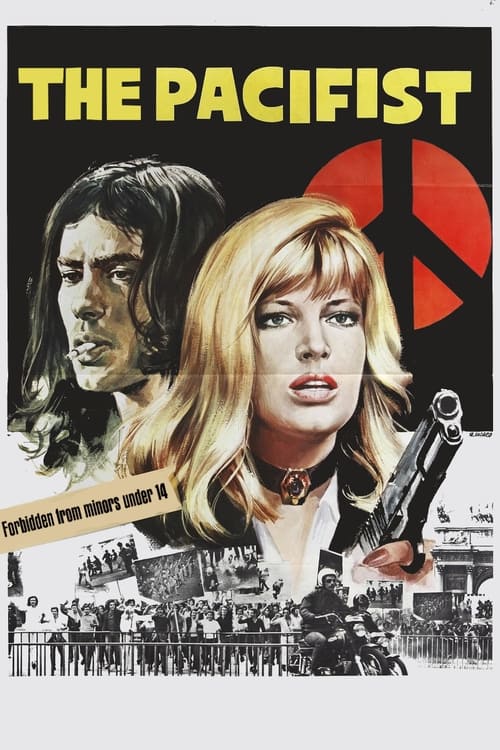
A journalist preparing a story on extremist youth falls in love with a young radical who fears being killed by his companions when he is unable to commit a political assassination.

The Pacifist

1970
My Way Home
7.1

In the aftermath of World War II, a Hungarian teenager, captured by Soviet troops, forms an unlikely bond with a Russian soldier in a remote prison camp.

My Way Home

1965
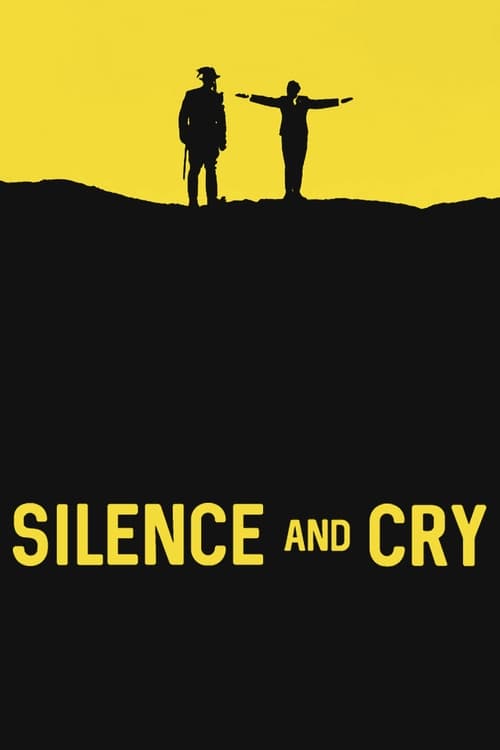
Silence and Cry
7.2

Set during a turbulent era of disquiet, fear, persecution and terror, which permeates every corner of post-WWI Hungarian society. In 1919, after just a few months of communist rule the Hungarian Republic of Councils falls victim to a nationalist counter-revolution. Admiral Horthy, leader of the nationalist far right movement, becomes the self-proclaimed regent of Hungary, and assumes power as the legal Head of State. Soldiers of the short-lived Hungarian Red Army are now on the run from relentless secret policemen and patrol units of the nationalist Royal Gendarme. If caught, ex-Red Army soldiers are executed without mercy or proper trial. István Cserzi, a former soldier of the Red Army has fled to the Great Hungarian Plains and has taken refuge on a farm, which is run by two sympathetic women.

Silence and Cry

1968
So Much for Justice!
5.5

Concerning the Mátyás era in Hungarian history, during the reign of Matthias Corvinus (1443–1490), the film focuses on three eras of the king's life: the young Mátyás fights for the throne, the older Mátyás as king, and the fate of the royal crown and the royal heir after his death.

So Much for Justice!

2010
Allegro Barbaro
6.9

Zsadányi flees from the authorities with his goddaughter, Bankós Mari, and they escape into the forest. The film then skips ahead thirty-fold years: Zsadány and Mari are now lovers, with the sound of war in the background halting their romance. The old friends of Zsadányi have joined with the Nazis, and the landowner living with his peasants in a socialist community grows distant from them. Zsadányi is held responsible for political problems in the country, and will pay with his life.

Allegro Barbaro

1979
Hungarian Rhapsody
6.2

The movie portrays a peasant revolt in Hungary in the early twentieth century.

Hungarian Rhapsody

1979
Red Psalm
6.3

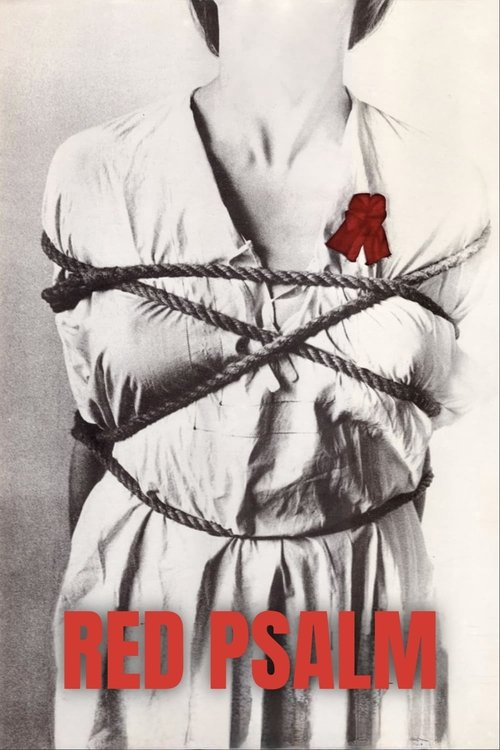
Set in the 1890s on the Hungarian plains, a group of farm workers go on strike in which they face harsh reprisals and the reality of revolt, oppression, morality and violence.

Red Psalm

1972
Season of Monsters
5.5

Zoltai is a Hungarian professor who returns home after a visit to the United States. Following a television interview, he commits suicide and leaves a note for his longtime friend Dr. Bardocz. The doctor and Zoltai's colleague Komindi join the police in investigating what drove the man to suicide.

Season of Monsters

1987
The Tyrant's Heart, or Boccaccio in Hungary
5.3

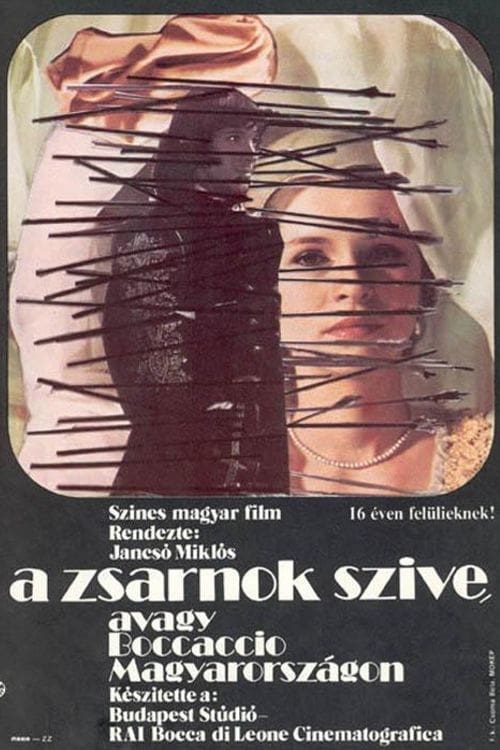
A historical drama set in the 1400s, a young man sent to Italy but is forced back after his father's mysterious death.

The Tyrant's Heart, or Boccaccio in Hungary

1981
Agnus Dei
4.7

Allegory of the suppression of the 1919 revolution and the advent of fascism in Hungary; in the countryside, a unit of the revolutionary army spares the life of father Vargha, a fanatical priest. He comes back and leads massacres. A new force, represented by Feher, apparently avenges the people, but only to impose a different, more refined and effective kind of repression.

Agnus Dei

1971
Electra, My Love
6.1

It has been fifteen years since the death of her father, Agamemnon, and Elektra still burns with hatred for Aegisztosz, who conspired with Elektra's mother to kill him.

Electra, My Love

1974
The Presence
6.5

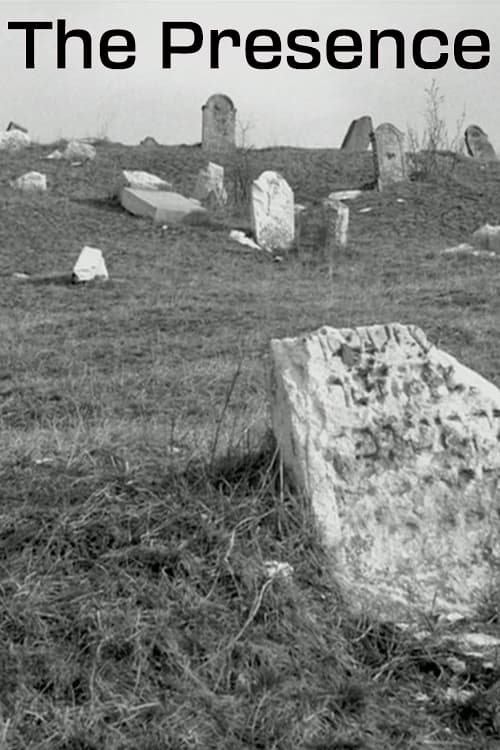
Two old men enter an abandoned synagogue, look at the decay around them, and pray.

The Presence

1965
God Walks Backwards
4.7

From the film-shooting in the Buda Castle Marci and his friend go to a well-paying job. The scene is a big castle in the middle of a huge park. They enjoy the company of the Kid and the beautiful naked French girl, Nathalie. Their job is to watch the monitors on which they can see the Moscow coup détat. By the time Gorbachev is executed the Communist and the Nationalists have taken turns in occupying the castle and the park.

God Walks Backwards

1991
Damn You! the Mosquitoes
4.9

Kapa, Pepe and Mesi would like to buy a scrapyard of trains, to start a nostalgia train and earn a lot of money. The capital to start with they want to get from grandpa, who has come home from America with a suitcase full of money. Everybody wants Mesi to approach the old man, because she is the only one he would speak to. But Mesi is more concerned with the idea that she wants a child, by now from anyone, while Pepe is jealous. Kapa’s alleged son emerges, with the mafia behind him: they, too, are eager to get grandpa’s money. After threats and blackmailing, poisoned apples are sent, with only one side of them poisonous. Those dead, by the way, are resurrected by the sound of a song. At last, nobody manages to get the money, but it wouldn’t make sense anyway: it’s all fake. The Statue of Liberty, however, turns out to be blind.

Damn You! the Mosquitoes

2000