FEEL IT.STREAM
Vojtěch Jasný

Vojtěch Jasný

Directing

Biography

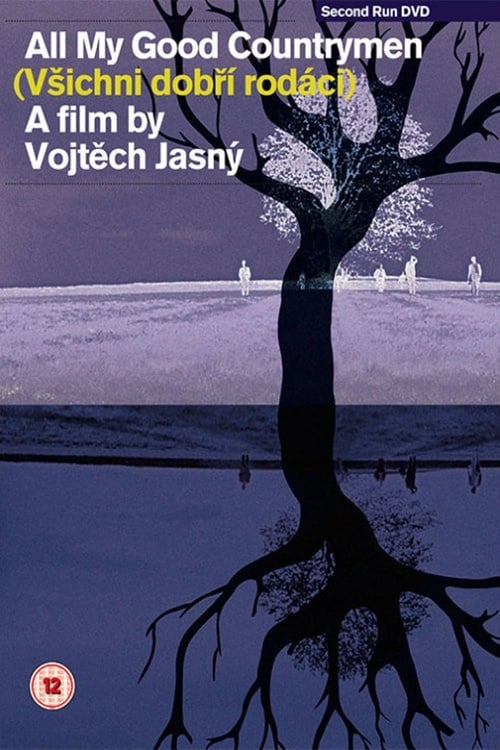
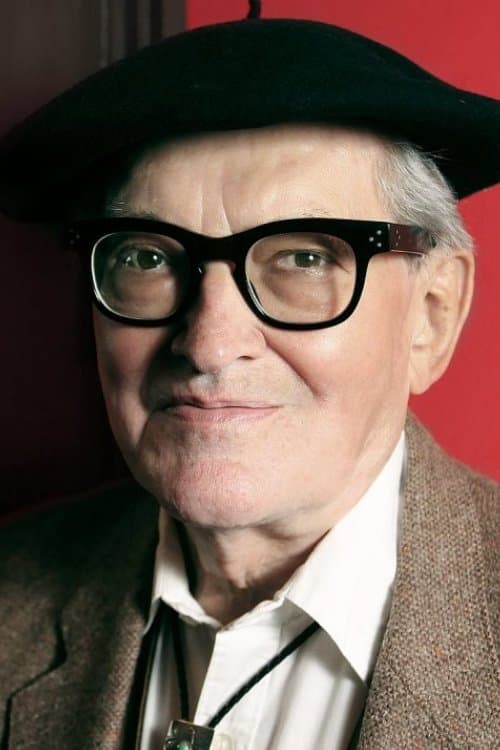
Vojtěch Jasný (born 30 November 1925 – 15 November 2019) was a Czech director who came to prominence in the sixties. He won a Cannes Special Jury Prize for Až přijde kocour/The Cassandra Cat (1963). He was born in Kelč in Moravia. An active filmmaker in Czechoslovakia throughout the 1950s and 1960s, he was among many artists and intellectuals who left the country after the USSR-led invasion following the Prague Spring of 1968. Jasný worked in other European countries for several years including Austria, West Germany and Yugoslavia until relocating to Brooklyn, New York in the early 1980s. Jasný taught film directing classes at Columbia University for several years (where his compatriot Miloš Forman was also a professor and former Film Division Co-Chair) and continues to teach at The School of Visual Arts (SVA) and The New York Film Academy (NYFA). Až přijde kocour/The Cassandra Cat is an allegorical fable about a magical cat that comes to a small Czech town and causes the underlying nature of the townspeople to be revealed. The film won a Special Jury Prize at Cannes. Also among Jasný's works is Všichni dobří rodáci /All My Good Countrymen (1968), a story centering on the lives and fates of several rural Czechs as they struggle to adapt and survive under communist rule; a film later banned in Czechoslovakia after the invasion of 1968.
Known For

No image
N/A

Television series Golden Sixties examines new insights into Czech and Slovak cinema of the 1960s and the role of the Czechoslovak New Wave. Each episode focuses on a different filmmaker.

Golden Sixties

2009
Broken Silence
7.0

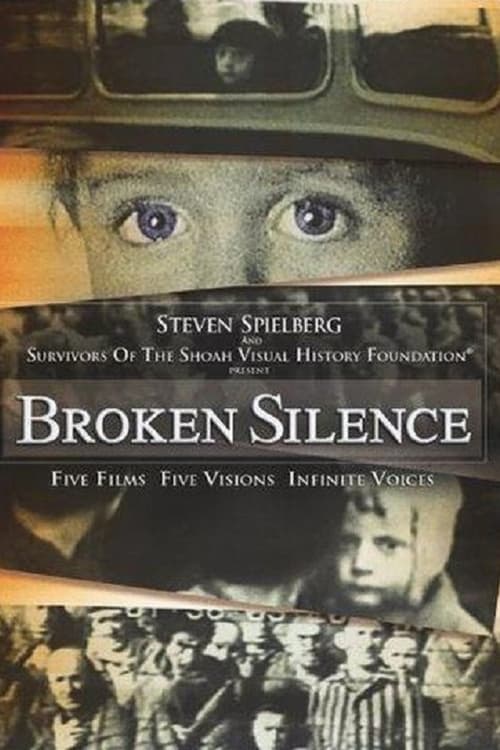
“Broken Silence” is composed of five hourlong shorts from a quintet of international directors: Hungary’s Janos Szasz (“Eyes of the Holocaust”), Argentina’s Luis Puenzo (“Some Who Lived”), Russia’s Pavel Chukhraj (“Children From the Abyss”), the Czech Republic’s Vojtech Jasny (“Hell on Earth”) and Poland’s Andrzej Wajda (“I Remember”). The helmers, some descendants of Holocaust survivors, focus on the atrocities within their particular parts of the world, with testimonials, pictures and an overall tone as they pertain to each region’s culture and history.

Broken Silence

2002
I Survived Certain Death
7.0

Telling the prisoners of a death camp. Boxer Tony Majer, who got into a concentration camp for a fight with the Gestapo, remembers the murderous work in quarries, on the cruel torture of the Nazis and prison solidarity that helped him survive.

I Survived Certain Death

1960
No image
10.0

No description available.

Der blinde Richter

1984
When the Cat Comes
6.9

While old Oliva tells a group of children about his life as a sailor and how he met Diana and her cat with sunglasses, a strange circus arrives in town.

When the Cat Comes

1963
CzechMate: In Search of Jiří Menzel
6.5

An epic exploration of the Czechoslovak New Wave cinema of the 1960s and 70s, structured around a series of conversations with one of its most acclaimed exponents - Closely Observed Trains director Jiří Menzel.

CzechMate: In Search of Jiří Menzel

2018
The Peanut Butter Solution
5.7

Peanut butter is the secret ingredient for magic potions made by two friendly ghosts. Eleven-year-old Michael loses all of his hair when he gets a fright and uses the potion to get his hair back, but too much peanut butter causes things to get a bit hairy.

The Peanut Butter Solution

1985
No image
6.2

The commander of the military training camp, newly promoted Major Cibulka, keeps his subordinates in line. Because of an unexpected emergency, he refuses to give leave even to the young lieutenant Zabran, whose wife is due to give birth any day. In addition, a false article appears in an army newspaper claiming that Zábrana is an example of a bad company commander. In fact, it is he who has the best leadership skills. Fearing for his wife's health, Zábrana disobeys orders and departs for Prague at night to visit his wife in the maternity ward. Cibulka decides to push the envelope even harder, and drives Zábrana, whom he has long disliked, before the prosecutor.

September Nights

1957
Die Rückkehr des alten Herrn
N/A

Rückkehr (Return) consists of two short films inspired by the director's youth: "Die Rückkehr des alten Herrn" (The return of the old lord) is a nostalgic dive into the memories of an old man who entrusts his grandson with stories of his youth. "Mein seliger Onkel" (My blessed uncle) then tells the story of the boy and his adventurous uncle. Both stories take place in a picturesque small town.

Die Rückkehr des alten Herrn

1978
No image
6.0

The adventurous story of a young soldier, lance corporal Milan Pazdera, who falls in love with a beautiful young girl at a party who claims to be in the countryside on medical leave. However, it turns out that she is a dangerous spy who is trying to obtain the call lists with the help of Milan, a scribe at the military camp headquarters.

Everything Ends Tonight

1955
Desire
6.5

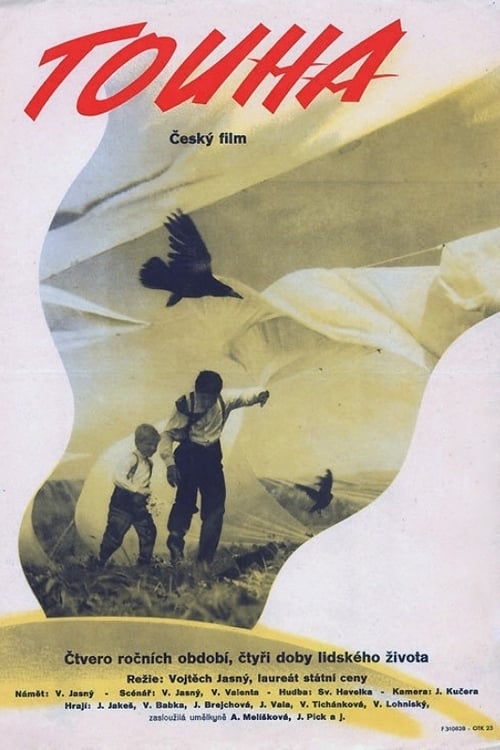
A poignant overview of how short life can be, this interesting drama from Czech director Vojetch Jasny is divided into four separate segments. In the first skit, a young child's impressions are observed as his newborn baby sister becomes a part of the family. In the second, a young woman falls in love for the first time one summer, and in the third, a tough, older peasant woman battles against the farming cooperatives. Finally, in the last segment, everything comes full circle as a woman who is about to become a grandmother dies while her daughter-in-law has not yet given birth.

Desire

1958
All My Good Countrymen
7.7

The lives of 7 friends in a small Czech town from 1945 to some time after 1958.

All My Good Countrymen

1969
We
4.8

In the 26th century the inhabitants of Utopia have so lost their individuality, which varies in number. They live in glass houses (this was written before the invention of television), which allows the political police, called “Keepers” can easily supervise them. They all wear the same uniform and usually turn to each other or as a ”cipher-so” or "UNIFEM" (uniform). They feed on artificial food and rest hour marching in fours in a row the anthem of the One State, pouring out of the loudspeakers. As they are allowed to put a break on the hour (known as the ”sexy time“), draw the curtains of their glass houses. At the head of the One State is one called The Benefactor, which are replaced every year the whole population, usually unanimously. The guiding principle of the State is that happiness and freedom are incompatible.

We

1982
Return to Paradise Lost
5.6

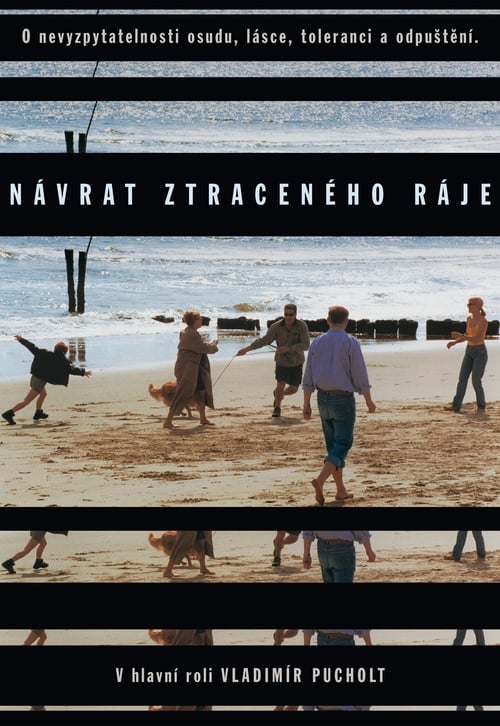
A professor reunites with an old friend who inspires him to return to Czechoslovakia for the first time since he emigrated years ago.

Return to Paradise Lost

1999
The Pilgrimage to the Holy Virgin
8.0

Farmers get away from their arguments by embarking on a religious pilgrimage, enjoy a picnic en route, and on their return decide to form a cooperative.

The Pilgrimage to the Holy Virgin

1961
The Pipes
6.0

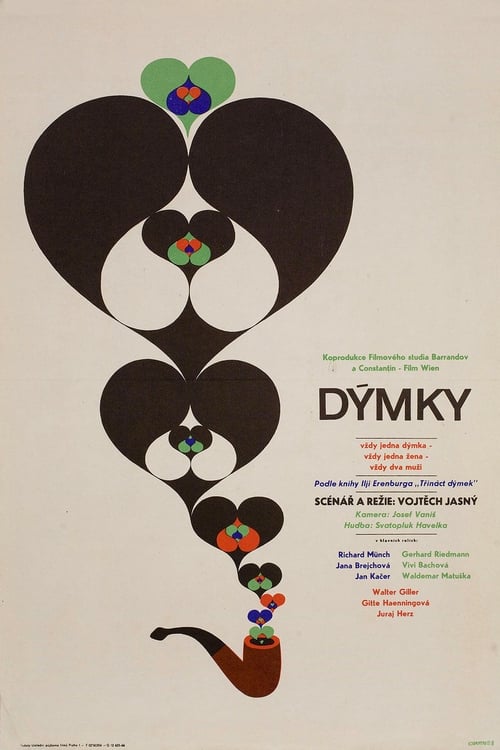
This three-part Austrian/Czech comedy stretches the boundaries of what is considered to be humorous. Part one finds a silent film actor upset because of a rival actor's attention to the former's wife. When he kills his rival, it is only when he is strapped to the electric chair that he realizes that this is his last live scene. The second episode has the wife of an elderly British nobleman having an affair with the young gamekeeper of their estate. Part three finds a peasant woman taking a lover when her husband goes off to fight the war.

The Pipes

1966
No image
8.0

Based on Nikolai Erdman’s banned 1928 comedy play The Suicide, a socially critical grotesque about a man tired of life

Bis später - ich muss mich erschiessen

1984
No image
7.0

A schizophrenic patient is is wasting away in a mental institution, until a young doctor encourages him to write poetry. The resulting masterpieces are however not able to stop the man from suicide.

Das Leben des schizophrenen Dichters Alexander März

1975
The Clown
6.3

Based on the best-selling novel by Nobel-laureate Heinrich Böll, this drama is a passionate indictment of Catholicism. Hans Schnier (Helmut Griem) has earned his living as a clown, though he is in fact a very covert sort of social critic. After enduring a difficult childhood in Bonn during the Second World War, including his mother's fanatic Nazism, he is appalled to discover many of the people he knows and loves swept deeply into involvement in the Catholic Church.

The Clown

1976
Es gibt noch Haselnußsträucher
9.5

The story of François Perret-Latour, a formerly successful banker and member of Parisian high society. His exciting life is long gone, and despite having a large family, he now spends most of his time alone in his Paris apartment on Place Vendôme. But then, within a very short time, a series of events breathe new life into the old, lonely man. His 16-year-old granddaughter, who turns to him in desperation because she is pregnant, plays a key role in this...

Es gibt noch Haselnußsträucher

1983