Acting
No description available.
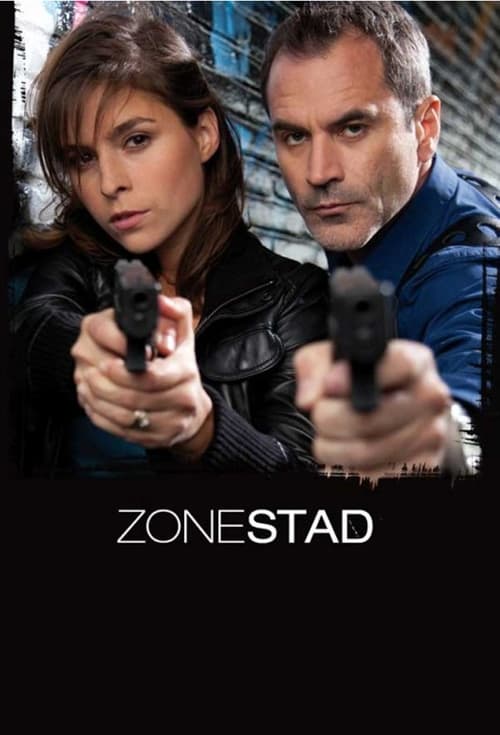
Zone Stad is a Flemish-Belgian TV series about a police-department located in Antwerp. In the series, police officers solve various crimes, which are shown as realistically as possible.
What if you had to investigate your own murder? This anthology series follows victims who wake up to find their own dead bodies and have to navigate the limbo between life and death to solve the mystery of who killed them and why.
Easter Sunday, April 4, 2010. In Bruges, some 200 cyclists and their entourage are getting ready for the 94th Tour of Flanders. A sea of supporters awaits them along the route, while millions more follow Flanders' finest on radio or TV. With the race as a backdrop, De ronde tells the story of a number of people who, like the cyclists, have everything to gain or lose today. The series originally had nine episodes, but these were recut to seven episodes for the DVD.
Sanaa (23) returns to Versailles, the place where she grew up, and in an attempt to reconnect with her little sister Rana (15), she promises her, to go on a journey to the seaside for the first time. A trip they've always wanted to make together.
In a community bound by an age-old tradition, how possible is it to revamp a business for the dead? A Moroccan-Belgian entrepreneur attempts to find out.
The series focuses on the Vangenechten family of butchers. Business is going well until Rudy, the butcher couple's only son, suddenly returns home after years of absence. He refuses to say where he has been all this time, but he does want to come back home and work in the butcher shop.
An unmarried thirty something businessman drives to work, being stuck in a traffic jam. He gets calls from his overprotective mom, as well as from his most helpful assistant. But today he feels a little more lucky, since the mysterious woman he has been following pulls up just next to him. He tries frantically to get in contact with her, but basic communication is not as evident as it seems to be ....
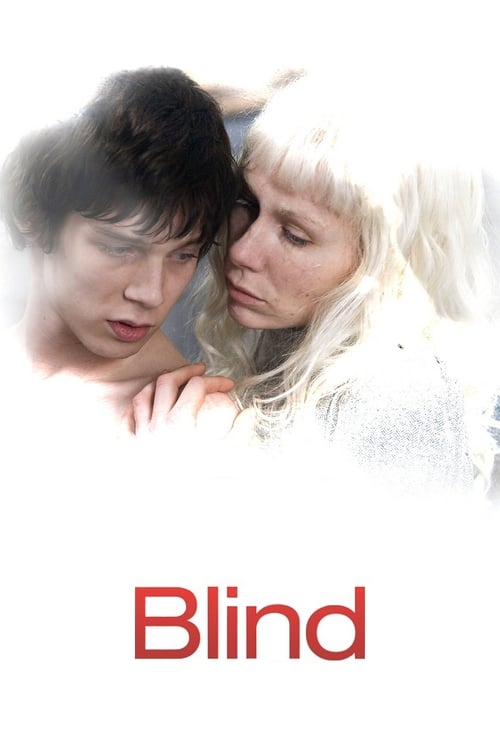
Ruben is a lone and unbalanced young man who lost his sight in childhood. Marie is an albino woman of temperate look and with a lot of insecurities. She has a beautiful voice and, along with Ruben, shares a mutual love for books and tales. Ruben's mother hires her as a reader to read her son books orally. While they live in a mansion, between these two lonely souls sparks love, but will love still be blind if the man recovers from his blindness?
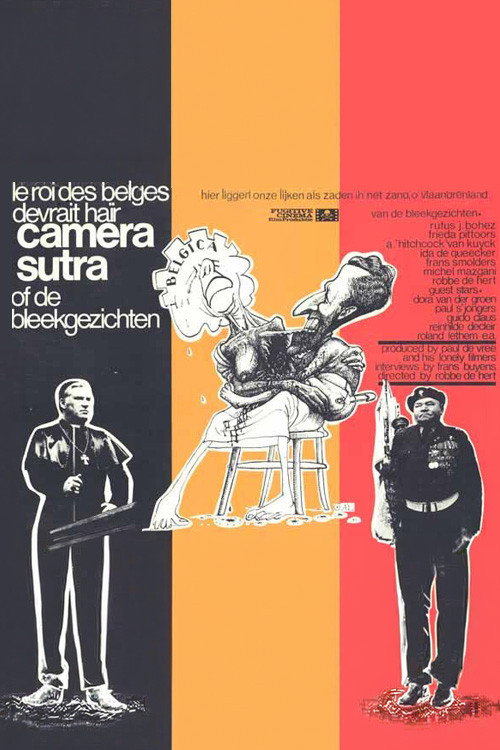
The Herts Camera Sutra or The Palefaces (1973) is a militant and visually fragmented critique of Belgian bourgeois society, blending documentary collage with semi-autobiographical fiction. De Hert attacks the distractions of nationalism, religion, and popular culture while exposing capitalism, social injustice, and postcolonial exploitation. The film’s second half shifts to a disillusioned group of rebellious youths, revealing the uncertainty and emotional paralysis behind revolutionary ideals. Both politically fierce and deeply self-questioning, the film captures the tension between radical ambition and powerlessness.
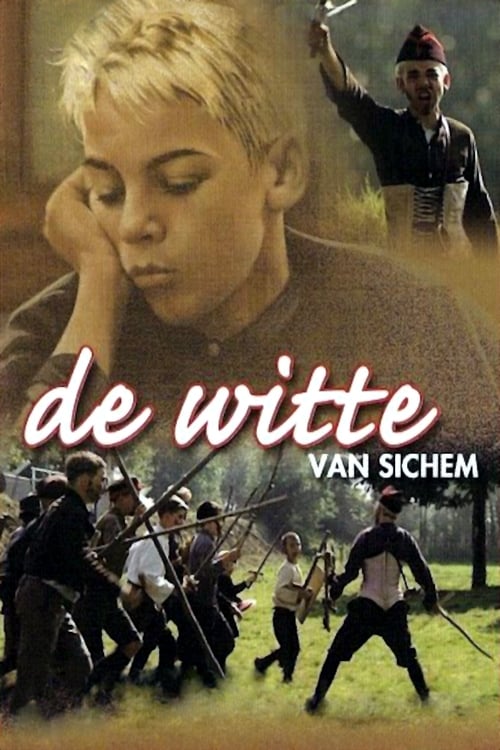
The second movie version, now in color, of Flemish (heimat-)author Ernest Claes' classical novel, titled after the nickname (Dutch 'the White', referring to a blond male) of the main character. The smart but naughty farmhands son's eternal mischief, pranks and disobedience drive his elders (especially teachers, family and father's grumpy employer, a rich farmer, but also neighbors and even the kind curate whose liturgical server he is) and classmates to despair in a time when a boy's punishment was still inevitable, swift and often severe; thus when his mother catches him skinny dipping she takes all his clothes home, forcing him to a long walk of shame, dreading dad's wrath all the way. This version also stresses the story's social and Flamingant aspects.
Shy, gentle half-wit Dennis, whose only obsession is train-spotting, is released early on account of good behavior after a rape sentence. His parents who run a modest barbershop, skeptic André and Rita, desperately try to keep him out of girl trouble, but his victim's sister Barbara starts a hate campaign. After another girl reports abuse, Dennis is jailed and beaten black and blue daily. Barbara's boyfriend, lawyer Thomas Verelst, accepts to help 'pro deo' (no cost) and pleads that Dennis belongs in a mental institution.