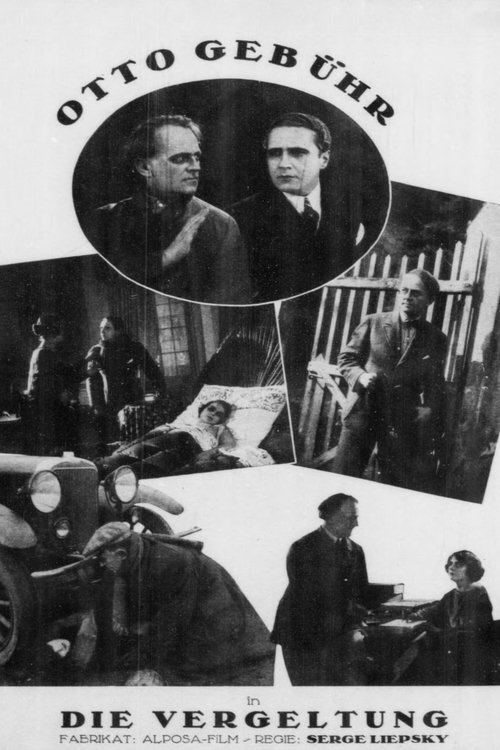
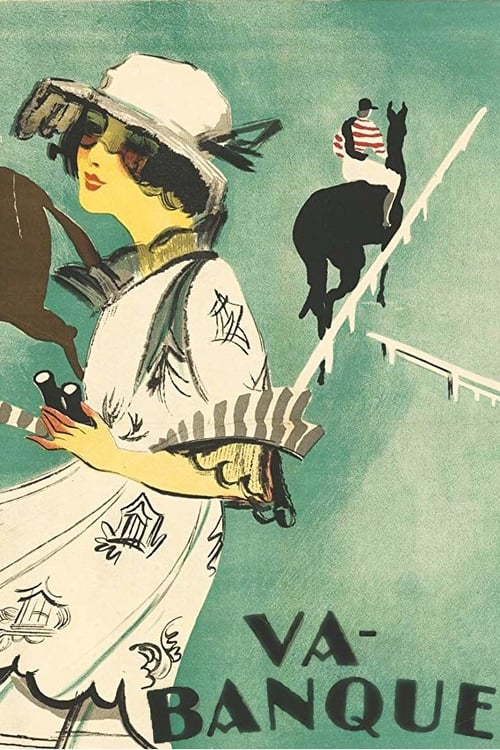
Acting
No description available.
Maud Goodin is the daughter of a millionaire, content with her present life, but she is an interesting conquest for those wants to get on the social ladder.
Lilli marries Dr. Friese, but when she realizes that he was her mother's lover, tragedy ensues.
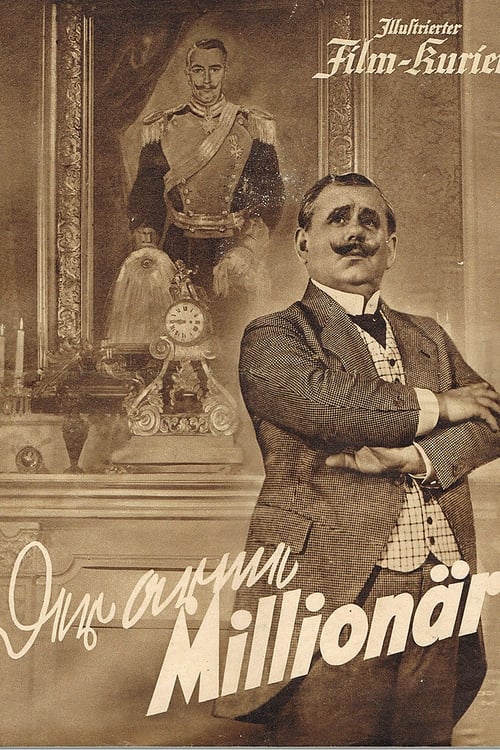
A shoemaker has delusions of grandeur when he inherits from a baron whose life he saved.He prevents his daughter from seeing a mere carpenter, abandons humble old friends, and shows poor judgment by falling for a couple of poseurs.
A lady-in-waiting is to become the companion of a young lady at the splendid estate Amönenhof.
King Frederick II and his leading advisors hesitate too long in the eyes of some officers, so Major von Schill decides to strike out on his own. He hoped that his brave move would be the catalyst for the great war of liberation. But von Schill's troops were soon defeated by a superior force of Dutch-Danish troops. The king takes a public stand against von Schill's actions and eleven of his officers are shot by summary execution on Napoleon's orders. However, one of them, Lieutenant Heinrich von Wedell, escapes death and is sentenced to forced labor for life. When Wedell's brother Karl, who opposed von Schill's unauthorized actions, learns of Heinrich's fate, he decides to help him in a risky way...
Martin Berger’s 'Menschen' serves as a harrowing socio-cinematic autopsy of the human spirit, adrift in the wreckage of a post-war landscape. Far from the escapist fantasies that often dominated early Weimar screens, this 1921 opus delves into the penumbral existence of the disenfranchised. The narrative follows a fatalistic trajectory, where the characters—portrayed with a raw, almost primitive intensity—grapple with the crushing weight of systemic indifference and personal moral decay.
A taxi driver, (Piel), finds an odd contraption on the back seat that renders him invisible, but his friend steals the device to rob a bank. An inventive comedy.
Séraphine and her mother arrive in Paris to visit the 1867 World Exhibition. In an overcrowded city they must be accommodated in separate hotels. During the night the mother, who wasn't feeling very well, gets suddenly worse. When next morning Séraphine goes to meet her every trace of her presence has disappeared and everybody denies having ever met her. The bewildered young woman must find someone who believes her. Previous version of So Long at the Fair (1950).
After a passionate affair in Paris, adventurer Sascha Demidoff can no longer forget Sitha, the beautiful Maharani of Eshanpur. He travels through the wilderness of India to the maharaja's palace, where Sitha still returns his passion. But when his connection to her becomes apparent, he finds himself exposed to the revenge of the deceived maharaja. It is only with Sitha's help that he narrowly escapes from a ravenous tiger in the predator courtyard and flees with her from the palace to Berlin. Meanwhile, the architect Fürbringer is waiting for a message from Eschnapur, where he has been promised the construction of several large buildings. However, Fürbringer's friend and first draughtsman Sperling returns from India without having achieved anything. When Fürbringer's fiancée, Irene Traven, discovers that the maharajah is in Berlin incognito, she gains access to him and manages to get the prince to award her fiancé the building contract...
A German circus drama.
Four school chums who meet yearly are missing their friend, who was working in a Stockholm bank and supposedly killed himself. But was it murder, instead?
An adaptation of the eponymous novella by Jeremias Gotthelf.
During the Seven Years' War, Prussian Major von Tellheim sacrifices his own fortune to save a Saxon estate from being plundered. After the war ends he is discharged and left penniless when the government suspects his noble deed was actually due to a bribe. Believing his lost honour makes him unworthy Tellheim breaks his engagement to Minna von Barnhelm, but she tracks him down to a Berlin tavern to win him back. To test his love Minna pretends she has also lost her wealth, prompting Tellheim’s protective instincts to finally override his stubborn pride. The film concludes with a royal decree from Frederick the Great, restoring Tellheim's rank and fortune and allowing the couple to marry.