Basma Alsharif
Directing
Biography
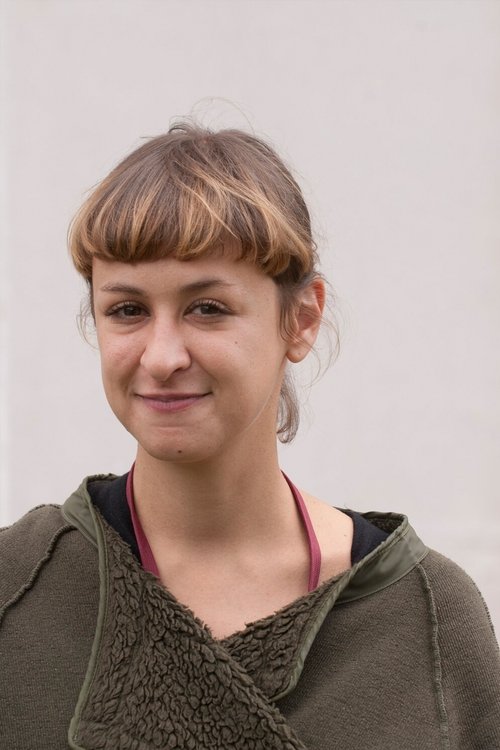
Basma Alsharif is an Artist/Filmmaker born in Kuwait to Palestinian parents, raised between France and the US. Since receiving a Master of Fine Arts in 2007 from the University of Illinois at Chicago, she developed her practice nomadically between Chicago, Cairo, Beirut, Sharjah, Amman, the Gaza Strip and Paris. Basma's work centers on the human condition in relation to shifting geopolitical landscapes and natural environments. Interested in what cannot ever be proven or explained, she uses photography, film, video, sound, language and performance to reveal the fallibility of our perception and of history. Engaging with politics on a visceral level through pieces characterized by their immersive, lyrical qualities, Alsharif creates familiar environments that lure us into unsettling experiences of being comfortable and foreign simultaneously.
Known For

Based on Gertrude Stein’s eponymously named screenplay, written in 1929 as European fascism was building momentum. Beatrice Gibson’s adaptation, set almost a century later in contemporary Paris, deploys Stein’s script as a talismanic guide through a contemporary moment of comparable social and political unrest. An original soundtrack, written especially for the film by British composer Laurence Crane, responds to the repetition, duplication and duality at play in Stein’s script. Both a fictional thriller and an act of collective representation, Deux Soeurs proposes empathy and friendship as means to reckon with an increasingly turbulent present.
Two Sisters Who Are Not Sisters

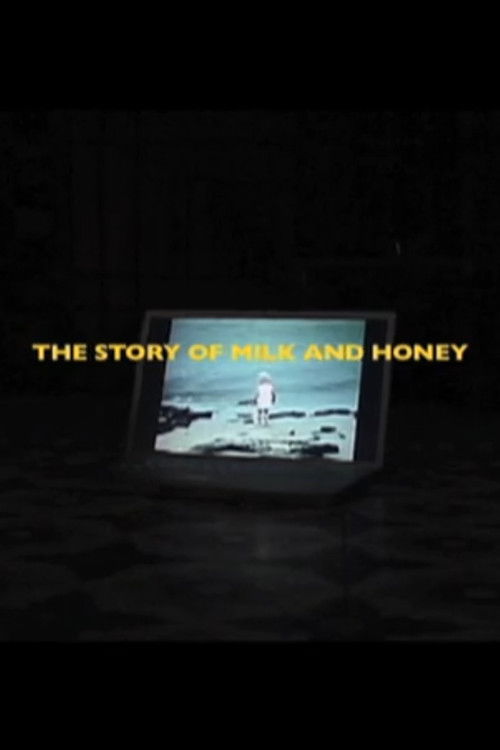
The Story of Milk and Honey is a short experimental video belonging to a larger project, which includes photographs, drawings and text, detailing an unnamed individual’s failure to write a love story about the Levant, as if it were a classical Arabic song. Through voiceover narration that weaves together images, letters, and songs, a story of defeat transpires into a journey that explores how we collect and perceive information, understand facts, history, images, and sound and where the individual is to be found in the midst of the material.
The Story of Milk and Honey

Super 8mm film transferred to digital video. Installation composed of footage from three separate sequences that interweave frame by frame. Shot in the interiors of empty homes in Amman, Jordan. Sound composed of recording of food ingredients for unspecified dishes looped repetitively over ambient noise from film transfer to digital video.
Turkish Delight

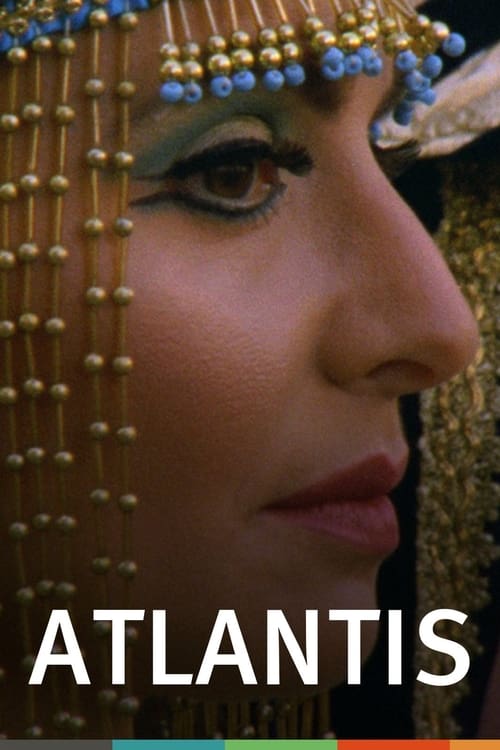
A documentary portrait of Utopia, loosely framed by Plato’s invocation of the lost continent of Atlantis in 360 BC and its re-resurrection via a 1970s science fiction pulp novel.
Atlantis

Capital was shot at various locations including the CityLife residential complex in Milan, the Nile riverfront in Cairo, residential neighborhoods in Alexandria, and construction sites of new cities—places where architectural histories are romanticized even as they are being erased. Through these sites, al-Sharif explores the desires that drive politicians, urban planners, and their imagined ideal residents as well as how the resulting designs, with their disregard for the historical failures of colonial architecture, seek to transform and control the cultural and political landscape. Together the film and installation hint at the limits of free speech and reveal how the legacies of fascism live on in the present.
Capital

An attempt to describe the everyday of a place that struggles for the most basic human rights: the Gaza Strip as a microcosm for the failure of civilization.
Home Movies Gaza
Originally presented as an installation, this raw, haunting short by Basma al-Sharif depicts a horse ride at dusk on a farm in Gaza through enveloping sights and sounds — serene and devastating at once.
It's So Beautiful Here

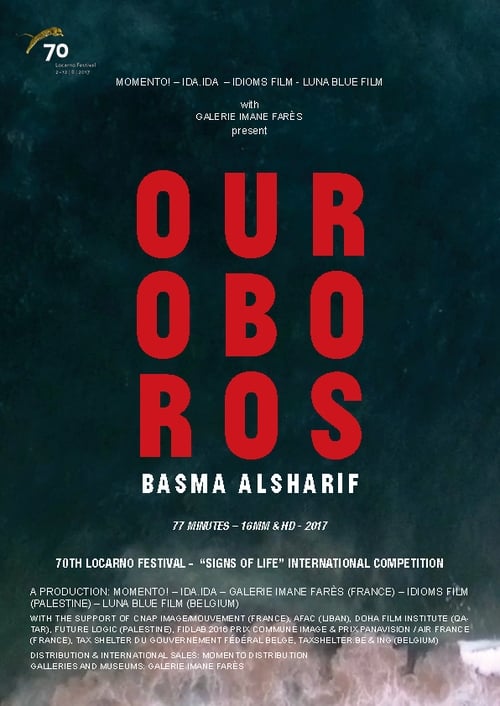
This film is an homage to the Gaza Strip and to the possibility of hope beyond hopelessness. Ouroboros, the symbol of the snake eating its tail, is both end and beginning: death as regeneration. A 74-minute experimental narrative film that turns the destruction of Gaza into a story of heartbreak, Ouroboros asks what it means to be human when humanity has failed. Taking the form of a love story, the film's central character is Diego Marcon, a man who embarks on a circular journey to shed his pain only to experience it, again and again. In the course of a single day, his travel fuses together Native American territories, the ancient Italian city of Matera, a castle in Brittany, and the ruins of the Gaza Strip into a single landscape.
Ouroboros
High Noon is the meeting between the Southern Californian landscape with that of the South-Eastern landscape of Onomichi Japan as an experience of the gravitational pull towards the center of the earth, with the knowledge that we are sometimes standing on the world upside down. We briefly glimpse each landscape as a dizzying series of loops that seem to repeat themselves endlessly.
High Noon

No description available.
Light Licks: Pardes: Drowned Hat Rescue Media City Motown Jump
An installation that takes over the space of the exhibition to re-establish it as a room in which all the elements that comprise the mise-en-scene are careful disruptions of a scene.
Trompe l’oeil

Drifting through the streets of former East Berlin neighborhoods, the film traces the unsteady affective terrain of isolation and displacement, assimilation and oppression. The bureaucratic condescension and violence of a residency interview sits alongside domestic scenes featuring a father and his young son. The film uncovers the loss and thrumming tensions of exilic life under Western Europe’s smooth gray surfaces.
Morning Circle

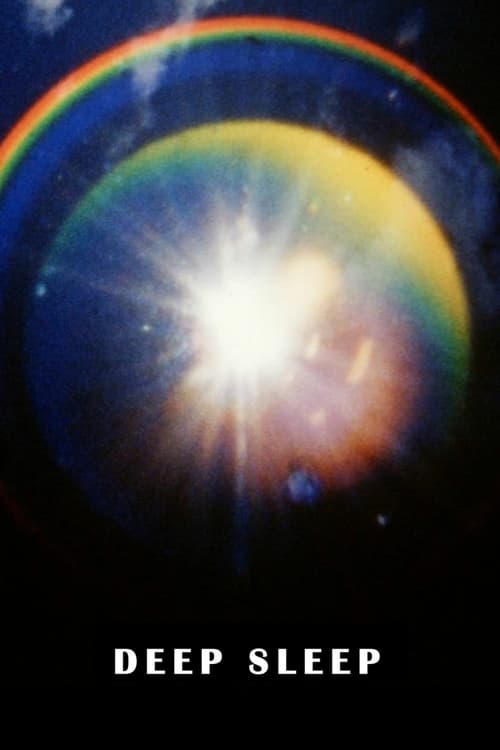
A transfixing performance film in which artist Basma Alsharif shoots footage in Athens, Malta and the "post-civilization" of the Gaza Strip while under self-hypnosis.
Deep Sleep
a 3 minute camera edit blends the slow motion image of a woman walking into a river over the course of an hour.
Untitled (Lyndsay Bloom)
A woman recounts her story of the mass exodus of Palestinians from Jerusalem, beginning with the arrival and ending with the departure. The tale moves backwards in time and through various landscapes but the events are not being undone and the story has not been untold. Farther Than The Eye Can See is the tracing of a decaying experience told through words of a place that no longer exists.
Farther Than the Eye Can See
Short film about the politics of measuring.
We Began by Measuring Distance

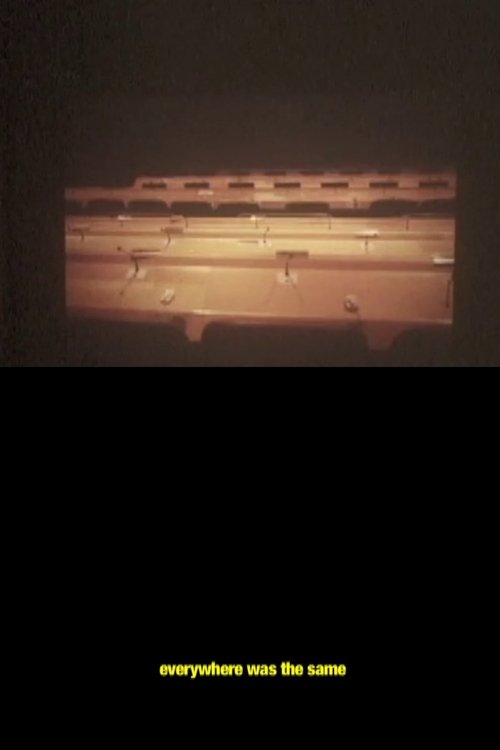
A slideshow of abandoned spaces carries along the story of two girls who mysteriously turn up on the shores of a pre-apocalyptic paradise. Factual texts drawn from the Madrid Peace Accords to the CIA World Factbook are weaved into a fictional narrative that unfolds the story of a massacre.
Everywhere Was The Same
Deep in the woods of New Hampshire, apathy and violence are blurred. A horror nature film develops, as Basma Alsharif fuses images from Ruggero Deodato’s “timeless slice of visceral horror,” Cannibal Holocaust, a self-referential study of sorts of the representation of violence, with those of another horror, equally distant, yet all too close.
A Field Guide to the Ferns
for the installation: Renée’s Room
Renée’s Room
Basma al-Sharif’s new work Old Masters was filmed at the Gothenburg Museum of Art in the spring of 2025. Inspired by Gus van Sant’s film Elephant (2003) and Alan Clarke’s earlier work (1989) with the same title, the video work follows protagonists throughout the museum and through an orange garden in Gaza. In conversation with fellow artists, al-Sharif opens up a space for reflection on the role of the witness. In Old Masters, al-Sharif returns to ideas and questions raised in an earlier work, Ouroboros, a film she conceived nearly ten years ago as a visual elegy for Gaza, connecting Palestine to other parts of the world. In Ouroboros, al-Sharif asks what gets to survive versus what is destroyed. As a genocide is enacted in Gaza, these questions remain urgent and shape al-Sharif’s new work.