Directing
An unemployed Algerian worker leaves Paris by hitchhiking. He soon found himself in Brittany and, seduced by the beauty of wild gorse, eventually established himself as a gorse merchant. But for problems with parking his little cart, he had a rough explanation with a law enforcement officer. The happy intervention of factory workers, the eager kindness they showed him, saved him from despair. This film is part of a trilogy "Them And Us" with the films "Les 3 Cousins" and "Techniquement Si Simple".
Documentary about diamond mining in the Central African Republic
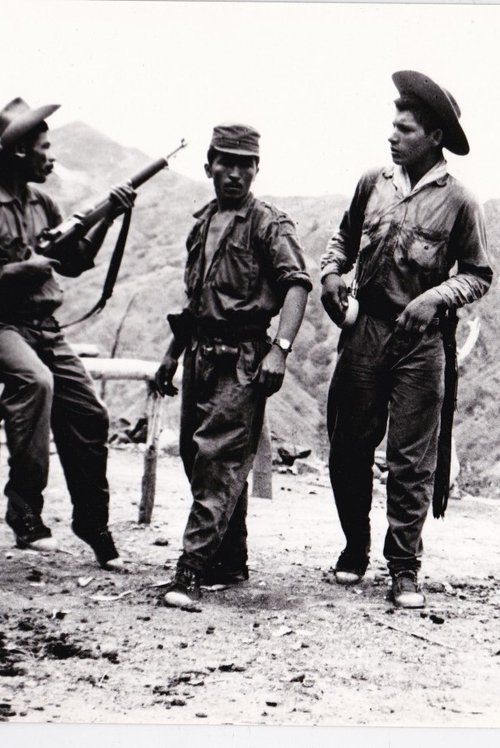
Documentary filmed in 1965 by two journalists in the remote town of Rio Chiquito, Colombia, a self-proclaimed communist "republic." The film shows the live of villagers and guerilleros before and after an attack by Colombian government forces.
A documentary look at striking workers in a textile plant in Besançon, France, centering on interviews with workers about their motivations for becoming involved with the union and the struggles of their day to day life.
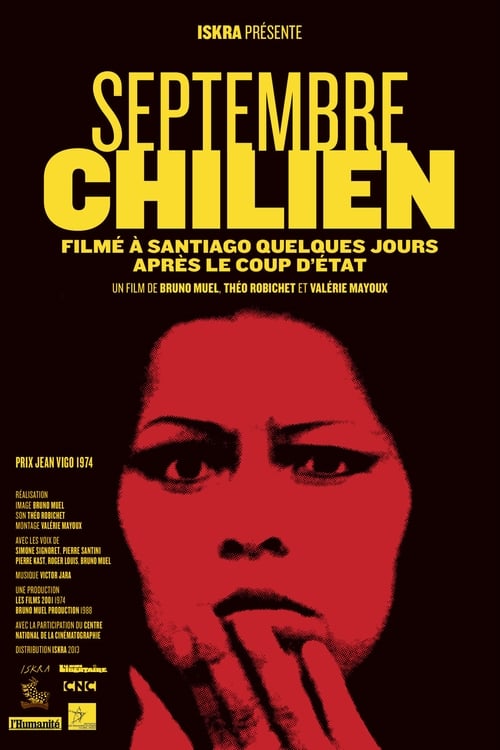
Bruno Muel's documentary on the coup in Chile in 1973. Muel, who was part of the famed Medvedkine group, along with Chris Marker and Jean-Luc Godard, among others, captured one of the most powerful portraits of the early days of Dictatorship. Profound solidarity with the socialist cause, Muel and his team showed great courage to mix the official registration of images with those triumphant, clandestine, of the nascent opposition.
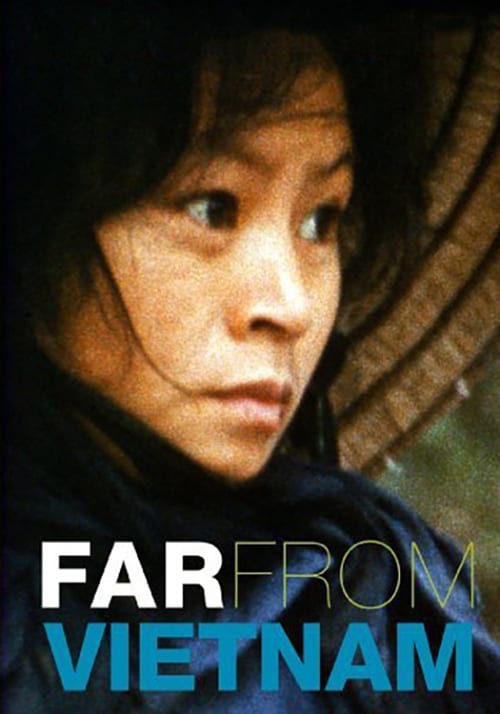
In seven different parts, Godard, Ivens, Klein, Lelouch, Marker, Resnais, and Varda show their sympathy for the North-Vietnamese army during the Vietnam War.
Guerre du peuple en Angola focuses on the situation in Angola in June 1975, when the declaration of independence sparks the start of a civil war. The filmmakers, who went there to train young Angolan filmmakers, bring back this film, unequivocally presenting the war as the struggle of the people and their movement against imperialism and its allies. In the north, in the forests, villagers have joined the armed resistance and support the MPLA.
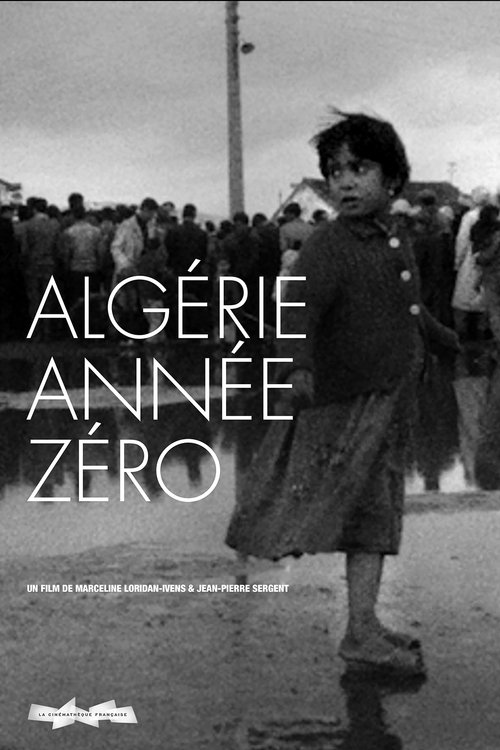
Documentary on the beginnings of Algerian independence filmed during the summer of 1962 in Algiers. The film was banned in France and Algeria but won the Grand Prize at the Leipzig International Film Festival in 1965. Out of friendship, the production company Images de France sent an operator, Bruno Muel, who later declared: "For those who were called to Algeria (for me, 1956-58), participating in a film on independence was a victory over horror, lies and absurdity. It was also the beginning of my commitment to the cinema."
No description available.
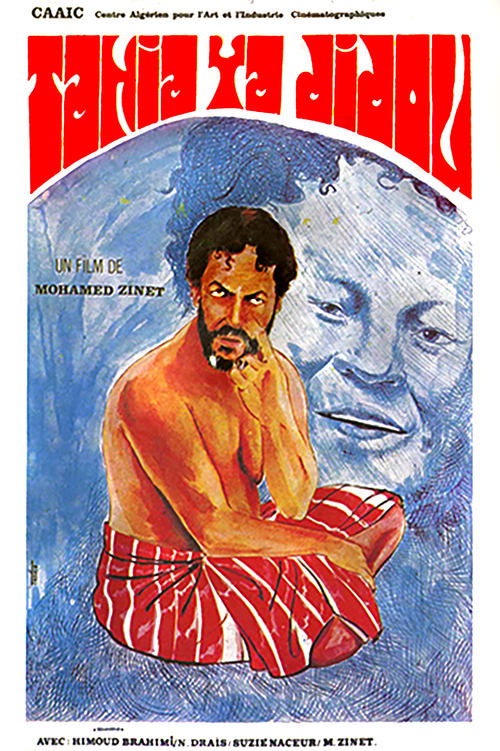
Originally commissioned by the city of Algiers to promote tourism, Mohamed Zinet’s Tahia ya Didou blends documentary with fiction to create a poetic, acerbic and rapturous portrait of the director’s native city. The camera travels freely, through the port, market, streets and cafés, capturing everyday people, some of whom recur frequently enough to seem like protagonists. The nominal plotline follows a French tourist couple’s leisurely visit to the city, the man having previously served in the army during the Algerian war. As they walk around, his comments betray his mindset’s racist colonial prejudices, while his wife reiterates asinine clichés. Their unhurried wandering is interrupted when he comes across a blind man and realises that he tortured him during his army service. The film is punctuated with punchy sequences that show a poet named Momo delivering verse as an elegy for Algiers.
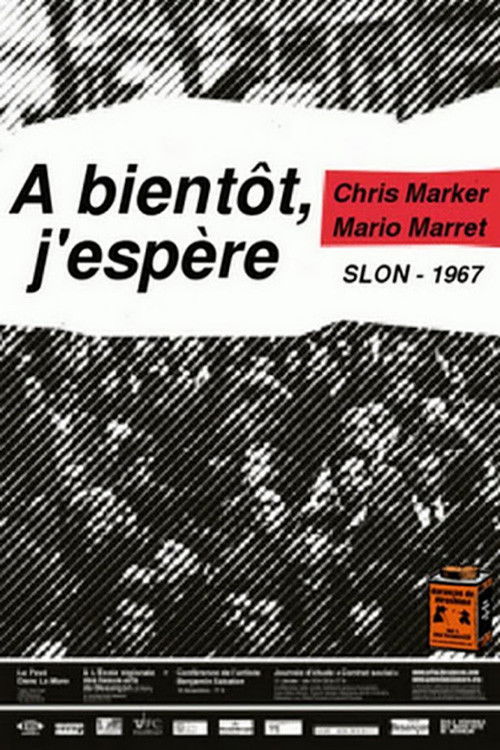
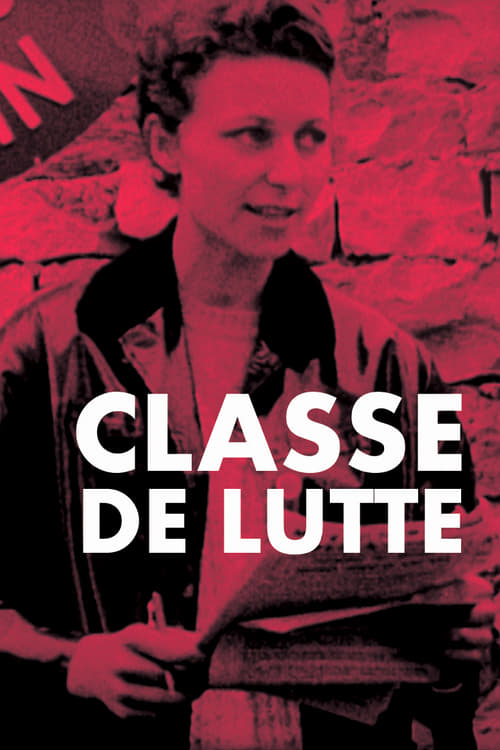
A follow-up to Be Seeing You (À bientôt, j’espère), this collective work—initiated by Chris Marker and the Medvedkin Group—was made in collaboration with workers at the Yema Watch Factory in Besançon. It follows a female worker who becomes active in labor organizing, depicting everyday struggles and the growing consciousness within the French labor movement.
A documentary about the Baumettes prison, in Marseille, France.
The Three Cousins is a comedy-drama by René Vautier released in 1970 about the living conditions of three Algerian immigrant cousins looking for work in Paris. Housed in a narrow construction shed, the coal stove will cause them to suffocate. The Three Cousins won the Best Human Rights Film Award in Strasbourg in 1970.
Interview with Bruno Muel and Christian Corouge, former members of Sochaux's Medvedkine group, filmed at La Hestejada de las arts in Uzeste, by Olivier Azam (co-founder and member of the Mutins de Pangée cooperative). "A trace in the collective and working-class memory". (Christian Corouge)
The daily life of Luanda's orphans, the child soldiers who took part in Angola's war of independence. Now that their country has been liberated, they work in the sugar cane and palm oil factories. Lopes, aged 10, forms an orchestra and sings A luta continua, the rallying cry that also covers the painted walls of Luanda.
Festival panafricain d'Alger is a documentary by William Klein of the music and dance festival held 40 years ago in the streets and in venues all across Algiers. Klein follows the preparations, the rehearsals, the concerts… He blends images of interviews made to writers and advocates of the freedom movements with stock images, thus allowing him to touch on such matters as colonialism, neocolonialism, colonial exploitation, the struggles and battles of the revolutionary movements for Independence.
A famous documentary about the Peugeot factory in Sochaux in the 1970s. In this region, everything is owned by Peugeot: homes, stores, schools and leisure - there is no escaping it. The production line dictates the rhythm of everyday life: a horrible machine, draining workers' energy and hope.
Witnesses tell of the day the police took over the Peugeot factories in Sochaux on strike for 22 days. Balance: two dead, one hundred and fifty wounded. The first film by Sochaux's Medvedkine group, this film recounts one of the most violent episodes of May 68: the murder of two Peugeot factory workers by a CRS brigade during clashes on June 11, 1968. The film was shown two years later, on June 11, 1970, in a cinema opposite the factory, on the day commemorating the death of the two workers.