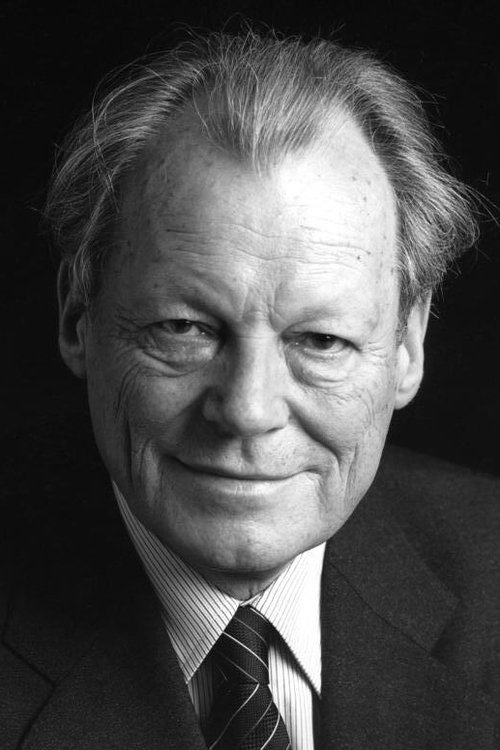
Willy Brandt
Acting
Known For
German daily news program, the oldest still existing program on German television.
Tagesschau
No description available.
Riverboat

Long-running Channel 4 documentary series covering issues about British society, politics, health, religion, international current affairs and the environment. Known for featuring a mole inside organisations under journalistic investigation.
Dispatches
The spectrum of topics ranges from political history with a focus on contemporary history (especially National Socialism and post-war history) to cultural history and social history. In addition, ZDF-History also regularly deals with pre-modern history, art and cultural history.
Terra X History
No description available.
Boulevard Bio
Das aktuelle sportstudio is a German sport magazine on German broadcaster ZDF.
Das aktuelle Sportstudio
No description available.
Wortwechsel
A German television format in which Günter Gaus interviewed prominent members of German society, particularly politicians. More than 200 interviews were conducted over the course of 40 years.
Zur Person

No description available.
Zeugen des Jahrhunderts
Presents a filmed, intercontinental conversation that links moderator Edward R. Murrow in New York with three internationally known figures located in different parts of the world. What set this apart from other televised interview/discussion programs was the fact that its participants could not see each other but could hear one another via telephone lines and radio.
Small World
No description available.
Je später der Abend
No description available.
Panorama
No description available.
Die Fernseh-Diskussion
No description available.
Journalisten fragen - Politiker antworten

Romm pulls out all the stops in its selection of documentary material to draw the viewer not only into absolute horror about fascism and nazism in the 1920s–1940s Europe, but also to a firm conviction that nothing of the sort should be allowed to happen again anywhere in the world.
Triumph Over Violence
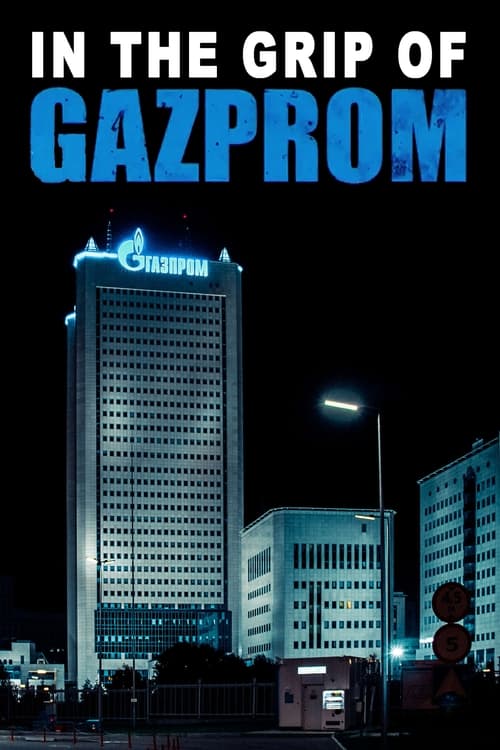
The war in the Ukraine has changed the way many European countries view Russian politics. Suddenly it became clear how dependent countries had become on Russian gas imports for decades and what Vladimir Putin was up to. However, no country needs more gas than Germany. It was only after Russia's invasion of the Ukraine that the German government realized that Russia had long used gas as a weapon to impose its will on states. The instrument created for this purpose is the natural gas production company GAZPROM. So how did Germany become so dependent on Russian gas? The documentary shows how, over several decades and several changes of government, a broad alliance of politicians and business representatives did everything possible to secure Germany's energy supply with cheap Russian gas, while the Kremlin's foreign policy became increasingly aggressive and the warnings of experts went unheeded.
In the Grip of Gazprom
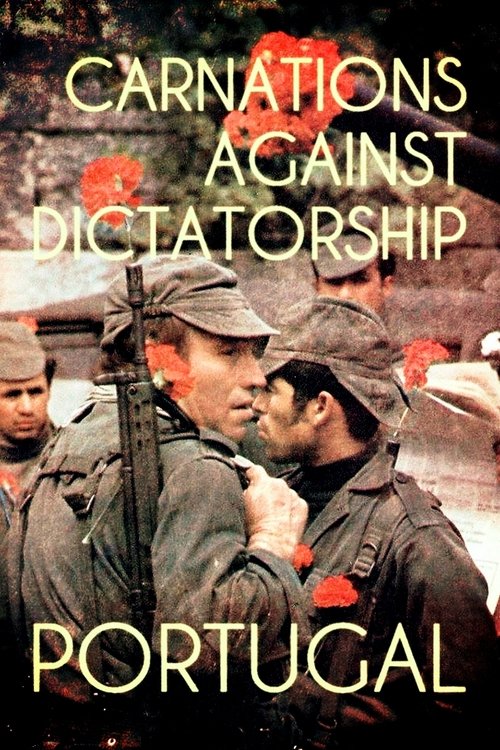
In Portugal, during the night of April 24-25, 1974, a peaceful uprising put an end to the last government of the Estado Novo, the authoritarian regime established in 1933 by dictator António de Oliveira Salazar (1889-1970), paving the way for full democracy: a chronicle of the Carnation Revolution.
Portugal: Carnations Against Dictatorship
From the behavior, discourse, and appearance of individual actors, Vachek composes, in the form of a mosaic, a broad and many-layered film-argument about Czechoslovak democracy in the period of its rebirth, all administered with the director’s inimitable point of view.
New Hyperion or Liberty, Equality, Brotherhood

An historic presentation by CNN documenting the lead up to and the beginning of the war in Iraq.
Desert Storm: The War Begins
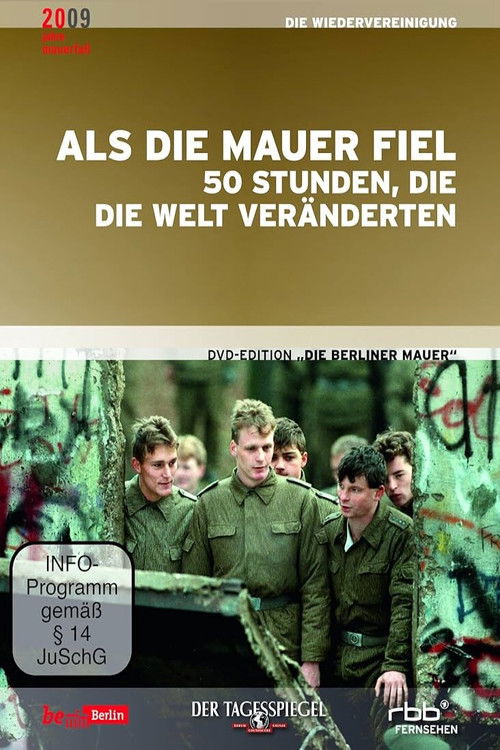
A detailed reconstruction of the events from Nov. 9th to 11th, 1989, which led to the Berlin wall tumbling down, on a local, national and international level.