Writing
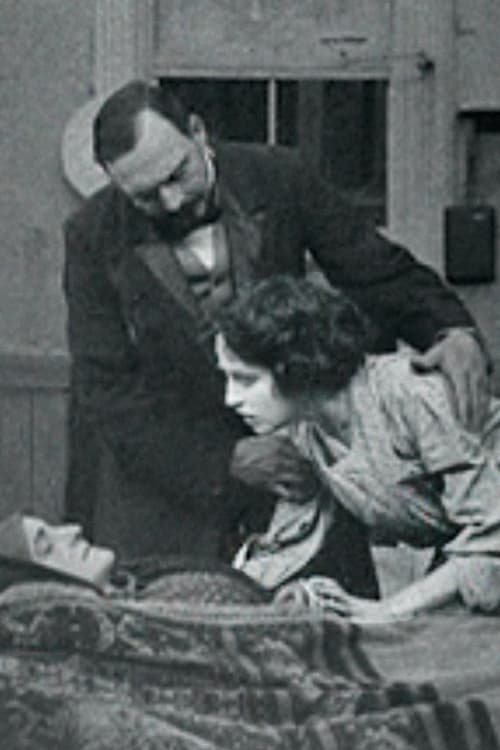
The story opens in a New York tenement where Miss Leonard is living in hopes of finding the means to support herself and little baby. A month before her husband had been killed in a mine accident and Miss Leonard sought the city, leaving her child m the care of a neighbor. She is aroused by a knock on the door. A youth of the underworld, struck with her beauty, has followed her home. He tells her where she can secure work. When he offers her money to pay for a new dress, she understands, and drives him from the room. Another knock. It is her landlord. She must pay her rent in the morning. Her eye falls on the card left by the "cadet." and makes a desperate decision that will change her life.
A wagon train heading west across the great desert runs out of water, and is attacked by Indians. One man -- their last hope -- is sent out to find water.
A short version of James Fenimore Cooper's famous tale about Natty Bumppo, or "Hawkeye," and his exploits during the French and Indian war.
A widower and his two daughters live in the wilds of the north woods. They form the acquaintance of two trappers, Bob Cole and Jim Watson, who hunt in the neighborhood. As fate will have it, both trappers love the same girl, the elder sister, but she loves Bob, while the younger girl is attracted by Jim. The elder girl, however, through a woman's whim, pays marked attention to Jim simply to arouse jealousy in Bob. He, in temper, cannot reason her motive and leaves, so through pique she accepts and marries Jim. Later Bob revisits the place, feeling that the girl loves him best, and tries to induce her to go away with him. He finally succeeds and, as you may imagine, fate brings about justice.
The husband of the young woman is shot by a rejected suitor and she is left with an infant boy, who is to be spared until he reaches man's estate. Standing over the dead body of her husband she vows vengeance.
Mildred lives with her husband, the prospector Steve Clark, in an out-of-the-way cabin in the mountains. She is affectionate and considerate, but her husband shows little if any concern for her, let alone love. A newcomer of friendly disposition and good humor one days runs into Clark and later finds Mildred by herself at home. Lonely and lovesick, she is overwhelmed by his lively attention and apparent affection.
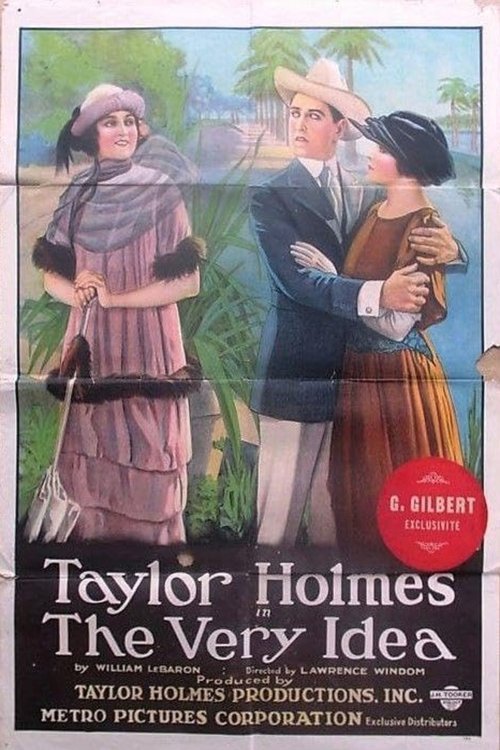
Gilbert and Edith Goodhue lack nothing in life except a child, which they desperately desire. Edith's brother Alan, who is interested in eugenics, suggests that they pay their chauffeur Joe and maid Nora to have a baby for them. While awaiting the proper time to elapse, Edith and Gilbert travel to Palm Beach for an extended vacation, where Gilbert, attempting to obtain a child for his wife, vamps a dancer with a baby.
The Goddess, the prettiest and best-natured girl that ever graced that little mining town, meets the tenderfoot prospector and leaves him another worshiper of her. His chances, however, are slim for Blue-grass Pete has won her affections, he having at an opportune moment saved her from the fangs of a snake which was about to attack her. Pete's affections turn to the Goddess's sister, while Pete's friends plot to rob.
Before he can avenge a crooked card game, Dan Carrington suffers heart failure and dies in his chair. John Tralee, the cheater, feels a pang of guilt when he discovers that he has taken all of Carrington's money and adopts the dead man's little girl, Lois. The girl grows up and the gambling hall becomes her second home.
Marion lives in a house that becomes a place of safety—or a "refuge"—for a man fleeing from danger. A group of criminals waits for a wealthy homeowner to leave before breaking into the house to threaten his wife and daughters. The family members barricade themselves inside one of the rooms for safety as the thieves attempt to break through the door. Upon discovering the situation, the father rushes back home in a desperate attempt to save his family from intruders.
A 1913 short directed by Stanner E.V Taylor and starring Marion Leonard.
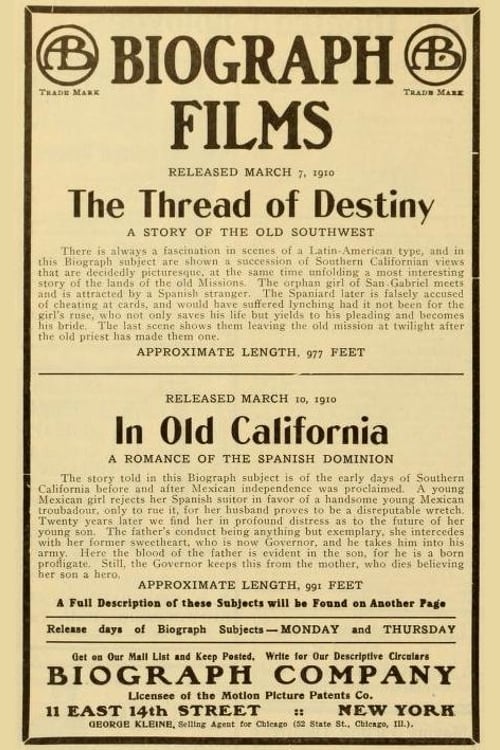
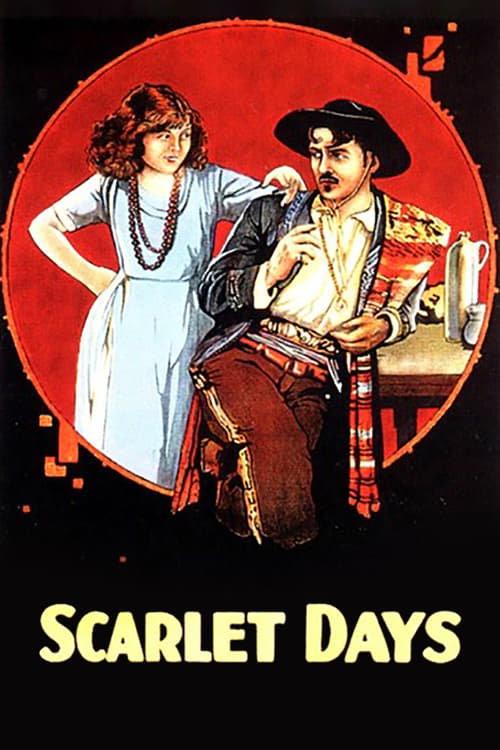
An historical dramatization of a Spanish woman during the reign of Spanish and Mexican owned California in the early 19th century.
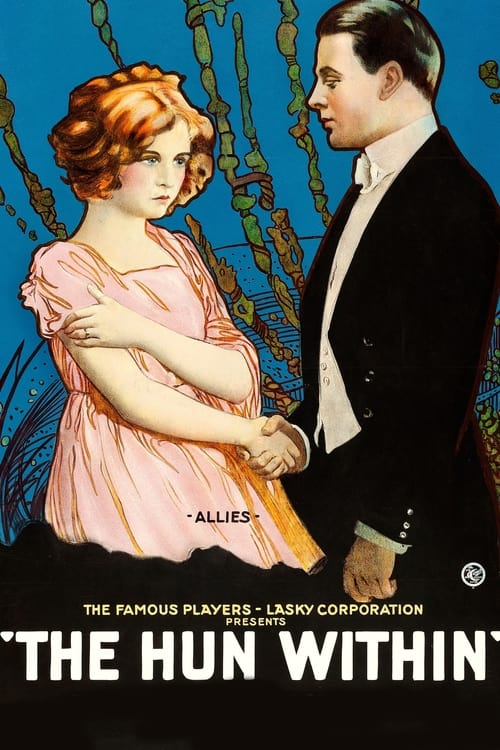
A German-American father, loyal to his new U.S. home, finds himself on opposite sides with his son in the wartime conflict between Germany and America. The son becomes involved with German agents plotting against U.S., and the father must decide between his son and his adopted homeland.
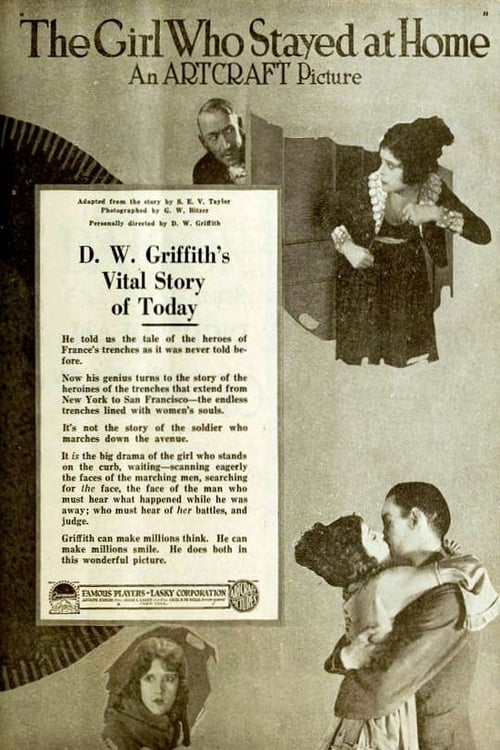
Ralph Grey visits France with his shipbuilder father, and falls in love with Blossom, granddaughter of his father's friend, a Civil war veteran not reconciled with the Union. Blossom, however, is engaged to a French nobleman. When war breaks out, Ralph enlists, while his brother Jim, a heartbreaker, is drafted.
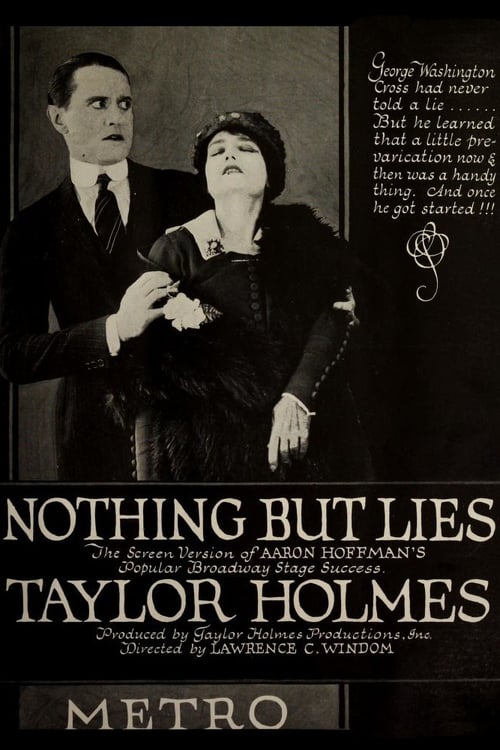
George Cross, a junior partner in the advertising agency of Nigh and Cross, goes to his office one evening to get a plate for a newspaper and surprises Allan Nigh, his partner's son, who has been distributing a leaflet exposing the lies of the advertising firm. Rosie, a member of the "Truth Society" to which Allan belongs, is hiding in the next room. George sends Allan to the newspaper office and then discovers Rosie. Shortly thereafter, Nigh and his daughter Ann, who is also Allan's sweetheart, arrive and George lies his way out of a compromising situation. Soon after, a detective arrives to investigate a front-page exposé on the circulars that Allan has written. When the advertisers realize that the exposé is actually the best campaign ever conceived, the supposed detective offers Allan a tremendous salary to write ads for him, Rosie reveals herself as a reporter from the Journal and Allan and Ann reconcile.
After her mother's death, Ruth struggles to support herself as a seamstress. While Ruth delivers shirts to the factory owner, the owner's son steals some money and Ruth is accused of the crime. She flees the ghetto of New York's Lower East Side and hides in the country where she meets a young farmer.
In early lawless California, Rosie Nell, a woman of disreputable dance halls, is wrongly charged with the murder of one of her fellow entertainers. Because her daughter, who knows nothing of her mother's station in life, is to return the next day from education in the east, Rosie is granted three days of grace to be spent in company with her daughter at a nearby cabin. The three days begin happily enough, thanks to the serenades of heroic bandit Alvarez and the poetry of romantic Randolph. But Bagley, the dance hall manager, has seen the daughter and has determined to make her his own.
The young authoress had come to the edge of the desert for her mother's sake. There she met the two young prospectors and a romance began. But the men were about to go across the desert, where they had heard rumors of gold. They decided to play square and before going determined to let the coin decide who should ask the young authoress the all-important question. The flip of the coin decided the older should try his luck first. He learned the girl did not love him. But the other she promised to marry when he should return from the gold lands, and the care of her sick mother, who would then be restored to health, should no longer interfere with her happiness. The young partners soon reached the other side of the desert, where success came to them far beyond their expectations.
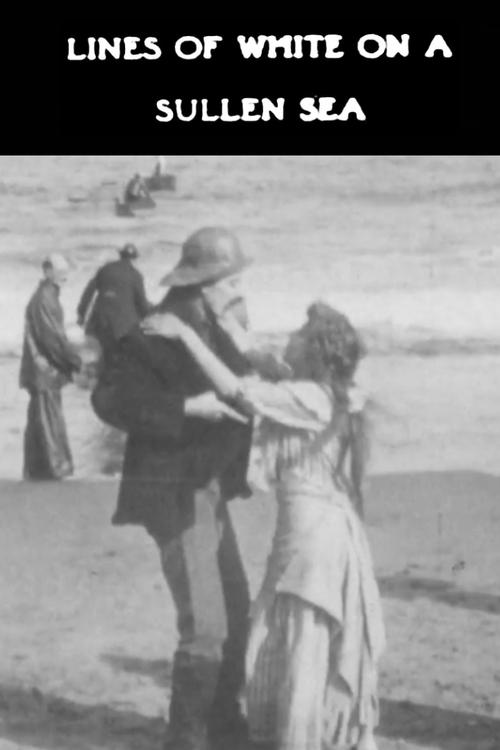
Soon after their engagement, Bill goes to sea, and Emily vows to stay true until his return. Unknown to her, Bill marries another woman from a different port. Emily waits faithfully for six years, finally becoming dangerously ill. When Bill suddenly appears in town with his family, Joe, who has loved Emily all along, forces Bill to make Emily's final moments happy by pretending he has returned to marry her.
A bored Lady Helen goes slumming as a domestic in a boarding house. There she falls in love with a sensitive young musician. The other women in the house are jealous, and accuse her of trying to steal the musician's violin. Lady Helen retreats to her own home, and arranges a position for the musician which allows them to be together.