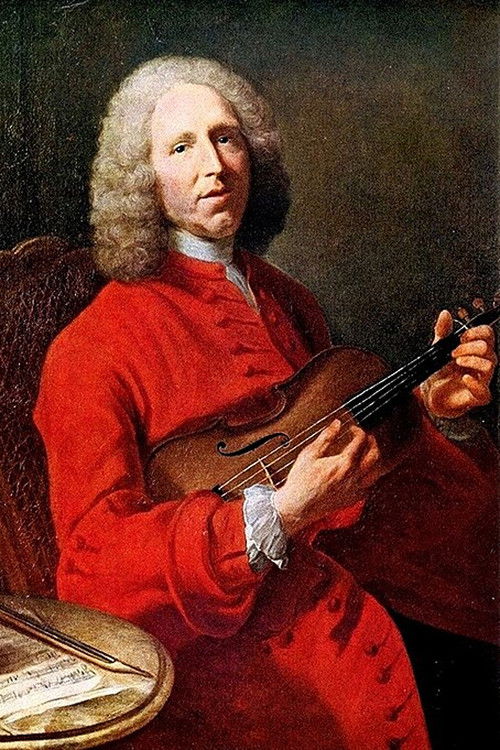
Jean-Philippe Rameau
Sound
Biography
Jean-Philippe Rameau (25 September 1683 – 12 September 1764) was a French Baroque composer and music theorist. Regarded as one of the most important French composers and music theorists of the 18th century, he replaced Jean-Baptiste Lully as the dominant composer of French opera and is also considered the leading French composer of his time for the harpsichord, alongside François Couperin.
Known For

A small town in an Argentinian province, 1975. The life of Claudio, a successful lawyer, gets complicated when he has a stupid quarrel with a stranger in a crowded restaurant.
Rojo

Winter of 1943. Andorra, a small country in the Pyrenees. In the tense calm of a borderland, where echoes of a nearby war reach the ears of the local inhabitants, Antonio and Sara, a young, married couple, are expecting their first child. No one knows exactly what is going on, nor what is being fought over, the priority is just to survive another day. When a family of Jews fleeing Nazi persecution arrives in the valley, the locals will find their lives disrupted and filled with a sense of fear and unease. Sara will have to face her own contradictions and decide whether to follow her head... or her conscience. The past, along with all the secrets that have remained buried under the snow for so many years, are about to surface. The burning cold has reached the mountains.
The Burning Cold

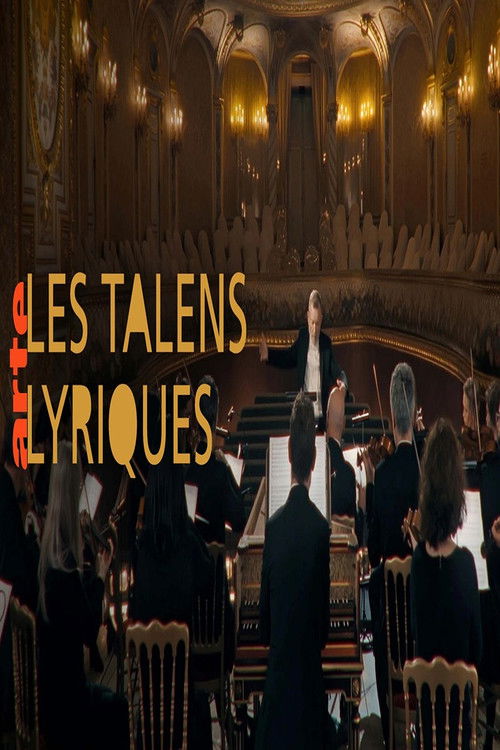
Hidden away in the heart of the Château de Fontainebleau, the Théâtre de l’Impératrice Eugénie is one of the most secret treasures of this jewel of French heritage. Closed to the public, this exceptional venue is reopening its doors for a concert given by Les Talens Lyrique and soprano Marie Lys.
Les musiques de Fontainebleau au Théâtre impérial

A return to its roots for Castor et Pollux, Jean-Philippe Rameau’s lyric tragedy first performed in 1737 at the Académie royale and inspired by the mythological episode of the Gemini. Rarely performed in its original version – the score was reworked by Rameau himself in 1754 –, this daring work plays on contrasts and expressiveness, as in the famous “Tristes apprêts”. The aria is sung by Télaïre mourning the death of her fiancé Castor, killed in battle, before his twin brother Pollux descends into the Underworld to ask his father, Jupiter, to bring him back to life. While this opera celebrates brotherly love, its prologue poses an essential question for director Peter Sellars: how do you stop a war and its attendant hatred and resentment?
Opéra National de Paris: Castor et Pollux by Jean-Philippe Rameau

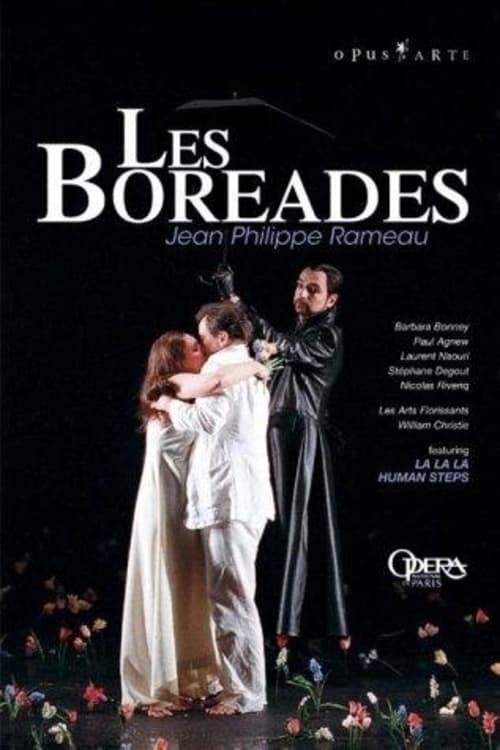
Director Robert Carsen and his creative team flood the stage with summer blossoms, drifts of autumn leaves, winter snows and thunderous spring storms. The cast of 140 are attired in elegant costumes inspired by late 1940s Dior. This mythical tale of a young queen, Alphise, determined to abdicate rather than contemplate an enforced marriage to a descendant of Boreas, is nothing less than highly-charged.
Les Boréades

Stéphane Lissner, director of the Paris Opera, entrusts the staging of the opera-ballet Les Indes galantes to the visual artist Clément Cogitore. Based on the experience of his short film Les Indes galantes, the artist updates Jean-Philippe Rameau's baroque masterpiece (1735) by bringing together lyric song and urban dance. The choreography is entrusted to Bintou Dembélé who supervises dancers from krump, popping, voguing or even experimental hip hop. From rehearsals to the Premiere, Philippe Béziat films the meeting of urban dancers with the lyric institution and invites the spectator to share a human and artistic experience.
Gallant Indies

In a special Christmas edition, violinist Daniel Hope and guests perform a varied and atmospheric repertoire including traditional Christmas songs in new arrangements, classical works and the hit song "Fields of Gold". Daniel Hope's guests are British musician, composer, and living-legend, Sting, Canadian pianist Bruce Liu, winner of the 18th International Chopin Piano Competition, South African soprano Golda Schultz, Argentinian-British guitarist Dominic Miller, Brazilian pianit Sylvia Thereza, the up-and-coming Leonkoro Quartet, cellist Nicola Mosca and percussionist Michael Metzler.
Sting, Daniel Hope & Freunde in Berlin Mit Golda Schultz, Bruce Liu u.v.m.

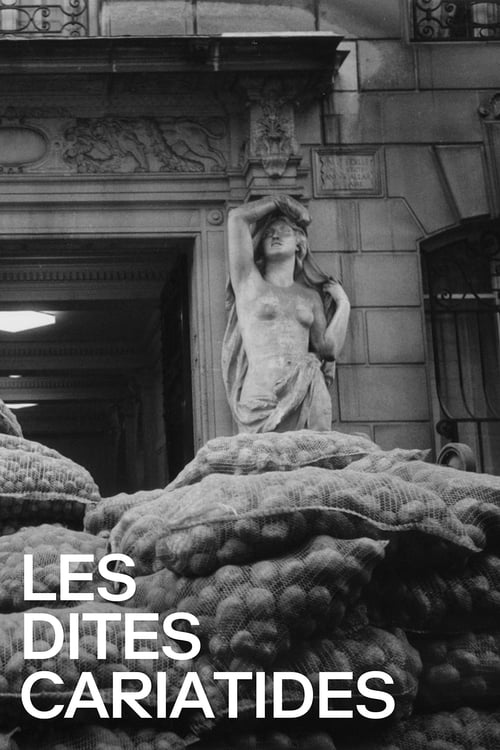
Commissioned by French television, this is a short documentary on the neo-classical statues found throughout Paris, predominantly on the walls of buildings, holding up windows, roofs etc.
The So-Called Caryatids

"William Christie and Les Arts Florissants propel this exuberant production of Jean-Philippe Rameau's second opera to great heights. Andrei Serban's extravagant, highly baroque staging presents the four exotic love stories vibrantly. In 'Le Turc généreux' Osman sets free his captive, Emilie, whom he loves, so that she may be reunited with her former lover, Valère; 'Les Incas de Pérou' is all about the rivalry of the Inca Huascar and the Spaniard Don Carlos, both in pursuit of Princess Phani; 'Les Fleurs' offers a Persian love intrigue, as the Sultana Fatime tries to detect whether her husband Tacmas has his eye on the lovely Atalide; and 'Les Sauvages' takes us to North America, where a Spaniard and a Frenchman compete for the love of Zima, daughter of a native chief, who prefers one of her own people." — from the DVD cover
Les Indes Galantes

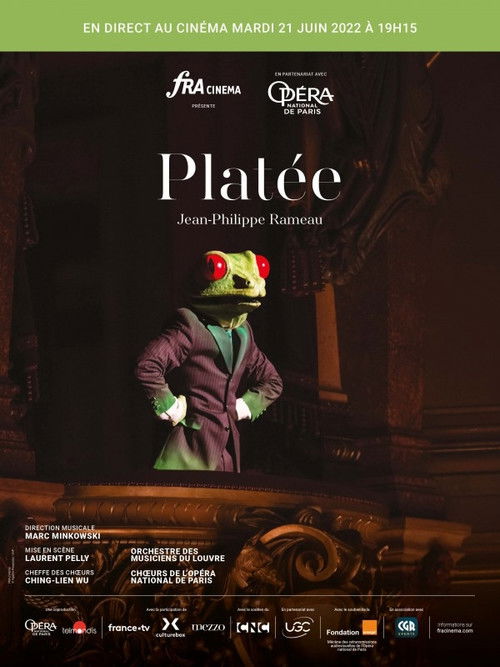
Jean-Philippe Rameau’s Platée is a masterpiece of the French operatic repertoire and was highly regarded by critics during the composer’s lifetime. Composed for the marriage of the Dauphin Louis, son of Louis XV, to the Infanta Maria Teresa of Spain, it was first performed at Versailles in 1745 and became an instant hit. The plot revolves around the ugly and conceited frog Platée, the victim of a machination of the gods who make her believe that she is loved by Jupiter. Is this Rameau mocking Princess Maria Teresa of Spain – reputedly a woman of little beauty? Or the French court, which saw itself as a new Olympus? This classic production from the Opéra national de Paris by Marc Minkowski and Laurent Pelly returns to the stage with an entirely new cast, featuring Julie Fuchs, Mathias Vidal, Jean Teitgen and Lawrence Brownlee in the title-role.
Platée (Palais Garnier)
The film begins with the Christmas preparations, so to speak, and ends with the first petrol price increase of the new year.
Witzleben

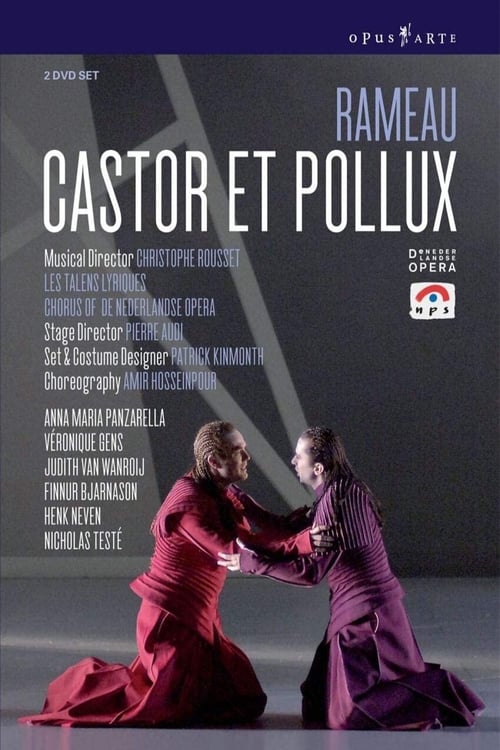
Recorded at the Musiektheater, Amsterdam on 21 & 25 January 2008. Performed by De Nederlandse Opera, composer Jean-Philippe Rameau's renowned tragedy "Castor et Pollux" tells the myth-based story of the selfless love between two brothers: Castor, who is mortal, and the immortal Pollux. When Castor dies trying to prevent the kidnapping of the woman he loves, Pollux decides to become mortal and replace his brother in the Underworld. Finnur Bjarnason, Henk Neven and Anna Maria Panzarella star.
Castor & Pollux

Clément Cogitore adapts a short ballet excerpt from Jean-Philippe Rameau's Les Indes galantes, with the help of a group of Krump dancers and three choreographers on the 3rd Stage of the Paris Opera: Bintou Dembele, Igor Caruge, and Brahim Rachiki. Krump is a dance style that originated in the ghettos of Los Angeles in the 1990s. It emerged as a result of the riots and brutal police repression that followed the beating of Rodney King.
Les Indes galantes

When, in 1733, Voltaire, the most brilliant mind of his day, collaborates with Rameau, its greatest composer, in undertaking an ambitious reform of operatic practice, the result is the biblical opera Samson. But the libretto is condemned and the score lost – possibly reworked here and there in later compositions. Claus Guth and Raphaël Pichon, haunted by this interesting project that had turned into one of the most intriguing failures in operatic history, have tried, not to recreate the letter, but to revive the spirit: to marry a strong, noble libretto with the most eloquent music.
Jean-Philippe Rameau: Samson (Festival d'Aix-en-Provence)

Argan is a severe hypochondriac who wants his daughter to marry a doctor.
Den inbillade sjuke

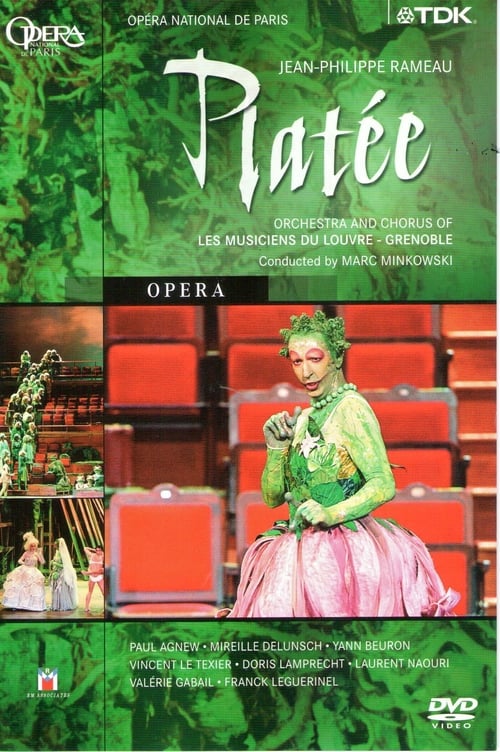
The prologue sets the stage for the action: Thespis, Momus and Thalie announce the subject of the play. It is a comedy mocking the folly of man...and the story of a trap set by Jupiter to cure Juno of her jealousy. The trap? It consists in convincing the water nymph Platée that Jupiter is in love with her. Mercury officially declares Jupiter’s love to Platée. When the god appears before her – first as a donkey, then an owl - the nymph calls on the birds of the marshes, but they scare Jupiter away. Luckily he quickly returns and declares his love for Platée. He even wants to marry her. La Folie comes to sing for the fiancée during an absolutely chaotic scene. However, as the couple prepares for the wedding, Juno arrives. Furious, she puts an end to the farce and ascends to the heavens with Jupiter. Humiliated, Platée understands she has been duped. She swims off into the marshes, as the chorus sings an ironic song in her honour.
Platée

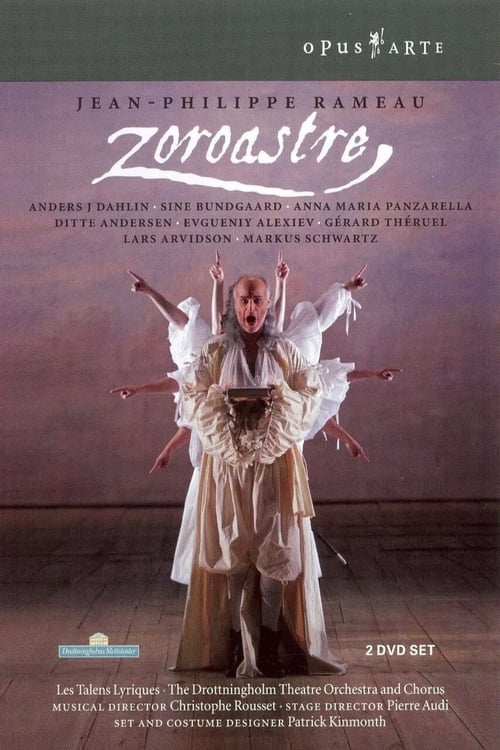
Making full use of Drottningholm Theatre's unique 18th-century baroque theatre machinery, as well as his deep creative understanding of the profound drama of the work, stage director Pierre Audi creates a production of ZOROASTRE that completely accords with the spirit of Rameau. True to the form of the tragedie lyrique, choreographer Amir Hosseinpour's dances perfectly match the weight and meaning of both plot and music. The ensemble, Les Talens Lyriques, reinforced with musicians from the Drottningholm Court Theatre Orchestra and Chorus, is expertly and passionately led into the musical stratosphere by musical director Christophe Rousset. This intensely dramatic production is captured live in vibrant High Definition video and true surround sound.
Zoroastre

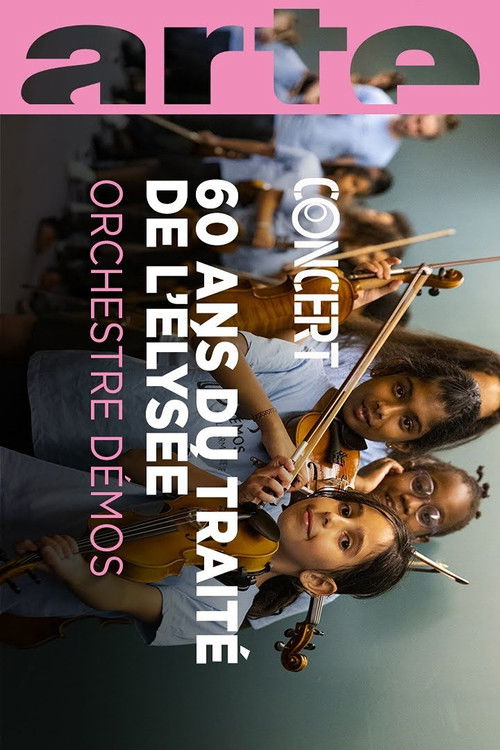
The Élysée Treaty celebrates its 60th anniversary this year. To mark six decades of Franco-German friendship in style, young French and German musicians will take to the stage at the Panthéon for a concert dedicated to fraternity.
60 years of the Élysée Treaty

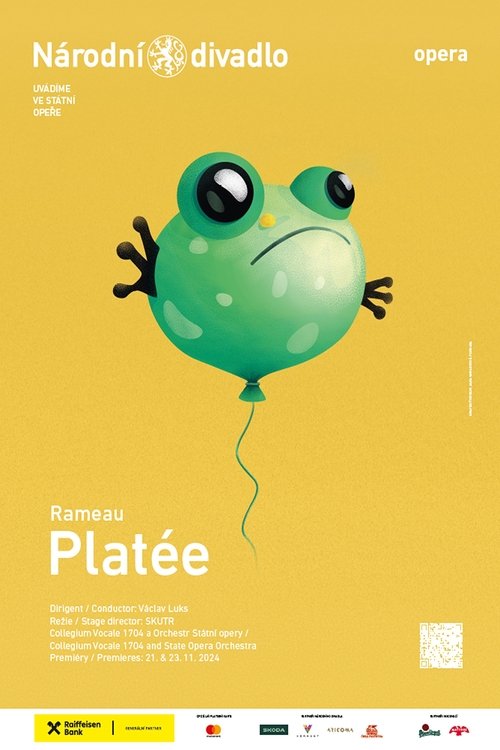
Platée, a silly and conceited nymph, falls for a fake wedding to Jupiter, king of the gods. This new staging of Jean-Philippe Rameau’s Baroque masterpiece is colourful, eccentric, full of wit and free of taboos, yet also surprisingly deep. Filmed 1st june 2025 at Czech National Theatre, Prague
Platée

The story concerns a pair of lovers, Acante and Céphise, who suffer at the hands of a wicked genie Oroès. They are saved by the good fairy Zirphile, who uses her magic powers, including the gift of telepathy (the sympathie of the title), to defeat Oroès.