Directing
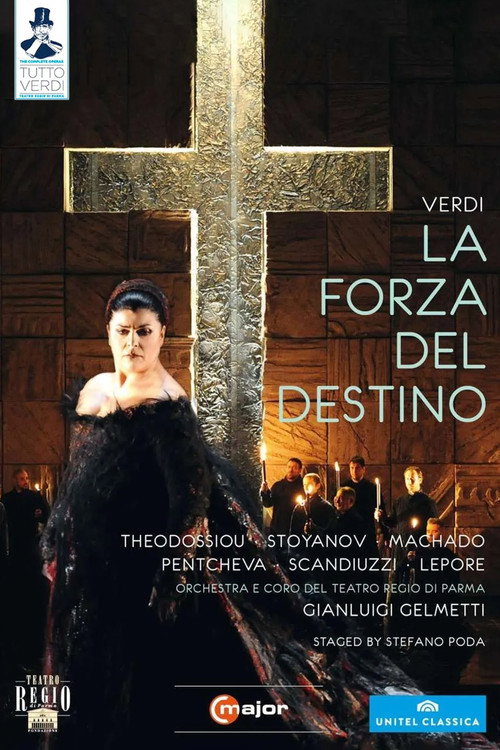
Donna Leonora, daughter of the Marquis of Calatrava, is about to flee secretly with her lover Don Alvaro (son of the Viceroy of Mexico and an Inca princess). The Marquis bursts in unexpectedly. Alvaro hesitates to raise his weapon against his lover’s father and throws his pistol. As it falls, the pistol goes off and the Marquis is mortally wounded. As he lies dying, he curses his daughter. Don Carlo di Vargas, Leonora’s brother, resolves to avenge his sister and her fiancé for their father’s death. In the turmoil of the chase, Leonora and Alvaro lose track of one another... ‘La forza del destino’ is an opera in four acts by Giuseppe Verdi, with a libretto by Francesco Maria Piave, adapted from the play ‘Don Álvaro o la fuerza del destino’ (Spain, 1835) by Ángel de Saavedra, the Duke of Rivas. Premiered on 10 November 1862 at the Imperial Theatre in Saint Petersburg. From the box set of 27 Verdi operas “Tutto Verdi”. Recorded live at the Teatro Regio in Parma on 2 and 5 February 2011.
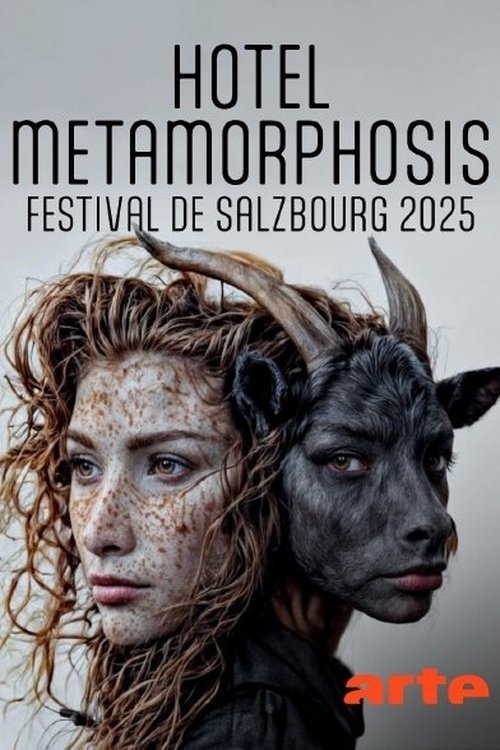
When Ovid's “Metamorphoses” meet Vivaldi's music: conceived and directed by Barrie Kosky, an effervescent show presented at the 2025 Salzburg Festival. With Cecilia Bartoli, Lea Desandre, Nadezhda Karyazina, and Philippe Jaroussky, as well as actress Angela Winkler in the spoken role of Orpheus.
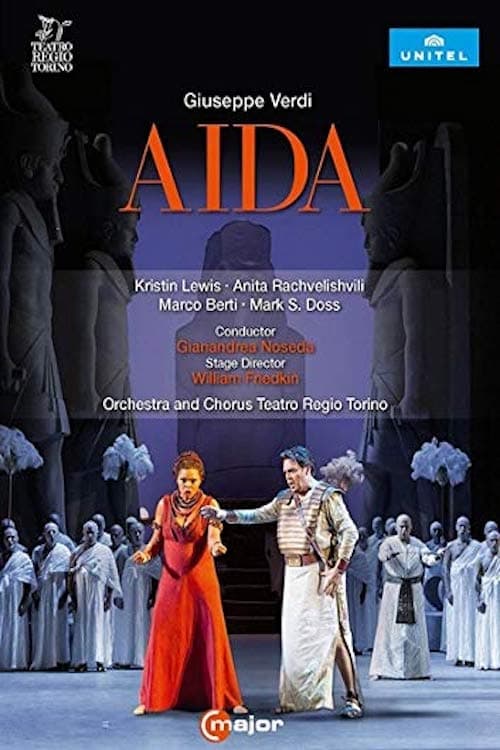
Originally commissioned to celebrate the completion of the Suez Canal and the opening of Cairos new opera house, Verdis Egyptian epic Aida is here seen in a spectacular new staging in the Teatro Regio Torino by the Oscar-winning American film director William Friedkin, creator of such famous movies as The Exorcist and The French Connection. The cast features American soprano Kristin Lewis who has been heralded for her remarkable voice, which she uses with powerful dramatic instinct, and Georgian mezzo-soprano Anita Rachvelishvili, whose Amneris dominates the stage with her dark, rounded, irresistible voice and extraordinary stage presence. Gianandrea Noseda leading the Orchestra and Chorus Teatro Regio Torino received accolaides from all: he controls everything- orchestra, singers, chorus, dancers, acrobats- with an all-encompassing overview. He knows exactly when its time to linger over a timbre, a color, an expressive chord.
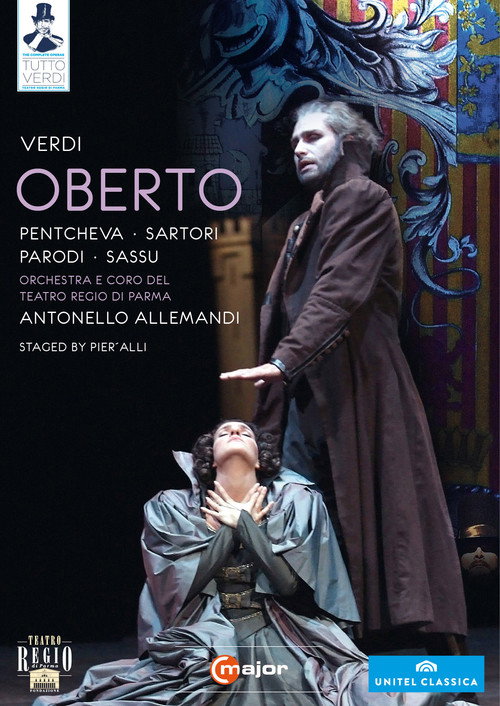
Part of Tutto Verdi series - Oberto (2007) Parma. Oberto was the first of Verdi’s operas to be staged and was heard for the first time at La Scala, Milan, in November 1839. As a young and unknown composer, Verdi was subject to the rules then governing the opera industry in Italy. Even so, there are already many scenes in this early work that reveal unmistakable signs of the composer’s individual style.
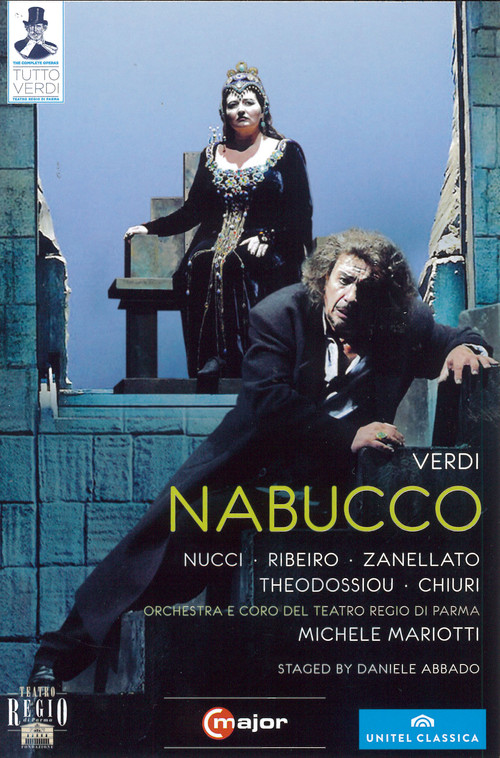
‘Nabucco’, or ‘Nebuchadnezzar’ (Italian: Nabucco), is an opera by Giuseppe Verdi with a libretto by T. Solera, based on events described in the Bible. (Nabucco is a shortened Italian rendering of the name of King Nebuchadnezzar II). It was this opera, the third in Verdi’s oeuvre, that brought him true fame. It tells of the tribulations of the Jews, their captivity by the Babylonians, and their subsequent release to their homeland by Nebuchadnezzar, King of Babylon. Giuseppe Verdi’s opera ‘Nabucco’, is a monumental work that tells the story of the enslavement of the Hebrew people by the Babylonian king Nebuchadnezzar (Nabucco) and their journey towards redemption. The premiere took place on 9 March 1842 at La Scala in Milan. The first performance of the final version was held at the Teatro San Giacomo in Corfu in September 1844. From the box set of 27 Verdi operas, ‘Tutto Verdi’. Recorded live at the Teatro Regio in Parma, 12–14 October 2009.
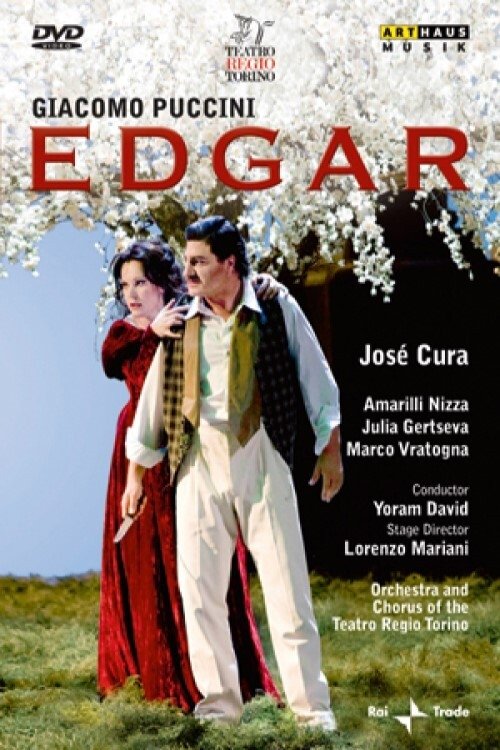
Puccini’s operas are among the most beloved and best-known works in the classical repertoire, but Edgar may be unknown even to aficionados, at least as it is presented here. This original four-act version of Edgar, first performed in 1889, was believed lost for over a century when Puccini’s granddaughter Simonetta discovered the score fully intact in 2008. In addition to the third act’s funeral music, which Arturo Toscanini conducted at Puccini’s funeral in 1924, listeners may recognize the duet from the now-restored fourth act, cut by Puccini in subsequent revisions of the work: it bears more than a passing similarity to the third-act duet in Tosca.
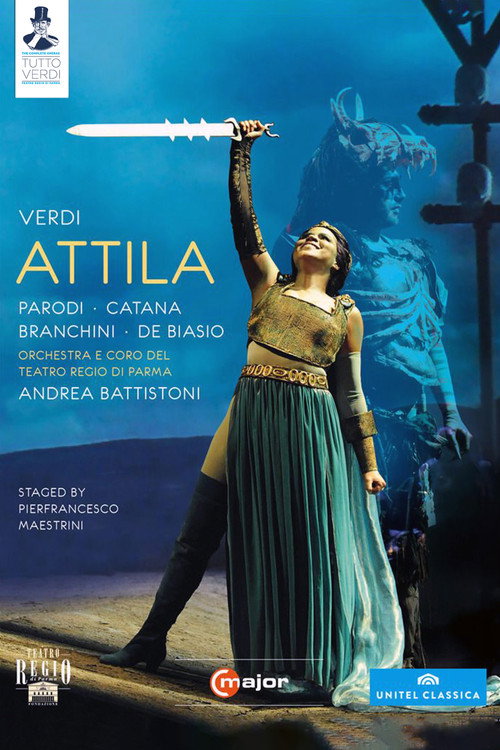
In Aquileia, around the middle of the 5th century. Odabella, daughter of the city’s lord, lost her family during the sacking carried out by Attila and intends to take revenge by killing him (Santo di patria indefinito amor). She herself was spared by Uldino, one of Attila’s slaves. Impressed by her courage, Attila gives her his sword. General Ezio, sent from Rome, proposes to Attila a deal to divide the Empire (Avrai tu l'universo, resti l'Italia a me!). But Attila denounces him as a traitor and refuses. Attila is an opera in a prologue and three acts by Giuseppe Verdi, with a libretto by Temistocle Solera based on Zacharias Werner’s tragedy, Attila, König der Hunnen, and premiered at the Teatro la Fenice in Venice on March 17, 1846. From the box set of 27 Verdi operas, “Tutto Verdi.” Recorded live at the Teatro Verdi in Busseto on October 21 and 25, 2010.
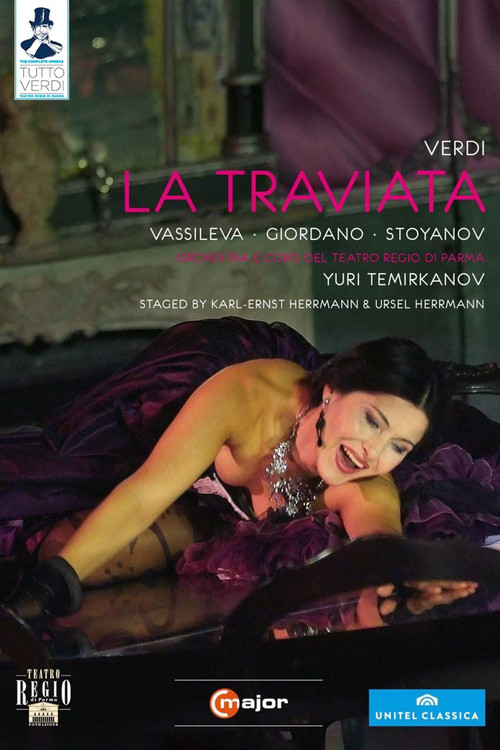
Around 1850, in Paris. At a soirée, Alfredo Germont, a young man from a respectable Provençal family, falls in love with Violetta Valéry, a courtesan. Deeply in love, Violetta gives up her profession and devotes herself entirely to Alfredo. However, Mr Germont senior, in the name of bourgeois respectability, persuades her to break up with his son. Violetta then writes a letter of separation to Alfredo without revealing the real reason for her decision. The fatal illness from which she was already suffering then flares up once more. A month later, Alfredo learns from his father that Violetta never stopped loving him... ‘La traviata’ is a 3 act opera by Giuseppe Verdi, with a libretto by Francesco Maria Piave based on the novel ‘The Lady of the Camellias’ by Alexandre Dumas, fils (1848) and its stage adaptation (1852). Premiered on 6 March 1853 at La Fenice in Venice. From the 27-opera Verdi box set “Tutto Verdi”. Recorded live at the Teatro Regio in Parma on 4 April 2012.
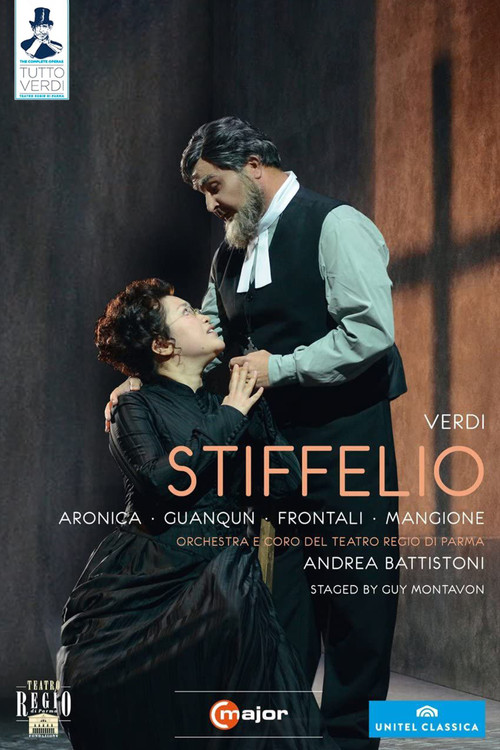
In Germany, at the castle of the Count of Stankar, on the banks of the Salzbach and in the vicinity of Salzburg, in the early 19th century. Upon his return from his travels, Pastor Stiffelio recounts his adventures: a boatman had handed him the wallet of a man who, fleeing from a woman’s bedroom, had thrown himself into the river. In the spirit of forgiveness, Stiffelio destroys the piece of evidence, unaware that it is proof that his wife, Lina, is guilty of adultery. ‘Stiffelio’ is an opera in three acts by Giuseppe Verdi, with a libretto by Francesco Maria Piave, based on ‘Le Pasteur ou l’évangile au foyer’ by Émile Souvestre and Eugène Bourgeois. Premiered in its original version on 26 December 1968 at the Teatro Regio in Parma. From the box set of 27 Verdi operas, “Tutto Verdi”. Recorded live at the Teatro Regio in Parma on 18 and 24 April 2012.
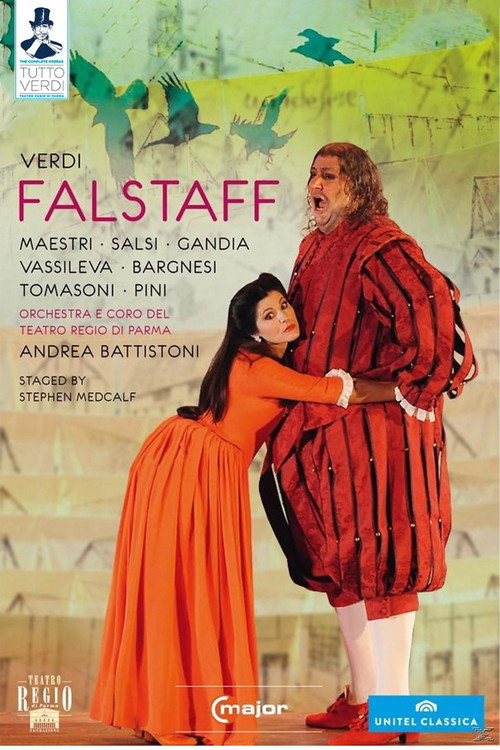
In England, at Windsor during the reign of Henry IV of England (1399–1413). Sir John Falstaff, also known as ‘Il Pancione’ (the Potbelly), has two identical love letters sent out, one to Meg Page and the other to Alice Ford, then delivers a sarcastic lecture on honour to his servants Bardolfo and Pistola. In Ford’s garden, his wife Alice and her friend Meg notice the similarity between Falstaff’s letters and decide to take revenge on him by pretending that Alice is receiving him at home whilst Ford is away. ‘Falstaff’ is a three-act opera buffa by Giuseppe Verdi, with a libretto by Arrigo Boito, based on Shakespeare’s ‘The Merry Wives of Windsor’ and ‘Henry IV’, Parts I and II. It premiered on 9 February 1893 at La Scala in Milan and on 18 April 1894 at the Opéra-Comique in Paris. It was the last opera composed by the composer, then aged 80. Taken from the 27-opera Verdi box set “Tutto Verdi”. Recorded live at the Teatro Regio in Parma on 10, 12, 15, 22 and 25 October 2011.
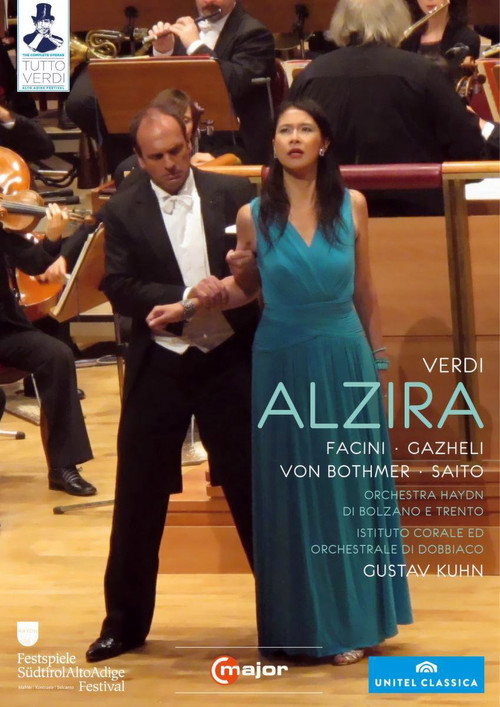
Part of Tutto Verdi series - Alzira (2012) Dobbiaco. This is a concert performance. Alzira is an opera in a prologue and two acts by Giuseppe Verdi to an Italian libretto by Salvatore Cammarano, based on the play Alzire, ou les Américains by Voltaire. The first performance was at the Teatro San Carlo, Naples, on 12 August 1845.
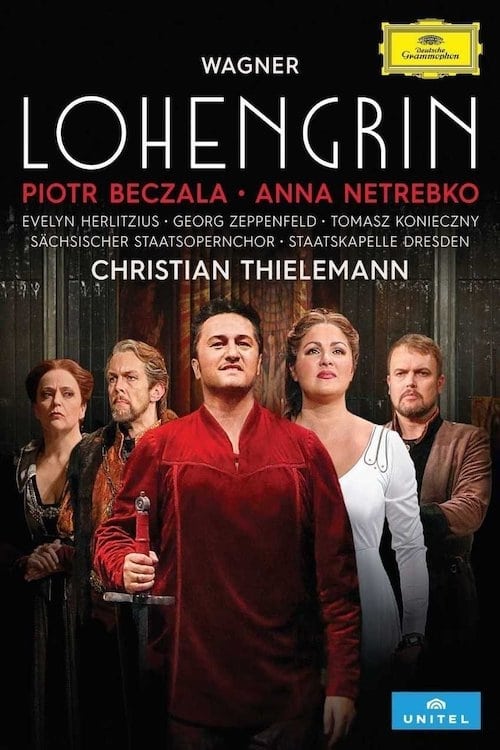
A dream came true at Dresden's Semperoper in May 2016 when opera superstars Piotr Beczala and Anna Netrebko made their Wagner debuts as Lohengrin and Elsa, inspired to take on their new roles by Christian Thielmann, the Dresden Staatskapelle's principal conductor and one of the leading Wagner conductors of our day. Die Welt described the performance captured here as "musically one of the finest Lohengrins of all time". Contributing to the triumph are Evelyn Herlitzius's Ortrud. Tomasz Konieczny's Telramund, Georg Zeppenfeld's King Henry and the Dresden State Opera Chorus.
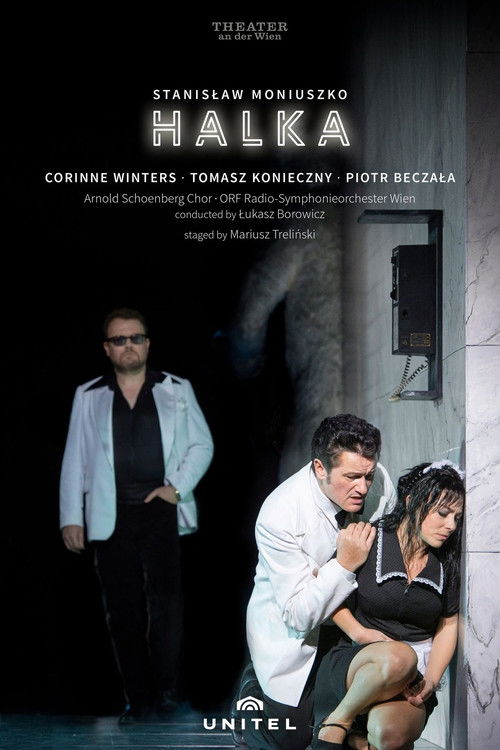
At Theater an der Wien Stanisław Moniuszko’s Polish national opera Halka is performed by a superb cast including Corinne Winters ('devotedly') , Piotr Beczała ('vocally outstanding') and Tomasz Konieczny ('his acting is piercing') (Der Standard). The Polish leading team, above all director Mariusz Treliński, puts the plot into a supercooled crime aesthetic. The ORF Radio Symphonie-Orchester Wien under the baton of Łukasz Borowicz plays with perceptible delight.
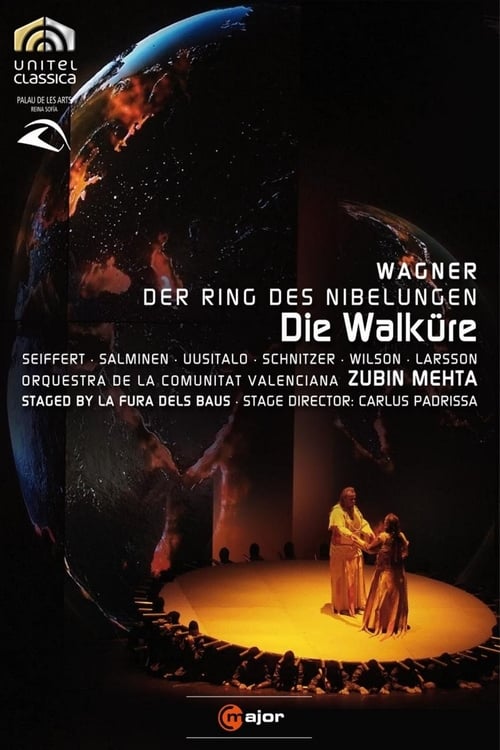
It has been a long time since the events of Das Rheingold. Wotan has fathered nine Valkyries, warrior women who bring dead heroes to Valhalla (the castle of the Gods). Richard Wagner's dream of a Gesamkuntswerk becomes reality through La Fura dels Baus' visual fantasy and blending of video technology, lighting and props (often formed of human beings): Their 30 computer projections and organic structures built of athletic performers that recall Cirque du Soleil are predestined for Wagner's visionary expressive world.
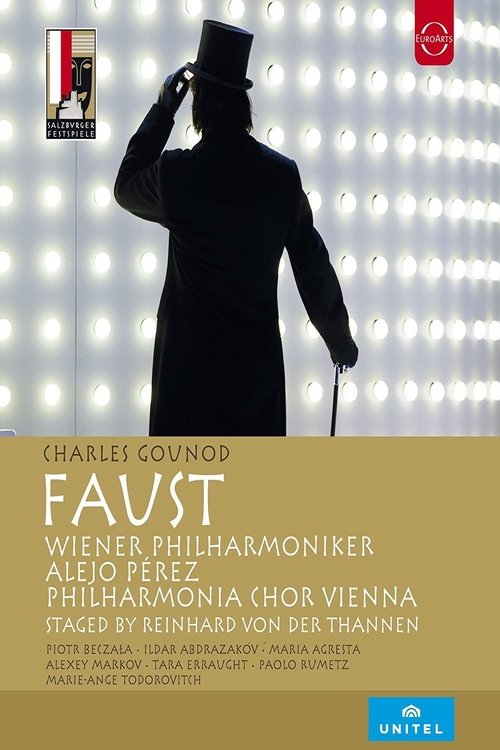
Salzburg Festival’s first-ever performance of Charles Gounod´s most famous and most performed opera! Internationally-acclaimed tenor Piotr Beczala triumphs in the title role as soul-selling philosopher Faust: “Piotr Beczala is a world-Faust” (Kurier) and “The well-deserved crown goes to a perfectly-cast Piotr Beczala” (Abendzeitung). Ildar Abdrazakov was “celebrated” (Broadway World) for his signature role as seductive and demonic Méphistophélès. Maria Agresta as convincingly innocent Marguerite struggling to resist temptation and to gain salvation: “She is fabulous!” (Süddeutsche Zeitung). “Spectacular and photogenic” staging (Frankfurter Allgemeine Zeitung) by award winning stage director and designer Reinhard von der Thannen. The Philharmonia Chor Wien and the Wiener Philharmoniker are performing under the baton of young Argentinian conductor Alejo Pérez.
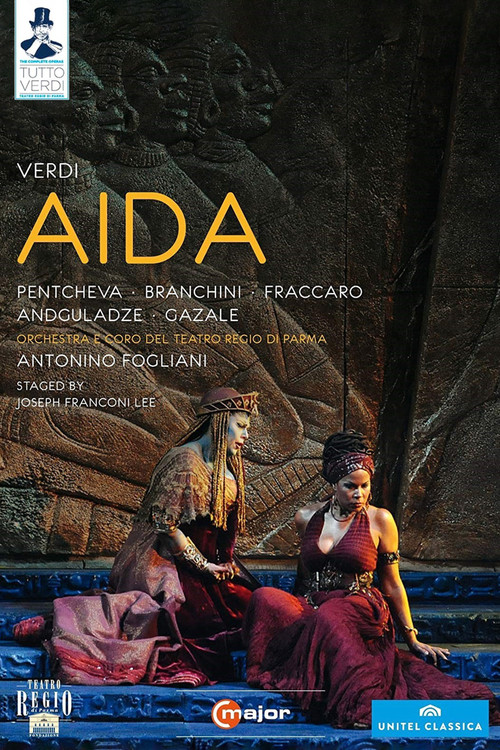
Set in Memphis and Thebes during the time of the pharaohs, the story centres on a love affair between Aida, an Ethiopian slave owned by Amneris, the pharaoh’s daughter, and Radamès, a captain in the Egyptian guard. Their relationship is thwarted by the armed conflict between their two peoples and the jealousy of Amneris, who is in love with Radamès. ‘Aida’ is an opera in four acts by Giuseppe Verdi, with a libretto by Antonio Ghislanzoni based on a plot by Auguste Mariette, premiered on 24 December 1871 at the Khedivial Opera House in Cairo. From the box set ‘Tutto Verdi’, featuring 27 of Verdi’s operas. Recorded live at the Teatro Regio in Parma on 1 and 5 February 2012.
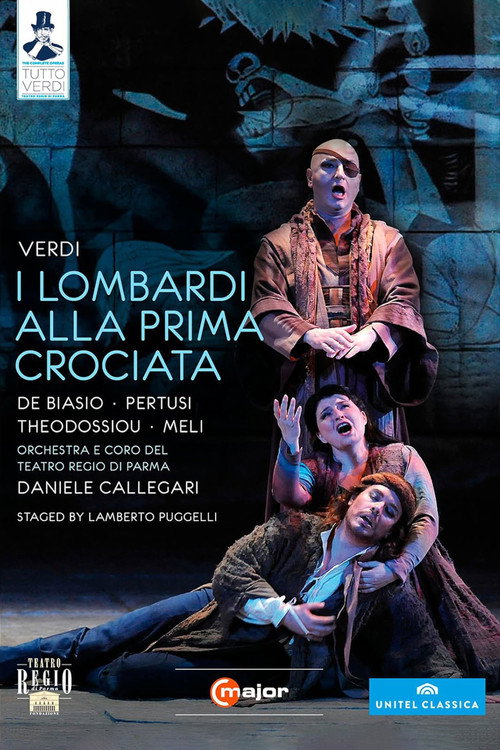
I Lombardi alla prima crociata (The Lombards on the First Crusade) was Verdi’s fourth opera and received its first performance at La Scala, Milan, in February 1843. The grandiloquent subject matter is fleshed-out with broad-brushed musical and dramatic effects and lavish choral scenes created a correspondingly impressive impact. A great success in Milan, it spread to the rest of Europe within a matter of only a few years.
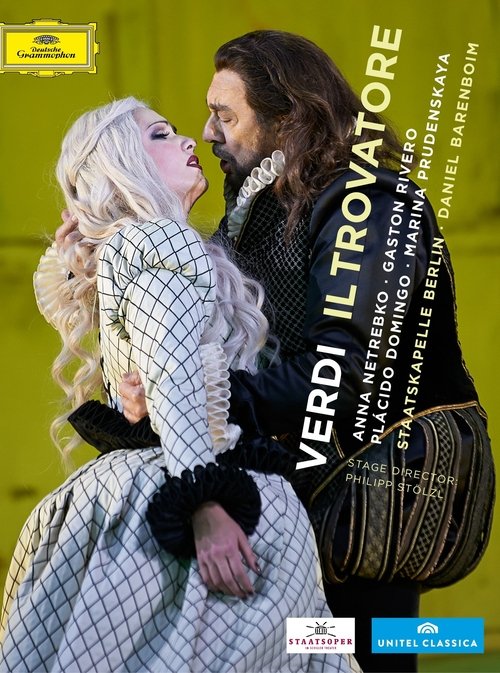
Daniel Barenboim conducts the Staatskapelle Berlin in this production of Verdi's opera starring Anna Netrebko and Plácido Domingo. The Count Di Luna believes that his younger brother was murdered years before by a vengeful gypsy but still hopes that he may be alive. When he attempts to court the beautiful Leonora, he is enraged to discover that she has a lover – the troubadour, Manrico. Manrico and the Count duel, and afterwards Manrico reveals to Azucena, the woman he believes to be his mother, that when he had the opportunity to kill the Count he felt something holding him back.
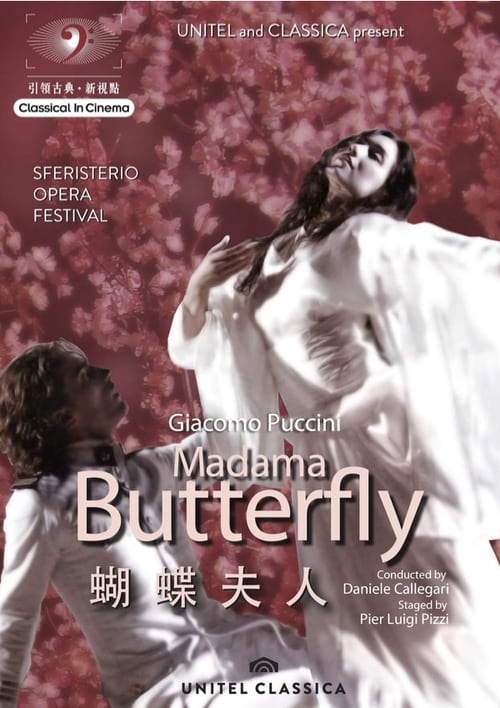
The story of Cio-Cio-San, called Butterfly, a young Nagasaki geisha who, abandoned by her American lover after giving birth to their son, ultimately kills herself, continues to impress audiences today. In this outstandingly authentic and elegant production from the Sferisterio Opera Festival, Puccini's highly emotional music is expertly delivered. The superior cast is headed by Raffaella Angeletti, "certainly one of the best Butterflies of our time" (ForumOpera.com), who has performed this role in many Italian theatres, as well as in Madrid and at the Vienna Staatsoper.
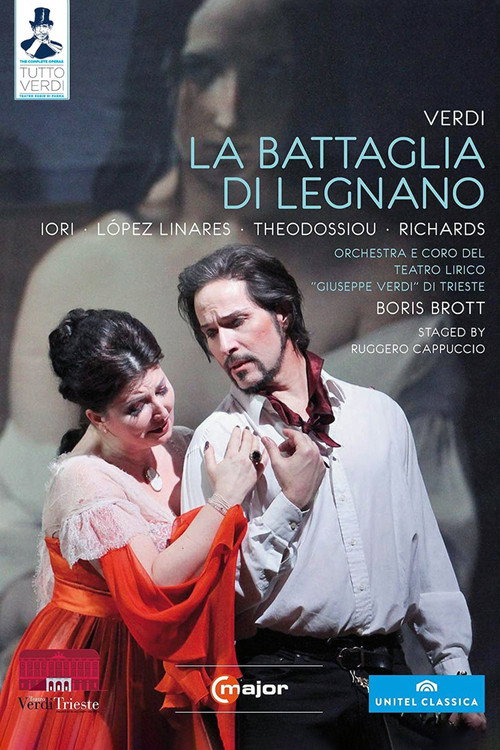
Part of Tutto Verdi series - La battaglia di Legnano (2012) Trieste. 'La battaglia di Legnano' ('The Battle of Legnano') is an opera in four acts, with music by Giuseppe Verdi to an Italian-language libretto by Salvadore Cammarano. Most of the early Verdi operas are sort of rare for a reason. They do not rise to the heights of genius that his middle period and late period operas did. However, there are always some beautiful arias or choruses and most of them are great fun......sort of like bel canto on steroids! What I mean is that you can hear that he was coming from the bel canto tradition, but he liked to inject a lot more power into the characters and their music.