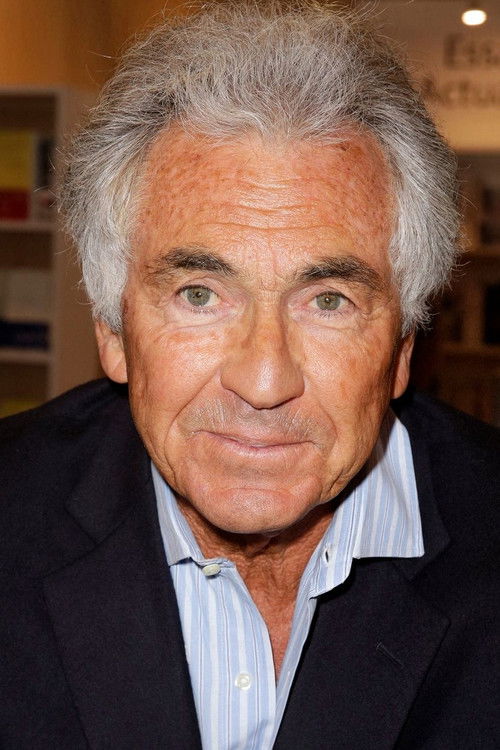
Jean-Paul Enthoven
Writing
Biography
Jean-Paul Enthoven (born 11 January 1949) is a French publisher and journalist. Born in Mascara near Oran in French Algeria, Enthoven comes from a bourgeois Jewish family. His mother was born Gilberte Tordjman and his father, Edmond Enthoven, was a businessman who made his fortune in real estate and cinema management. In this completely agnostic Jewish family environment, his political socialization took place in a very republican atmosphere, attached to moral considerations such as the defense of human rights and found himself in the political figure of a Clemenceau. His family was linked to the Oranese intellectual elite, notably with philosopher André Bénichou, director of the Descartes course which many French academics attended during the Algerian War. Thus his parents became close to Pierre Nora and the latter helped their son when he became a boarder at Lycée Lakanal in Sceaux. Jean-Paul Enthoven was then very close to the "Nora family", Pierre Nora being its "Cicerone". After attending the lycée Buffon, he entered the lycée Janson-de-Sailly where he took philosophy classes from Maurice Clavel. The latter noticed him among the heads of the class and made him meet Gabriel Marcel but especially Pierre Boutang whose influence plunged him for a time into "self-hatred". He was then a student at the Faculty of Letters at Paris-Sorbonne and at the Faculté de droit de Paris. He obtained a degree in history, a diploma from the Institute of Political Studies, a DES in public law and political science. Although anchored on the left, he missed May 68 by preferring literature to ideological debates. The readings he made at Éditions Gallimard around 1971/1972 gave him the opportunity to meet Raymond Aron. If he did not become a disciple, the latter led him to detach himself very quickly from a Marxism to which readings had led him to adhere. And he defined himself as Spinozo-nietzschean when, in 1973, he became assistant to Maurice Duverger at the Sorbonne. An assistant at the university Paris I - Panthéon Sorbonne from 1973 to 1975, he meets a young philosopher who has just returned from Bangladesh, Bernard-Henri Lévy. Falling under the spell of the normalien, he presented him in the autumn of 1974 to his friend Gilles Hertzog, who thus participated in the life of the ephemeral daily L'Imprévu (January–February 1975). Despite the failure of Bernard-Henri Lévy's daily, the trio's friendship grew stronger around him to the point of appearing to be a true "sibling" where Jean-Paul Enthoven would, in his own words, be "Bernard's Minister of the Interior, and Gilles, his State Secretary for Foreign Affairs". At the same time, his ties with Pierre Nora brought him into contact with Jean Daniel and the staff of Le Nouvel Observateur. ... Source: Article "Jean-Paul Enthoven" from Wikipedia in English, licensed under CC-BY-SA 3.0.
Known For
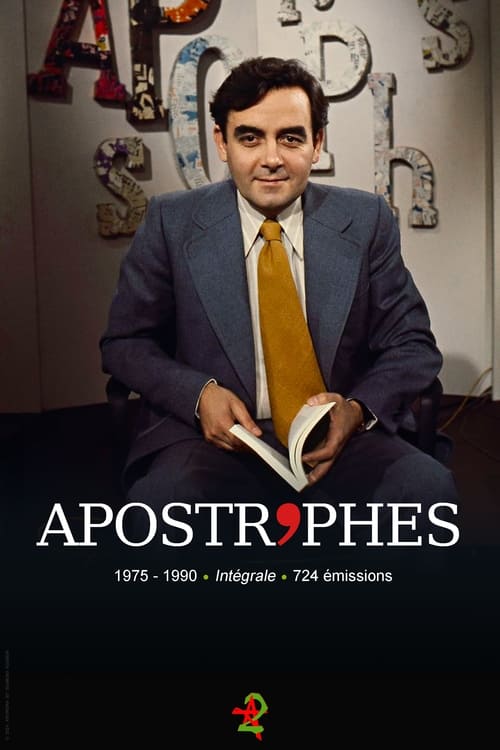
Apostrophes was a live, weekly, literary, prime-time, talk show on French television created and hosted by Bernard Pivot. It ran for fifteen years (724 episodes) from January 10, 1975, to June 22, 1990, and was one of the most watched shows on French television (around 6 million regular viewers). It was broadcast on Friday nights on the channel France 2 (which was called "Antenne 2" from 1975 to 1992). The hourlong show was devoted to books, authors and literature. The format varied between one-on-one interviews with a single author and open discussions between four or five authors.
Apostrophes
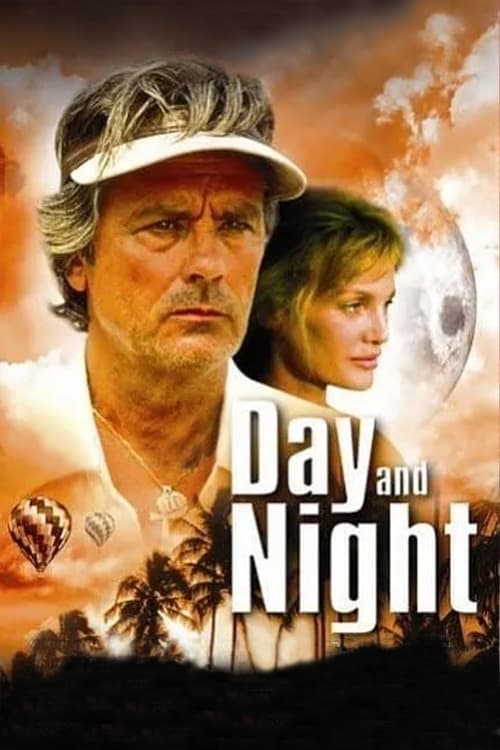
Ten years ago, distinguished French author Alexandre (Alain Delon) exchanged his stressful, hectic life in Paris for a more peaceful existence upon a Mexican hacienda with his wife Ariane (Marianne Denicourt). Lucien (Jean-Pierre Kalfon) also accompanies them. There, Alexandre meets the strange lady-oracle Sonia (Lauren Bacall). As the film opens, the melancholy Alexandre is visited by the sensuous actress Laure (Arielle Dombasle) and her producer Raoul Fillipi (Karl Zero) who is going to make a movie of one of Alexandre's best-loved books. Laure is determined to play the part of the heroine and is willing to resort to seduction to get it. At the same time, Ariane is involved in a passionate affair with French-Mexican seismologist Carlo (Xavier Beauvois). While all of these characters wrangle and tangle with their different agendas, the local residents prepare for a violent revolution. ~ Sandra Brennan, Rovi
Day and Night
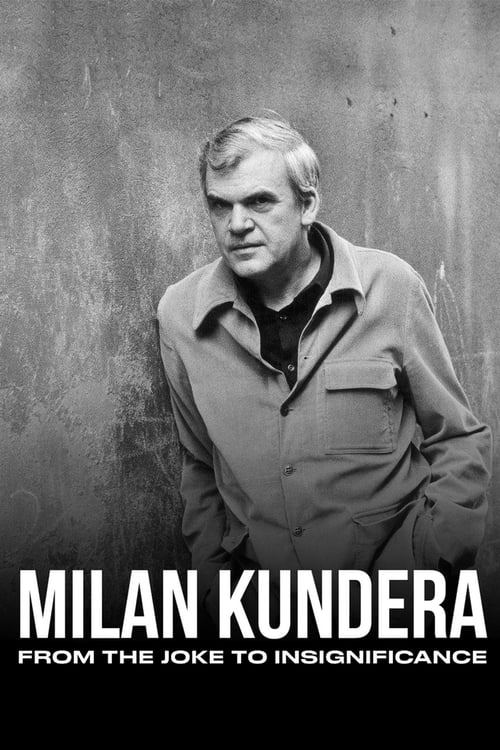
The brilliant Czech writer Milan Kundera has not given an interview in thirty years; nor does he appear in public. How did he become a legendary author? What is so unique about his books?