Mike Dunford
Directing
Known For
Faces pass by in quickly edited, split-screen recordings. A 'structuralist' film in which the film material itself plays an important role. Grain, scratches and flickering give the film texture. The music is by Steve Reich.
Portraits
Footage of street life in the Bronx and Manhattan, with a continuous soundtrack of the constant crime statistics, and the recent Reagan invasion of Grenada (to fight the Cuban threat to American students and an airstrip). Interrupted with statistics about wealth inequality, and shoals of tropical fish (for respite). A grim 1983 report from ground zero in the evil empire.
Jigsaw Feeling / New York Streets
Early experimentations with film by a materialist sculptor and future structural filmmaker.
Four Films
Marks another stage of work which I called “distributed narrative”. In this a strand of thought, an idea or a story, and related or unrelated material that adds or conflicts is constantly re-presented over the course of the work, to create in the totality of the viewing a synthesis that is somewhat open, mediated but not fixed. The story of Nohi Abassi is a rainforest myth and is told within the hard architecture of the computer processing centre, and the hard and yet fluid architecture of videographic operations that enclose and abstract the image, and confront the implicit slipperiness of the ideology and the relationship of mankind and nature shown within the myth. The story is read by a non-actor, undermining easy acceptance and transparent listening, and yet giving a different type of authenticity to the tale. The tale is read many times from different points, repeating, double tracking. Every aspect of the recording is present.
Nohi Abassi
Scratch begins as a standard 8 film fragment, originally filmed in our 60’s basement kitchen, and reprojected as a loop 5 times with a repeated coda of junk and glitch footage, onto a ground glass screen, refilmed in black and white on 16mm film stock.This sequence then begins a series of repetitions that run through negative image, reversed image, solarized, solarized and double exposed, colourized, and finally solarised and reversed with a colour sequence for each process. The central colour section repeats and starts to reverse the procedure through the sequences to the first iteration.At this point a scratch appears, a rich white line that appears momentarily on the image...
Scratch
A small tree filmed on Hampstead Heath is printed out and re-edited at the Film Coop to form a formal abstract sequence bracketed by juddering naturalism. As with other films, the imagery is used away from its context as representation, as the source for an edited construction
Tree
In 2008 de-regulated globalised finance capital brought the world to the brink of disaster. Its ideology of market fundamentalism and unconstrained corruption proved to be utterly bankrupt and a recipe for the destruction of the social order as well as capitalist accumulation. In response the governments of the world bailed out the banks with tax-payers money, restarted the broken system, and carried on as before. The ruins of the old system block the way to the birth of the new. This Gramscian situation gave rise to our current condition of an indeterminate interregnum between the old and the new. We don’t have a lot of time.This short video is an oblique essay on this.
interregnum

The piece is built on a framework of tracking down and up a parking garage staircase, with a carwash in the basement, (since demolished) the same take repeated a number of times, and therefore a different, but same repetition. A second strand of the work is formed by an ostensibly unconnected set of ideas and concerns, dealing with the gradual movement of our social system from a democratic, to an oligarchic global system. The gradual abstraction of the staircase into colour fields, text, the actress singing and repeating a dialog sequence to camera, make a shifting montage without narrative connection. There is no metaphor in this work.It‘s a loose bag of ideas, some connected, others just there as images, to be organized by the viewer, not really an essay, but thoughts on despair.
We live in interesting times

A surfer, filmed and shown on tv, refilmed on 8mm,and refilmed again on 16mm.Simple loop structure preceded by four minutes of a still frame of the surfer. An image on the borders of apprehension, becoming more and more abstract. The surfer surfs, never surfs anywhere, an image suspended in the light of the projector lamp. A very quiet and undramatic film, not particularly didactic. Sound: the first four minutes consists of a fog-horn, used as the basic tone for a chord played on the organ, the rest of the film uses the sound of breakers with a two second pulse and occasional bursts of musical-like sounds.
Silver Surfer
Five experimentations with film as a medium, a physical object and a record of social reality.
Five Films
Arbitrary Limits is a documentation, and a documentary, of the making of itself, a self-reflexive narrative that encompasses the relationship between film-maker and sound recordist, and their relation to the ongoing film, a commentary on the film’s production, and the gradual exposition, through asides, and partial explanations through the film, of what the film set-up, and its eventual notional outcome should be.
Arbitrary Limits
Using video colorising, pushing u-matic tape –tracking close to breakdown, and slo-mo, a video devoid of narrative structure, interspersed with inserted interpretations on the title and music track, a dance of edited movement in camera, and edit suite.
Very Funny
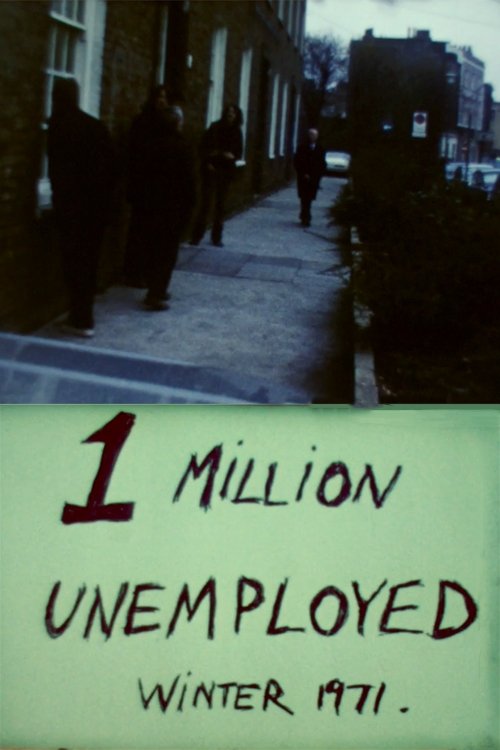
A film on unemployment that invites the spectator to resist capitalism and the consumption society, made by Mike Dunford, who was unemployed at the time, with the intention of providing a catalyst for discussion at Claimants Union meetings.
One million unemployed in winter '71
'Still-Life with Pear' takes a subversive position towards the illusion inherent in the film-image, its apparent transparency to representation, but rather than dealing with this by countering with strategies of foregrounding the actual materiality of the film-strip, the narrative construct is subverted within the film with a counter-narrative.
Still-Life with Pear
Lip Sync is about sync sound and the disruption of it. [The film] works by disrupting the element and foregrounding the effect on film, and flattening the representation from image to projected filmstrip.
SYNC.SND
Standard 8 colour film, refilmed and slowed down, edited into a formal work on 16mm film, of camera pan sequences of a woman lying naked. Almost abstract images slide from darkness to light and back, repeated, repeated, in a pattern of repetitions that at some point reverses back to the start again. A small visual love poem, but abstract.
True Love
A small meditation on light, wind, and Cecil Taylor
C.T
Part of the Logical Propositions series, 16mm, colour, sound
Slinklip
All part of a series called LOGICAL PROPOSITIONS. The simple aim of this series was to didactically select several elements of film naturalism, which work to create the illusion of representation on screen, and make each the subject of a self-descriptive film using that element as subject and demonstration. So Lip sync is about sync sound and the disruption of it, Deep Space is about camera stability and invisibility of the camera apparatus, and Lens Tissue is about clarity of the image and focus. Each of them works by disrupting the element and foregrounding the effect on film, and flattening the representation from image to projected filmstrip.
Lens Tissue
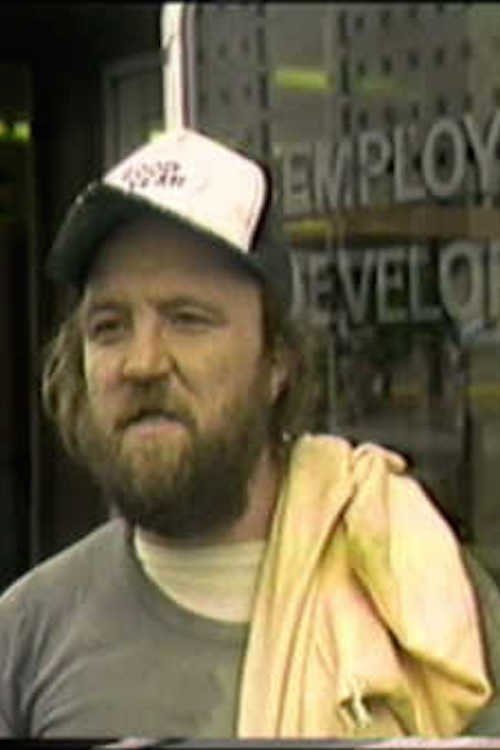
Ronald Reagan had been elected US president in 1981, and began the long unwinding of post-war progressive economic and social policy awaited by the American ruling class, but which had produced social welfare and full employment for the 50’s and into the 60’s when a combination of the cost of the Vietnam war and the Arab oil shock produced an economic crash. Initiating a program of de-regulation of industry, and of finance capital, and an aggressive anti-union assault, he began the process of offshoring, globalised production and finance, and the beginnings of the financialisation of capital and its oligarchisation that we now face. At the time we were unaware of the extent to which this would polarise and destroy and feudalise the society we were in but we could see the beginnings of the rollback and the destruction.