Ernst W. Fiedler
Directing
Known For

A confidence trickster is released from prison and travels to a village where he blackmails and tricks women out of their savings.
The Marriage Swindler
During the global economic crisis, "Morgenrot" mine is due to be closed due to unprofitable results. With the use of a machine forbidden for security reasons, the mates try to work more effectively and thus save their jobs. A serious accident happens.
Grube Morgenrot
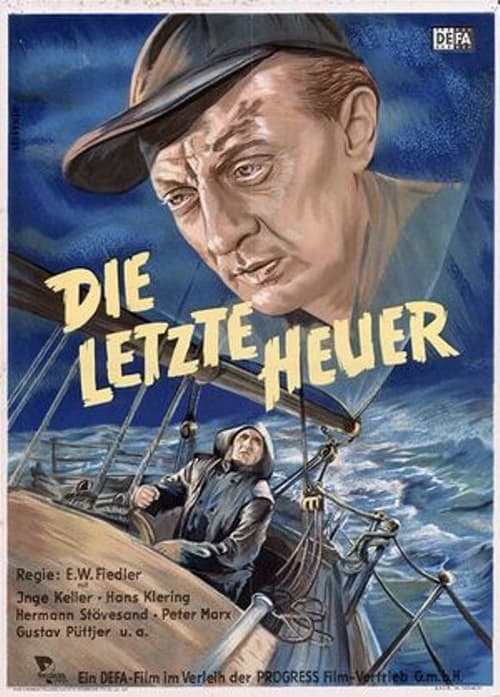
The ship stoker Heini Holler leaves Greece for health reasons and reports to the consulate of fascist Germany. The consul sends him back to Hamburg. He had previously reported him to the Gestapo there as politically suspicious. On his arrival, Holler is immediately arrested. His comrades kidnap the consul and demand an exchange for Heini, which is to take place in Marseille. The Gestapo agree to this as a pretense and secure the support of the French police to arrest the kidnappers. However, the solidarity of the sailors in Marseille is stronger and Heini is able to cure his lung disease in the Soviet Union.
Die letzte Heuer
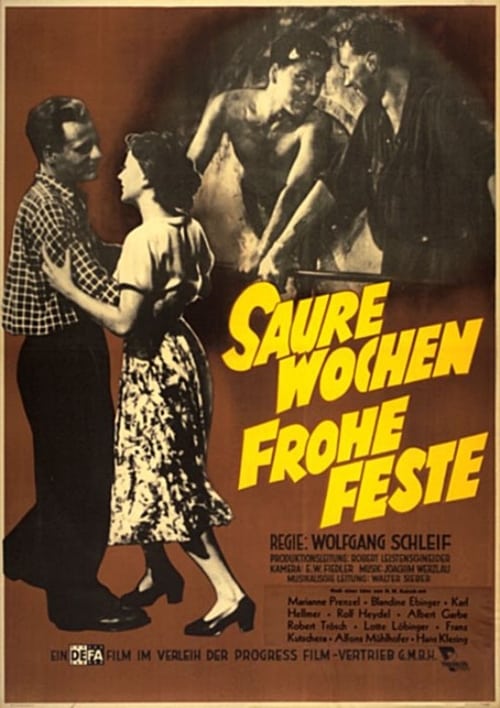
A theater competition breaks out on the occasion of the four-year anniversary celebrations at the Hennigsberg power plant. The old hands want to perform the kitschy musical comedy "Gärtnerliesl". The youngsters are against it and are planning their own program with which they want to skewer events from the plant in a cabaret style. But first, everyone has to work together on a turbine breakdown. On the day of the festival, the "Gärtnerliesl" fails with timpani and trumpets, while the youth's program is met with great applause, which the rivals join in with.
Saure Wochen - Frohe Feste
The young actress Bettina has angered the director of a West Berlin camp for troubled youth with a song that celebrates the adventurous lives of these "wayward youths." Hein Denecke invites her to get to know the real lives of these young people.
… und wenn’s nur einer wär’ …
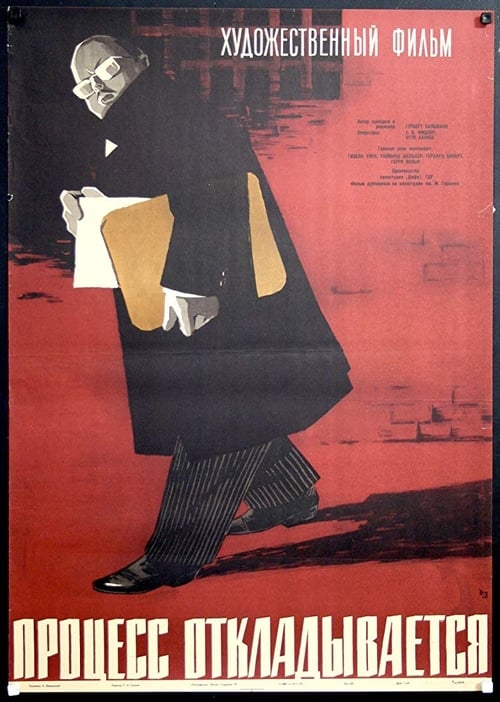
In 1955, Michael Vierkant, a Jew who had emigrated during the Nazi era, returns from abroad to the Federal Republic of Germany to obtain the conviction of Korn, the former informer responsible for the murder of his sister. Korn is back in office; Michael's efforts remain unsuccessful. There is a direct confrontation between the two, and Michael shoots Korn in self-defense. He flees and is hidden by the young, reclusive artist Marie Jäger, but is then caught by the police and charged with premeditated murder. The case is taken out of the hands of the criminal investigation department by the Office for the Protection of the Constitution, which constructs an act of political revenge on behalf of the communists. Michael manages to escape from prison. Marie and her friends organize a press conference at which Michael reveals the connections. The trial is postponed.
Der Prozeß wird vertagt
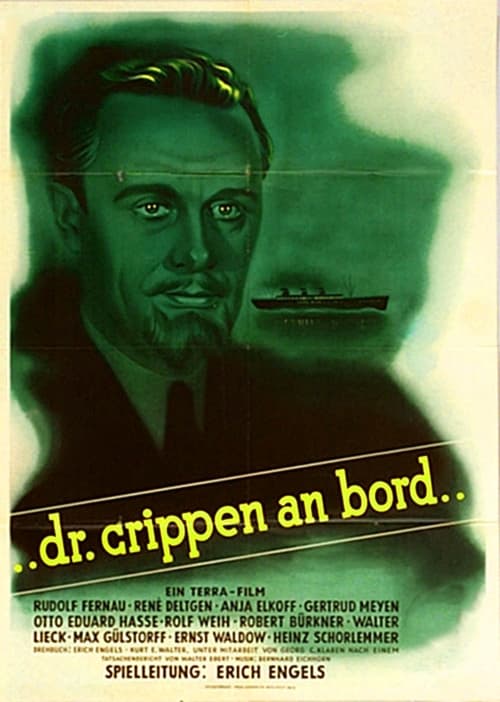
The popular trapeze artist Cora is married to the respected doctor Frank Crippen. After a party at the Crippens' house, Cora suddenly disappears. Apparently, she traveled to Brazil alone overnight. However, a friend of the couple is skeptical and calls the police. While excavating the garden, Inspector Düwell makes a gruesome discovery: body parts. Meanwhile, the prime suspect, Dr. Crippen, has already gone into hiding...
Doctor Crippen
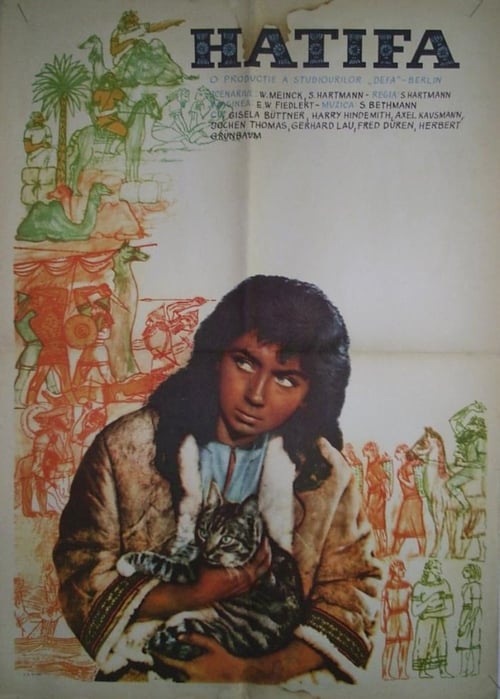
Hatifa is tired of her difficult fate and escapes from the place of her enslavement, a quarry in the desert. There she wanders around in freedom, but ultimately helpless, without water or food. Shortly before dying of thirst, she is saved by the sage Simsal, who is traveling with a caravan of the merchant Ganem. Hatifa quickly makes many friends, including the young servant Hodja. Only to him she confides her secret. The girl had to keep the fact that she was a slave to herself. After all, anyone who helps escaped slaves is mercilessly threatened with the death penalty. Out of consideration for the caravan, they both flee, but are soon picked up by Ganem. When he realizes that he can make a lot of money with Hatifa, he sells her again to a quarry.
Hatifa
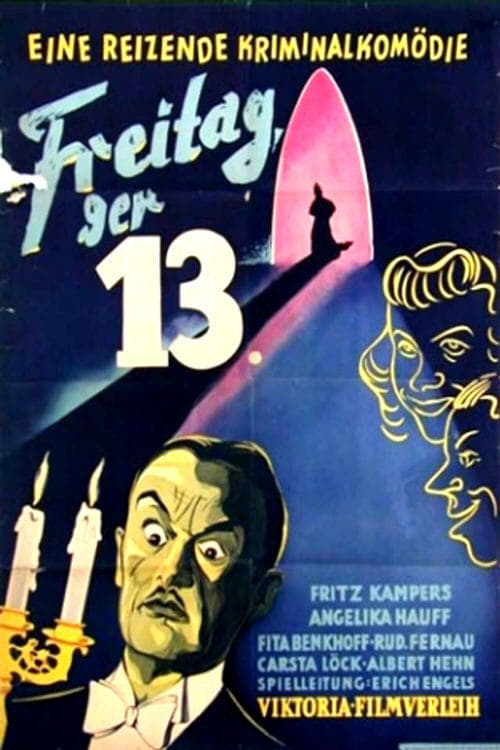
Mr. Rapp was close to selling Rauhenegg Castle when suddenly some young men turn up claiming that the place is haunted. The seller wants to prove the opposite and invites the men to spend a night in the building themselves.
Freitag, der 13.
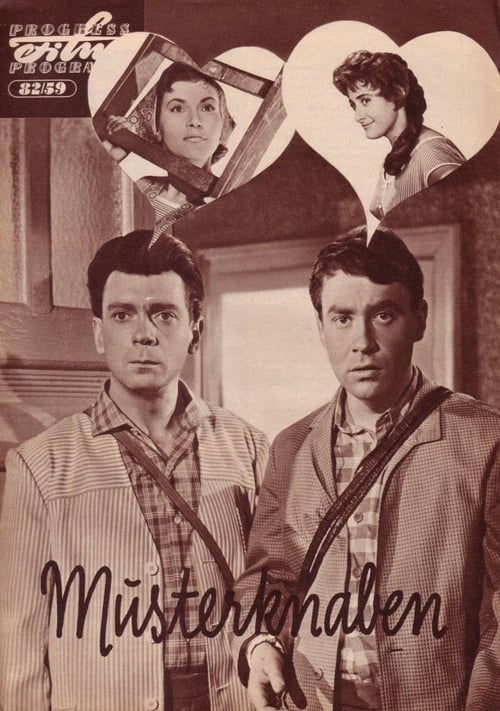
Two young building workers are more interested in girls than their work; complications ensue at home.
Musterknaben
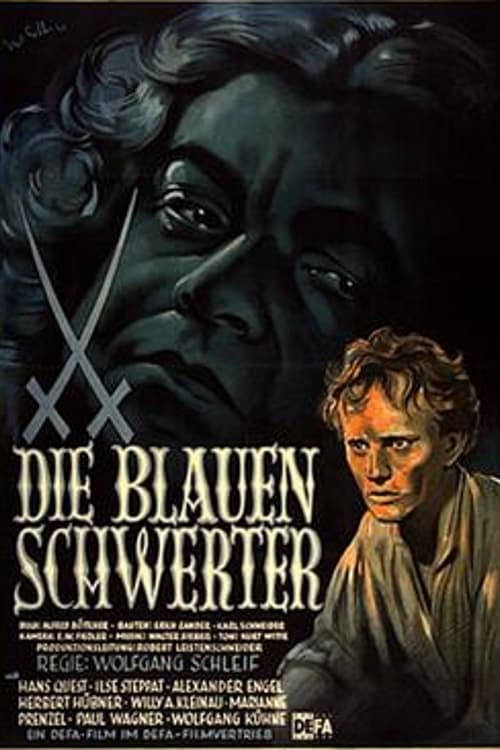
The story of Johann Friedrich Böttger, an apothecary’s apprentice and alchemist’s assistant. Fleeing from the Prussian King, he goes to Saxony, where King Frederick August the Strong takes him to a fortress and demands that he create gold. Böttger is equipped with everything he would need for the task, but he has known for a while that actual gold production is a myth and instead experiments with porcelain—white porcelain, as the Chinese are said to possess. In 1709, he finally succeeds in surprising the King with the "white gold," the first white porcelain made in Europe, he hopes for freedom.
The Blue Swords
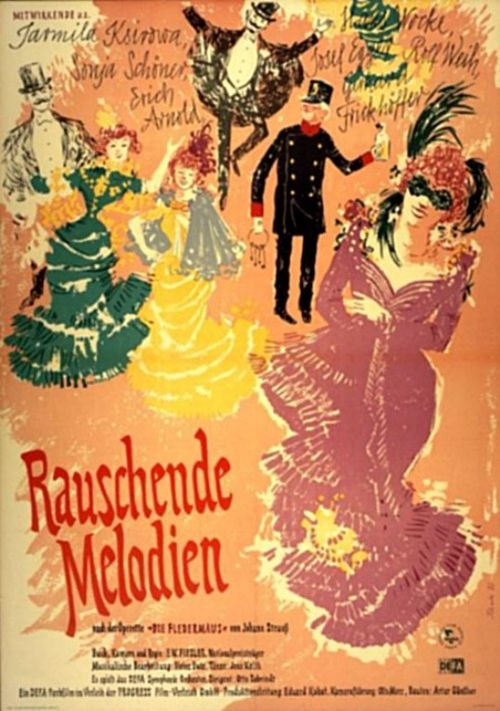
A close film adaptation of Johann Strauss' "Fledermaus". Notary Falke uses Prince Orlofsky's ball, at which the distinguished gentlemen of Viennese society enjoy themselves with the opera's ballet girls, to take revenge on Dr. Eisenstein, who once embarrassed him after a drinking bout. Falke also invites Eisenstein's wife Rosalinde. During the lavish party, Eisenstein courts his own wife, who is disguised as a Hungarian countess. In the morning, he hurries to prison to serve a short sentence. His indignation is great when a Dr. Eisenstein is already sitting there. He had been taken from his wife's arms the night before. He makes a scene for Rosalinde, but she convicts him of infidelity with the Hungarian countess.
Rauschende Melodien
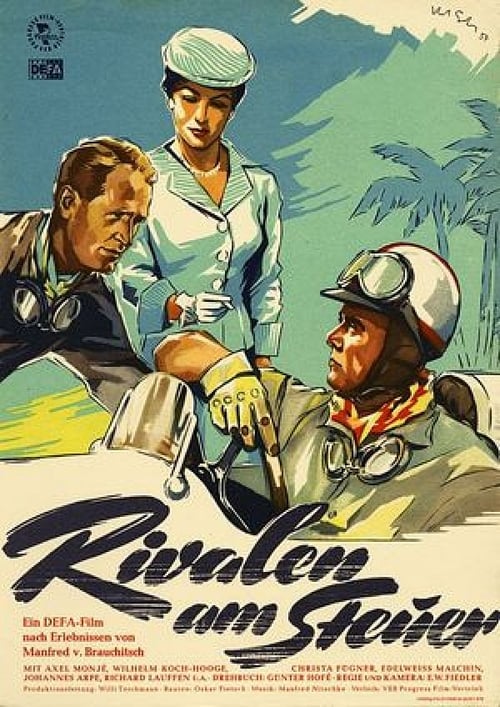
Manfred Falk is an experienced race car driver and member of a racing collective in Eisenach. While competing in West Germany, the beautiful Manuela convinces him to leave his girlfriend Inge and his friends at the collective behind in order to join the South American Alvarez racing company.
Rivals Behind the Wheel
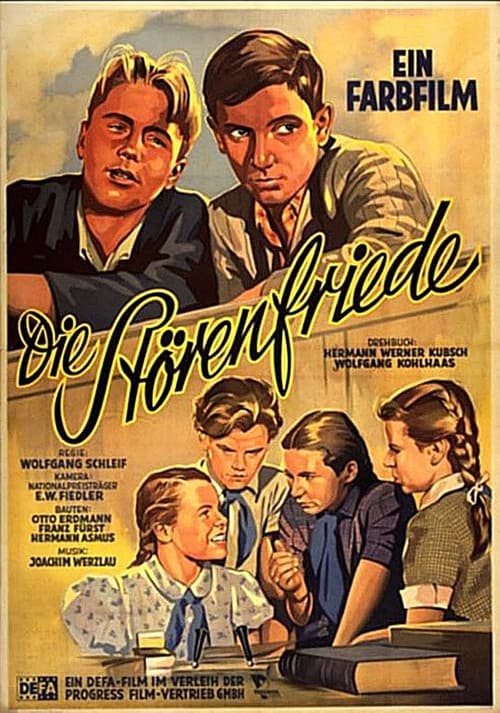
Schorsch and Franz are two rascals who are full of mischief and constantly tease both their teachers and their fellow pupils. Vera, the new classmate, decides to put her foot down and bring an end to the poor situation. With skill, patience and the help of the other pioneers she finds out about the troublemaker’s love for miniature trains and tries to direct their redundant energy onto the right track. However, Vera and her pioneers have to overcome some resistance before Schorsch and Franz finally change their behavior and become better classmates.