Vito Acconci
Directing
Biography
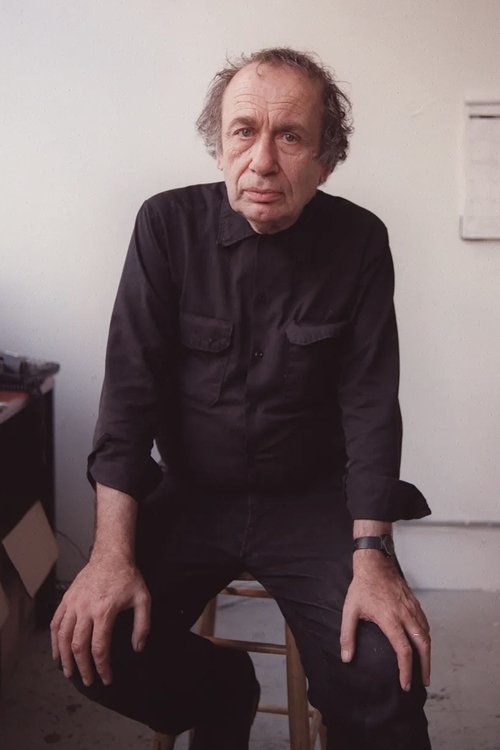
Vito Acconci (January 24, 1940 – April 27, 2017) was an American performance, video and installation artist, whose diverse practice eventually included sculpture, architectural design, and landscape design. His performance and video art was characterized by "existential unease," exhibitionism, discomfort, transgression and provocation, as well as wit and audacity, and often involved crossing boundaries such as public–private, consensual–nonconsensual, and real world–art world. His work is considered to have influenced artists including Laurie Anderson, Karen Finley, Bruce Nauman, and Tracey Emin, among others. Acconci was initially interested in radical poetry, creating 0 to 9 Magazine, but by the late 1960s he began creating Situationist-influenced performances in the street or for small audiences that explored the body and public space. Two of his most famous pieces were Following Piece (1969), in which he selected random passersby on New York City streets and followed them for as long as he was able, and Seedbed (1972), in which he claimed that he masturbated while under a temporary floor at the Sonnabend Gallery, as visitors walked above and heard him speaking. In the late-1970s, he turned to sculpture, architecture and design, greatly increasing the scale of his work, if not his art world profile. Over the next two decades he developed public artworks and parks, airport rest areas, artificial islands and other architectural projects that frequently embraced participation, change and playfulness. Notable works of this period include: Personal Island, designed for Zwolle, the Netherlands (1994); Walkways Through the Wall at the Wisconsin Center, in Milwaukee, WI (1998); and Murinsel, for Graz, Austria (2003). Retrospectives of Acconci's work have been organized by the Stedelijk Museum in Amsterdam (1978) and the Museum of Contemporary Art, Chicago (1980), and his work is in numerous public collections, including those of the Museum of Modern Art and Whitney Museum of American Art. He has been recognized with fellowships from the National Endowment for the Arts (1976, 1980, 1983, 1993), John Simon Guggenheim Memorial Foundation (1979), and American Academy in Rome (1986).[6] In addition to his art and design work, Acconci taught at many higher learning institutions. Acconci died on April 27, 2017, in Manhattan at age 77.
Known For

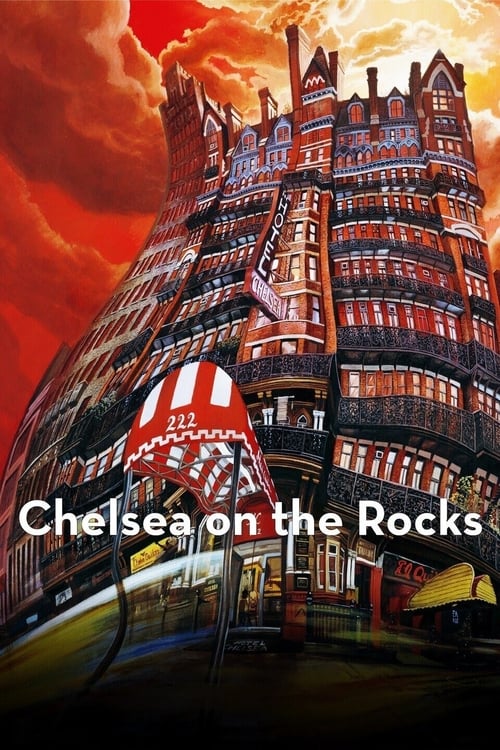
Chelsea on the Rocks celebrates the personalities and artistic voices that have emerged from New York’s legendary Chelsea Hotel. Once considered an untouchable, impenetrable tower for writers, artists, musicians and mavericks, it has been recently claimed as a boutique hotel venture for a management company that shows disregard for its formidable history. –Cannes Film Festival
Chelsea on the Rocks

A probing portrait of Chris Burden, an artist who took creative expression to the limits and risked his life in the name of art.
Burden

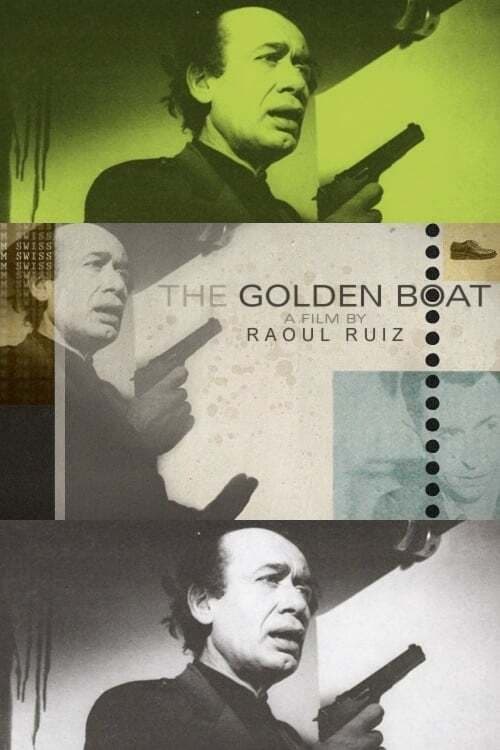
Inspired in form by American police TV shows and soap operas, The Golden Boat is a madcap, surreal dash through the streets of New York city, telling the mysterious and often hilarious story of an aged street-person named Austin, a comically compulsive assassin, as he joins up with a young rock critic and philosophy student named Israel Williams. In the course of their adventures, Austin pursues his object of desire - a Mexican soap opera star - and along the way engages a host of TV characters and bit players, whose repartee range from gangsterish insults to the question of God's existence.
The Golden Boat

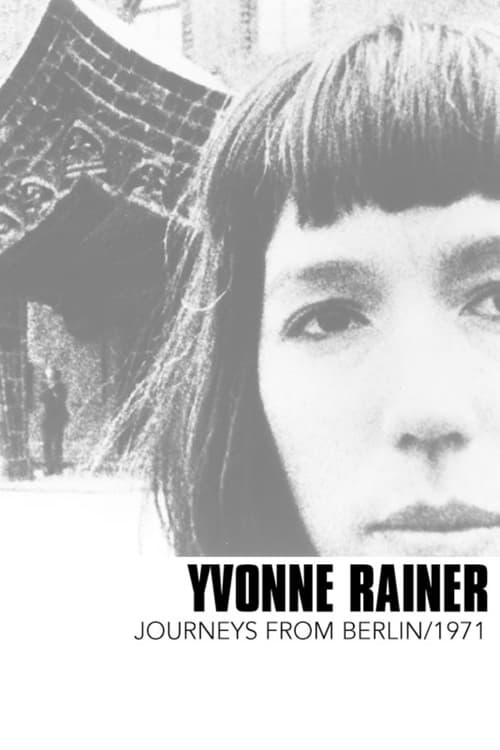
An epic meditation on psychoanalysis, the Baader-Meinhof, feminism, and pre-revolutionary Russia.
Journeys from Berlin/1971

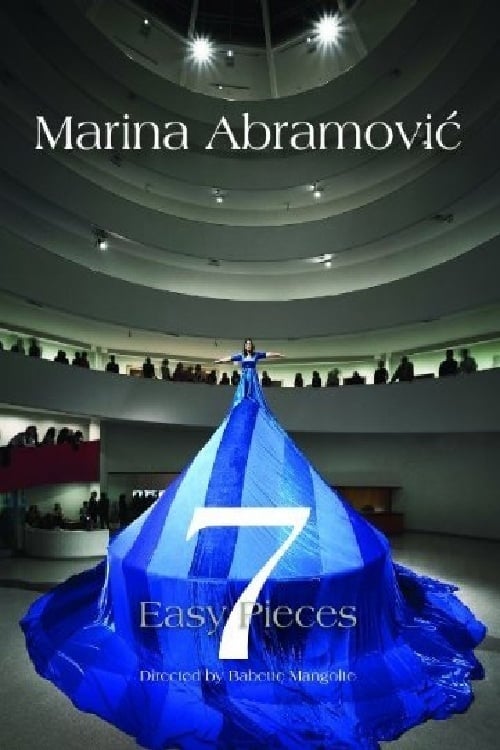
For Seven Easy Pieces Marina Abramovic reenacted five seminal performance works by her peers, dating from the 1960's and 70's, and two of her own, interpreting them as one would a musical score. The project confronted the fact that little documentation exists from this critical early period and one often has to rely upon testimony from witnesses or photographs that show only portions of any given performance. The seven works were performed for seven hours each, over the course of seven consecutive days, November 9 –15, 2005 at the Guggenheim Museum, in New York City. Seven Easy Pieces examines the possibilities of representing and preserving an art form that is, by nature, ephemeral.
Seven Easy Pieces
With HOW TO FLY, Bowes abandoned plot entirely, finding other forms of structure. He wanted to show that stories do not have to obsessively organize and explain data, and that television’s hundreds of simultaneous, fragmented narratives – news, fiction, commercials, sports, etc. – had prepared audiences for this new type of structure. — Charles Ruas
How to Fly

Explores some of the most innovative attempts by contemporary artists, filmmakers, architects etc to explore multiple Temporalities and to counter the uniform sense of time promoted by our technology-driven society.
The Art of Time

Poet and artist Vito Acconci points his finger towards the camera and his own reflection in an offscreen video monitor.
Centers

Documentary about the Mekons.
Revenge of the Mekons

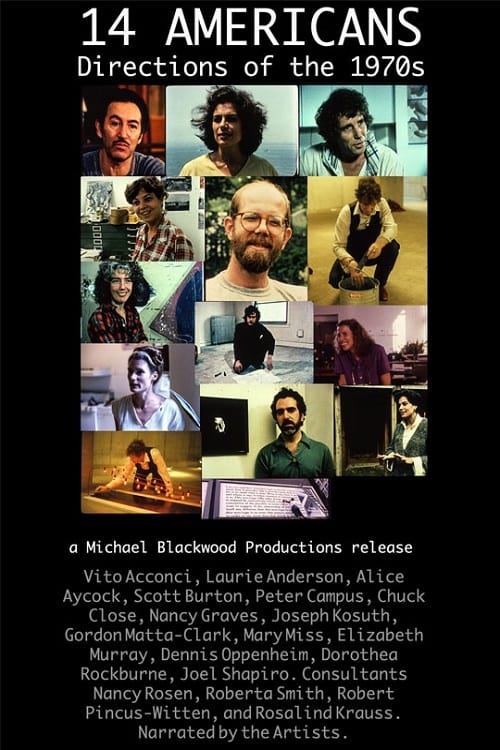
The multiple means of making art after the end of illusionism led these artists to create performances, sculptures, earthworks, tableaux, furniture, shaped canvases, and more, using unusual materials. They explore the process of making forms and giving meanings to those forms. In this idea art, their focus is as often social and psychological as artistic. Some of their activities enlist engineering and construction techniques, others compose texts or scripts that are central to their art. Some cast the viewer in the role of a spectator, while the others demand active participation. The sources for their concepts and art works are equally diverse; the delicate proportions and balance of Early Renaissance painting, the exploration of the surface of the moon, the structure and inventions of vernacular architects, to name only a few.
14 Americans: Directions of the 1970s

"Unavailable until recently, Corrections is Acconci's first single-channel video. Back to the camera, with only his head and bare shoulders visible, Acconci lights a match and brings it around to the nape of his neck. The lights dim as the flame nears his body hair, which briefly flares in the darkness, at which point Acconci shakes out the match. This action is repeated for the duration of the piece. Corrections introduces themes that typify Acconci's body-based performance work of the 1970's." - Electronic Arts Intermix
Corrections

Compilation film consisting of material from various artists who are involved in body art
Body Art

The two-channel piece Remote Control is an exercise in manipulation and control between artist and subject, male and female. On separate channels, the viewer sees Acconci and Kathy Dillon sitting alone in wooden boxes in different rooms, each facing a static camera. Although they can only see and hear each other on separate monitors, they attempt to interact and respond to one another directly, as if their communication were unmediated. Through language and gesture, Acconci tries to manipulate Dillon's actions from his box, as though by remote control.
Remote Control
"Acconci caresses his torso, then crushes cockroaches into his stomach and rubs them into his skin." - Electronic Arts Intermix
Rubbings

Face-Off is an ironic collusion of private and public, of exposure and masking, a tense ritual wherein Acconci divulges and then censors his self-revelations. Acconci turns on a reel-to-reel audiotape recorder and bends down to the speaker to listen to it, his face barely visible in the frame. The audio is a recording of his own voice addressing himself and the viewer, recounting intimate details about his life. However, whenever the material becomes too personal, he tries to drown out his voice and prevent the viewer from hearing, yelling: "No, no, no, don't tell this, don't reveal this...." Reacting to his recorded voice, he becomes increasingly agitated as the tape proceeds.
Face-Off

A documentation of one of Acconci's most notorious performances, Claim Excerpts is a highly confrontational work, an exercise in self-induced, heightened behavioral states, and an aggressive psychological exploration of the artist/viewer relationship. During the three-hour performance, Acconci sat in the basement of 93 Grand Street in New York, blindfolded, armed with metal pipes and a crowbar. His image was seen on a video monitor in the upstairs gallery space. Staking claim to his territory, he tries to hypnotize himself through language into an obsessive state of possessiveness.
Claim Excerpts

A three-part video epic in which avant-garde artist Vito Acconci explores the relationship between the self and national mythology. Through multiple vignettes, Acconci brings together a collage of music, photographs, diorama, experimental theater and his own profile, to tell a semi-autobiographical narrative that, in turn, becomes a critique of the alienated quality of American mythology.
The Red Tapes
In this feature-length silent film, Acconci uses hand-written title cards to present an "interior monologue" about speaking, language, and silence. The written text alternates with images of Acconci, alone in the interior of an urban loft or on a rooftop, with the skyline of downtown New York as a backdrop.
My Word

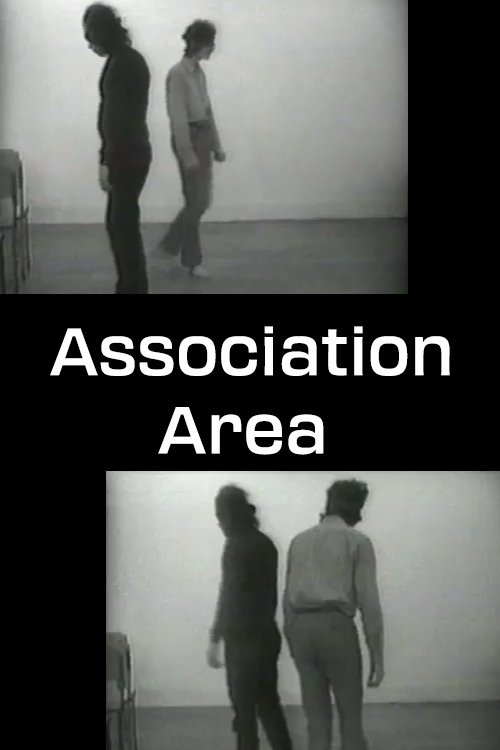
In the late 1960s, Vito Acconci abandoned poetry in order to work with the body and its relationship with space, although he did retain a commitment to language. Influenced by the concepts proposed by the Judson Dance Theater and the Structuralist experimental cinema in the Anthology Film Archives, Acconci shifted his interest towards performance, Super 8, video, sound and installation, executed within the gallery or museum space. Three Relationship Studies (Manipulations, Imitations, Shadow Play) brings together three conceptual exercises in which Acconci explores one of his main themes of interest: the body as space. In this particular case, he focused on the relationship of his body with the other, his manipulation of it, and the way the shadow cast by his body manages to dominate the space outside it.
Three Relationship Studies

In Two Track, Acconci experiments with direct and peripheral perception of information in the context of communication and interaction. He sits with a man and a woman in front of a microphone. The man and woman each read a different text (a Mickey Spillane novel and a Raymond Chandler novel) simultaneously; Acconci repeats everything the man says. Occasionally an off-screen voice interrupts to question Acconci on what the woman has read, and he tries to answer.