Writing
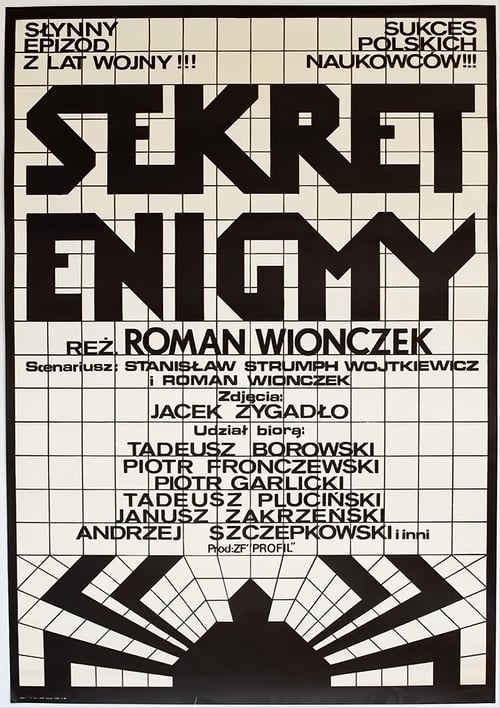
Three Polish mathematicians are the first to crack the sophisticated Enigma code used by the Germans just before the Second World War. They build replicas of the Enigma machines and manage to get two of the machines to the British and French code-breakers before the German invasion of Poland in 1939; they ask that recognition be given to their work at the end of the war. After the invasion, the Polish cipher bureau escapes and continues their decoding in Algeria and unoccupied France.
The film shows Poland regaining independence in 1918 and the formation of the first government of the Republic of Poland.
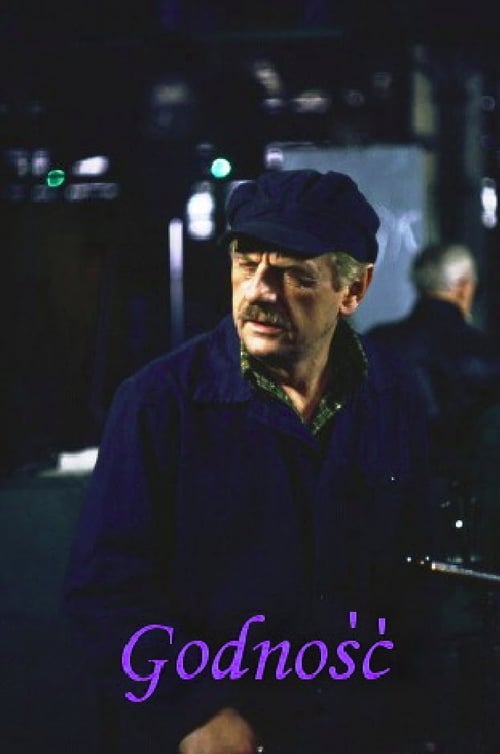
The year is 1981, a month before the imposition of martial law. At the "Metalpol" plant, where almost the entire Szostak family works, fierce and dramatic discussions and games are taking place. Karol Szostak, who is uncompromising but moderate in his actions, is elected chairman of the industry trade union. Solidarity members demand his dismissal. Despite the strike, declared at the behest of the region, Szostak, along with others, joins the work force. He is taken away in a wheelbarrow from the plant where he has worked for 46 years.
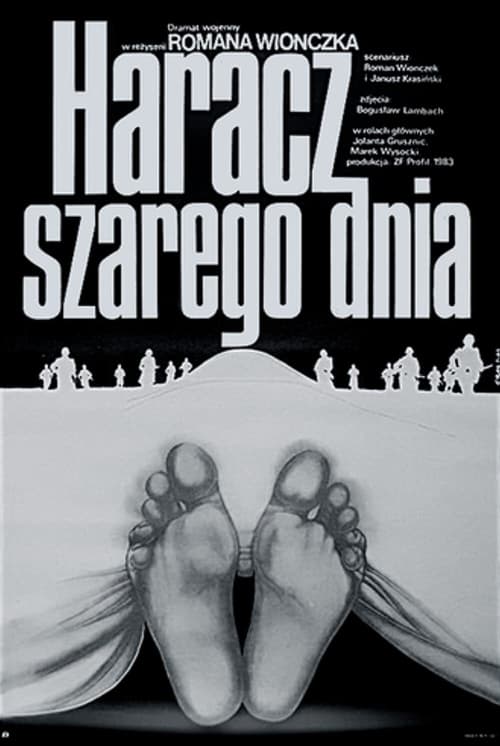
The year 1943. The Second World War is on. A group of partisans, which includes, among others, the young poet Gonczar, his friend Włodek and Zosia, are ordered to blow up a railway bridge during a military transport crossing. The task is completed, but with great losses.
The film is the author's message of memories and reflections evoked by the celebrations of the anniversary of Warsaw's uprising. The picture of the cemetery with crowds of people who came to visit the graves of the insurgents presented in a way that aroused emotions because of the power of the memories it refers to, but also because of the fact that the anniversary was private, unorganized - it was an expression of spontaneous, grassroots activity. The Warsaw Uprising lived in the memories and emotions of those who remembered it, who lost loved ones, friends, acquaintances, but also lost their city, because Warsaw is also the subject of this personal anniversary.
An old farmer comes into conflict with his daughter and son-in-law, who value the teaching profession more than farming.
A sequel to the 1984 anti-Solidarity film Dignity. The film is set at the beginning of martial law. Metalpol is on strike. The communists intern attorney Franczuk, an advisor to the Solidarity movement. Szostak, who a few days ago was taken out of the plant on a wheelbarrow as a defector, wants to return to work. However, this proves to be a very difficult, not to say impossible, task.