Christoph Willibald Gluck
Sound
Biography
Christoph Willibald (Ritter von) Gluck (2 July 1714 – 15 November 1787) was a German composer of Italian and French opera in the early classical period. Born in the Upper Palatinate and raised in Bohemia, both part of the Holy Roman Empire at the time, he gained prominence at the Habsburg court in Vienna. There he brought about the practical reform of opera's dramaturgical practices for which many intellectuals had been campaigning. With a series of radical new works in the 1760s, among them Orfeo ed Euridice and Alceste, he broke the stranglehold that Metastasian opera seria had enjoyed for much of the century. Gluck introduced more drama by using orchestral recitative and cutting the usually long da capo aria. His later operas have half the length of a typical baroque opera.
Known For

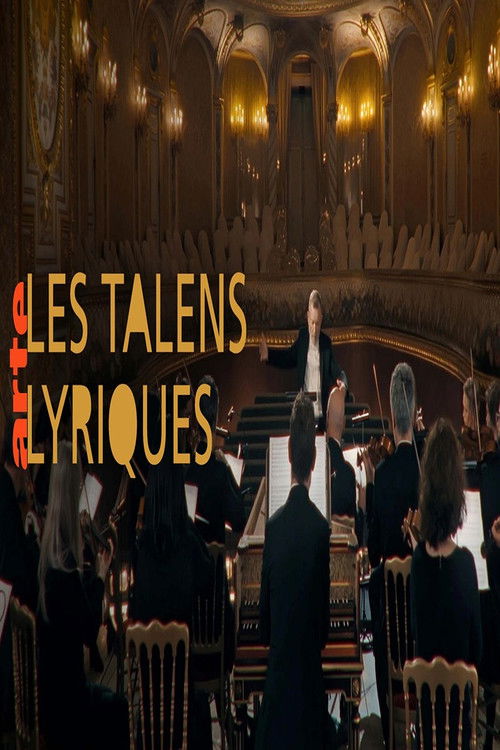
Hidden away in the heart of the Château de Fontainebleau, the Théâtre de l’Impératrice Eugénie is one of the most secret treasures of this jewel of French heritage. Closed to the public, this exceptional venue is reopening its doors for a concert given by Les Talens Lyrique and soprano Marie Lys.
Les musiques de Fontainebleau au Théâtre impérial

Documentary about the Swedish artist and painter Philip von Schantz.
Jockey, professor och folkkär målare

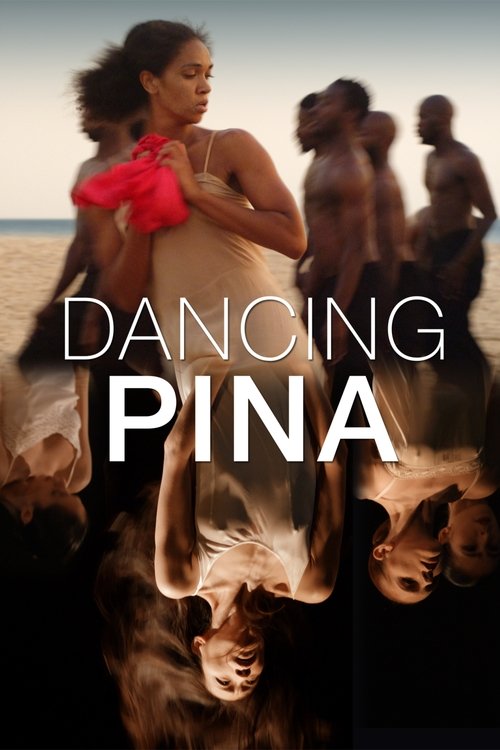
Two of Pina Bausch’s most famous works are rehearsed in Germany and Senegal, championing the choreographer’s legacy through a younger generation of dancers.
Dancing Pina

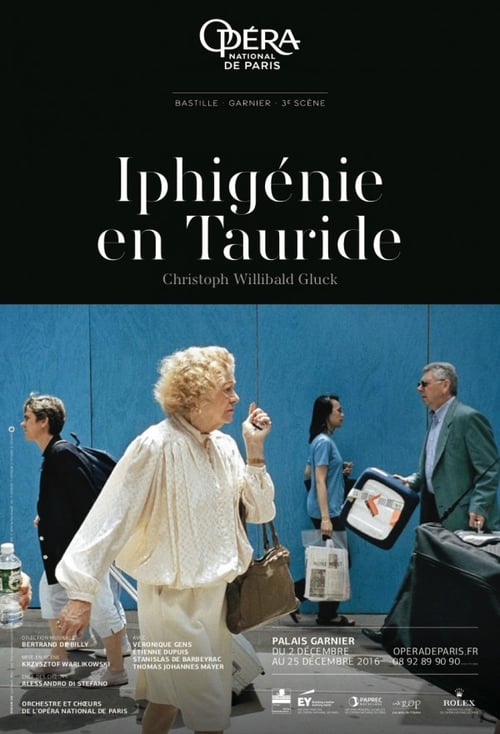
Gluck’s gripping adaptation of the ancient Greek myth is vividly brought to life by a stellar cast in Stephen Wadsworth’s atmospheric production. Oreste is driven by the Furies to atone for killing his mother Clytemnestre. When he and his companion Pylade are shipwrecked on the island of Tauride, the king Thoas demands they be sacrificed. At the center of the drama is Iphigénie, Oreste’s long-lost sister. Forced to live among her enemies, she holds the lives of the captives in her hands—unaware that one of them is her brother. (Iphigénie en Tauride is performed in an adaptation of the 1779 Paris version edited by Gerhard Croll, by arrangement with Bärenreiter.)
The Metropolitan Opera: Iphigénie en Tauride

The Ballet de l'Opera National de Paris mounted this production of the late Pina Bausch's dance-opera Orpheus und Eurydike, which Bausch had adapted from composer Christoph Willibald-Gluck and Ranieri de' Calzabigi's 1762 opera Orfeo ed Euridice. As the title suggests, it takes its basic narrative from the myth of Orpheus, and his courageous but ill-fated attempt to rescue his lover Eurydice (also known as Eurydike) from the jaws of the underworld. This particular production finds Yann Bridard dancing as Orpheus and Marie-Agnès Gillot dancing as Eurydike , with mezzo-soprano Maria-Riccarda Wesseling accompanying Bridard and soprano Julia Kleiter accompanying Wesseling. Pina Bausch did the choreography and stage direction, while Rolf Borzik designed the sets, costumes and lighting. The Balthasar-Neumann Ensemble & Choir, under the direction of Thomas Hengelbrock, lend musical accompaniment.
Orpheus and Eurydice

In 1946, a former resistance fighter starts working as a forester in a small town in Masuria. The local people don't trust him, robberies are common and his old flame is married to another man.
The Refuge

Reimagine Christoph Willibald Gluck’s enduringly popular opera based on the famous Greek myth. From Lyric Opera of Chicago in collaboration with the Joffrey Ballet. Starring Dmitry Korchak, Andriana Chuchman and Lauren Snouffer.
Gluck: Orphée et Eurydice

Director and choreographer Mark Morris’s production of Gluck’s masterpiece updates the immortal story from its ancient Greek roots to the timeless present, where, he says, “the union of chorus and dancers feels inevitable and inseparable.” With costumes by Isaac Mizrahi and a set designed by Allen Moyer, this production surrounds the action with the superb Met chorus dressed as a crowd of historic characters who bear witness to the transformative power of love. Orfeo (Stephanie Blythe) is so consumed with grief at the death of his beloved Euridice (Danielle de Niese) that the gods (Heidi Grant Murphy as Amor) allow him to lead her back from the underworld—if he will not look at her on the way. Of course he can’t resist looking, but the gods are truly merciful.
Gluck: Orfeo ed Euridice

The unexpected return of his ex-wife and the assembly of a group of protesters both threaten to wreck a corrupt contractor's inauguration party for his new superhighway.
Réjeanne Padovani

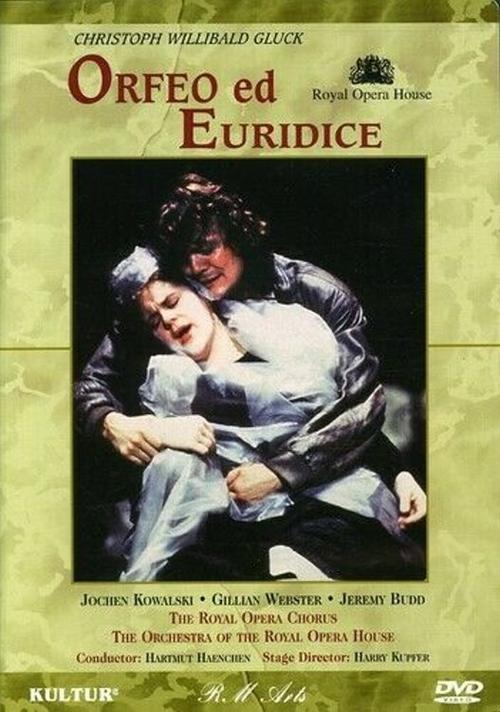
Performed live at the Royal Opera House, Covent Garden, Gluck's opera in three acts is conducted by Hartmut Haenchen. Performers include Jochen Kowalski, Gillian Webster and Jeremy Budd, alongside the Royal Opera Chorus and Orchestra. When Orpheus mourns for his late wife Eurydice, the god Cupid offers him the chance to descend into the underworld and lead her back to the land of the living, on the condition that he does not look at her face. He sets out on his journey, but his path to the Elysian Fields is blocked by the fierce Furies.
Orfeo Ed Euridice

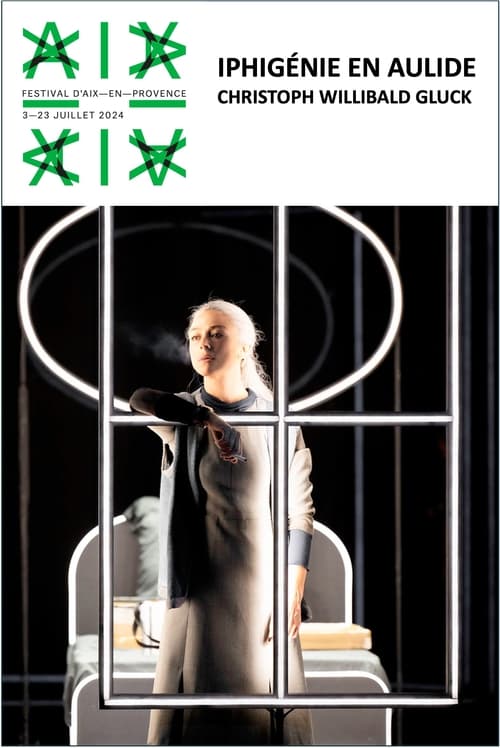
A decade before the French Revolution, in a country riven with bitter polemics, Gluck throws the history of opera into confusion by raising it to an unheard-of peak of tragic intensity. Experiencing his two Iphigenias in a single evening goes beyond the norms of operatic life: it is to enter the very heart of the curse on the family of King Atreus of Mycenae, to follow a logical destiny through a cycle of endless violence. How does the victim of Aulis become the murderess of Tauris? That is the burning question that Dmitri Tcherniakov must adress, plunging the spectator into the midst of a household haunted by the dead and setting in train an implacable process of dehumanization, with parallels to our world today. Conducting Le Concert d’Astrée, Emmanuelle Haïm drives this dual tragedy to the summit of its expressive power, leaving humanity to be translated through arias of the utmost poignancy.
Iphigenie en Aulide / Iphigénie en Tauride @ Festival d'Aix-en-Provence 2024

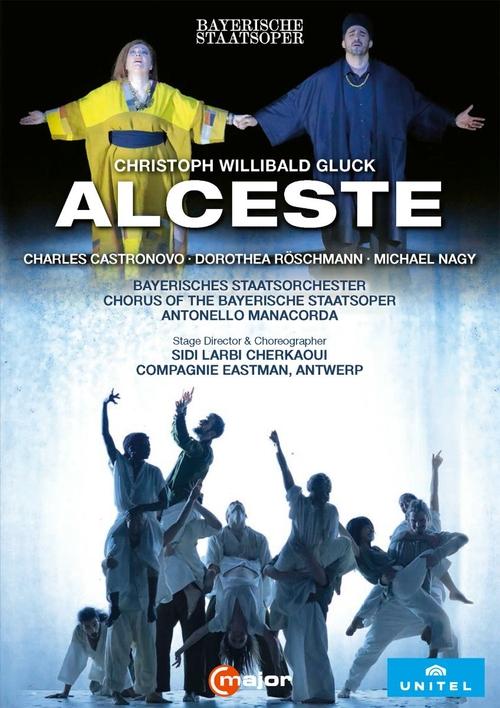
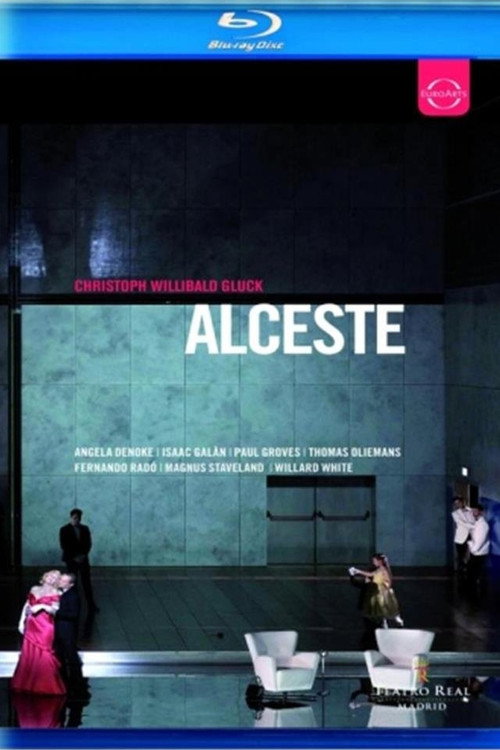
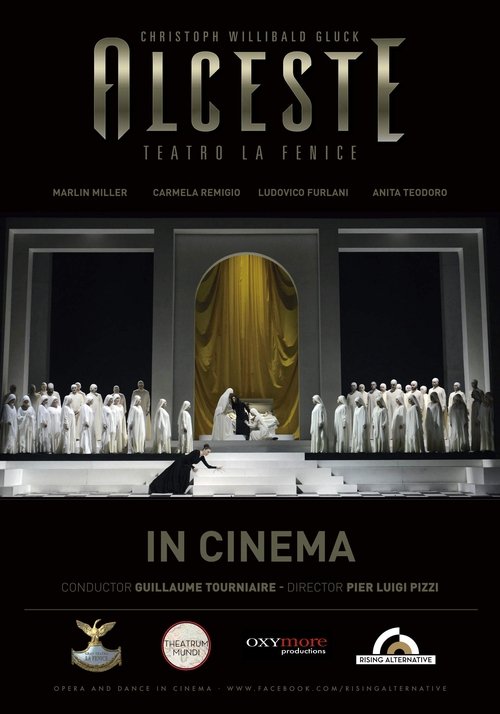
At death’s door, a beloved king is doomed unless someone takes his place. So then his wife resolves to sacrifice herself to save him. Christoph Willibald Gluck composed his reform opera Alceste not once, but twice. In La Fenice’s production of the lesser-known original Italian version, director Pier Luigi Pizzi strips the action down to the bare emotional drama of Alceste’s sacrifice.
Alceste - Teatro La Fenice

Opera in three acts by Christoph Willibald Gluck, Hector Berlioz's version (1859)
Gluck: Orpheus & Eurydice @ Halle 47, Floirac

No description available.
Iphigénie en Aulide

Juan Diego Flórez dazzled audiences and critics alike when he played the virtuoso role of Orphée in La Scala’s first ever staging of Gluck’s opera in its French version: “Juan Diego Flórez delivered a lesson in style. His tone is darker and his projection more self-effacing than in the past, but class is permanent. His agility and legato are utterly thrilling. The ovations were never-ending.” (Corriere della sera) The present release is a production by Royal Opera House, Covent Garden, London Recorded live at Teatro alla Scala, Milan, March 2018. Gluck’s Orpheo ed Euridice was first performed in 1762. It is the first of Gluck’s “reform” operas, in which he attempted to replace the abstruse plots and overly complex music of opera sera with a “noble simplicity” in both the music and the drama. The present production was staged by Hofesh Shechter and John Fulljames.
Gluck: Orphée et Euridice

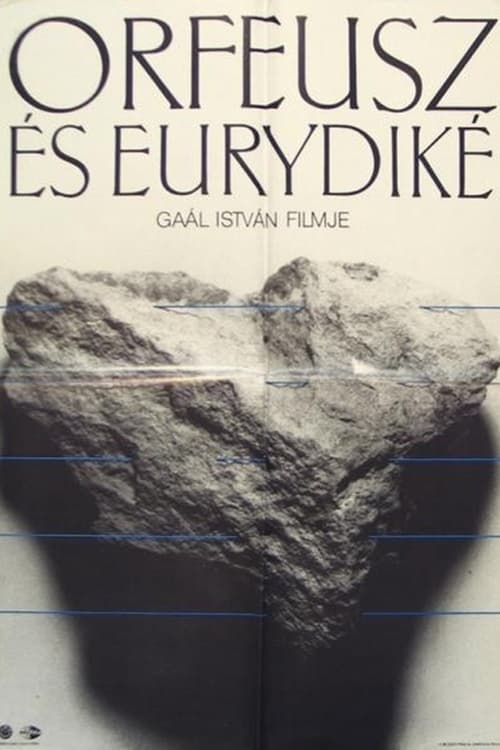
The opera-film, as opposed to Gluck's Vienna version, is a recollection of the ancient tragic Greek myth. Orpheus, who is able to defeat Hades with the power of art, is unable to conquer his own human defects. Amor is sympathetic to Orpheus' sufferings as he mourns his dead beloved, and lets him know the message sent by the Gods, namely that he may take her home from the underworld if he is capable of not looking at her.
Orpheus and Eurydice

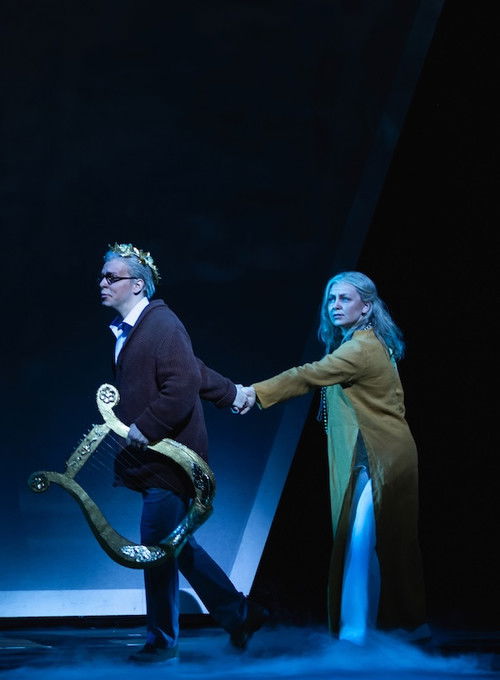
Amour, the messenger of the gods, tells Orpheus that he may descend to the underworld and return with Eurydice. His singing has the power to appease the Furies and animate the blessed Shadows. Yet, his voice cannot reassure Eurydice who despairs of the feigned indifference of Orpheus, put to the test by Jupiter. Raphaël Pichon conducts the opera of operas and Aurélien Bory displays the giddiness of the mental and supernatural spaces traveled by Orpheus and beyond. Marianne Crebassa plays a new breeches role with Hélène Guilmette (Hélène in Le Timbre d’argent) and Lea Desandre (the title role in Alcione).
Gluck - Orphée et Eurydice

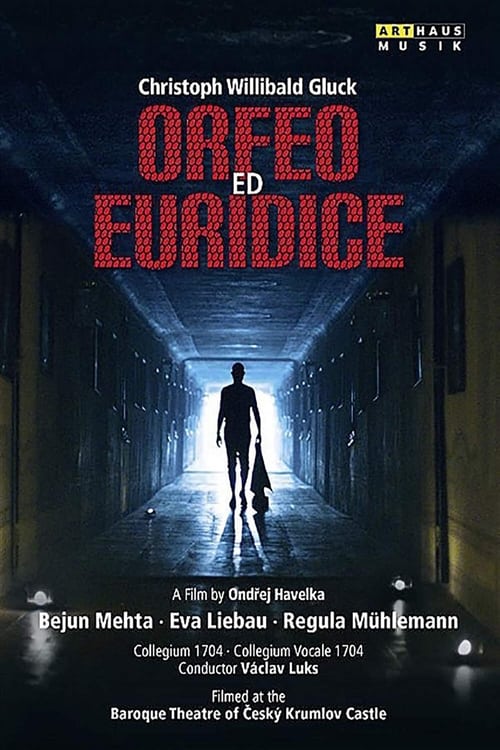
Based on Gluck's masterpiece and performed entirely on location in and around the environs of the Baroque Theatre at the Cesky Krumlov Castle in the Czech Republic; it's an opera production designed specifically for the film with outstanding sets and production values. Countertenor Bejun Mehta sings the role of the torn main character and acts as an artistic advisor, making for an involving and impeccably performed opera.
Gluck: Orfeo ed Euridice

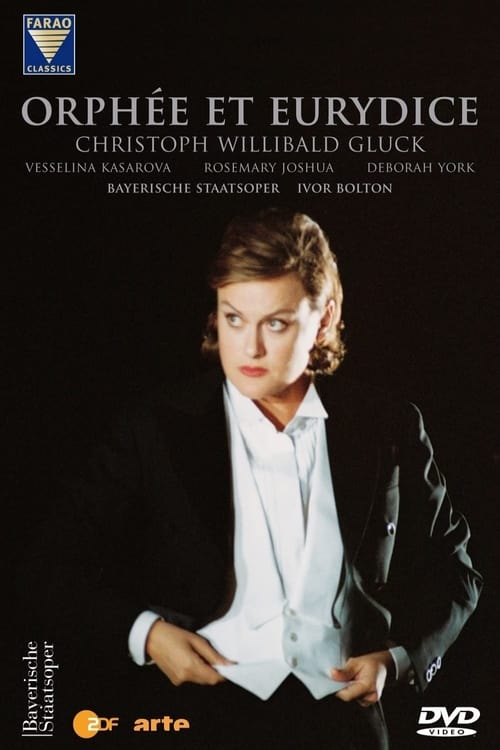
Live from Munich, October 2003. A husband laments the death of his wife. He follows her to the underworld and finds her there. But he is forbidden to look at her. He does it anyway! Has he now lost her forever? Or will the gods' hearts be moved by this loving, "human" glance? In 1762, Gluck put the quietus on the artificiality of baroque opera with this work - from then on the human element took center stage.
Orphée et Eurydice

Leading Chopin interpreter Nelson Freire is the soloist in Chopin’s lyrical and brilliant Second Piano Concerto. On the podium the French conductor Lionel Bringuier makes his Proms debut conducting the BBC Symphony Orchestra and gives a sizzling performance of Roussel’s Symphony No.3 and of Ravel‘s score for the ballet Daphnis et Chloé – Suite No 2. ‘’The programme, otherwise entirely French, highlights everywhere this purity of style and gesture (which would give him more in common with Pierre Monteux than Charles Munch), which charms all who see and hear the young conductor: a clear and understandable beat, subtle control of balance and level, natural rhythm and pulse, and expression without embellishment.’’