Lothar Lambert
Directing
Biography
No one in Germany can more justifiably call himself an independent filmmaker than Lothar Lambert: 41 films to date since 1971, almost all financed out of his own pocket, as producer, director, screenwriter, actor and, time and again, as editor, cameraman, sound man and distributor. Cinema about sex and longings, self-realization and psychological deformities, desires, the weal and woe of the little-noticed in the (initially only West) Berlin urban jungle. And it is as authentic, shocking and tragicomic as you rarely find in this country. Because they were unusually weird and "dirty" in terms of content and form - especially for the well-behaved German standards - Lambert's works were quickly classified as "underground" in the seventies. And have recently been increasingly ignored by critics and film historians. Having long since become documents of the zeitgeist and thus of contemporary history, it is long overdue to (re)discover these works.

Known For

Polizeiruf 110 is a long-running German language detective television series. The first episode was broadcast 27 June 1971 in the German Democratic Republic, and after the dissolution of Fernsehen der DDR the series was picked up by ARD. It was originally created as a counterpart to the West German series Tatort, and quickly became a public favorite.
Polizeiruf 110

Looks like an alien, sings like a diva - Klaus Nomi was one of the 1980s' most profoundly bizarre characters to emerge through rock music: a counter tenor who sang pop music like opera and brought opera to club audiences and made them like it. The Nomi Song is a film about fame, death, friendship, betrayal, opera, and the greatest New Wave rock star that never was!
The Nomi Song

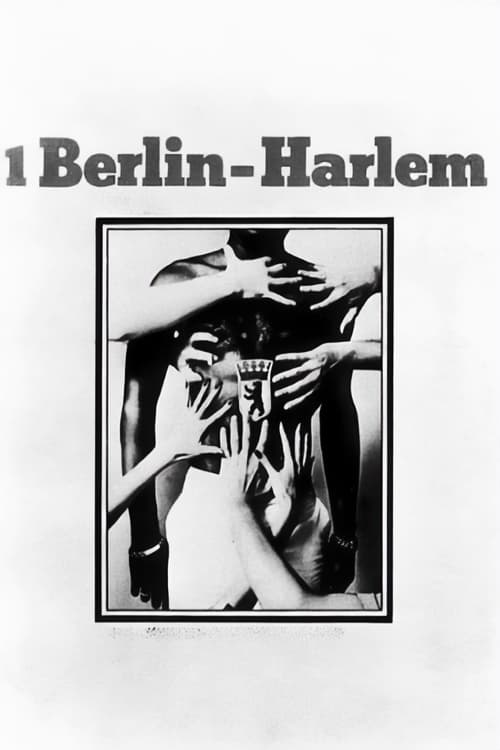
An African-American GI retires from the US Army in West Berlin to live with his white girlfriend, who already has a baby with another black man. After an argument with her family, she deserts him as well. Despite finding a job and a new place to live, he keeps running into racism, which also manifests itself in sexual intimidation.
1 Berlin-Harlem
The two brothers Alfred and Hans are very different, one, a mummy's boy, still hopes for the great love at 35, the other enjoys life as a womanizer. When their mother dies, their lives change. Mama's boy Alfred and Don Juan Hans fall in love with the same woman. Their beloved is called Angelika who is in her mid-30s, works in a travel agency and considers herself emancipated. She has not married the father of her now 18-year-old daughter. All parties involved change as a result of the courtship of Angelika. The sad Alfred becomes a radiant lover, the womanizer starts thinking and Angelika herself feels younger and younger.
Der sexte Sinn

Berlin Underground-star Ulrike S. went to the Toronto-Filmfestival and then to New York - to find out something about the film business and also about her own desires, daydreams and nightmares.
Fräulein Berlin

Depicts Carl Andersens uncommon art and life. Born in Vienna, the capital of Austria in 1958, he participated in the development of Viennas subculture through his bar called "Fun Factory". It was a unique place to have some cheap drinks, see strange movies and join concerts in the cellar. He also influenced the Viennese film community by bringing art house and underground movies, like "Liquid Sky" (1982), or "The Texas Chainsaw Massacre" (1973) in uncut versions to the theaters. As he was a film maniac he started to direct movies by himself. His first two movies "I was a Teenage Zabbadoing" (1988) and "Mondo Weirdo - a Trip to Paranoia Paradise"(1990) became underground classics. In the late 80's Andersen went to Berlin. There he directed and produced more than 10 No-Budget movies. Diffic ult relationships and the process of filmmaking itself were his main themes. He got lost in alcoholism and committed suicide in August 2012.
Carl Andersens Underground der Liebe

Two shady businessmen set out to shake up the West Berlin funeral industry - with unconventional ideas and questionable methods. To this end, they take over the business of a long-established mortician who wants to retire. One of them also hooks up with the colorless daughter of the chairman of the local mortician's association in order to get money and his father's customer list from her. Meanwhile, his partner has to deal with his wife and their equally nagging children. And then the establishment strikes back. At the same time, the unmarried newcomer to the industry discovers that he does have real feelings for the association chairman's daughter.
Gestatten, Bestatter

A treatise on love and desire tainted by harsh reality of capitalism, in which submission to the laws of lust-as-commerce is played out by five prostitutes and their pimp, who pits them against one another so that they are incapable of standing up to him collectively.
Utopia

The plot centers around a director’s ruined film – most of which was inadvertently destroyed at the lab. It is a wild mosaic of startling imagery including a safe-sex foot fucking scene with toes in a condom, a woman flasher, and a woman voyeur in a wheelchair who comments on the street life near a public toilet.
Desert of Love

Julchen is the "feminine" (transvestite) and definitely motherly half of a couple of homosexual men, the "co-fathers" of a pleasant part-Moroccan girl. The girl has been told that her mother is dead, but Julchen knows this is not true.
A Fairy for Dessert

Anyone who is keen to capture Berlin’s most original characters on film is bound to end up at Sylvia Heidemann’s door. Sylvia has saved up every penny of her reparation money to appear just once in her life on the silver screen like Greta Garbo. It just so happens that the Viennese filmmaker Andersch and Madame Heidemann are staying at the same hotel and it’s not long before the two strike a bargain.
From Here to Vanity

A Berlin woman in her early thirties is trying to handle her psychological problems and childhood trauma with the help of her psychiatrist. She is ashamed and overwhelmed by her masochistic sex fantasies.
The Nightmare Woman

Eva Ebner is a Berliner who gives the appearance of being rather eccentric. She knows the film business inside out – regardless of whether she’s work- ing behind the camera as an assistant director or in front of it as an actor. Her name is closely associated with a series of now-legendary adaptations of Edgar Wallace’s crime novels which were made in Germany during the 1960s. Upcoming young directors from local film schools have also profited from Ms. Ebner’s unbroken enthusiasm and passion for film. However, this eighty-year-old has a more than broken relationship to the events of her childhood and youth in Gdansk – a time when her life was characterised by an anti-Semitic step-mother and the dangers posed by the Nazi regime. This film portrait does not eschew any of the long dark shadows of that era, nor does it sidestep any friction between portrayer and his subject. (Lothar Lambert)
Thank God I’m in the Film Business!
No description available.
Kobay
The story of a short but intense friendship between two very different women in Berlin. Mascha, in her mid-30’s, worked as a television editor for years before dropping out to make two self-financed and unexpectedly successful theatrical films. At the moment, she is taking a break – she’s run out of ideas. Her plight is made worse by her boyfriend Frank’s unsympathetic attitude. He is a head of production, from a working class background, an unscrupulous career man, and won’t tolerate an unsuccessful woman around him. In the midst of this exasperating mess, Mascha meets the ‘’wolf girl’’, Dennis, a young black rebel who works as a cleaner in a theater. The girl fascinates Mascha and she finally breaks her long, loveless relationship with frank so she can spend more time with Dennis. The two women move in together: Mascha because she wants to turn the simple ‘’wild’’ Dennis into a more sedate person, and Dennis because she has secret hopes of finding human warmth and shelter.
Wolfgirl

The actor Holger Miesbach can no longer pursue this or any other profession, for psychological reasons and despite ongoing psychiatric treatment. While his mother offers telephone sex, where she pretends to be a minor and always forgets to get paid, he devotes himself to painting, but above all to his childhood passion for collecting autographs. When the actress Gloria Mundi, who had celebrated success as a teenager with revealing scenes, but who had killed her mother and her lover in Hollywood in 1961, returns to Berlin, Holger's penchant for the washed-up star becomes obsessive.
Blonde to the Bone

A Turkish woman with a Marilyn Monroe obsession hooks up with her new neighbor, an Arab. Although the young man occasionally intones Elvis Presley songs to the guitar, as requested by her, the relationship soon falls into crisis, especially since the fun-loving single mother also begins an affair with a blonde who bears a vague resemblance to Monroe. The love potions are watched curiously and commented on by other residents of the Kreuzberg apartment building.
You Elvis, Me Monroe

A simple tax collector suffers from a deep depression. He flies from his dominant mother to a dangerous company in violent left-wing circles. And discovers a cure for his impotence.
A Touch of Longing: His Fight
Four women in a therapeutic shared apartment adore their therapist and defend their hero with all available means, including sexual ones, when a strange woman breaks into their world. Doreen comes from the East and is looking for an apartment.
What You Never Wanted to Know About Women

Rita, the prostitute, meets the Lebanese worker Hossein. He need working papers. She needs love.