
Siegfried A. Fruhauf
Directing
Biography
Born in Grieskirchen (Upper Austria) in 1976 and grown up in the small village of Heiligenberg (Upper Austria). 1991 – 1994 Training as commercial manager. Studied experimental visual design at the University of Artistic and Industrial Design in Linz where he first came into contact with the Austrian Film Avantgarde. From 1995 to 2010 he lived and worked in Linz and Heiligenberg. 2002 Supporting Award for Filmart by the Austrian Federal Chancellery. Since 2001 organization of film and art events. Since 2009 lecturere at the University of Artistic and Industrial Design, Linz. Numerous works and shows in the area of film, video and fotography. Participation in various important international film festivals (Festival de Cannes - Semaine Internationale de la Critique, Intenational Filmfestival of Venice - Section Nuovi Territori, Sundance Film Festival Park City, ...). Member of sixpackfilm.Has a son (Jonas Theodor) with the Austrian journalist Anna Katharina Laggner. Lives and works in Vienna and Heiligenberg since 2010.
Known For

Rattling, diamond shaped refractions of light: a projector? fluorescent tubes? It turns out to be more like a "human machine" the filmmaker is dissecting with a fine surgical blade. And so commences an imagined dolly shot into the bloodless, post-humanoid body, travelling into an abstract space that occasionally seems to become concrete of its own accord before dissolving back into glistening streaks and ultimately, wide expanses: a cinematic worm hole leading behind the images, where the sluggish human eye is and must be subject to a trick of light arrangements.
Thorax
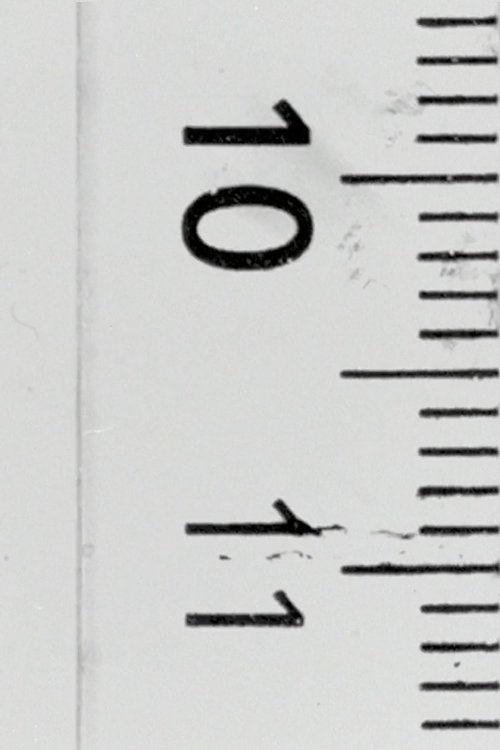
This movie consists of 100 frames. The length of 100 frames an analog 35 mm film is 6.25 feet = 1.91 meter. Keep other people at this comfortable distance. COVID-19 is bad! Stay safe!
Distance Film

Looking at the camera demonstrates the awareness that there is someone looking back before taking pictures.
Bled
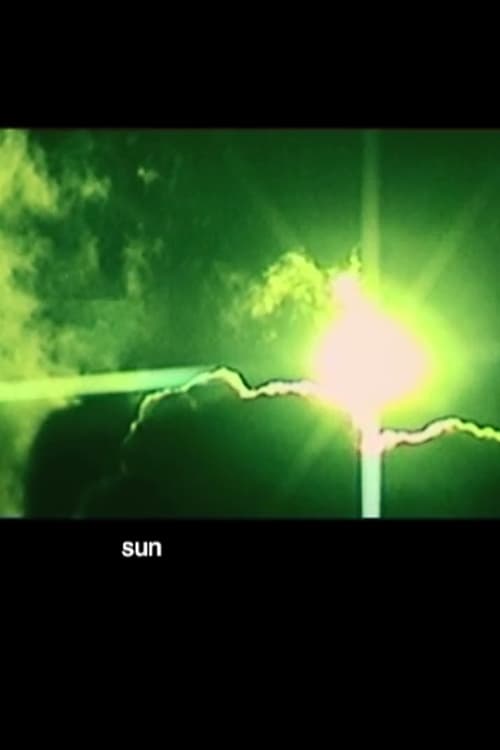
SUN – which is not necessarily typical for the genre – consists of nothing more than a dozen static shots with little or no movement. The main subject of both the video and the song's lyrics are identical. But this is not immediately obvious: In a slow reverse zoom the white glare filling the picture is gradually revealed to be the sun's ball of light surrounded by a green-ish yellow blaze.
Sun
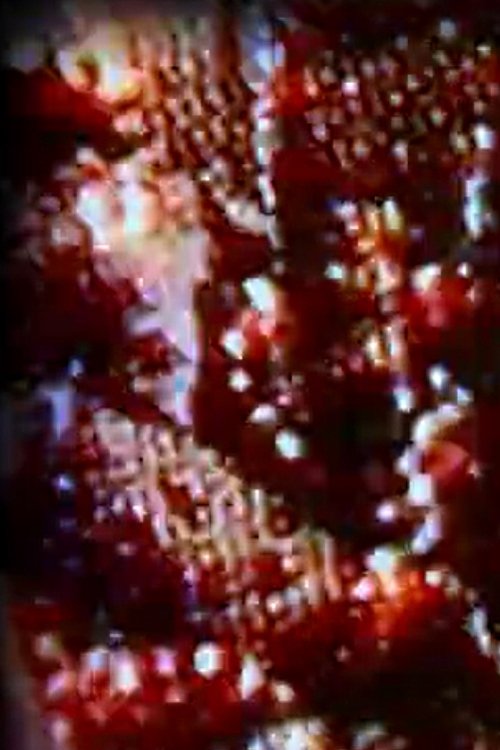
The abstruse title "Wk=mMv2/2" is the physical equation for a molecule's kinetic energy, and it refers to the images shown in the film: They were created by zooming at coincidentally photographed individuals on postcards. As a result of the extreme enlargement, the grid of the cards' printing is made clearly visible and the figures, many of which are only a few millimeters high in the original, are greatly abstracted.
Wk=mMv2/2

"La Sortie ironizes one of cinema's original motifs: Under Fruhauf's expert hands, just as in the people's real history, the workers will never manage to leave the factory; instead of escaping into off-screen space, as in the initial three stagings by the Lumière brothers, their movements from foreground to background and simultaneously from left to right and right to left form a plastic cross which refers to the death of manual labor in factories, the figurative erasure of its working class, and the death of cinema. In other words, after the harmonious mise-en-scène of the Lumières who invented an appeased everyday comes a critical elegy." (Nicole Brenez)
La sortie
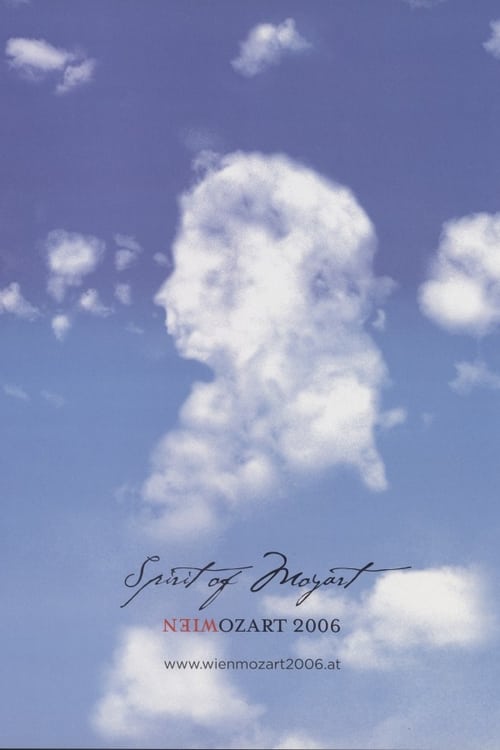
Twenty-eight well-known filmmakers living and working in Austria were invited by WIENER MOZARTJAHR 2006, to produce associative miniatures on Mozart. Requirement: they had to be one-minute artistic short films. The directors come from a whole range of different backgrounds, ranging from animated, experimental and short film to documentaries and feature films. The result is a multi-facetted sampler of diverse formal and contextual positions with regard to Mozart’s person and his influence on today’s society, art and culture. The contributions run the gamut from experimental-conceptual statements through socio-critical and documentary observations to pithy short feature films.
The Mozart Minute
The curtain is emblematic of cinema: a veil of illusion that never completely closes but continuously opens.
Dissolution Prologue (Extended Version)
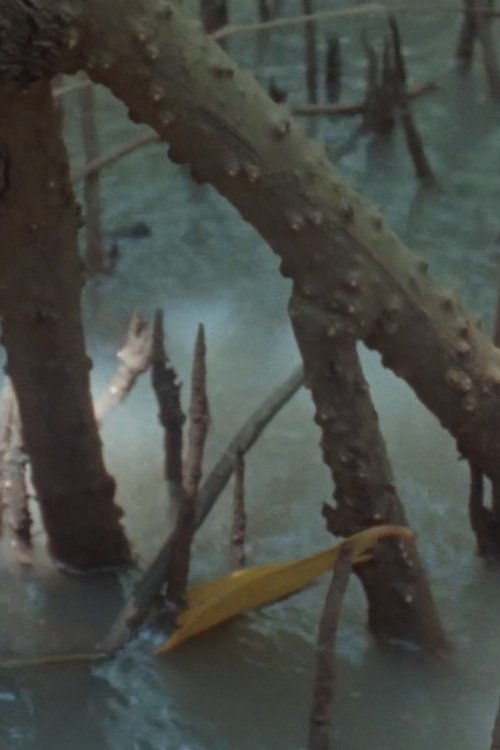
It was supposed to be just a review of a cinematic apparatus, but it has turned into a storm.
Camera Test

How simple is it to make what is happening look suspicious, when harmless shapes are transformed in the bustle of image compression artefacts into dark shadows and a disco light palm becomes an association with explosions? It starts with red, signaling a reason for caution, and it ends in only three minutes as film noir.
SPOT - an Attwenger Trilogy
Blurred silhouettes, where otherwise big stars stroll, gray streaks where glamour normally reigns, iconoclasm where strict attention is usually paid to visual staging. Palmes d'or is nourished by photos that were taken at the film festival in Cannes, and is, at the same time, its most quintessential undermining.
Palmes d'Or
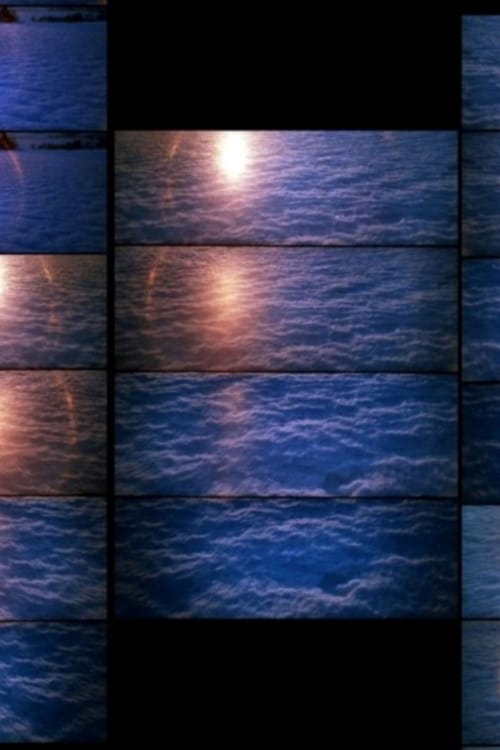
The dynamic performance of drummer Jörg Mikula serves as the trigger for a new work by Siegfried Fruhauf that explores the reciprocal relationship between the two time-based media of film and music in a wild way. WHERE DO WE GO reveals itself to be a synesthetic experiment rendering sight as rhythmical and the visual edit as musical. The filmmaker painstakingly animates brief phases of movement recorded with a Lomography Supersampler* to create a visual series of trains, tracks, bridges and nature that are re-constellated and brought together in a multiple split-screen projection.
Where Do We Go
Like a Santiago Álvarez squared (or multiplied by 4K, to be more precise), Siegfried A. Fruhauf –a descendant of Austria’s Great Generation of Tscherkassky, Deutsch and Arnold– rede- fines with Vintage Print the power of film as imagination, at the service of an amazing economy of resources. If the pioneer of Cuban montage cinema became immortal when he left us his phrase “give me two photographs, a moviola, and some music, and I’ll make you a film,” Fruhauf slims down that recipe by cre- ating thirteen hyperkinetic minutes out of a single, century-old glass negative in decomposition. Ranging from figurative to ab- stract art, analogy to digital, and documentary to experimental, Vintage Print’s definitive achievement is that it reverses a road movie in its own terms, and the first thing that is left behind is the very same notion of cinema.
Vintage Print

Free fall experiences are of extreme interest to me as a filmmaker due to altered visual perceptual parameters. The more or less uncontrolled dynamics of a falling camera generate unexpected views of our familiar environment. In my one-minute video, I tried to compose shots of cameras being thrown into the air into a fast-paced free-fall ballet. Conventional ways of looking at the use of architecture are broken up and well-known horizons are eliminated. A new perspective unfolds in the energy of these camera movements.
Thrown
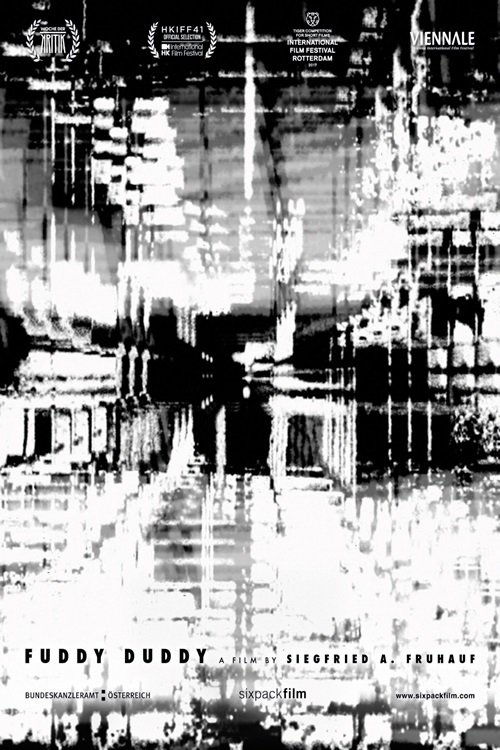
FUDDY DUDDY uses the motif of the grid to blow it to pieces. Being occupied with structural film, I repeatedly draw 'frame plans', using grid structures to precisely record the succession of individual images. To me, this sometimes seems like a search for structures in an apparently chaotic world. The medium of film fulfils the need for orientation. (Siegfried A. Fruhauf)
Fuddy Duddy
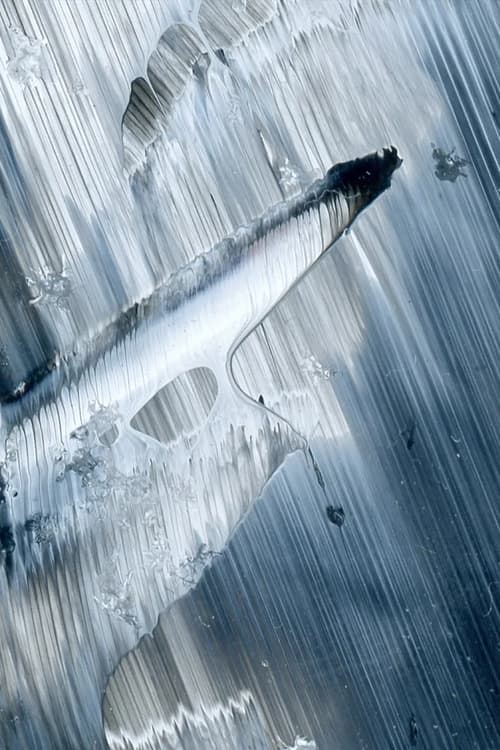
It’s all the rage to evoke spectacular ‘immersive’ cinema today, but nothing matches the immersion effect of a Siegfried A. Fruhauf film. Agglomerating the textures of cave surfaces with the material traces of filmic processes, Cave Painting offers a trippy visual and sonic journey for the senses that evokes an avant-garde, grunge version of the psychedelia in Stanley Kubrick’s 2001: A Space Oydssey. Don’t blink, or you’ll miss something good. As always, Fruhauf conjures a new world.
Cave Painting
"The film as a mirror and, as a further consequence, the phenomenon of identification primarily inherent in feature films, condense to a type of essence of film's potential. This film reports on cinema and the processes within it. In doing so, it doesn't reveal any secrets, but instead, attempts to transfer – in the sense of seeing what we see – what we do in the cinema and what also can be relevant outside of film into a visually stimulating and captivating event." (Siegfried A. Fruhauf)
Mirror Mechanics
Etüde draws on early avant-garde film theories and practices, on the utopia of the absolute film: hearing pictures, seeing music. With the technique of hand-drawn sound, the film medium becomes the instrument, something playable. Fruhauf allows us to take part in this process, gets the sound creaking and places a hand in the picture as a subject – where it increasingly threatens to rebel against its forced role.
Etüde
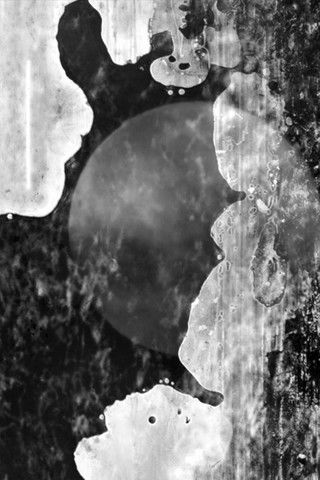
While white particles shimmer against a black backdrop, we listen to a rising ambient soundtrack, which determines the dynamics of their movement, their transformations, and also of nascent concrete motifs. The inspiration for this organic, yet also coolly detached, abstract film was the full moon reflected on the surface of the water. (Viktor Palák, KVIFF)
Mare Imbrium
For the exhibition VILLA KARBACH (part of European Capital of Culture Bad Ischl Salzkammergut 2024, Austria), Siegfried A. Fruhauf (AT) developed the installation “Alpenglühen Karbach” (2024) based on rethinking cinema in new and endless ways. The Austrian artist tries to bring the sun underground and stage the sunrise in a tunnel.