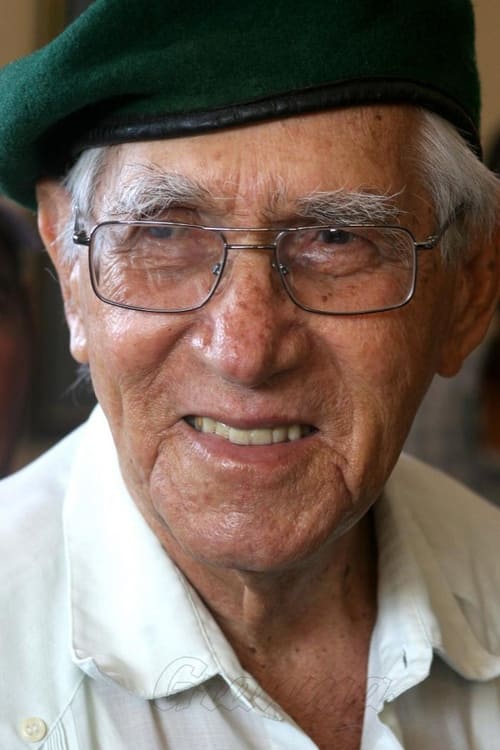
Salvador Wood
Acting
Biography
Nació el 24 de noviembre de 1928, en Santiago de Cuba, donde mismo nació su compañera de la vida, Yolanda. Sus padres eran santiagueros y por la estirpe paterna de los Wood, fue el único que tuvo el coraje de ser actor de teatro, de radio, de televisión y de cine. Llegó a La Habana en 1946, en busca de un espacio que tuviera una mayor resonancia nacional, aunque estaba convencido de que el municipio es el universo, pero a veces es bueno salir del municipio. Cuando parte rumbo a La Habana en busca de otros aires en el oeste, ya era actor de teatro y de radio en Santiago de Cuba, en realidad vino para la capital porque en Santiago entonces eran más limitadas las posibilidades de desarrollo. Sus primeros retos como actor fueron en la radio, en 1943, en un programa especial sobre el fusilamiento de los ocho estudiantes de Medicina, el 27 de noviembre. Hizo el papel de uno de los estudiantes fusilados. Después llegó al teatro y su primer reto fue con solo 17 años, en el año 1945, organizado por el Cuadro de Comedia y Arte Dramático creado en Santiago de Cuba por el actor matancero José María Béjar, en la obra Don Juan Tenorio, de Zorrilla. Béjar hacía el Tenorio y él su contrafigura, Don Luis Mejías; obra en verso, un clásico del teatro romántico español. Lo más simpático es que aún hoy sé sabe de memoria la larga relación que le hace Don Luis Mejías a Don Juan Tenorio en la Hostería El Laurel. Le siguió, en 1952, el primer reto en la televisión, en un programa de Paco Alfonso, en el Canal 2, dirigido por Jesús Cabrera, donde hizo por primera vez un personaje campesino. Después de eso a hecho 18 campesinos distintos. Más tarde, en 1960, debutó en el cine, en un documental bajo el título de Chinchín, donde hizo el papel de otro campesino. El director fue Humberto Arenal y el fotógrafo, el canadiense Harry Tanner; se filmó en Jovellanos, Matanzas. Donde salvador fue más feliz como actor, y sintió un mayor impacto emocional, fue en la película El Brigadista, en 1976, porque allí debutó su hijo Patricio Wood, juntos los dos en el mejor ejemplo de fraternidad que existe, padre e hijo. Como actor también lo marcó sobremanera el haber hecho el papel de José Martí en un programa que dirigía Pedro Álvarez, en 1968, a propósito del centenario del estallido de la Guerra de 1868, en el que mi esposa novia encarnó la figura de Carmen Zayas Bazán.
Known For
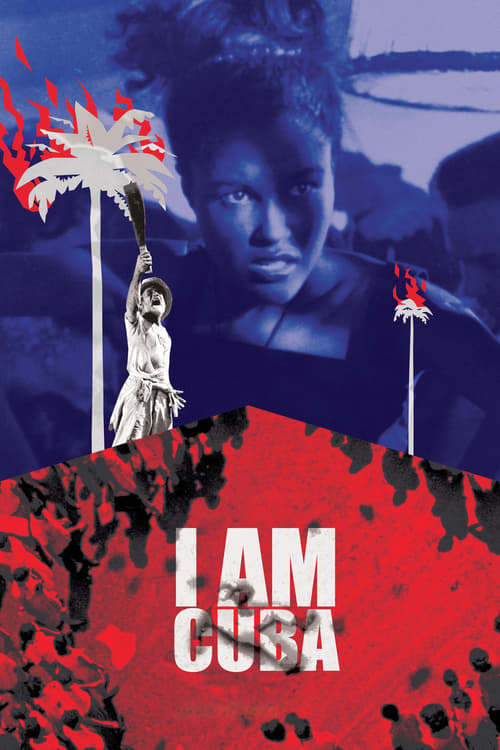
A study in contrasts set in and around Havana that explores Cuba's 1959 revolution: a young woman's fascination with the excess of an American-owned casino leads to her downfall in the eyes of her street vendor boyfriend; a tenant farmer revolts the only way he knows how, attacking the land he works; university students gain first-hand knowledge of political upheaval; and, in the hills outside the city, the members of a poor peasant family are patriotically swept up into the burgeoning revolt.
I Am Cuba
The Castro revolution was just consolidating its power when, in 1961, over 100,000 students were sent from their schools into the countryside to teach the peasants there how to read. Coinciding with the Bay of Pigs invasion, in this docudrama, 15-year-old Mario (Salvador Wood) has come to a tiny village in the Zapata swamps and gradually wins the villagers over to his task. At the same time, he receives an education in the realities of rural life from the hard-working peasants.
El brigadista
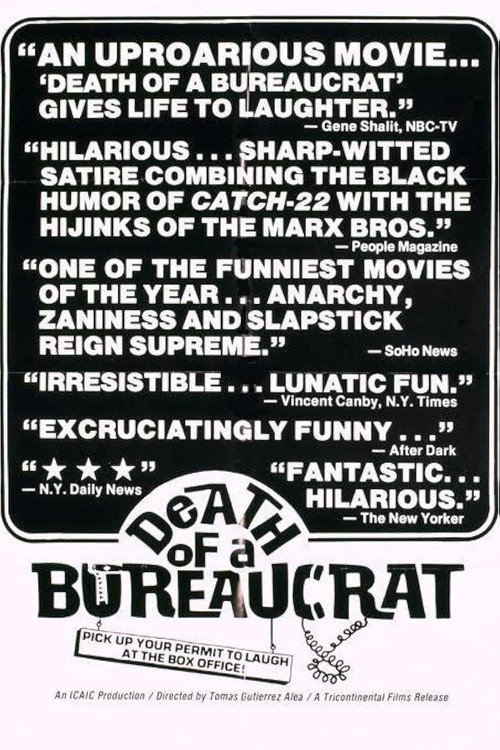
A young man attempts to fight the system in an entertaining account of bureaucracy amok and the tyranny of red tape. Restored by the Academy Film Archive and the Instituto Cubano del Arte e Industrias Cinematográficos in 2019.
Death of a Bureaucrat
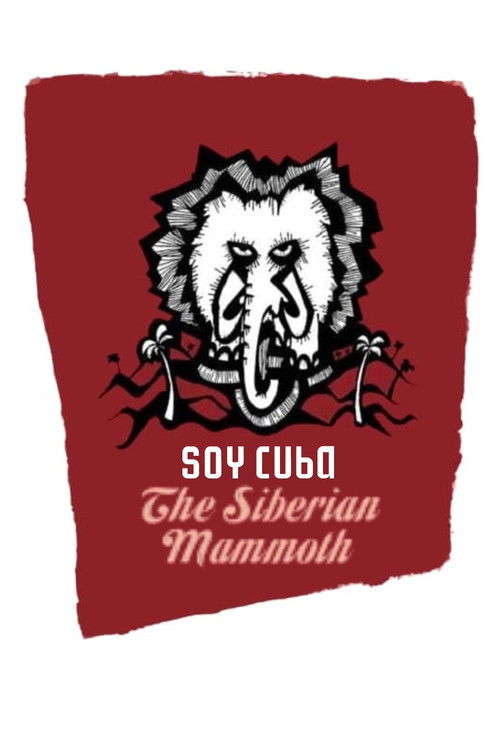
Contemporary film critics regard the epic film I Am Cuba as a modern masterpiece. The 1964 Cuban/Soviet coproduction marked a watershed moment of cultural collaboration between two nations. Yet the film never found a mass audience, languishing for decades until its reintroduction as a "classic" in the 1990s. Vicente Ferraz explores the strange history of this cinematic tour de force, and the deeper meaning for those who participated in its creation.
I Am Cuba, the Siberian Mammoth
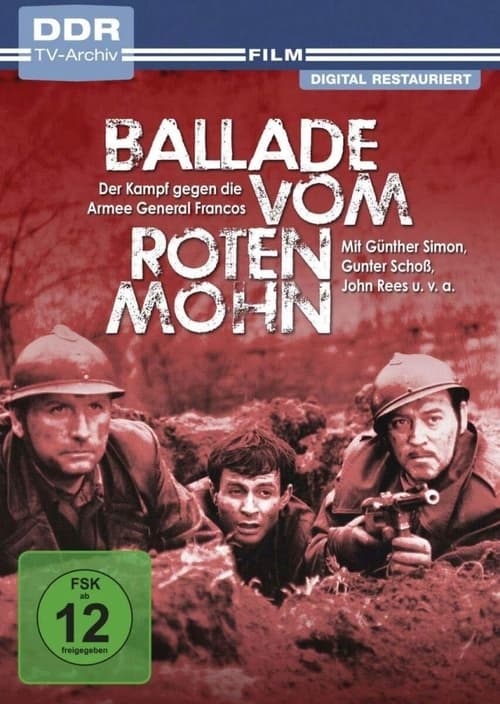
Spain in the 1930s. The film tells of the fight of international troops against General Franco's army. It tells of the fate of three brigadists, the American Gary, the German Hans and the Englishman Joe, who are taken prisoner by Franco's army. Their attitude in this difficult situation is a living example of international solidarity and creates a memorial.
Ballade vom roten Mohn
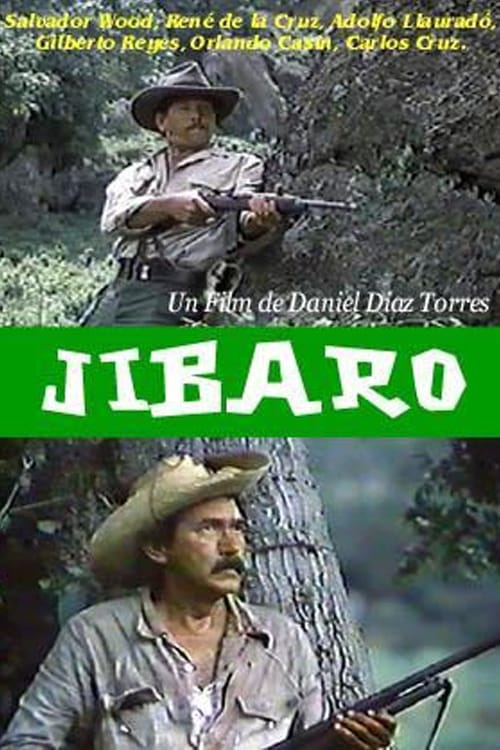
The first years of the Cuban Revolution characterized by social transformations and class struggles.
Jíbaro
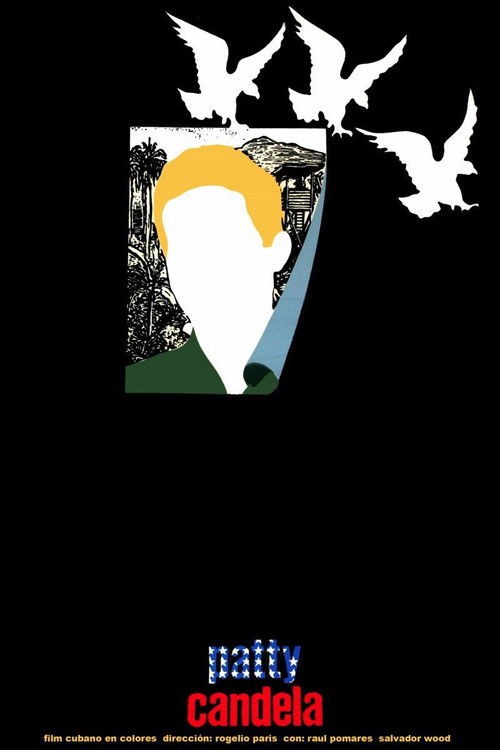
Based on actual events, the film dramatizes the efforts of Cuban counterintelligence services in response to Operation Patty, a CIA plot to assassinate Raúl Castro.
Patty Candela
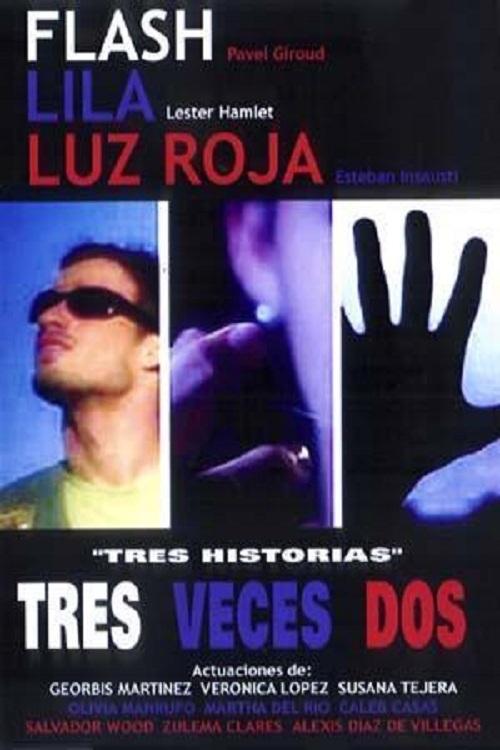
Film formed by three stories: Flash by Pavel Giroud, in which a photographer sees strange apparitions in his photographs; Lila by Lester Hamlet, on the forbidden love between a young couple; and Luz roja by Esteban Insausti, about two characters who begin an affair after they met by chance in a traffic hold-up.