Acting
No description available.
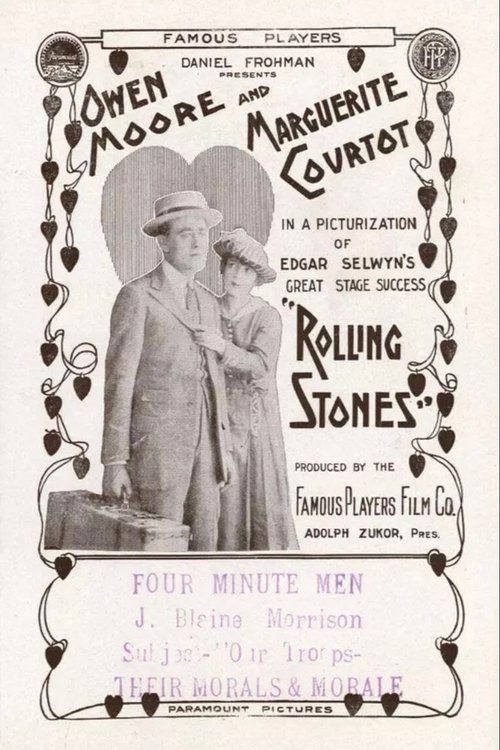
Rolling Stones is a 1916 American drama silent film directed by Dell Henderson.
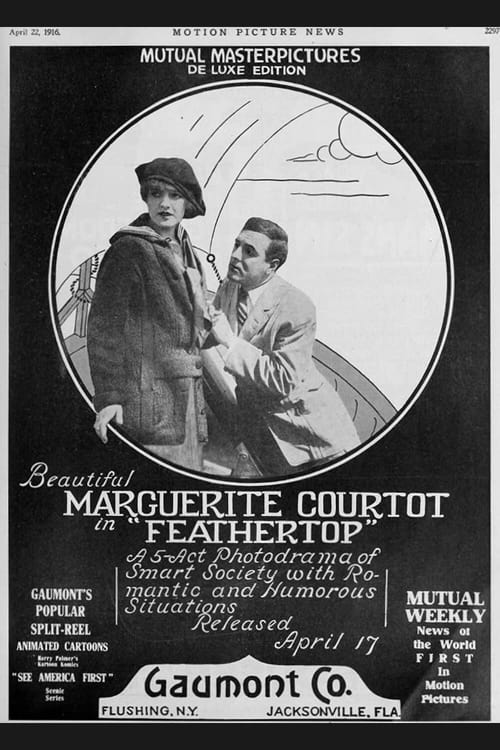
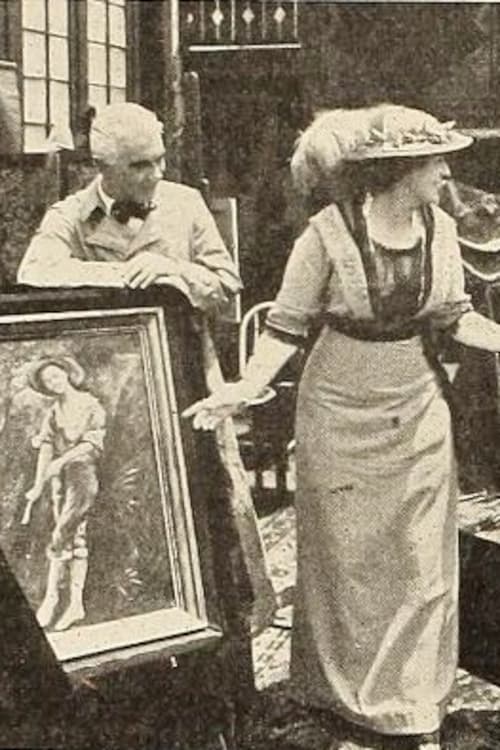
Elsie Green cannot decide which of her two suitors to marry. When she reads Nathaniel Hawthorne's short story "Feathertop", she dreams that she is its heroine Polly Goodkin, and this leads to her final decision.
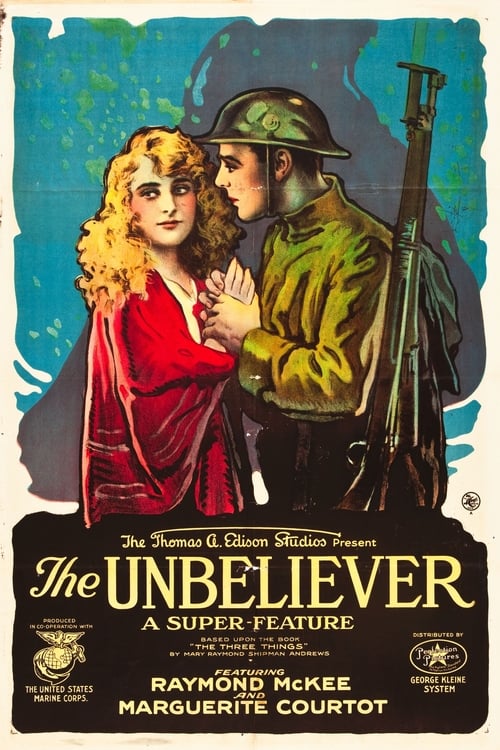
A wealthy young American, bred to class distinction and racial intolerance, enters the Marines during the First World War. In the course of his training and his experiences in the trenches fighting, being wounded by, and being hospitalized with Germans, he comes to a recognition of the equality and brotherhood of men.
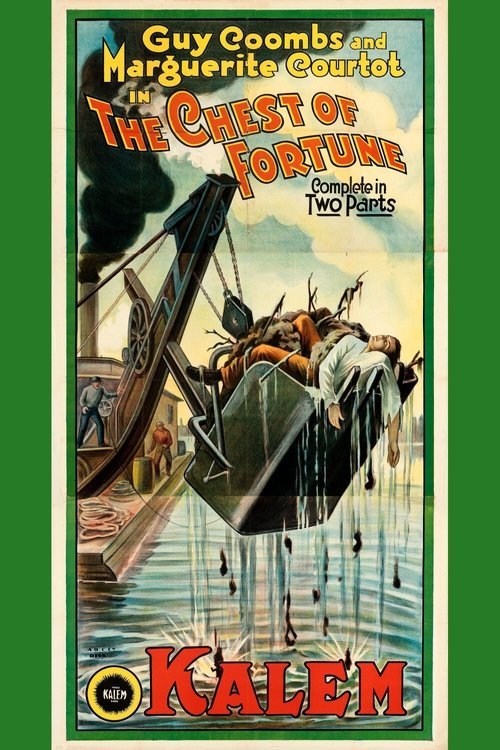
Just when we think that this movie will be about a Southern family in Civil War days, the action jumps to modern-day 1914, still in the southern United States. Handsome Jack (Guy Coombs) is in love with the fair lady played by Marguerite Clayton.
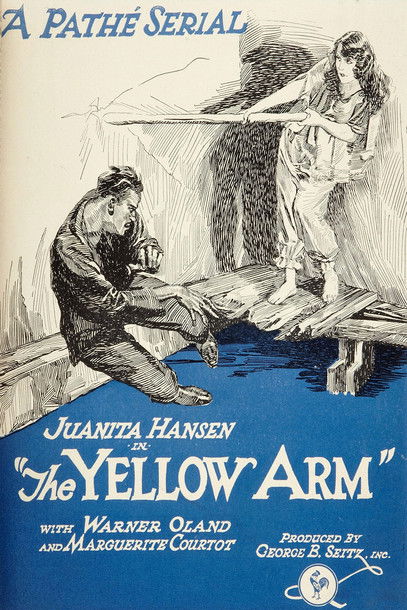
Suzanne Valdur travels to China to find her long-lost father. There, she becomes entangled in a dangerous plot involving a mysterious and villainous character known for his "Yellow Arm". Suzanne's attempts to evade a "nest of knaves" and survive various perils—including water traps and "false goddesses"—as she navigates a world of deceit make up the 15 episodes of this adventure serial. Episode titles: 1. House of Alarms 2. Vengeance of the East 3. A Strange Disappearance 4. At Bay 5. Danger Ahead 6. A Nest of Knaves 7. Into the Dead of Night 8. Smuggled Aboard 9. Kingdom of Deceit 10. The Water Peril 11. Pawns of Power 12. Price of a Throne 13. Behind the Curtain 14. The False Goddess 15. The Miracle
Brian Lazar returns to his shabby dwelling after pawning a valuable ring. A woman, accompanied by a detective, accuses him of being a thief, but, before his arrest, Brian pleads for the opportunity to tell his story.
Our hero's fiancée, who has broken off their engagement, agrees to make a trip around the world, starting absolutely naked, without money or help of any sort from others in order to prove his worth to her.
Jacqueline Roland, the daughter of a backwoodsman, meets Henri Dubois during a visit to the city, but is unresponsive to his attentions. Henri later takes charge of the lumber camp where Jacqueline lives, and is closely followed by Li Chang, who is blackmailing him to keep secret a murder he committed years earlier. The new boss is determined to win Jacqueline for himself and convinces her lover, Raoul Radon, that she no longer cares for him. When Li Chang kidnaps Jacqueline, Henri comes to claim her and an oil lamp is upset during the ensuing struggle. As the fire spreads into the forest, Jacqueline escapes with Li Ching in pursuit. She and Raoul are reunited, while Henri perishes in the blaze.
The story hinges on the redemption of a country boy, an artist, who has fallen among evil companions, and is an outcast.
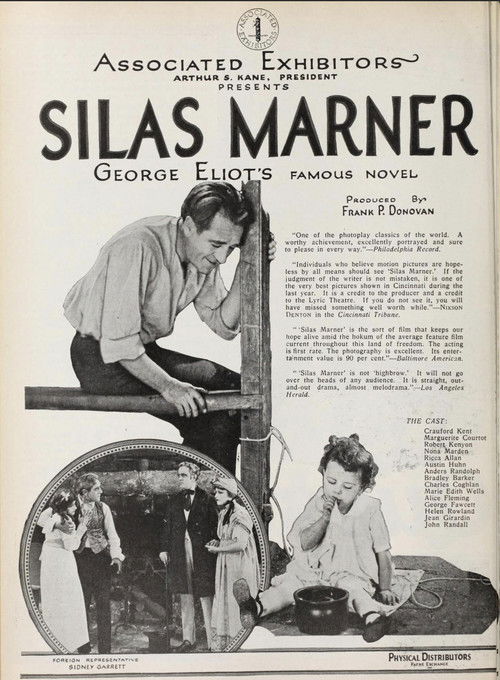
After being wrongly accused of robbery and murder, a kind, gregarious weaver becomes a nasty, bitter, lonely old miser.
Young Angus Burke accidentally shoots the sheriff, who is leading a posse to get the boy's father, a thief. Angus' mother dies, and he is taken to trial alone. Found not guilty, he is given a job with the local newspaper office. He leaves when several citizens object to his presence--to return several years later. He takes over the newspaper and saves the townspeople from a gang of crooks.
Sylvia Lee, a young American in Spain, is torn between her attraction to dashing revolutionary Pedro Pezet and her American boyfriend, Reginald.
Eleanor Warren is loved by Harold Rives, a struggling artist. Although fond of the young man, Eleanor longs for the comforts of wealth.
Mary Adams, about to visit relatives in a distant part of the country, is entrusted to the care of Manuel Bond. The girl's beauty inflames Bond, a gambler and a scoundrel. That night, when the stagecoach halts, Mary is horrified to discover that Bond has registered for both as man and wife. The gambler turns a deaf ear to the girl's frantic pleas. After locking her in the room, the scoundrel proceeds to the barroom. Mary escapes by means of the window. The girl comes upon a party of settlers. Mary joins the party. Later, the girl meets Kit, a young backwoodsman. It is a case of love at first sight and the two are married the same day.
Being the story of the Morgans, a 19th-century Massachusetts whaling family, their tightly-knit Quaker community, and the dangerous adventures of an unwilling stowaway aboard one of the elder Morgan's harvest vessels.
Jack Duncan returns from the war in France to his wife and baby and learns that his job as a draftsman at the Loring Steel Mills has been taken. Given work in the machine shop, Jack becomes the prey of Red agitators who want him because of his popularity with soldiers. The Reds cause Jack's discharge just when his house payments come due, and when they convince him of the injustice of his situation, he joins their ranks. After learning of plans to burn the factory and Loring's home, and start a riot in the town, Jack is won over by a socialist's arguments advocating mild reforms. At a meeting of workingmen, Jack praises Americanism. He warns Loring and, with soldiers at a nearby camp, quells the riot. After a woman agitator kills her comrades and then shoots herself, Jack arrives home to save his wife from an attack by a Red ringleader. Jack is then made a foreman at the mill.
Marion Taylor is secretary to Edward Mallory, a wealth Wall Street businessman. She supports her invalid brother Tommy, who has been told by his doctors that he has to go to the mountains for his health. Marion doesn't have the money for that, but Mallory, who has made no secret of his intentions towards her, does. She resigns herself to submitting to his advances in order to get the money in order to keep her brother alive. However, circumstances arise in which she may possibly get the money without having to debase herself with her boss.
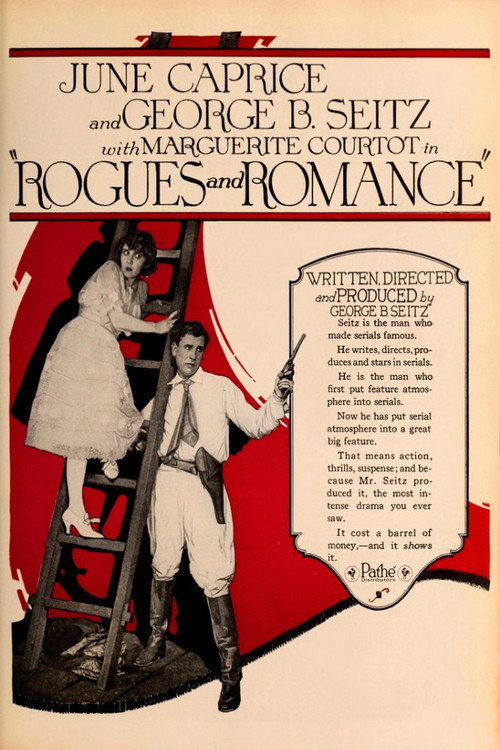
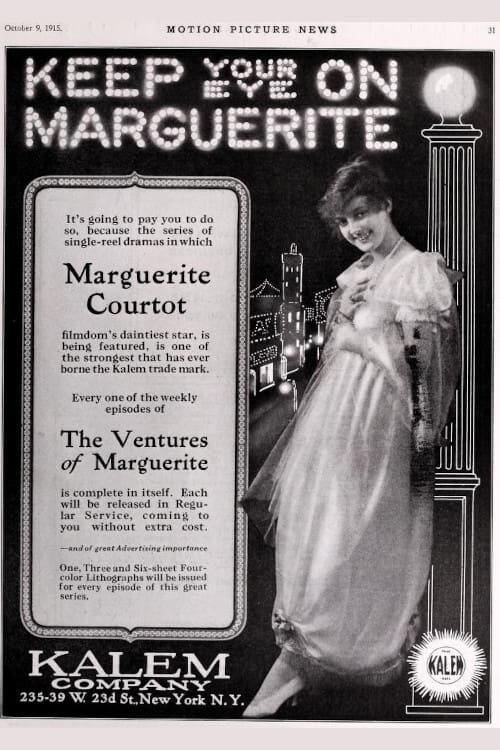
As heiress to a large fortune, Marguerite is able to satisfy her love for beautiful clothes and a taste for adventure, while confronted by a multitude of schemers and gangsters bent on reducing her to poverty.