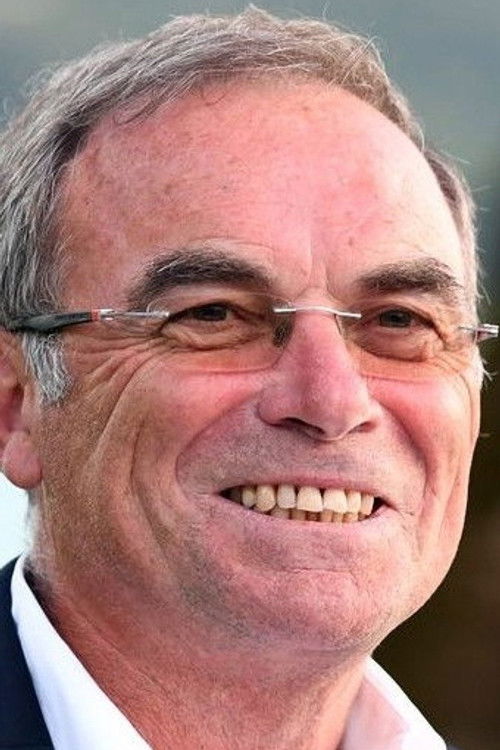
Bernard Hinault
Acting
Biography
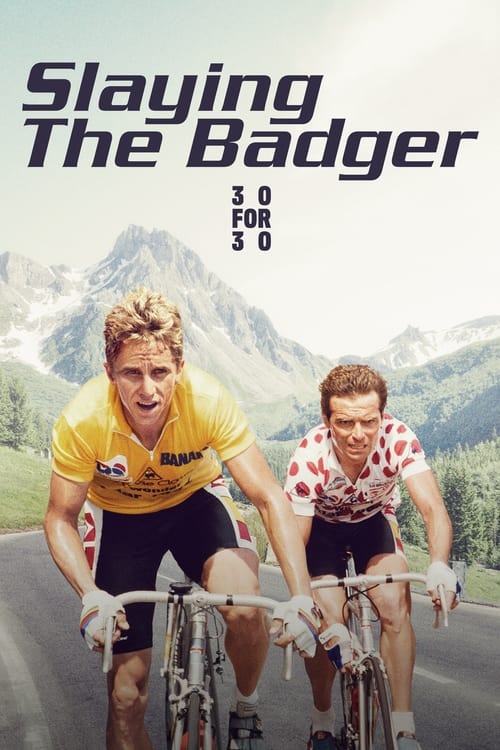
Bernard Hinault (born 14 November 1954) is a French former professional road cyclist. With 147 professional victories, including five times the Tour de France, he is often named among the greatest cyclists of all time. In his career, Hinault entered a total of thirteen Grand Tours. He abandoned one of them while in the lead, finished in 2nd place on two occasions and won the other ten, putting him one behind Merckx for the all-time record. No rider since Hinault has achieved more than seven. Hinault started cycling as an amateur in his native Brittany. After a successful amateur career, he signed with the Gitane–Campagnolo team to turn professional in 1975. He took breakthrough victories at both the Liège–Bastogne–Liège classic and the Critérium du Dauphiné Libéré stage race in 1977. In 1978, he won his first two Grand Tours: the Vuelta a España and the Tour de France. In the following years, he was the most successful professional cyclist, adding another Tour victory in 1979 and a win at the 1980 Giro d'Italia. Although a knee injury forced him to quit the 1980 Tour de France while in the lead, he returned to win the World Championship road race later in the year. He added another Tour victory in 1981, before completing his first Giro-Tour double in 1982. After winning the 1983 Vuelta a España, a return of his knee problems forced him to miss that year's Tour de France, won by his teammate Laurent Fignon. Conflict within the Renault team led to his leaving and joining La Vie Claire. With his new team, he raced the 1984 Tour de France, but lost to Fignon by over ten minutes. He recovered the following year, winning another Giro-Tour double with the help of teammate Greg LeMond. In the 1986 Tour de France, he engaged in an intra-team rivalry with LeMond, who won his first of three Tours. Hinault retired at the end of the season. As of 2025 he is the most recent French winner of the men’s Tour de France. After his cycling career, Hinault turned to farming, while fulfilling enforcement duties for the organisers of the Tour de France until 2016. All through his career, Hinault was known by the nickname Le Blaireau ("The Badger"); he associated himself with the animal due to its aggressive nature, a trait he embodied on the bike. Within the peloton, Hinault assumed the role of patron, exercising authority over races he took part in. Hinault was born on 14 November 1954 in the Breton village of Yffiniac, the second oldest of four children to Joseph and Lucie Hinault. The family lived in a cottage named La Clôture, built shortly after Hinault was born. His parents were farmers, and the children often had to help out at harvest time. His father later worked as a platelayer for the national rail company SNCF. Hinault was described as a "hyperactive" child, with his mother nicknaming him "little hooligan". Hinault was not a good student, but visited the technical college in Saint-Brieuc for an engineering apprenticeship. He started athletics there, becoming a runner and finishing tenth in the French junior cross-country championship in 1971. ... Source: Article "Bernard Hinault" from Wikipedia in English, licensed under CC-BY-SA.