Jaroslav Heyduk
Acting
Known For

Thirty Cases of Major Zeman is a Czechoslovak action-drama television show intended as a political propaganda to support the official attitude of the communist party. The series were filmed in the 1970s. Each episode encompasses one year, and investigations are stylized to that year. Most are inspired by real cases. The series follows the life of police investigator Jan Zeman during his career from 1945 to 1975.
Thirty Cases of Major Zema
No description available.
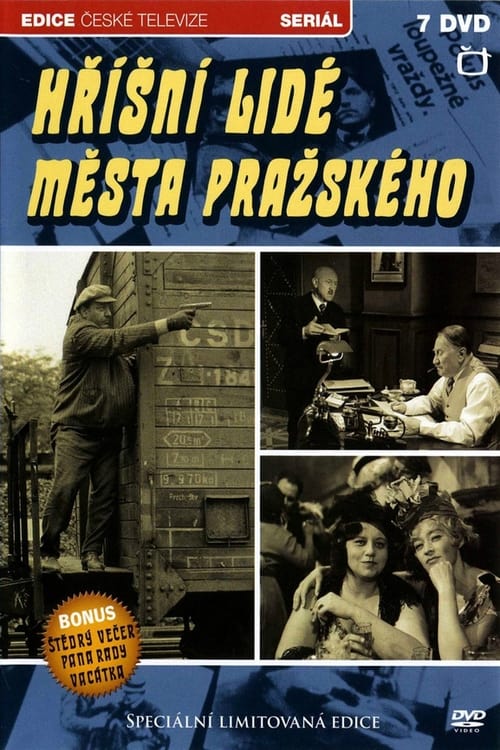
Hříšní lidé města pražského
No description available.
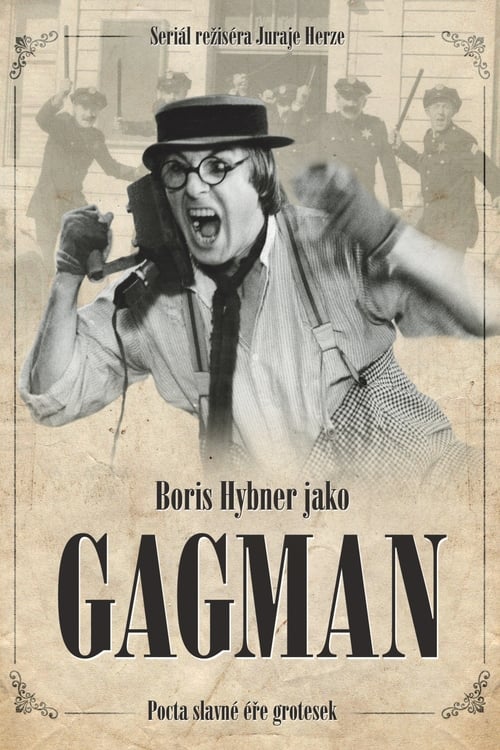
Gagman

The little mermaid rescues a prince from drowning and falls in love with him. To be with him, she makes a deal with the evil sorceress: her beautiful voice against a life on land.
The Little Mermaid

An only son, Jirí Valenta (Jaromír Hanzlík), has been drafted to the army. At the barracks he acquires the nickname Seamstress because he sews rugs in his spare time. One day, his friend introduces him to Julka Vávrová (Jorga Kotrbová), a girl he is desperate to get rid of. The naive Jirí falls in love with the girl and accepts her invitation to spend Easter together in the country. There he learns that the girl is the single mother of the young boy Martínek, whose father is the married tractor driver.
Dva muži hlásí příchod

An anthology of three absurd, ironic tales inspired by Čapek’s “Tales from One Pocket” and “Fables and Side Stories,” each showing uncanny forces disrupting ordinary lives: in Krejčík’s “Glorie,” a gentle clerk is haunted by a sudden halo; the other two segments by Mach and Makovec similarly blend everyday routines with ironic, supernatural twists.
Of Things Supernatural

After their young daughter dies suddenly from a viral infection, Marie and Petr struggle to cope with the silence and emptiness left in their apartment. The couple drifts apart as Marie sinks into deep isolation while Petr attempts to distract himself through work and social interactions. Eventually, they decide to try for another child in an effort to move forward and rebuild their fractured relationship.
Day for My Love
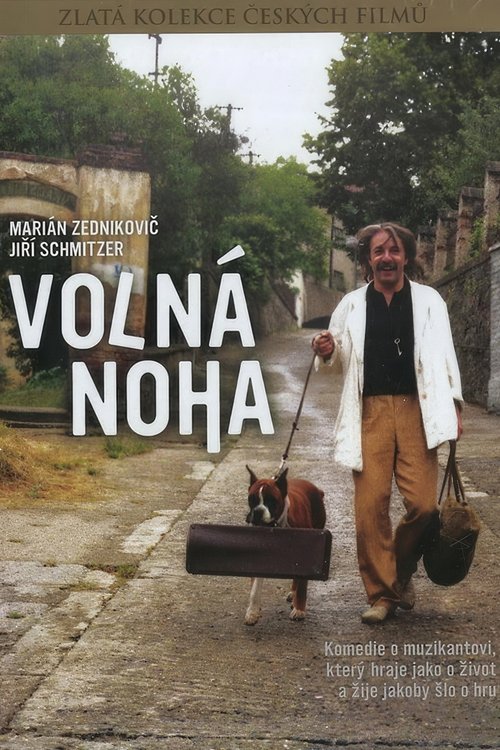
Jazz musician and trumpeter Beno is originally Slovak, but has been living in Prague for a long time. As a true bohemian, he does not recognize any limitations in his personal or artistic life. He is devoted to jazz with body and soul and despises any form of pop music. That is why he rejects the lucrative offers of his girlfriend, the successful singer Gábina. He also successfully faces the pressure of his much younger girlfriend-to-be and her defiant mother. Beno often has to pay for his tricks, but he accepts this with open eyes. Beno is ably supported by his friend, saxophonist Emil, known as Rampouch.
Freelancing
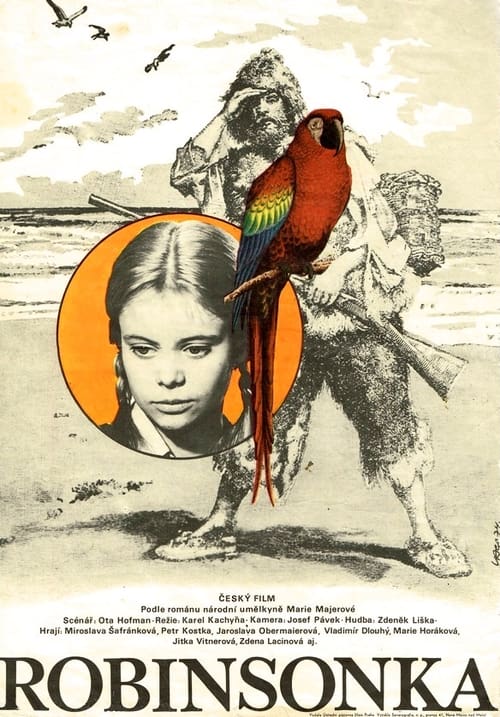
Blazenka likes to imagine she is on a desolate island and has to find a way how to survive. After the death of her mother she stays together with her baby brother and has to take care of the family. In this difficult situation, she plays this role-game that helps her to deal with the sudden loss of her mother.
Robinson Girl
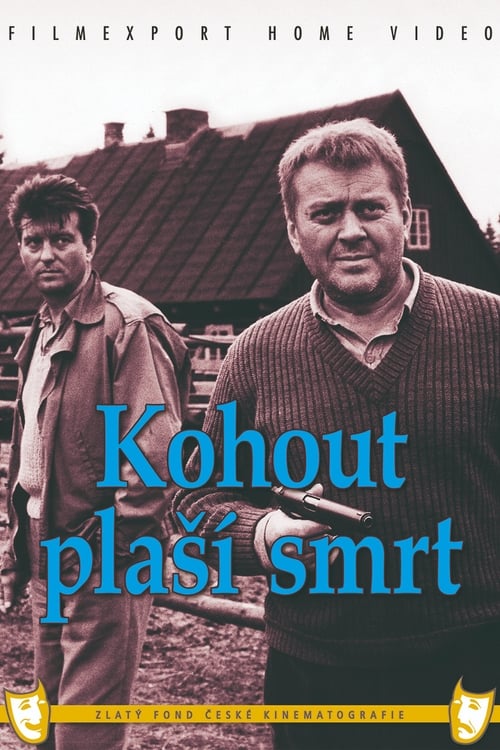
A group of saboteurs search for a weapons cache hidden by the Nazi army. Beskydy in the summer of 1950: the StB agent Borek infiltrates a group of saboteurs hidden in the Beskydy mountains. They are preparing terrorist actions against the ongoing collectivisation in the village. The group is led by Ervín Kopal and Metud Hanák. Borek is to make contact with them, secure the saboteurs and discover a weapons depot. After many dramatic events, the task is accomplished, but at the highest cost...
Kohout plaší smrt
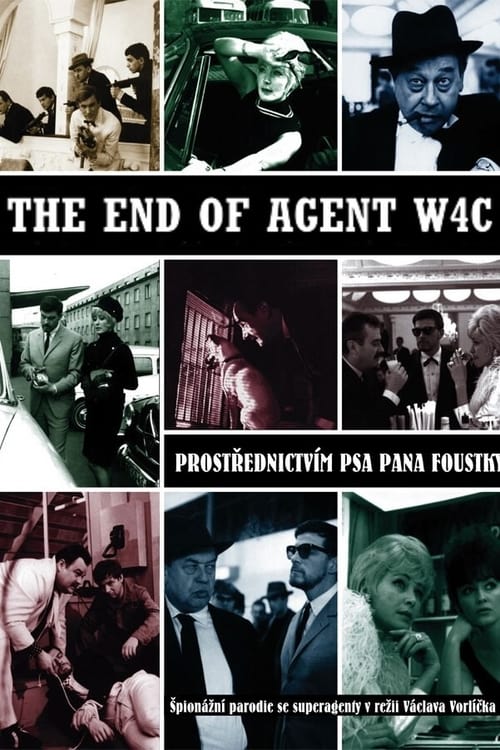
The invincible agent Cyril Juan Borguette alias W4C has been assigned a mission to go to a hotel in Prague, get hold of a saltcellar with a plan for the military exploitation of Venus hidden in it, and hand it over to the beautiful agent Alice. He will have to compete for the saltcellar with other agents working for the world's various greater and smaller powers. The head of the Prague counter-intelligence unit gets news of agent W4C's mission. Deficient in personnel, he nominates accountant Foustka as agent 13B. Mr Foustka takes his dog Pajda with him and the two head for the airport. Pajda helps him track down agent W4C in a classy hotel that becomes the battleground for the interests and plans of the secret agents from different countries, each trying to get hold of the precious saltcellar.
The End of Agent W4C

Even under socialism, which proclaimed the equality of all people, there were status differences. A young bricklayer, who has fallen in love with a college girl from a "better" family, feels this first-hand - the girl's petty bourgeois parents are fundamentally opposed to an unequal relationship from their point of view. In protest, the young lovers decide to live in a tent for the time being and go straight to the park. The surprisingly clueless director Ladislav Rychman has tried to merge disco songs with a tame satire on modern-day rich people.
Láska na druhý pohled

The film is a concert of well-known actors from an alcohol rehab where a middle-aged man has taken refuge to get rid of his addiction. In the rehab, cruelty is personified by the attendant who, with sadistic satisfaction, hands out demerit points for the slightest sign of displeasure or rebellion.
Dobří holubi se vracejí

This castle has its own ghost - a mysterious White lady. She emerges from the painting on the wall when someone speaks out magic formula. White lady is good ghost, she can make someone's wishes true. Even if it is a new duct. But a miracle is not the thing that Communist leaders want in the town.
The White Lady
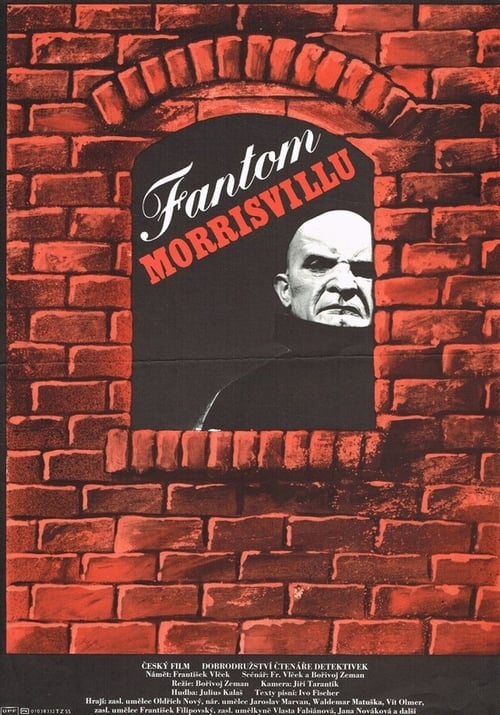
Inspector Brumpby (Jaroslav Marvan) and the young crime reporter Allan Pinkerton (Vít Olmer) attend wedding of Sir Hannibal Morris (Oldrich Nový) with beautiful Clarence (Kveta Fialová). After the ceremony, Clarence's ex-husband, criminal Manuel Diaz (Waldemar Matuska), who was believed dead, shows up in her room. He wants to get his hands on Clarence and, most importantly, on the money she would inherit in the eventuality of her new husband's death. Diaz makes attempts on Hannibal's life. He knows his way about an underground labyrinth in the château and the traps he sets up for Hannibal seem to work, since Hannibal is apparently found dead after an explosion in the labyrinth, after which his body vanishes. The inspector tries to solve the countless mysteries. In this, he is joined by Allan, always ahead of the man of the law in his estimation and judgment of the situation.
The Phantom of Morrisville
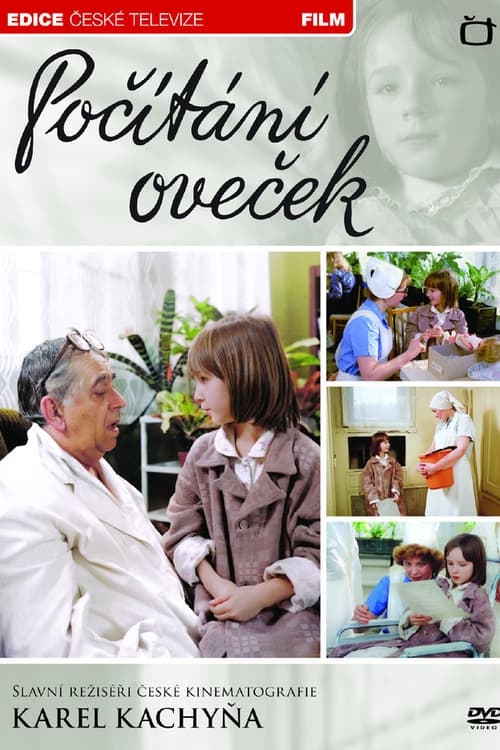
A story about young girl Hanka who doesn't have parents and is forced to spend most of her time in a hospital bed.
Counting Sheep
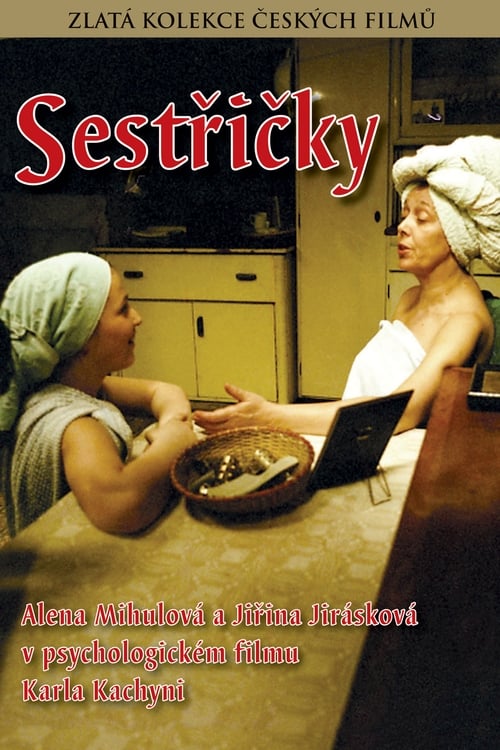
A Czech psychological film about the school of life, its sorrows and beauties. The main character is a young aspiring nurse Marie Sahulová, who, after a trouble in the hospital - she secretly brought a boy to her boarding school - is transferred to a rural health centre, where together with an old doctor and a peculiar nurse she has to travel around twenty-five villages and a number of solitudes in the harsh environment of the neglected villages of the 1950s. The nurse, a wise and experienced woman whom no one calls anything other than "babi", becomes her guide, who introduces her to the practice and the pitfalls of private life in a distinctive way. In the mosaic of everyday worries and more or less serious medical interventions, Marie matures and finds the meaning of her work and life.
Sestricky

A lyrical story about first love, death and disappointment, based on a poem of the same title.
Romance for Bugle
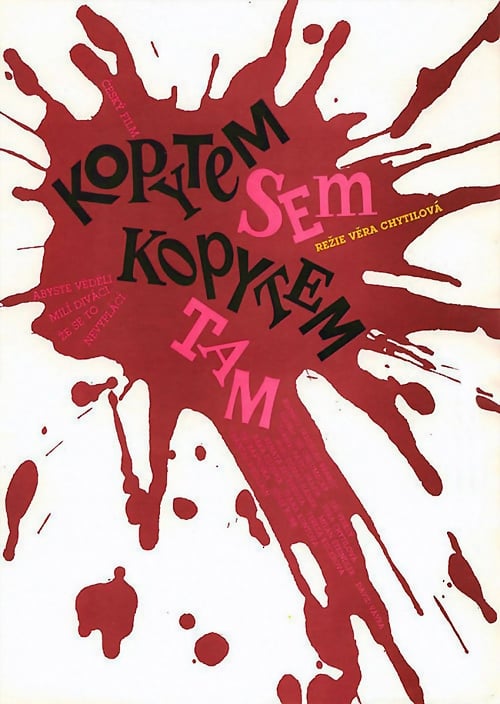
A striking generational tragicomedy, A Hoof Here, a Hoof There is a caustic group portrait of pals who enjoy a tipple, all kinds of hi-jinks and no-strings sexual adventures. Auditor Pepe, vet Dědek and restaurant manager František are financially secure and enjoy life with their similarly fun-loving girlfriends—at least until the moment when the brash Pepe collapses and ends up in hospital.
A Hoof Here, a Hoof There

This fairy tale tells of a magical hen who lays golden eggs. When an enterprising taxi driver (greedy, of course) learns of such a miracle, he immediately realizes that he could easily and effortlessly get rich if he could get such a hen...