Writing
The Prague Research Institute of Air Engineering is to prepare a proposal to reduce dust in Ostrava, especially in the area where the new power plant is to be built. That is why engineers Vojtěch Spára and Jiří Zástěra will travel to Ostrava. Eva Frágnerová, a hygienist, will strongly oppose the power plant project near the housing estate.
No description available.
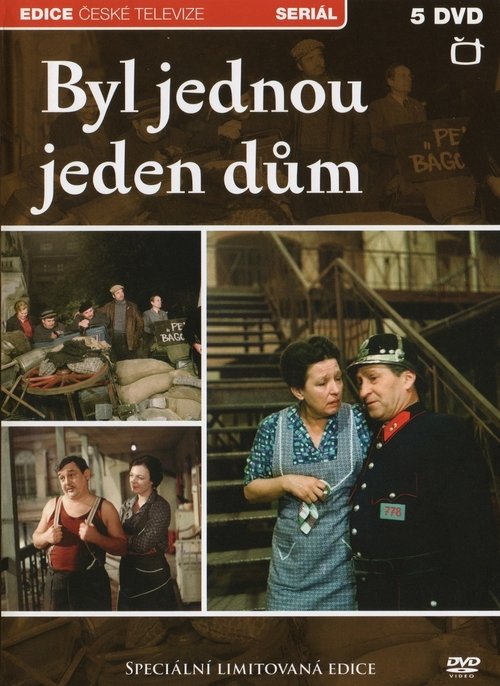
Three pensioners, three Josephs, living on a housing estate, are bored. They have nothing to do, so they make up all sorts of alliterations and tease each other. When one of them is approached by a neighbour, he asks if he can find out who is borrowing her bicycle from the carriage shop. He finds out it's a little boy who doesn't have a dad, and his mom doesn't have money for a bike. So he borrows the bike and always leaves it somewhere on the estate. The pensioners feel sorry for the boy, so one of them takes the blame and offers to be the boy's mum's surrogate grandparents.
A woman discovers a conspiracy while searching for her missing travel companion.
Oldřich Daňek's play tells a love story from our ancient times about the beautiful convent inmate Jitka and the brave Břetislav, the son of the Bohemian prince Oldřich and the simple laundress Božena. This witty apocryphal uses semi-historical, semi-legendary material in a modern way.
Olga Valentová, whose father was a communist resistance fighter and died during the occupation, works in the export department of Tatrovka. The young woman recapitulates her life and returns to her father's ideals.
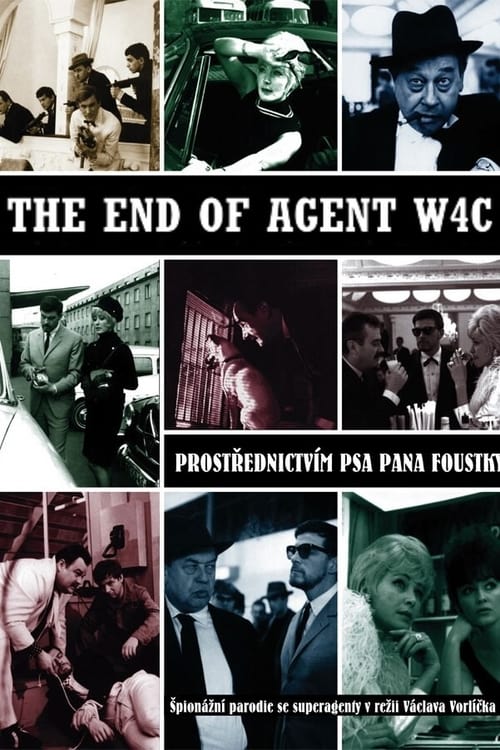
The invincible agent Cyril Juan Borguette alias W4C has been assigned a mission to go to a hotel in Prague, get hold of a saltcellar with a plan for the military exploitation of Venus hidden in it, and hand it over to the beautiful agent Alice. He will have to compete for the saltcellar with other agents working for the world's various greater and smaller powers. The head of the Prague counter-intelligence unit gets news of agent W4C's mission. Deficient in personnel, he nominates accountant Foustka as agent 13B. Mr Foustka takes his dog Pajda with him and the two head for the airport. Pajda helps him track down agent W4C in a classy hotel that becomes the battleground for the interests and plans of the secret agents from different countries, each trying to get hold of the precious saltcellar.
In the Hussite times, religious truth was sifted even on the tips of weapons. When in 1430 the Hussites set out on a raid to Nuremberg, the so-called Spanila Cavalry, to defend their doctrine, the young commander of the cavalry, the landowner Keřský, whose bride had once been kidnapped by a vicious crusader, saw it as an opportunity for personal revenge. Although Oldřich Daněk has tried to establish a distinctive interpretation of historical events, he reflects on where the blinded desire to punish a bad deed with further cruelty leads, but his version seems too thesis-like and lifeless, it does not rise above the descriptively illustrated scenes from old Czech chronicles...
A student commits suicide out of unhappy love to a married man; story is recounted in retrospective by a "judge" who asks the audience to decide who is the guilty party.
The High Royal Chamberlain is accused of treason and imprisoned. Even if the suspicion proves to be unfounded, the prisoner finds his life in danger, because the royal majesty must not admit error. If the unfortunate man had confessed, he could have been pardoned, but the Vice-Chamberlain refuses such a solution as a matter of principle... This historical story, which aspires to the dimension of a parable, takes place at the dawn of the reign of John of Luxembourg.
The rude and bitter mining engineer Štěrba strongly opposes the proposal of his colleague Ing. Vochoče to reopen mining in the old mine. Vochoč's plan is precisely prepared and could solve many problems. However, Štěrba does not want to explain anything to anyone, he does not want to talk to anyone, his only refuge is the pub and his only friend is a glass of alcohol. He has resigned himself to a relationship with his wife. No one knows that he has very good reasons to prevent Vochoč and the others from taking their meritorious initiative...