FEEL IT.STREAM
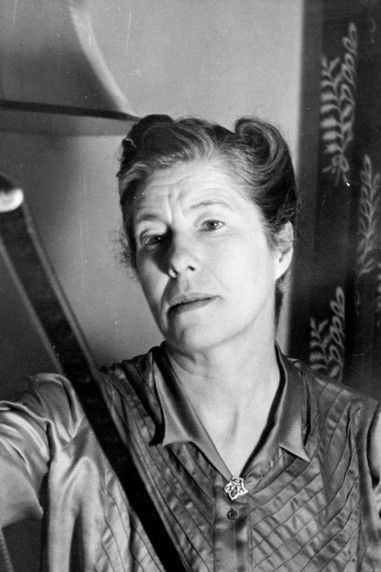
Mary Field

Mary Field

Directing

Biography

British director and screen writer, she is not to be confused with the American actress of the same name. Mary Field is best known for directing short educational and nature films. Field became the series director of Secrets of Nature in 1929. Previously a history teacher, she joined the film industry as an historical consultant in 1925, working for British Instructional Films. Although she had no training in science or filmmaking, Field quickly proved herself to be a first-class film director, developing a unique style that fused education and instruction. Field insisted that nature films were more than just a series of impressive images: they were the result of a painstaking process that involved scriptwriting, editing, filming, cutting and montage and synchronisation, as well as the collaboration of expert consultants. She continued to direct nature films under the new title Secrets of Life from 1934 when her production team, led by H. Bruce Woolfe, moved from British Instructional Films to Gaumont-British instructional. During the Second World War, she put her skills to work in producing public information films for the British government and was later commissioned to produce a series of educational films for the British Council. Field was a pioneer in understanding how children related to the cinema, and spearheaded attempts to adapt films to their taste. Her 1954 Carnegie report, Children and Films: A Study of Boys and Girls in the Cinema, investigated the reactions of children to a series of films by means of infra-red photography. Previous reports into children’s reactions to cinema had been based on questionnaires. Field had been interested in audience’s reactions long before this – as early as the late 1920s, she was adapting many of the Secrets of Nature films based on audience feedback.
Known For

No image
7.5

Professor Norman Wedgwood oversees an experimental rocket group on remote Buchan Island in Scotland. His children, Geoff, Valerie and Jimmy visit to watch the latest rocket launch, along with journalist Conway Henderson. When the pilot takes ill, Jimmy finds himself taking his place on a mission to the Moon along with his pet hamster, Hamlet.

Target Luna

1960
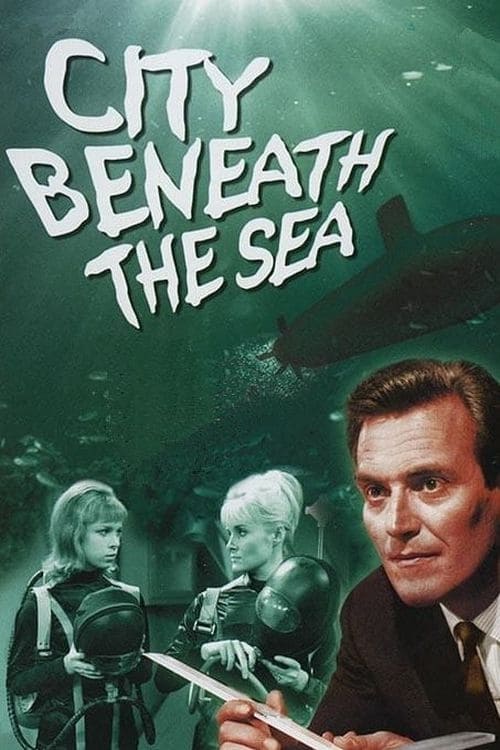
City Beneath the Sea
6.0

No description available.

City Beneath the Sea

1962
Pathfinders to Venus
6.3

Returning from their unexpected trip to Mars the crew of MR4 intercept a distress signal from Captain Wilson, a U.S astronaut, and must change course for Venus to attempt a rescue in space. However, through the space periscope, Brown sees what appears to be a settlement or a city of some sort. Desperate to investigate, Brown edits Wilson's message and tricks the crew into landing Venus so as they can rescue him.

Pathfinders to Venus

1961
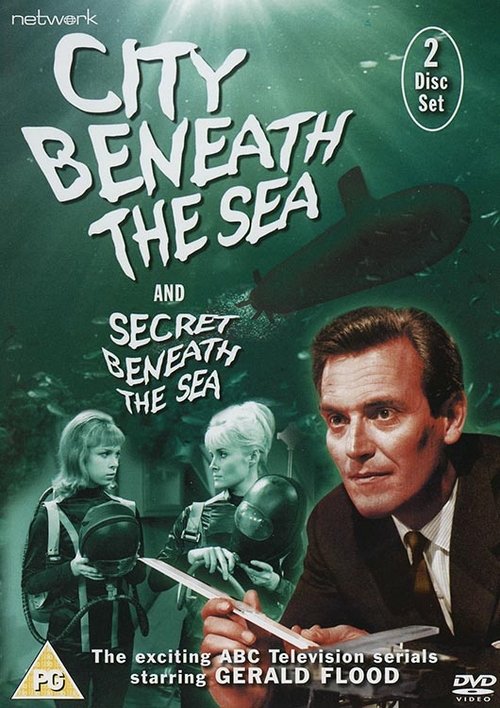
Secret Beneath the Sea
6.0

No description available.

Secret Beneath the Sea

1963
Pathfinders to Mars
7.5

A secondary mission in a new rocket, MR4, to the Moon takes off from Buchan Island. This time Henderson takes the lead role as pilot accompanied by Professor Wedgwood's oldest son Geoff as radio operator, Professor Mary Meadows, Henderson's niece Margret along with Hamlet. However one of the crew turns out to be science writer named Harcourt Brown who has plans to divert the ship to Mars determined there is life on the planet. Brown succeeds in getting MR4 to Mars, but with the length of the journey, the crew decide that the only way to get home is to find water on Mars.

Pathfinders to Mars

1960
Pathfinders in Space
6.0

Professor Norman Wedgwood and his team are planning another rocket mission to the Moon. Once again, Geoff, Valerie and Jimmy are on hand to witness the launch of a new rocket MR1, along with journalist friend Conway Henderson. However, when the automatic supply ship MR2 fails to launch Henderson and the children make a desperate rescue attempt with Jimmy's pet Hamlet.

Pathfinders in Space

1960
They Made the Land
N/A

They Made the Land (1938) is a documentary showcasing how land in Scotland was reclaimed and cultivated for agriculture. It explores the challenges of making a living from the land while highlighting the contributions of agricultural research and animal breeding. Produced as part of a series of seven documentaries for the 1938 Empire Exhibition, the film was created under the supervision of pioneering documentarian John Grierson.

They Made the Land

1938
Wisdom of the Wild
9.0

A wildlife film with a difference: it has A Message for any humans in the house. "The squirrel in the tree, the fox below, the birds, insects, all know that a time of plenty will not last forever". Austerity-stricken wartime viewers can learn from their economical feeding habits. An entertaining hybrid of public information and natural history from the makers of wildlife series Secrets of Life. Released in the BFI boxset Ration Books and Rabbit Pies: Films from the Home Front.

Wisdom of the Wild

1940
Mrs. T. and Her Cabbage Patch
N/A

Poetic tribute to Mrs Turner's vegetable growing prowess, plus the delights of "wartime steaks".

Mrs. T. and Her Cabbage Patch

1941
No image
N/A

This film shows how and why the animals which inhabit a pond are dependent one on another for their survival. We see the minnow in pursuit of water fleas and a stickleback seeking worms to satisfy his need of fuel. Carbon-dioxide, we are reminded, is essential for the growth of the green plants and the oxygen they release for the breathing of the animal population of the pond.

Life in the Balance

1936
No image
N/A

Documentary on the life cycle of the tortoiseshell butterfly: first laying their eggs under the leaves of sting nettles and in2-3 weeks the caterpillars emerge and live off the nettle leaves. Then fully grown caterpillars spin a chrysalis. After 3 weeks the new butterfly emerges, and so the cycle continues.

Butterflies and Nettles

1935
No image
N/A

King Penguins are first seen in their natural habitat, the Antarctic, after which we see them in the Edinburgh Zoo. With slow-motion pictures we see how they swim with the use of their flippers and feet. Their mating and incubating of their eggs and later, the hatching of them; the rearing of the young at various stages of their growth are also shown.

Kings in Exile

1938
No image
N/A

The Secrets of Life series (1934-50) may not conform to modern expectations of nature filmmaking, inclined as it is towards giving cute fluffy creatures human names and characteristics. But it couldn't be accused of shielding kiddies from the harsher realities of the food chain, as this exercise in ruthless Darwinism demonstrates to unintentionally hilarious effect. A more than usually eccentric narrator introduces us to the newborn bunny quartet of Donald, James, Charles and Clifford, but as the film's title gives away, "the boys" aren't all long for this world as they face an assault course of hungry owls, predatory badgers, shotgun-happy gardeners and aerial bombardment (no harm in a little anti-Nazi detour, this is 1942 after all). (from http://player.bfi.org.uk/film/watch-once-we-were-four-1942/)

Once We Were Four

1942
Any Evening After Work
5.0

A man contracts a sexually transmitted disease, but is reluctant to seek medical help - until a no-nonsense lecture about the risks he is taking forces him to change his mind.

Any Evening After Work

1930
Romance in a Pond
N/A

Short, anthropomorphically-inclined documentary showing the life-cycle of the common newt.

Romance in a Pond

1932
Tell England
8.3

In England, two young friends, confronted with the outbreak of World War I, enlist together to serve in the same company on the battle-field.

Tell England

1931
The Life History of the Onion
N/A

The film shows speeded-up germination of the seed to form roots and shoot, at whose base the leaves later form a bulb. The flower produces pollen grains (shown much magnified), which are transferred by insects to the stigmas for fertilization of seeds inside the ovary.

The Life History of the Onion

1943
No image
N/A

A close-up on Somerset's changing milk and cheese industry

Somersetshire Dairy-Farming

1937
Ebb-tide
N/A

Go with the flow: to gentle but spellbinding effect this innovative natural history film glimpses marine life astride rising tides at Millport on the Isle of Cumbrae. Urchins, lugworm, weaver-fish and crabs are the shy-but-elegant stars coaxed onto the screen (with the assistance of Millport’s local research station) for this archetypal edition of Gaumont-British Instructional’s 1930s cinema series Secrets of Life.

Ebb-tide

1948
The Mystery of Marriage
5.0

The courtship rituals of animals and plants are compared to those of contemporary society, with educational and frequently humorous results.

The Mystery of Marriage

1931