Writing
Visualization and choreography of the song "Barbara" by Les Frères Jacques.
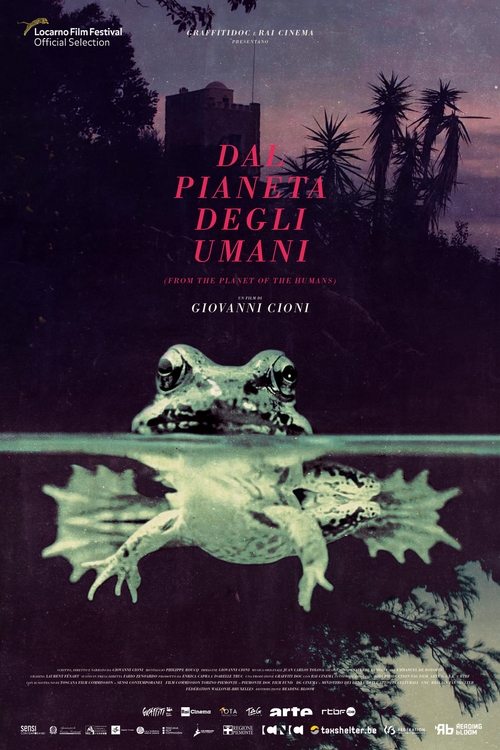
A border inspection at Ventimiglia, between Italy and France, turns into a fantastical fairy tale narrated by a chorus of frogs, wherein a scientist experiments with rejuvenation techniques using monkey testicles. Dr. Voronoff was a real person, and was world-famous in the 1920s. His villa stands on the border where migrants try to cross. But it is as if they do not exist.
In Brussels a conversation taks place between two jewish elderly men (us) and an Algerian women (them).
No description available.
Documentary about mysticism in Neaples.
Marginalized members of Italian society gather in a meeting and welcome center. They have experienced drugs, prison and homelessness. Talking about their existence, singing and living life, they show that humanity is not lost. A visionary, poetic film referencing the masters of Italian cinema such as Pasolini and Bellocchio. A vibrant work that puts the sadness of the world to song.
A street with pedestrians. Music. A voice reads the credits and clarifies, "This is a very violent film." The action begins: a man crosses the street and enters his flat. He opens the door, puts out the fire under the kettle whistling in the kitchen, and enters the living room…
Giovanni Cioni is a farmer-director. Every year, at his home in Mugello, he organizes a workshop that combines filmmaking, farming, and shared life. An open atelier where filmmakers live and experiment with his way of inhabiting and narrating the world.
The city of Naples is told through 24 short stories that emphasize its complexity, looks and characters.
We are in a film inside a film that develops from the rehearsal of the dialogues between Totò and Ninetto Davoli in Che cosa sono le nuvole by Pier Paolo Pasolini and fragments from La Vida es Sueño by Calderón de Barca. The rehearsals are repeated with clapperboards and become the starting point for tales of dreams, messages, songs and disputes about the human condition.