Valeria Sarmiento
Editing
Biography
Valeria Sarmiento (born 29 October 1948) is a film editor, director and screenwriter best known for her work in France, Portugal and her native Chile. She has worked both in film and television, directing 20 feature films, documentaries and television series'. She is the widow of Chilean film director Raúl Ruiz (1941-2011) with whom she collaborated for decades as regular editor and co-writer. She has also edited films for Luc Moullet, Robert Kramer and Ventura Pons . From Wikipedia, the free encyclopedia
Known For

The tragic story of the many lives of Father Dinis, his dark origins and his pious works, and the different fates of all those who, trapped in a sinister web of love, hate and crime, cross paths with him through years of adventure and misfortune in the convulsed Europe of the late 18th and early 19th centuries. (A longer television version of the film of the same name, released in 2010.)
Mysteries of Lisbon
The trials and tribulations of a fashion house in 1950s Chile.
Casa de Angelis

A portrait of Austrian artist Gustav Klimt whose lavish, sexual paintings came to symbolize the art nouveau style of the late 19th and early 20th century.
Klimt

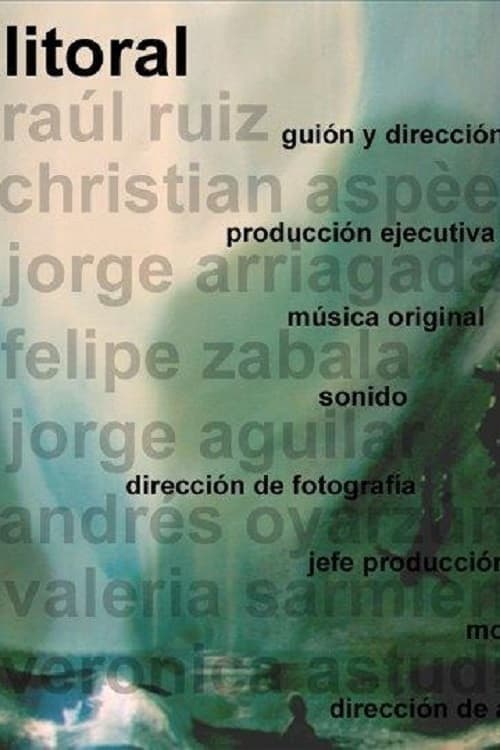
An ode to Chilean maritime myth and storytelling. Sailors onboard the Lucerna tell stories, but before long their stories intersect.
Litoral

Passionate romance, brutal treachery, and selfless nobility are set against the background of Napoleon’s 1810 invasion of Portugal.
Lines of Wellington
Historical drama adapted from the diary of the famous British travel-writer Maria Graham who arrived in Chile in 1822 just as the country was becoming independent from Spain. She is a woman coming to terms with her husband’s recent death: In her discovery of this breathtakingly beautiful country, its people and its customs, she learns to live again.
Maria Graham: Diary of a Residence in Chile

A serious young man of free spirit is forced by his surroundings to become rich at all costs. A group of blind children tries to open the eyes of the unbelievers to the Christian faith. Retired nuns who open a brothel, to pay the running costs of the convent. These rather ironic paradoxes turn this fairytale into a philosophical fable.
Love Torn in a Dream

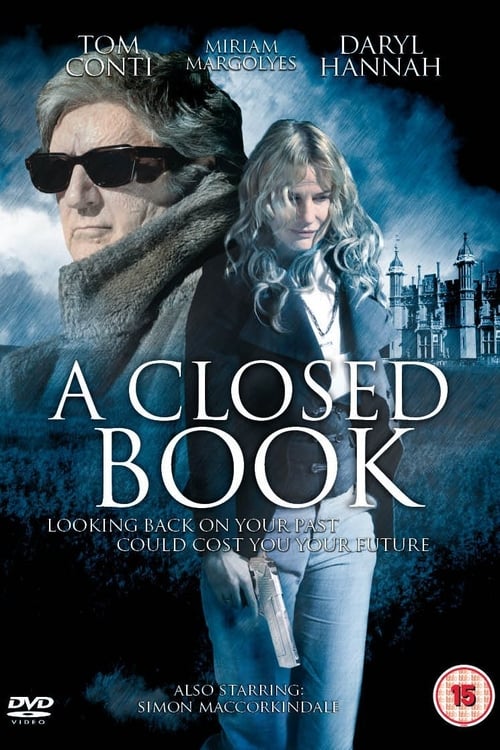
Jane appears to be ideal: attractive, intelligent, unruffled by her employer's abrupt eccentricities. But, gradually, we come aware that Jane has another agenda. Incrementally, Sir Paul's familiar surroundings are altered. His housekeeper is diverted away, strange things happen around the house and he becomes increasingly dependent on his new assistant.
A Closed Book

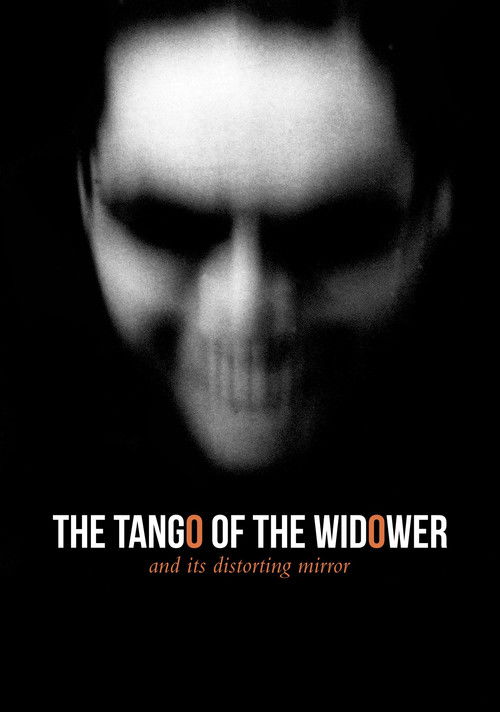
A man's wife commits suicide and appears to him as a ghost. The ghost follows him everywhere – under the bed, under tables… After seeing the ghost so frequently, the man begins to resemble her.
The Tango of the Widower and Its Distorting Mirror

A well-bred young woman who prizes the virtue of fidelity remains faithful to the doctor who deflowers her, even after he marries her invalid sister.
Amelia Lópes O'Neill

Jim is a small child who lives in an inn run by his parents. The arrival of a strange captain to the Island they live will trouble his existence and tip him into an universe of adventures.
Treasure Island

A father is scheming to have his slightly mental daughter from an earlier marriage killed by allowing a murderous psychopath to be released from the asylum and led to his house. However, the psychopath and the daughter fall for each other.
That Day

Bananas, eggs, and tuna: three basic foodstuffs with three wildly different points of origin. Moullet begins with these on his plate but constructs his film by working backwards and finding the sources for these items and how they reach our plates. As Moullet’s investigation deepens, however, the film moves beyond the confines of a simple exploration of food origins into more political and social realms, not only relating to food but also to the medium of film.
Origins of a Meal

A drama centered on an office worker on the verge of retirement who begins to relive both real and imagined memories.
Night Across the Street

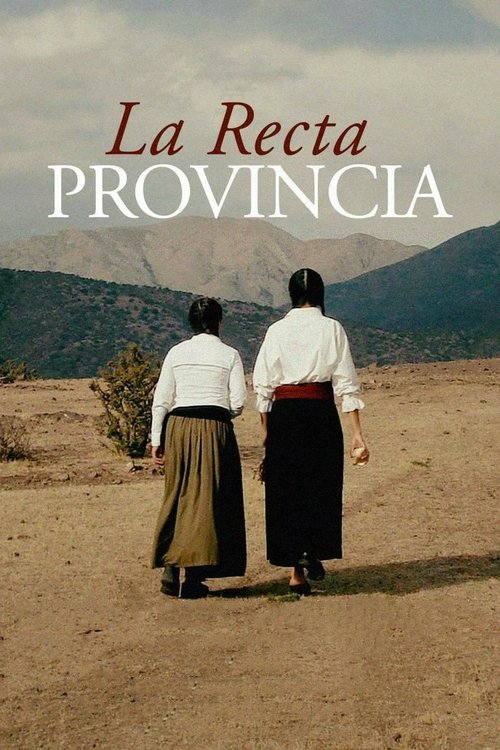
This was a man. He lived with his mother. He cared a manor house in the countryside of Chile. One day the man found a bone in the garden. The bone was bored. That was a bone flute. The man with the flute music play. And music song became. The voice of the song begging to seek the other bones of his scattered body. The man and his mother were in those ways of God and hell, looking for the bones that make up the skeleton of that Christian. And give him a Christian burial. And they saw what they saw, they lived what they lived. Many stories lived. And although they did not tell anyone, others told them.
La Recta Provincia

Chilean director Valeria Sarmiento weaves a tale of love, betrayal, and civil unrest centering around a nightclub in 1950s pre-Communist Cuba in her 2002 romantic drama Rosa La China. Notorious businessman Santiago Ordenez (Juan Luis Galiardo), who primarily goes by the nickname Dulzara, operates a high-profile club/casino with the protection of some local politicians with whom he has dubious relationships. A large portion of the club's success is due to its star singer, Rosa (Luisa Maria Jiminez), who also happens to be Dulzara's lover. Rosa, however, has recently started into another affair with a somewhat younger womanizer named Marcos (Abel Rodriguez).
Rosa la China

A satirical take on President Salvador Allende's Popular Unity process prior to the 1973 Chilean coup d'état. The film is made up of a series of short stories, in which different worlds cross paths.
Socialist Realism

Madeleine is with her lover, Jean-Paul, when her husband arrives home and catches the two together. Madeleine kills her husband and tells Jean-Paul to flee before the police arrive. After Jean-Paul drives away, he picks up a hitchhiker. When the car, stolen by the hitchhiker, explodes, police believe the dead hitchhiker is Jean-Paul. Madeleine takes up with Jean-Paul's brother, Bastien, while Jean-Paul, arriving in Strasbourg, is mistaken for the heir to a fortune. The detective on the case spends more time writing crime novels than investigating real-life crimes.
L'Inconnu de Strasbourg

The film revolves around the concept of soap opera. Its structure is based on the assumption that Chilean reality does not exist, but rather is an ensemble of soap operas.
The Wandering Soap Opera

Chilean exiles in Paris discuss the problems facing them. They kidnap and attempt to re-educate a touring singer from their fatherland.