FEEL IT.STREAM
Raymonde Carasco

Raymonde Carasco

Directing

Biography

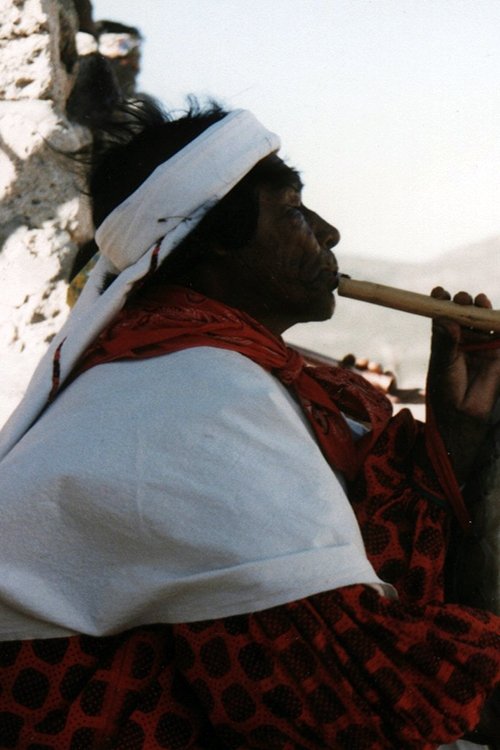
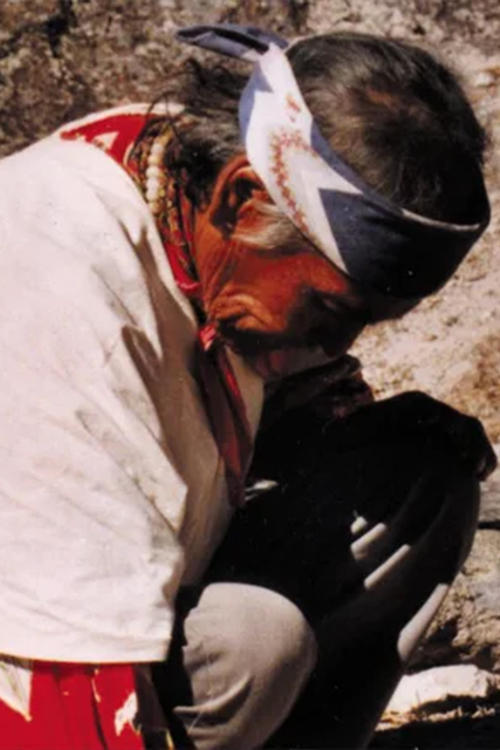
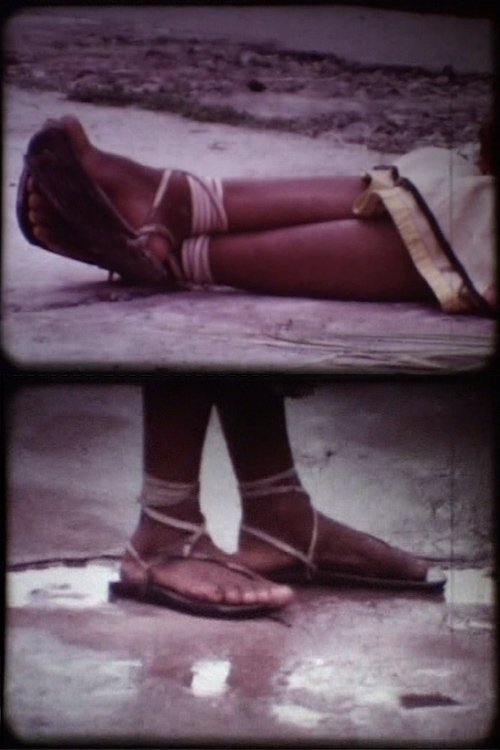
Director, author, and professor of philosophy and film studies Raymonde Carasco (1939-2009) left behind a remarkable body of work that remains little known today. Her attempts at combining film and anthropology, which she eventually gave up, arose from an interest in Sergei Eisenstein, about whose approach to editing she had written a dissertation under the guidance of Roland Barthes. Inspired by Antonin Artaud’s book Voyage to the Land of the Tarahumara (1947, published in English in 1976 as The Peyote Dance), she traveled to Mexico, where she spent more than years with this group of Native Americans. Together with her husband, the cinematographer and film editor Régis Hebraud, she filmed an entire series of ethnographic films: Tarahumaras 78 (1979), Tarahumaras 79 – Tutuguri (1980), Los Pintos (1982), Tarahumaras 85 – Los Pascoleros (1996), Artaud et les Tarahumaras (1996), Ciguri 98 – The Peyote Dance (1998), Ciguri 99 – Le dernier Chaman (1999) and La Fêlure du temps (2004)
Known For

Cinématon
4.9

Cinématon is a 156-hour long experimental film by French director Gérard Courant. It was the longest film ever released until 2011. Composed over 36 years from 1978 until 2006, it consists of a series of over 2,821 silent vignettes (cinématons), each 3 minutes and 25 seconds long, of various celebrities, artists, journalists and friends of the director, each doing whatever they want for the allotted time. Subjects of the film include directors Barbet Schroeder, Nagisa Oshima, Volker Schlöndorff, Ken Loach, Benjamin Cuq, Youssef Chahine, Wim Wenders, Joseph Losey, Jean-Luc Godard, Samuel Fuller and Terry Gilliam, chess grandmaster Joël Lautier, and actors Roberto Benigni, Stéphane Audran, Julie Delpy and Lesley Chatterley. Gilliam is featured eating a 100-franc note, while Fuller smokes a cigar. Courant's favourite subject was a 7-month-old baby. The film was screened in its then-entirety in Avignon in November 2009 and was screened in Redondo Beach, CA on April 9, 2010.

Cinématon

1978
Un film (autoportrait)
8.0

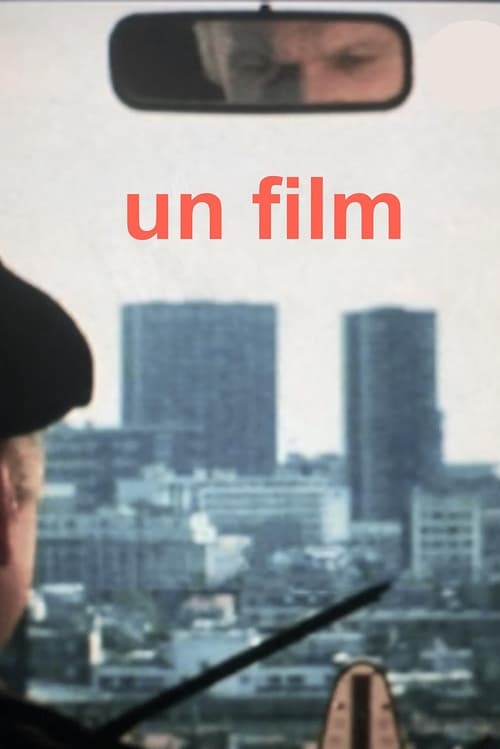
The shooting diary of a film shot in France and in the United States. Using photos of Paris and of New York City, excerpts of his former films, statements by friends of his and shooting sequences of the film itself, tormented filmmaker Marcel Hanoun has made a heterogeneous and unclassifiable film about the difficulty of filming.

Un film (autoportrait)

1984
Gradiva: Esquisse I
5.8

The movie shows a smattering of images from the story of Wilhelm Jensen's Gradiva. The subject is sublimated desire.

Gradiva: Esquisse I

1978
Ciguri - Tarahumaras 99 - Le dernier chaman
N/A

Rites of winter, rites of peyote. A creative documentary based on texts by Antonin Artaud read by Jean Rouch, and the words of the last shaman’s peyote, translated by Raymonde Carasco.

Ciguri - Tarahumaras 99 - Le dernier chaman

1999
Rupture
6.0

Joa (Bulle Ogier), an archaeologist from Mexico, comes to Paris in search of her sister Anna (Mireille Perrier), of whom she is suddenly without news. Anna, a theater actress, was in the title role in Sade's "Justine" when she disappeared. The investigation leading Joa to the people who have known her sister, turns into an initiatory quest. Her journey, her stroll through a subterranean marginal Paris, leads also to the emergence of a new woman.

Rupture

1989
The Dead Tree
6.5

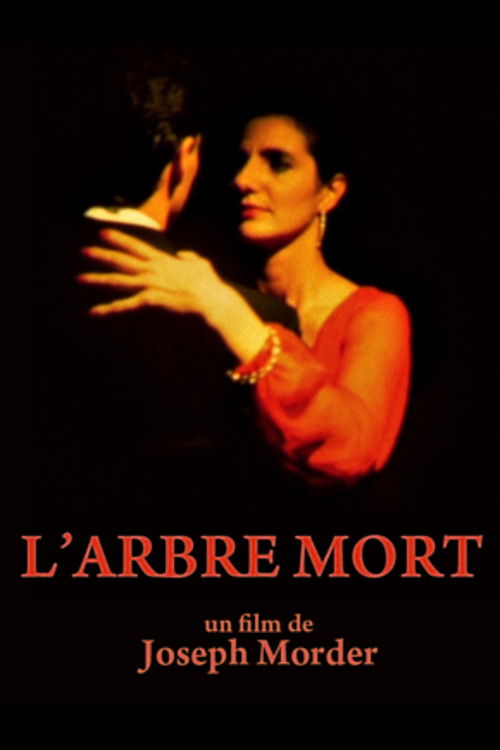
The veneer of the story is a tale of chance love: two French expatriates strike up a chance romance when they meet on a ship headed back to South America.

The Dead Tree

1987
Julien
N/A

An intimate exploration of Raymonde Carasco’s father.

Julien

1983
Life Lesson
7.0

To attain knowledge, man and woman had to be willing to give up their innocence," says Boris Lehman. Life Lesson is a poetic and philosophic reflection on the theme of paradise lost. Some fifty persons illustrate the planet's convulsions and the world's vacillations. Trying to communicate, to commune with the invisible, they cry out, sing out, give out messages, each in their own way, in their own state of solitude. These are like multiple echoes that resemble waves in the water or stars in the sky. " Behind these images and sounds that have been stifled by today's society, Lehman hunts for noises, cries, songs, messages that go astray. He says that if we look at the invisible we may hear the words. He invites us to look beyond the appearances of social life and to vibrate in tune with life's polyphony that is all around us."

Life Lesson

1995
Divisadero 77 (Gradiva - Western)
N/A

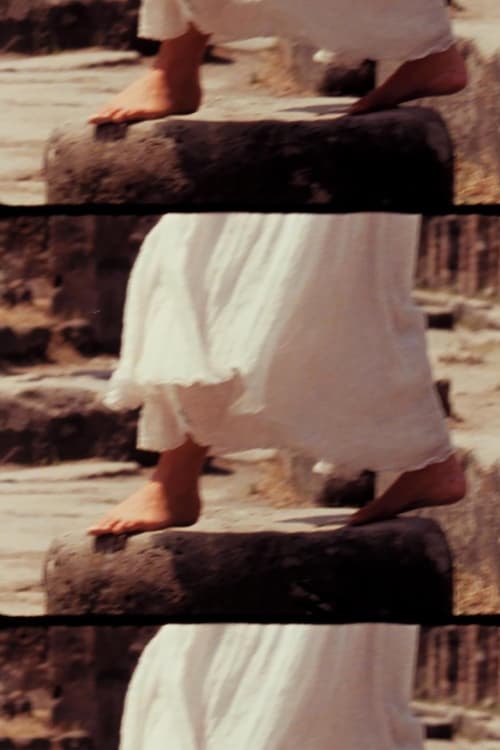
By combining a journey to the locations for Eisenstein’s unfinished opus Que Viva Mexico! with images of an Indian girl walking, Carasco has created a cinematic topos across multiple historical eras. We see figures walking, marching, in motion, as we set out on the trail of a film, and of the Tarahumara – those who run fast.

Divisadero 77 (Gradiva - Western)

1977
No image
N/A

Third chapter of La fêlure du temps. "It's enough that Gloria tells you the first time: if you want to work that way, do it. The sueño is not taught: you yourself are going to think how to work the sueño"

Tarahumaras 2003, The Crack of Time Part 3: Initiation - Gloria

2003
No image
N/A

La fêlure du temps (2000-2003) is the last of the works of Raymonde Carasco focused on the Tarahumara. This epic divided into five chapters (L’Avant is the first) focuses on the origins and the disappearance of the Tarahumara culture, based on the words of the last shaman.

Tarahumaras 2003, The Crack of Time Part 1: Before - The Apaches

2003
Ciguri – Tarahumaras 98 - La Danse Du Peyotl
N/A

A documentary cycle involving the Rarámuri or Tarahumara people of Northern Mexico. This film addresses rites of winter as well as peyote and bakaka rites. Its commentary, read by Raymonde Carasco and Jean Rouch, is drawn from texts by Antonin Artaud.

Ciguri – Tarahumaras 98 - La Danse Du Peyotl

1998
No image
N/A

“The most culturally mixed of the Tarahumara dances, a hermaphrodite dance says Raymonde. We may have captured a little of Artaud’s vision in the Le rite du peyotl chez les Tarahumaras.” (Régis Hébraud)

Los Matachines - Tarahumaras 87

2011
No image
N/A

Second chapter of La fêlure du temps. "As a child, I loved to dance. I remember a time we lived in happiness"

Tarahumaras 2003, The Crack of Time Part 2: Childhood

2003
No image
N/A

This film was shot in summer 1979. The repeated ritual of Tutuguri that Tranquilino the saweame sang and danced six times in a short, strictly accurate duration. Secret words from which only emerge vowels, dance that builds a sacred space between the four cardinal points of a cross, a black and pagan sign. A native solar rite, prior to the Spanish conquest. The assembly here builds in a single plane the two poles of real time and an expanded space-time, from dual material: Tutuguri and Carreras.

Tutuguri: Tarahumaras 79

1980
No image
5.0

This film chronicles a meeting: that of the Tarahumara Indians and a camera that looks at the people that are etymologically called "foot runners." Musical montage: steps rhythms, traditional gestures and postures.

Tarahumaras 78

1979
Los Pascoleros - Tarahumaras 85
8.5

This film was shot during Easter 1985. It shows the preparation and staging of the Passion in the village of Norogachic, Mexico. The initiation rites of two Pascoleros, filmed for the first time, form the center of this document.

Los Pascoleros - Tarahumaras 85

1996
Le Contrebandier des profondeurs
N/A

No description available.

Le Contrebandier des profondeurs

2013
No image
N/A

This film was shot in August 1984 in NOROGACHIC, the heart of the Sierra Tarahumara (the same place where Antonin Artaud in 1936, claims to have attended the rites of Tutuguri after crossing "The Mountain of Signs").

Yumari - Tarahumaras 84

1985
Le Cinématon invisible de Raymonde Carasco
N/A

No description available.

Le Cinématon invisible de Raymonde Carasco

2015