Zizi Jeanmaire
Acting
Biography
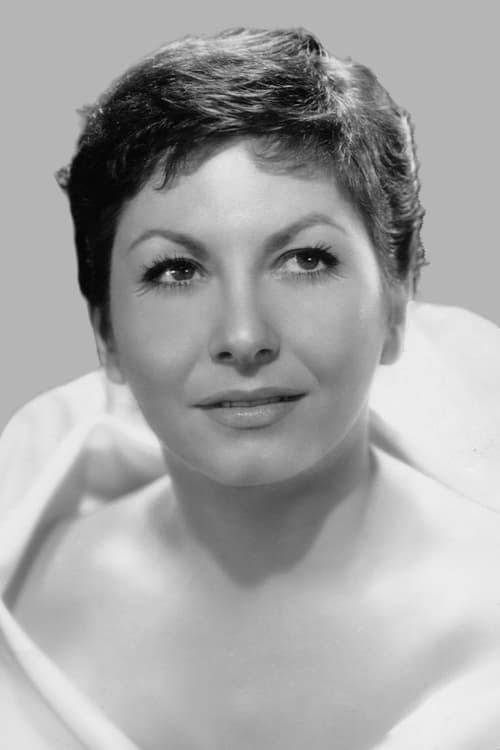
Zizi Jeanmaire (born Renée Marcelle Jeanmaire; 29 April 1924 – 17 July 2020) was a French ballet dancer, actress and singer. She was the widow of renowned dancer and choreographer Roland Petit. She became famous in the 1950s after playing the title role in the ballet Carmen, produced in London in 1949, and went on to appear in several Hollywood films. She and Petit had one daughter, Valentine Petit, a dancer and actress. Jeanmaire is mentioned in the lyrics of the song by Peter Sarstedt, "Where Do You Go To (My Lovely)?", in the first line: "You talk like Marlene Dietrich, and you dance like Zizi Jeanmaire / Your clothes are all made by Balmain and there's diamonds and pearls in your hair". She is also mentioned in the lyrics of the song by Steve Harley & Cockney Rebel, "Nothing is Sacred", from their album Timeless Flight: "I said: "Zizi Jeanmaire wouldn't take this and neither will we / if they call me Napoleon again I'll be forced to let the lion free".
Known For

The best in the performing arts from across America and around the world including a diverse programming portfolio of classical music, opera, popular song, musical theater, dance, drama, and performance documentaries.
Great Performances

No description available.
Champs-Elysées

No description available.
Sacrée Soirée

Omnibus was an arts-based BBC television documentary series, broadcast mainly on BBC1 in the United Kingdom. The programme was the successor to the long-running arts-based series 'Monitor'. It ran from 1967 until 2003, usually being transmitted on Sunday evenings. During its 35-year history, the programme won 12 Bafta awards. Among the series' best remembered documentaries are Cracked Actor, a profile of David Bowie, and Rene Magritte, a graduate film by David Wheatley, 'Madonna: Behind the American dream', a film produced by Nadia Hagger, and a profile of the British film director Ridley Scott. For a season in 1982, the series was in a magazine format presented by Barry Norman. The series was replaced by 'Imagine' hosted by Alan Yentob.
Omnibus

The Ed Sullivan Show is an American TV variety show that originally ran on CBS from Sunday June 20, 1948 to Sunday June 6, 1971, and was hosted by New York entertainment columnist Ed Sullivan. It was replaced in September 1971 by the CBS Sunday Night Movie, which ran only one season and was eventually replaced by other shows. In 2002, The Ed Sullivan Show was ranked #15 on TV Guide's 50 Greatest TV Shows of All Time.
The Ed Sullivan Show

Le Grand Échiquier is a French variety television program created and presented by Jacques Chancel. It aired at 8:30 pm on the first channel of the ORTF from January 12, 1972 to July 12, 1972, then on the second color channel of the ORTF from September 1972 to December 1974, and finally on Antenne 2 from January 1975 to December 21, 1989. The program returned to France 2 on December 20, 2018 and is hosted by Anne-Sophie Lapix.
Le Grand Échiquier

A French variety show.
Numéro un

No description available.
Le monde est à vous

No description available.
Cinépanorama
No description available.
Midi trente

No description available.
Discorama

“The Bell Telephone Hour” was a musical variety show that aired on “NBC” TV from 12 January 1959 to 14 June 1968 that showcased the best in Broadway, Classical, Concert, Jazz and Popular music each week. The series had its’ own house band appropriately named the “Bell Telephone Orchestra”. The show also had its’ own theme song being the “Bell Waltz” composed by “Donald Voorhees” who was also the show's Orchestra conductor. Some of the greatest violinists of the 1960’s performed on this show that aired in the old “Black & White” format. Some of these great violinists included “Erica Mornin”, “Isaac Stern", "Michael Rabin", "Ruggiero Ricci", "Yehudi Menuhin" and "Zino Francesacatti". From time to time some of the great singers and bandleaders of the 1960’s would perform on the show as well. Some of these were “Bing Crosby”, “Gordon MacRae”, “John Gary”, “Leslie Uggams”, “Mary Martin”, “Nelson Eddy”, “Patti Page” and “Roy Rogers”. The TV show followed on the heels of its’ predecessor with the same name on “NBC” radio that aired from 29 April 1940 to 1958 on Monday nights at 8 PM. The name of the show was derived from its’ Major sponsor “Bell Telephone Laboratories”. The TV version began airing on Friday nights at 8:30 PM once a month. It later was given it’s same time slot now airing every other week alternating with another show on the other weeks such as News shows and specials. The show time slot changed quite often over the years. In September 1960 it aired at 9 PM and in September 1961 it moved to 9:30 PM. In October 1963 it moved to Tuesday nights at 10 PM, September 1965 it moved to Sunday night at 6:30 PM and in September 1967 it made its' final move back to Friday night at 10 PM.
The Bell Telephone Hour

No description available.
À bout portant

No description available.
Cadet Rousselle
No description available.
Night-Club
No description available.
Der goldene Schuß
No description available.
Europarty

A small-town shoemaker with a knack for spinning yarns, Hans encounters happiness and heartbreak on his road to becoming a full-fledged writer.
Hans Christian Andersen

A documentary film about dancing on the screen, from its origins after the invention of the movie camera, over the movie musical from the late 20s, 30s, 40s, 50s, and 60s, up to the break dance and music videos from the 80s.
That's Dancing!
No description available.