Acting
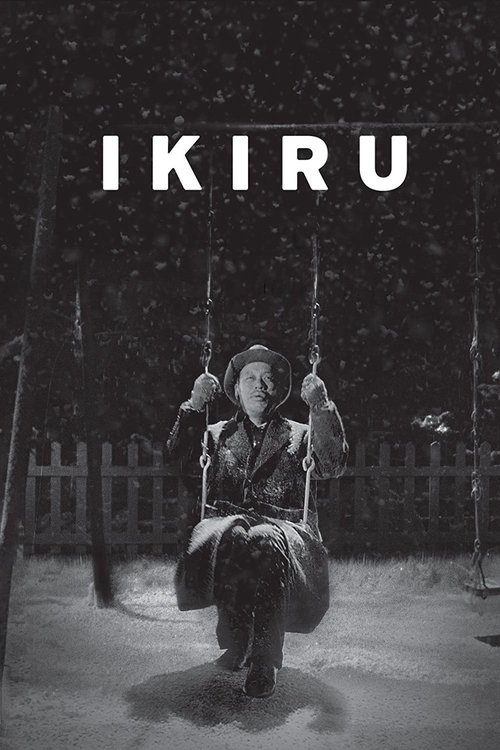
Kanji Watanabe is a middle-aged man who has worked in the same monotonous bureaucratic position for decades. Learning he has cancer, he starts to look for the meaning of his life.
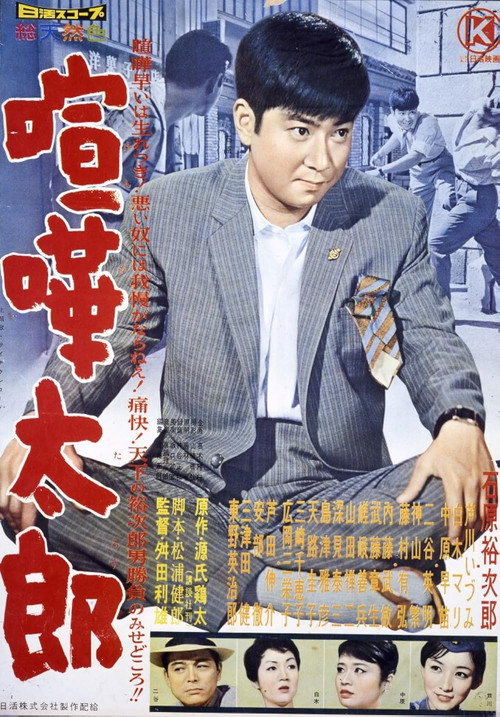
Taro Uno, nicknamed "Fighting Taro," has joined Hyakusho Trading Company, which is currently busy with bidding for Southeast Asian reparations supplies. This is because their competitor, Toyo Bussan, is considered a strong contender. One day, Taro comes to the rescue of Toyo Bussan's president, Iwashita, and his illegitimate son, Kenji, who are being harassed by a local gangster named Kankichi.
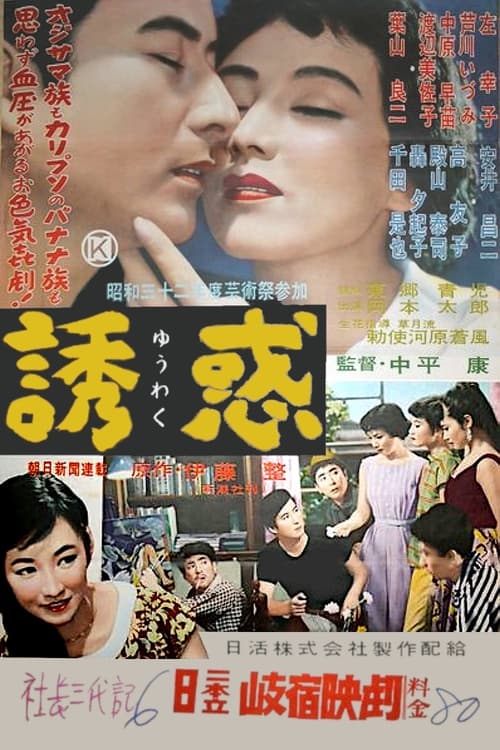
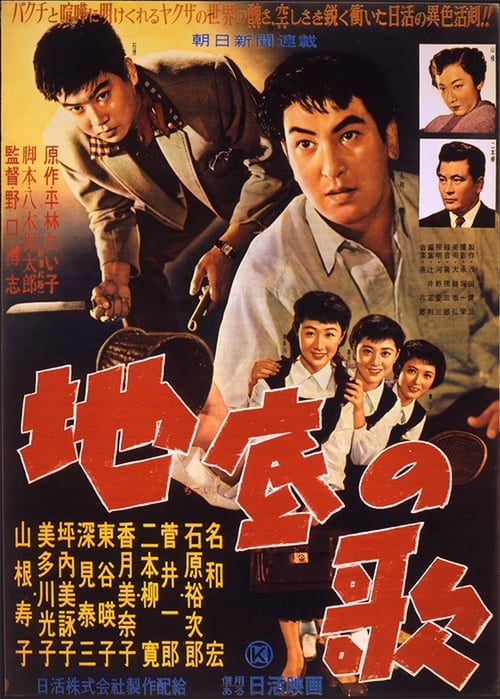
Shokichi, the owner of the clothing store, lives with his daughter Hideko and plans to open an art gallery. One day, Hideko led a handsome art student, Shohei and a poor painter, Sohei. Sohei’s painting was praised by a great printer at the completion ceremony of the art gallery. Since he became successful as a painter, but he looked quite indifferent. Around the same time, Shohei’s sister brought Sohei’s pictures to the gallery and Shokichi noticed that she was a daughter of his first love.
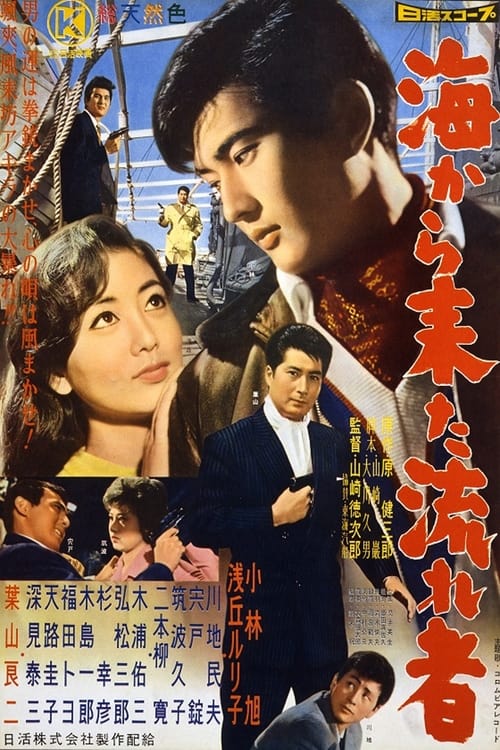
Plans to build a touristic hot spring on the island of Izu Oshima run afoul of the Kobe yakuza group, which intends to use the island as a relay base for drug smuggling.
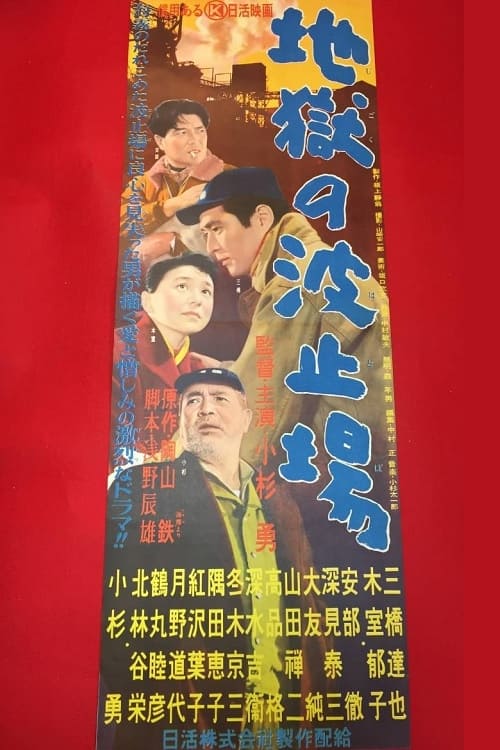
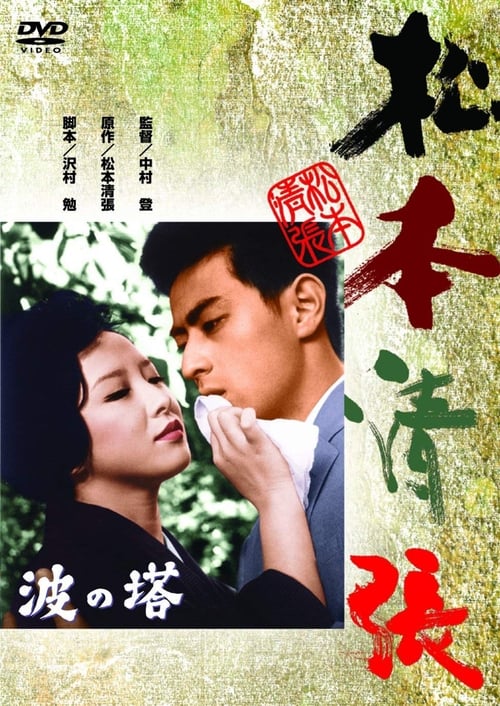
A battle for a large sum of money unfolds on the docks near a steel mill in a foggy atmosphere. Manzo, an engineer on the verge of retirement, witnesses two men shooting each other and collapsing on the quay while his assistant Shinsuke is away.
A dangerous mobster threatens the life of a businessman's mother in this thriller. As Ryuji oversees the building of a bridge in Japan, a powerful gangster plans to stop the project. By any means necessary.
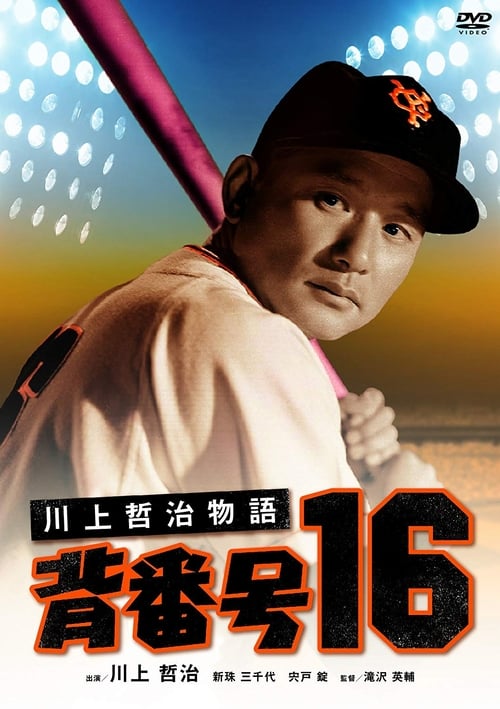
A biopic about Japanese baseball player, Tetsuharu Kawakami.
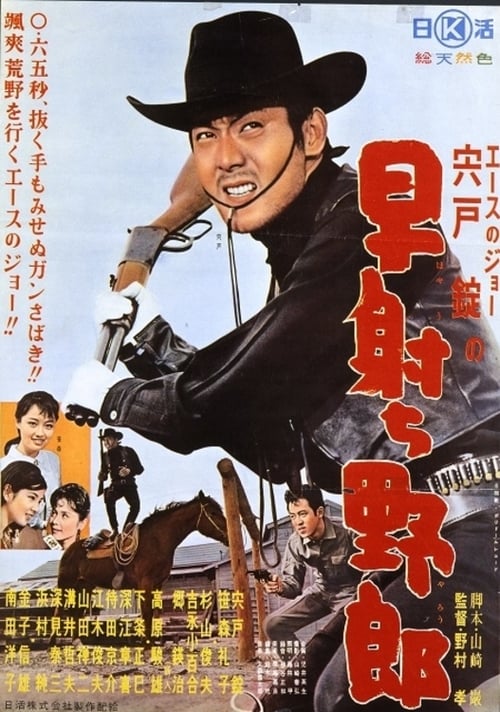
One day, a lone horseman rides into town with a wounded man strapped behind him. Joe, the Ace, had captured one of the bandits who had held up the armored payroll car headed for the dam construction site, takes the wounded man to the police and claims the reward offered. He is told to wait until the driver of the armored car returns to identify the bandit and goes over to the Blue Star where he is introduced to Mishima, the owner of the cabaret, who is highly respected in the town. Joe then meets Saburo, while fishing, and his lovely sister, who seem to sense the real man beneath the rough appearance and take him into their home. Word reaches Joe that the bandit he'd captured had been shot and he hurries over to the hospital.
Two brothers compete for the amorous favors of a young woman during a seaside summer of gambling, boating, and drinking.
Keiko Yukawa is a former prostitute and the newest inmate at White Lily, a female rehabilitation facility.
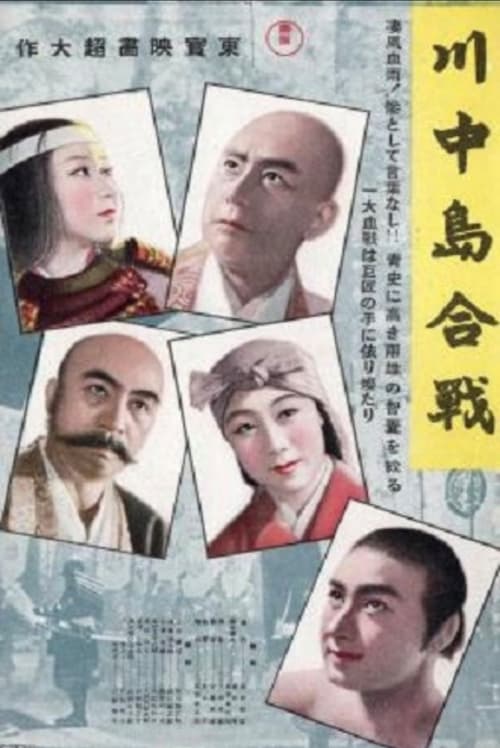
This epic depicts the battle between Uesugi Kenshin and Takeda Shingen. The focus of the story is the struggle by the unit leader in charge of the main supply wagons and the supply troops to transport materiel to the Uesugi army. To this are added episodes involving an itinerant woman.
A conflict between two yakuza families in Tokyo, the Izus and the Yoshidas, has recently broken out. When an Izu underling starts a fight with a Yoshida man, Fuyu, the Izu family sends Tsuruta, a senior member of the clan, to make a personal apology to Fuyu. Tsuruta discovers that the woman he is in love with is Fuyu's sister, Tatsuko. Tsuruta ends up gambling with a swindler, who is in fact Tatsuko's husband. (The general plot of the film was re-used for Seijun Suzuki's Kanto Wanderer).
Japanese film.
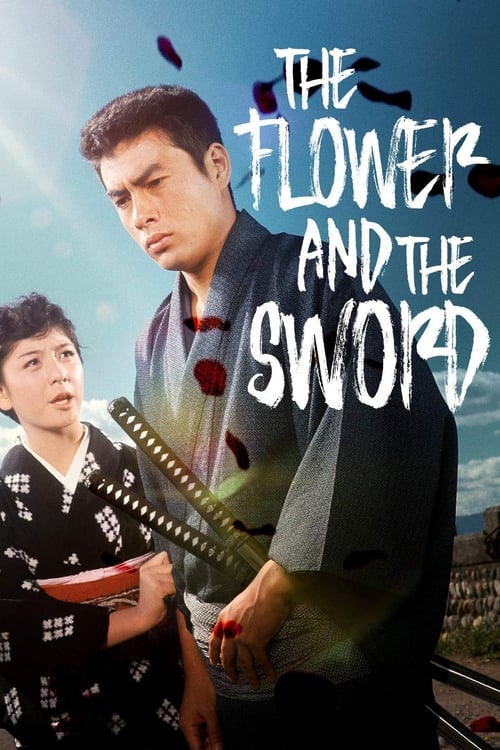
Set against the 1877 Satsuma Rebellion, two Osaka families navigate the radical social shifts of the early Meiji Era. As the merchant class ascends to economic prominence, the former samurai class faces a steady decline in status and traditional structure.
A young prosecutor named Takao falls in love with Yoriko, only to discover that her husband is the target of his investigation into a major corruption scandal. Torn between professional duty and their forbidden affair, the couple finds themselves trapped by societal expectations and legal consequences.
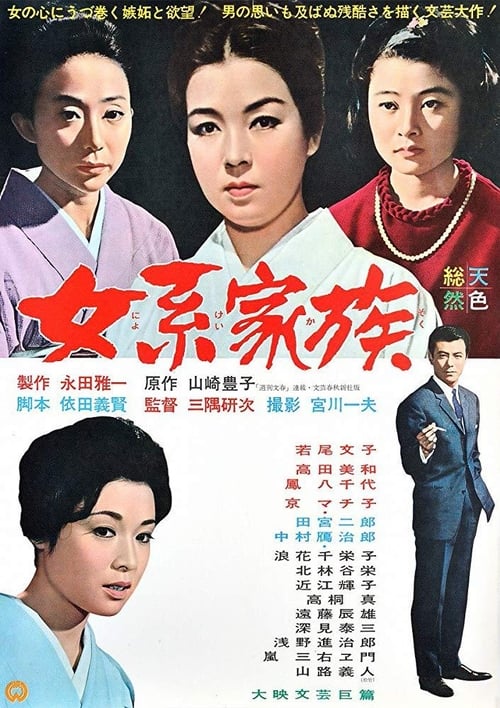
AKA Family of Women. A story about a wealthy family and the greed and selfishness of three daughters and relatives, after the passing of their old father.
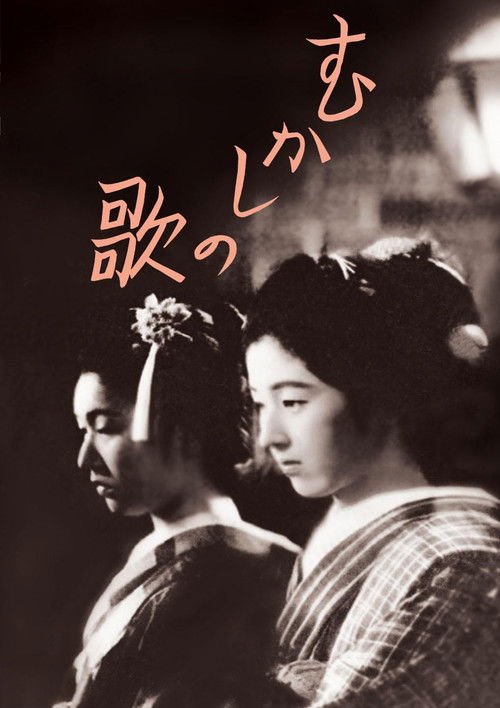
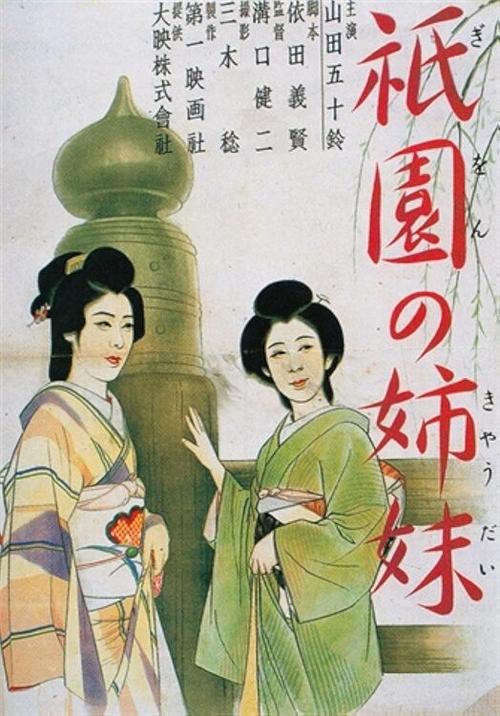
A geisha in the Gion district of Kyoto feels obliged to help her lover when he asks to stay with her after going bankrupt and leaving his wife. However, her younger sister opposes this, thinking that they should both find wealthy patrons to support them.
Five women classmates from a college in Tokyo are on the first stretch of a walking tour when one of them, Masako, falls ill at a railway station. Osen, a middle-aged maid from a nearby inn, takes her in and nurses her, assisted by Dr. Minami, a young physician who diagnoses her illness as a mild case of pneumonia. With Masako in good hands and needing a few days to recuperate, her classmates continue their tour. Masako’s recovery, however, is hampered by her spoiled and immature nature and her determination to punish the world for the loss of her mother.
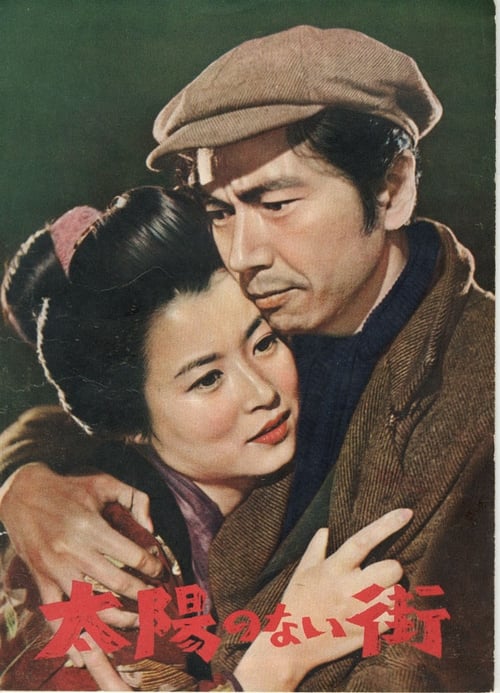
Based on the novel by proletarian writer Sunao Tokunaga. The story is about a long strike by workers at a large printing house and the strikers' steadfastness, which neither hunger nor violence could break. The heroine of this story actively participates in her colleagues' struggle against layoffs, oppression, and police brutality.
No description available.