Kenichi Enomoto
Acting
Biography
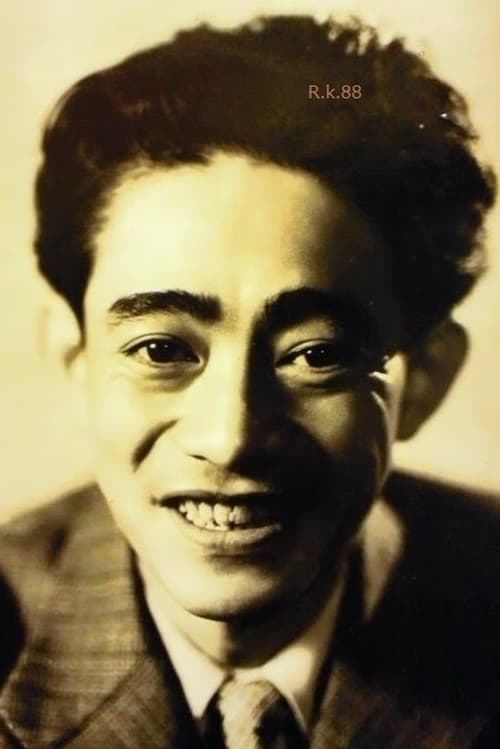
From Wikipedia, the free encyclopedia. Kenichi Enomoto (October 11, 1904 – January 7, 1970) was a popular Japanese singing comedian, mostly known by his stage name Enoken. A major innovator during his heyday, Enoken's stage shows, radio appearances, and film roles were a major influence within Tokyo theatre before World War II, and was a catalyst for the revival of comedy in the postwar period. Born in Aoyama, Tokyo, the son of rice cracker shop owners, Enomoto fell under the spell of such stars of the Asakusa Opera as Taya Rikizo and Fujiwara Yoshie, and in 1922 he made his stage debut at age 18 as a chorus member of the Asakusa Kinryukan Theatre. The Great Kanto Earthquake of the following year dealt a great blow to the opera world in Tokyo, at which time Enomoto shifted to comic theatre. Playing small roles in various comedy productions, he returned to the Asakusa stage in 1929 as part of the troupe Casino Folly. The following year saw him launch his own troupe, Enoken Gekidan, which would firmly establish him as a leading figure in Tokyo theatrical circles. In 1934, he starred in the movie Enoken no Seishun Suikoden (Enoken’s Tale of Youth’s Folly), and gained national popularity. His subsequent film career saw him parody a whole parade of Japanese historical personages, including Kondo Isami and Sakamoto Ryoma, in a series of "jidai-geki" (historical dramas) and "chanbara" (samurai drama) films, including some directed by Kajirō Yamamoto, Nobuo Nakagawa and Akira Kurosawa. Enomoto became afflicted with necrosis of the right leg in the 1950s, which required amputation, curtailing his film and stage career. He did, however, make a legendary comeback at the Shinjuku Koma Theatre 1963 wearing a prosthetic leg. He died in 1970, and is entombed in Hase Temple in Nishi-Azabu, Minato, Tokyo, on whose tombstone is inscribed "The King of Comedy". Description above from the Wikipedia article Kenichi Enomoto, licensed under CC-BY-SA, full list of contributors on Wikipedia.
Known For

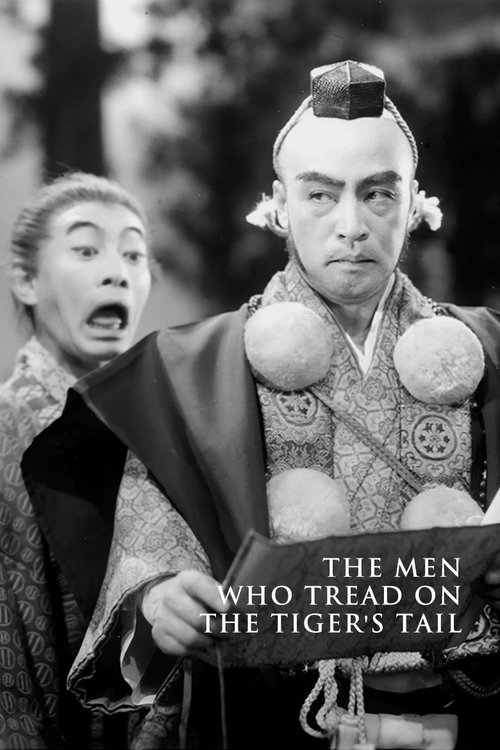
A fugitive lord and his six retainers disguise themselves as monks to bluff their way through a hostile checkpoint.
The Men Who Tread on the Tiger's Tail

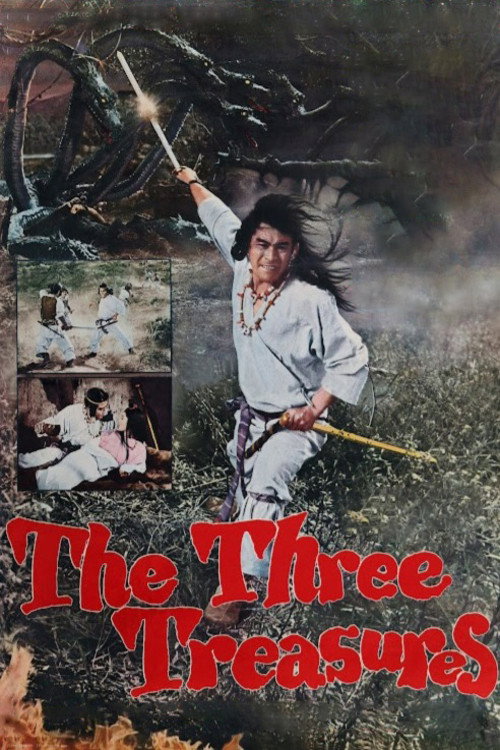
The legend of the birth of Shintoism. In Fourth Century Japan, the Emperor's son Ouso expects to succeed his father on the throne, but Otomo, the Emperor's vassal, prefers Ouso's stepbrother, and conspires to have Ouso die on a dangerous mission he has contrived. But Ouso prevails in the mission and returns to his father's castle under a new name, Prince Yamato Takeru. Otomo plots to have the Prince sent into even greater danger, but Otomo is unaware that the gods have favored the Prince and the outcome is far from what any of them expected.
The Three Treasures

A spectacular comedy with a star-studded cast that depicts unusual trials and unexpected verdicts regarding the five deadly sins: the crime of beauty, the crime of a terrifying wife, the crime of taking the wrong course, the crime of seducing, and the crime of killing with laughter.
Nonki saiban

A legendary pre-war comedy operetta starring Enomoto Kenichi, Hideko Takamine and Li Xianglan. The Sanzo Ikkou continues its westward journey, on a mission to prevent a demonic resurrection. As Genjo Sanzo, Cho Hakkai, Sha Gojyo, and Son Goku (Kenichi Enomoto) fight their way to their goal, their path is fraught with internal strife.
The Monkey King

No description available.
A Doting Parent’s Lullaby

The fifth film in the Toho Diamond series, following "The Hateful Thing." Based on the true story of "Zoo Story" by author Fukuda Saburo. During the Tokyo air raids of World War II, Zen-san, an elephant keeper at Ueno Zoo, is faced with the heartbreaking task of euthanizing Tonki, a beloved elephant, due to food shortages and wartime pressures. Unable to carry out the order, Zen-san secretly feeds Tonki, but the elephant is ultimately shot by the military police. The film poignantly captures Zen-san’s despair and the devastation of war, as he reflects on his powerlessness amid the chaos.
Elephant from "Zoo Story"

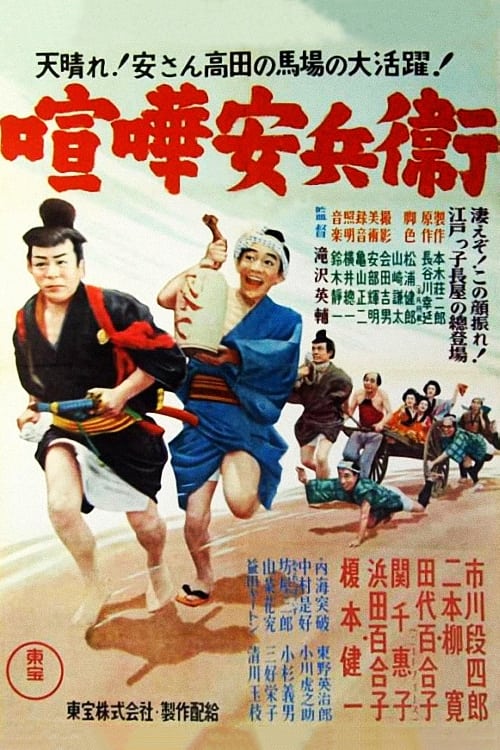
Yasube Nakayama left the clan and lives in Edo. One day, Yasubei visits his uncle Rokuroemon Kanno to borrow money from a moneylender in the amount of 13 ryo in order to save Oteru, the daughter of a merchant. However, the next day, Rokuroemon was killed in a fight by the Murakami brothers. Yasubei rushed to the scene, took revenge and became the husband of Miya, the daughter of Horibe Yahei.
Fighting Yasubei

Near the end of the Taisho era (1912-1926), Enokichi, a popular figure in the world of boxing entangled in the Yakuza business.
Enoken’s Boxing Generation

No description available.
Hyoroku's Dream Tale

Omnibus of love stories from 1947 directed by famous directors, featuring big stars.
Four Love Stories

Enoken plays a cloistered rich kid whose father hires a disreputable tutor to teach him how to really be a millionaire: by drunken debauchery, women, and song.
Enoken’s Ten Millions

Once an average and seemingly ordinary Tokyo girl, she suddenly finds herself as a TV star owing to her discovery by a casting company, which noticed photographs that her cousin had sent. When another actress falls ill she is given the role instead. Her first film is a success propelling the young actress to popularity, her own fans, money and a house. While everything looks dandy from the outside not all is well within the family however.
Kin no tamago: Golden Girl

A country boss gives up his way of life because of his daughter's marriage.
A Country Boss

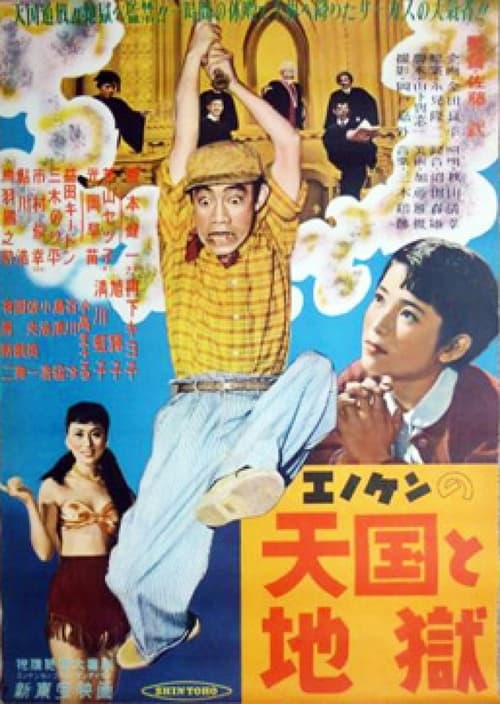
Keita, after his death, was taken to the court of heaven as Defendant No. 1361, where his past was projected. He was formerly a favorite of the Meriken Circus troupe, yet he sinned by exposing a certain woman. During the screening, he realizes what he has done, and fate gives him a chance to redeem his sins.
Enomoto's Heaven and Hell

The film adaptation of Kazuo Kikuta novel "Kumo no Ue Dangoro Ichiza", which enjoyed great success at the performances of the Toho Takarazuka Theater at the end of the year. The troupe "Kumo no Ue Dangoro" continues to tour from town to village. The small cast of the troupe includes its leader (Kenichi Enomoto), Norizo (Norihei Miki) and Taizo (Mutoshi Happa), who play female roles - they are all super actors, each of whom plays five roles. Dan Goro dreams of performing in a major theater and tries to put on a big show with a young man he meets in Shikoku named Sakai (Frankie Sakai), but...
The Dangoro Party in the Sky

A bizarre murder at a hot springs resort threatens to disrupt an Edo detective's (Hasegawa) vacation. When his hot-blooded wife (Yamada) starts snooping around, however, he finds himself reluctantly drawn in to the case.
The Man Who Waited

No description available.
These Foolish Times
Enoken's pickpocket Kinta (returned from the Chakkiri Kinta movies) finds some unexpected trouble: a stolen diamond necklace he just can't seem to get rid of!
Enoken's Cropped Hair

1958 Mito Kōmon film.
The Beloved Imposters

No description available.