Roger Rochat
Camera
Known For
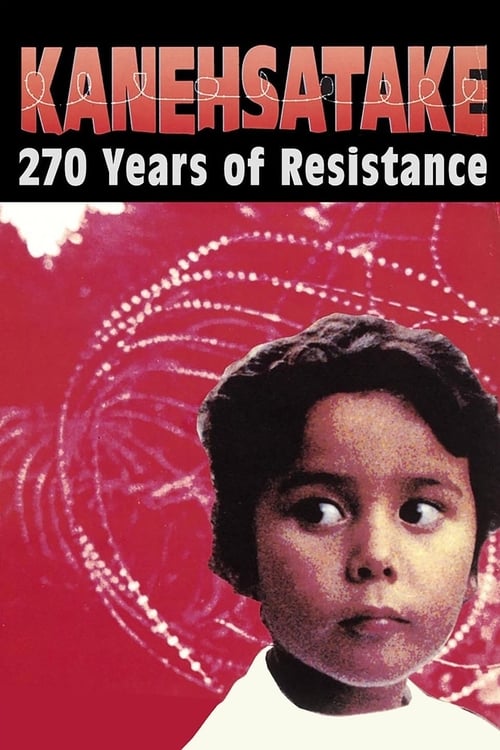
In July 1990, a dispute over a proposed golf course to be built on Kanien’kéhaka (Mohawk) lands in Oka, Quebec, sets the stage for a historic confrontation that would grab international headlines and sear itself into the Canadian consciousness.
Kanehsatake, 270 Years of Resistance
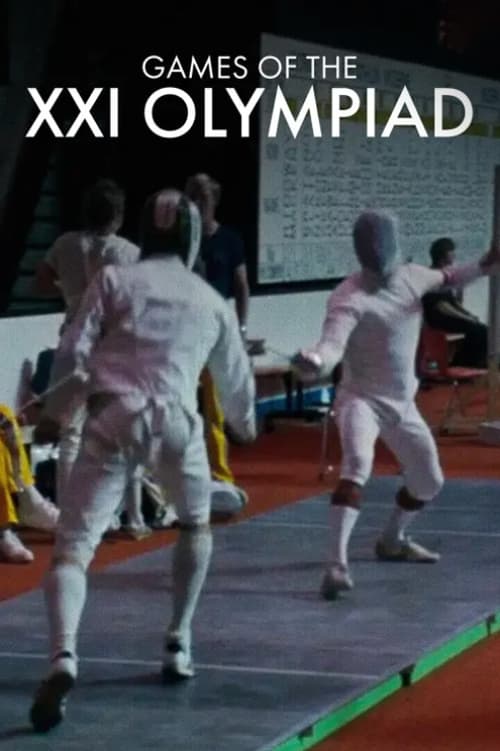
Edited from almost 100 km of film footage shot during the Games, this feature documentary is a breathtaking portrait of the 1976 Montreal Olympics. Much more than a simple record of the Games, the film approaches each event with the intention of revealing the athlete - whether winner or loser - as a unique individual.
Games of the XXI Olympiad
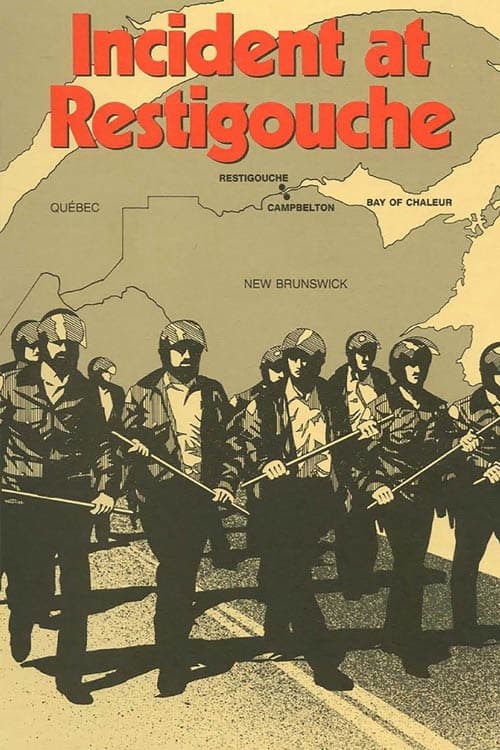
Incident at Restigouche is a 1984 documentary film by Alanis Obomsawin, chronicling a series of two raids on the Listuguj Mi'gmaq First Nation (Restigouche) by the Sûreté du Québec in 1981, as part of the efforts of the Quebec government to impose new restrictions on Native salmon fishermen. Incident at Restigouche delves into the history behind the Quebec Provincial Police (QPP) raids on the Restigouche Reserve on June 11 and 20, 1981. The Quebec government had decided to restrict fishing, resulting in anger among the Micmac Indians as salmon was traditionally an important source of food and income. Using a combination of documents, news clips, photographs and interviews, this powerful film provides an in-depth investigation into the history-making raids that put justice on trial.
Incident at Restigouche

The fourth film in Alanis Obomsawin's landmark series on the Oka crisis uses a single, shameful incident as a lens through which to examine the region's long history of prejudice and injustice against the Mohawk population.
Rocks at Whiskey Trench
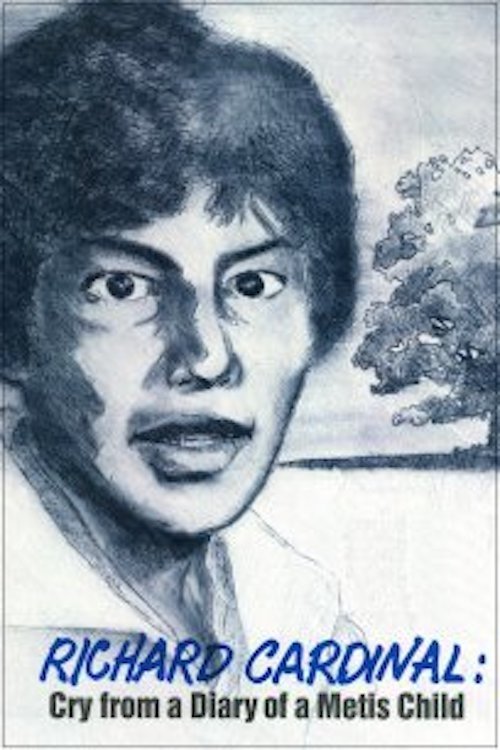
This short documentary is a moving tribute to Richard Cardinal, a Métis adolescent who committed suicide in 1984. Taken from his home at the age of 4 due to family problems, he spent the rest of his 17 short years moving in and out of 28 foster homes, group homes and shelters in Alberta. A sensitive, articulate young man, Richard Cardinal left behind a diary upon which this film is based.
Richard Cardinal: Cry from a Diary of a Métis Child
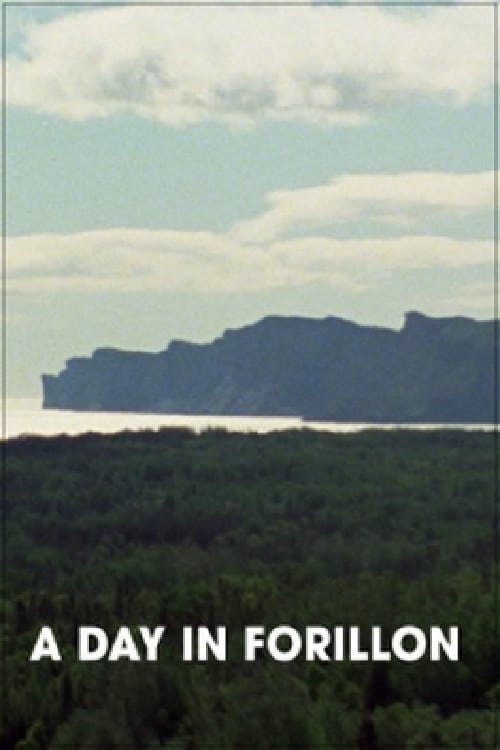
This short film illustrates a day in the life at Forillon National Park. Situated on the Gaspé peninsula in Quebec, the park offers spectacular views of sea, mountain and forest. A monumental landscape not to be missed. A film without words.
A Day in Forillon
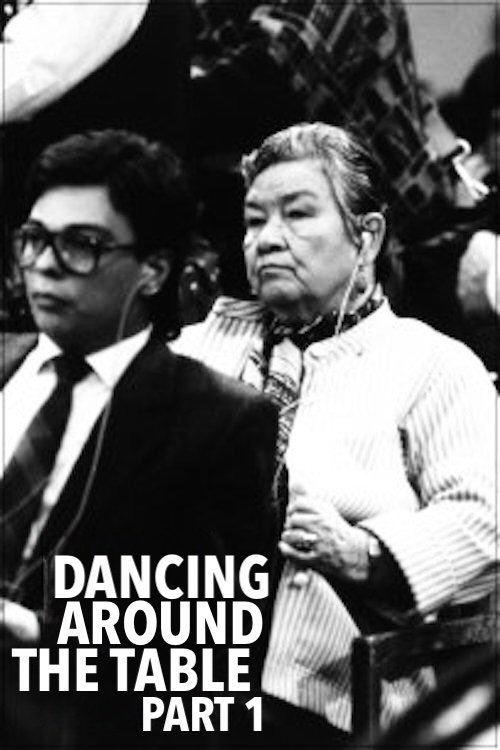
Dancing Around the Table: Part One provides a fascinating look at the crucial role Indigenous people played in shaping the Canadian Constitution. The 1984 Federal Provincial Conference of First Ministers on Aboriginal Constitutional Matters was a tumultuous and antagonistic process that pitted Prime Minister Pierre Elliot Trudeau and the First Ministers—who refused to include Indigenous inherent rights to self-government in the Constitution—against First Nations, Inuit and Métis leaders, who would not back down from this historic opportunity to enshrine Indigenous rights. The conference was Pierre Elliott Trudeau’s last constitutional meeting before he resigned and the process was handed over to his successor, Brian Mulroney.
Dancing Around the Table, Part One
Far from home and cut off from family and friends, Montreal’s Indigenous homeless population is the focus of No Address. Dreams of a better life in the big city can be met with harsh realities, as the individuals in this documentary recount. Often trying to flee circumstances created by colonialism and the effects of assimilation, the First Nations and Inuit people in this work share frank stories about their lives and the paths that took them to the streets of Montreal. Alanis Obomsawin presents an honest, stark portrayal of endemic homelessness while giving voice to those so often overlooked or made invisible on the streets of every city in Canada.
No Address
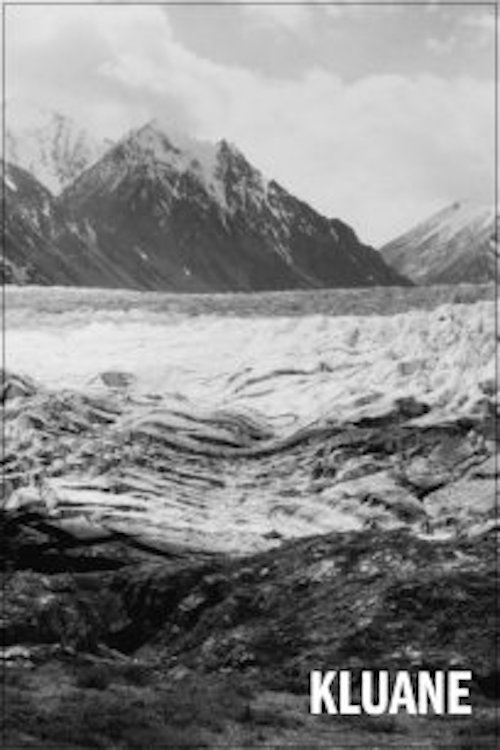
Kluane National Park is situated in the Yukon area of northern Canada and is a research paradise for glaciologists, geologists and other scientists. Mountaineers come to scale the impressive heights. Animals are free to roam, protected by stringent legislation. This film reveals many facets of this beautiful park, which has been declared a protected zone by UNESCO.
Kluane
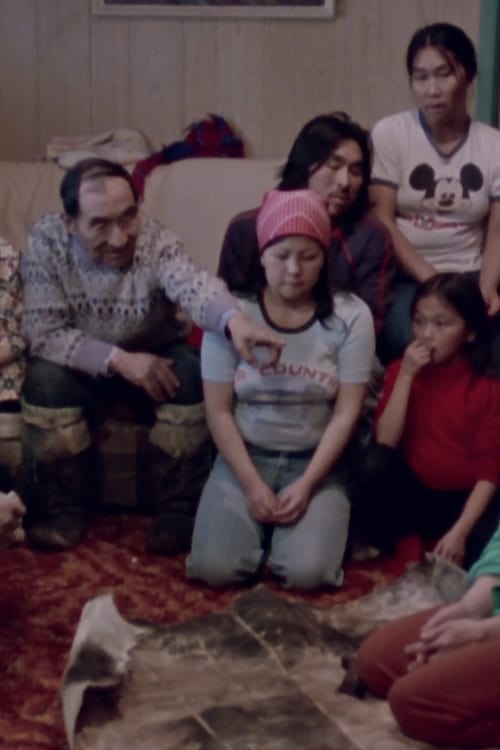
Made in collaboration with the Inuit Tungavingat Nunamini, this film focuses on those dissident members of the Inuit community who rejected the agreement signed on November 11, 1975, between the Northern Quebec Inuit Association, the Québec and federal governments, the James Bay Energy Corporation, the James Bay Development Corporation, Hydro-Québec and the Grand Council of the Crees, which took away Native rights to a territory of almost one million square kilometres. By their words and actions, the dissident Inuit of Povungnituk, Ivujivik and Sugluk express their strong desire to retain their land and their traditions. The filmmakers go into their homes, on the ice and the sea to record first-hand the lives of these northern people.
Our Land, Our Truth
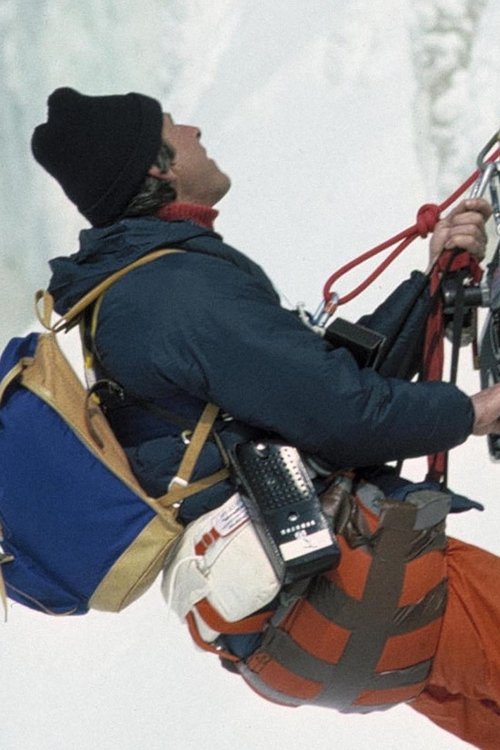
Crystal Pillar, White Lady, The Whale—these are the names given by ice-climbing enthusiasts to the spectacular ice formations surrounding Quebec's Montmorency Falls. Ice Birds shows two experienced climbers scaling the breathtaking wall of the Crystal Pillar with precision and considerable daring, appearing from below as black spots on the vast landscape of one of nature's masterpieces.
Ice Birds

The reality of life before, during, and after the signing of the North American Free Trade Agreement (NAFTA), and the profound effects the economic agreements between big business and government can have on human lives. Filmed over a three year period in Canada, the United States, and Mexico, this documentary poses a sobering question: In this global war of cut-rate economies, are people on the losing side?
The Emperor's New Clothes
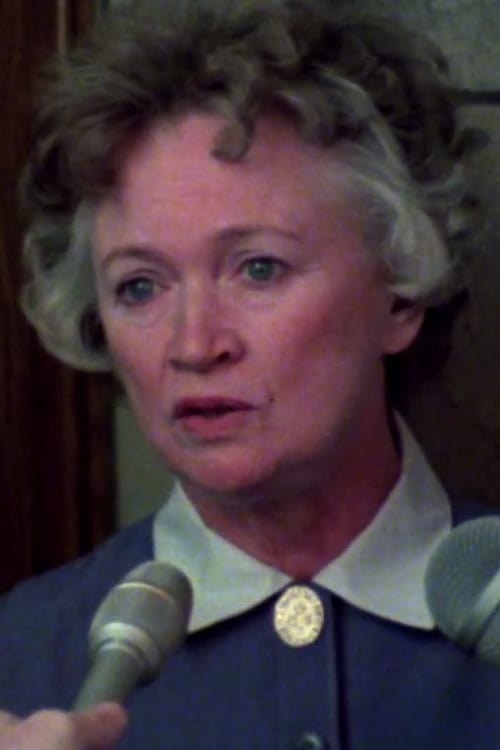
This lively satire uses animation and a pseudo-documentary style to depict Canada's search for a national identity. The National Scream explains, amongst other elements of Canadiana, how and why the beaver became the country's symbol.
La fièvre du castor
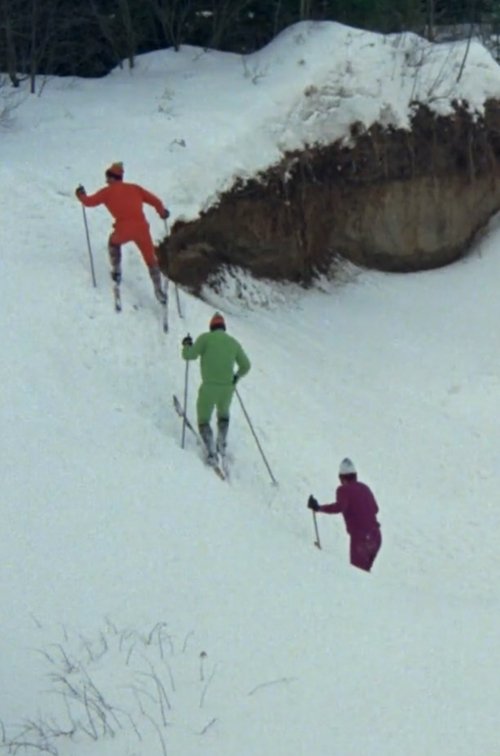
A short documentary on the charms of cross-country skiing. Beyond the formal beauty of the images, there floats a certain nostalgia for unknown landscapes. Something rare that pushes the neophyte to want to follow these free men, on the white paths, on exhilarating walks, taking the time to look at the landscape. Film without words.
Ski de fond
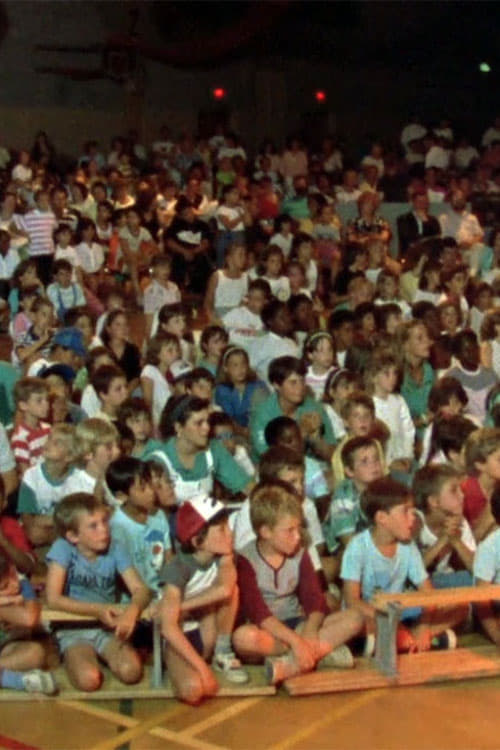
Alanis Obomsawin turns her lens to Le Patro Le Prévost, a recreational centre in the Villeray quarter of Montreal. On the eve of its 80th anniversary in 1989, Le Patro is a vital focal point in the predominantly working-class neighbourhood. Beloved by the many generations who use the facilities and partake in activities daily, Le Patro encourages a strong sense of togetherness through principles of cooperation, respect and sharing. Obomsawin presents a tender portrait of a neighbourhood of diverse residents and the community centre many of them consider a second home.
Le patro Le Prévost - 80 Years Later
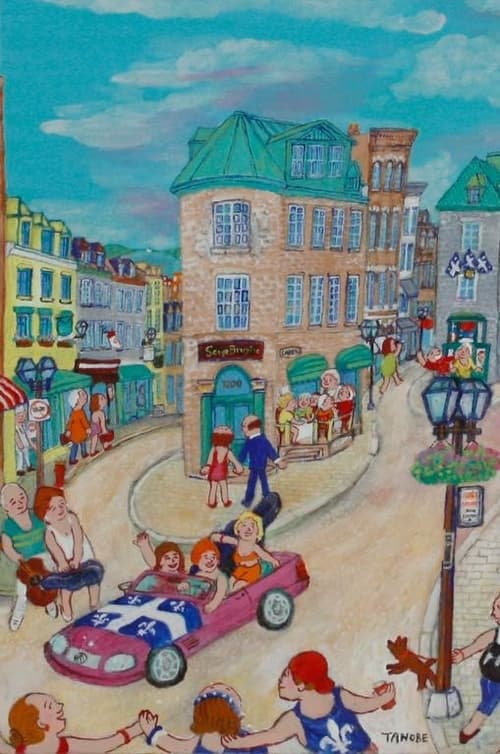
This documentary short is a portrait of Miyuki Tanobe, a Japanese painter who has chosen to make Québec her home. She works in the Nihonga style, applying centuries-old techniques to scenes drawn directly from the working-class neighborhoods of Montréal. The film records the progression of one of her paintings from preliminary sketch to completion.
My Floating World: Miyuki Tanobe
This short film was an experiment in using video recordings and closed circuit television to stimulate social action in a poor Montreal neighbourhood. A citizen's committee filmed people's concerns and then played back the tapes for the community. Upon recognizing their common problems, people began to talk about joint solutions. It proved an important and effective method of promoting social change.
VTR St. Jacques
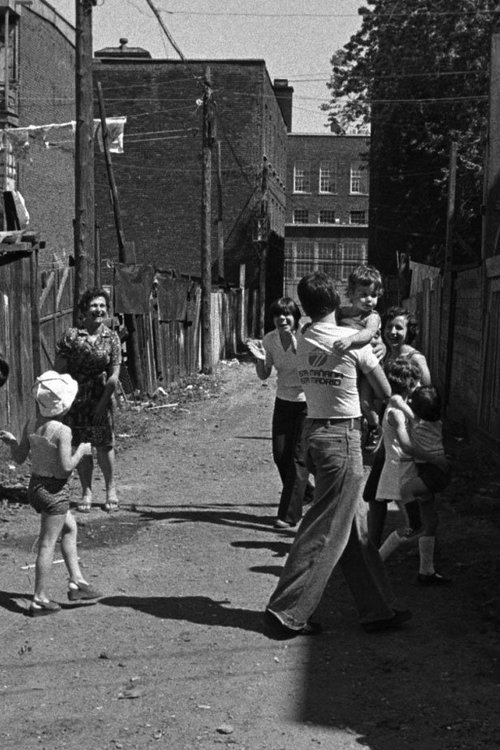
This film takes a look at the Portuguese community of some 30,000 people settled in Montreal, focusing in particular on the family of Manuel Borges, who arrived in Quebec in 1967. It thus portrays, with nuance and sensitivity, the issues arising from the immigrant condition and shows how one learns to live in a country one wishes to make one’s own.
Les Borges
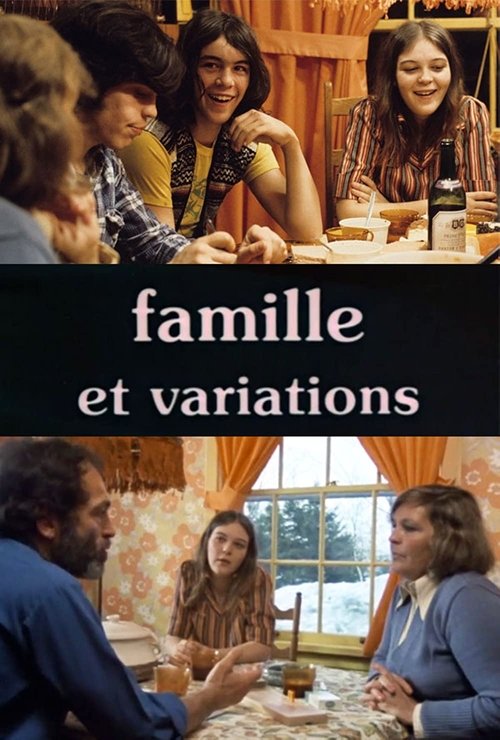
a portrait of the changing social and political context of the nuclear family in the 1970s, focusing on four families of varying circumstances: a traditional nuclear family with a special needs child, a separated family, a single-parent family and a family in a communal living environment.