Omar Khlifi
Directing
Biography
Omar Khlifi was a pioneering Tunisian film director, screenwriter, and producer, often regarded as the father of Tunisian cinema. An autodidact, he began his career in the early 1960s, directing a dozen short and medium-length films. In 1966, Khlifi directed L'Aube (El-Fajr), recognized as the first full-length feature film in Tunisian cinema after independence. His subsequent works include The Rebel (1968) and Fellagas (1970), which explored themes of resistance and national identity. Khlifi's films are noted for their portrayal of Tunisian society and history, contributing to the cultural and artistic landscape of the country. He passed away in 2017, leaving a lasting legacy in the Tunisian film industry.
Known For
Directed by Omar Khlifi.
The Rebel

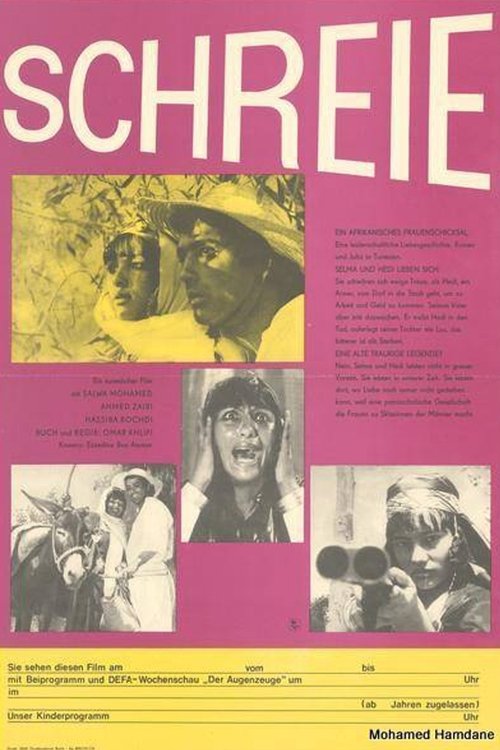
The story of two girls. Saadia was raped after fierce resistance, which allowed her to take revenge by killing her attacker, but the village men's council felt she had been provocative and sentenced her to death. She is shot and the women of the village, transgressing the tradition, follow her funeral procession. As for Selma, who loved Hedi, she sees her father forcing her to marry another man. His lover comes back hastily but drowns. Became crazy, she succumbs in turn.
Screams

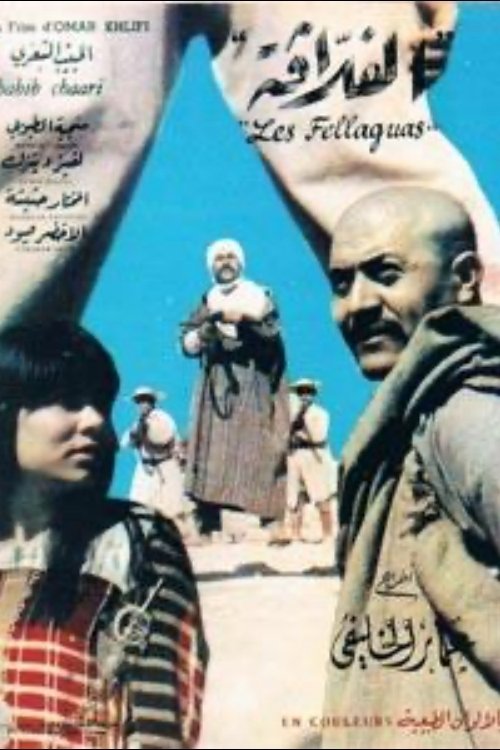
Love blossoms between Rabah and her cousin Mosbah, but when a man who aids the French occupation kidnaps her, Mosbah's attempt to rescue her fails. As he gets arrested and sentenced to three years in prison, he vows revenge.
Fellagas
Al Fajr is the first Tunisian feature film. It tells the story of three young Tunisians who fight against the French colonisation.
The Dawn
The story takes place in a village at a time that is deliberately undetermined, but could be current. Two girls is told to a guest passing through their mother withdrawn from the world: Saadia was raped after a fierce resistance. Despite killing her assailant, the village men's council felt provocative and sentenced her to death. The second is forced to marry a husband chosen by his father.