FEEL IT.STREAM
Emma Černá

Emma Černá

Acting

Biography

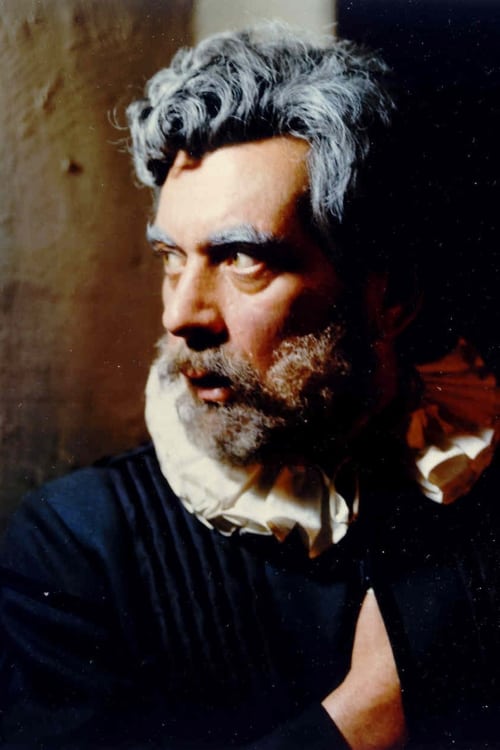
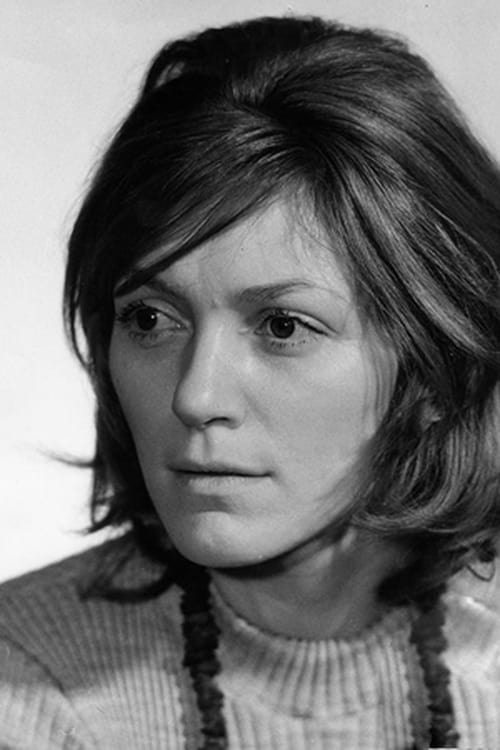
Emma Černá (23 March 1937 – 2 July 2018) was a Czech stage, film and television actress. She is an actress, known for Adelheid (1970), Loners (2000) and Kolya (1996). Upon her graduation from the Academy of Performing Arts, Černá worked at the Theatre on the Balustrade and the Palmovka Theatre. She was also a guest at the Comedy Theatre in Prague and the Prague National Theatre. She has made appearances in almost fifty film or television roles. From Wikipedia, the free encyclopedia
Known For

Vyprávěj
7.3

Set in Czechoslovakia, the drama follows the lives of its characters against the backdrop of real historical events that shape their personal stories. To evoke period atmosphere, the series intersperses authentic clips from vintage Czechoslovak film newsreels, using their original commentaries or newly recorded historical voice-overs by Vladimír Fišer. A narrator, initially voiced by Vojtěch Kotek and later by Matěj Hádek, provides continuity and reflection, guiding viewers through changing times. Under the guidance of screenwriter Rudolf Merkner, each episode’s script weaves family and individual dramas into key moments of Czech and Slovak history: political shifts, cultural trends, and social transformations from the 1960s onward.

Vyprávěj

2009
Dobrodružství kriminalistiky
8.5

No description available.

Dobrodružství kriminalistiky

1989
The Physician of a Dying Time
8.0

Series about the life of Renaissance anatomist, scholar and politic Johannes Jessenius. Already legendary series today, was produced by Czechoslovak Television Bratislava, directed by Slovak director Miroslav Luther in the first half of 80's in Barrandov Studios in Prague. The story and screenplay of the series wrote Czech writer Vladimír Körner. Five-episodes epic historical narration is a biographical story of distinguished Renaissance scholar, anatomist and politic of Slovak origin, Johannes Jessenius (Ján Jesenský, 1566–1621). It displays his life from the first studies and successes. In 1594 he became professor of surgery and anatomy on Wittenberg University, which he had attended years before. From that moment, his life went through social and personal wins and losses, to the sad end on the Prague Old Town Square gallows, among 27 noblemen, knights and burgenses, after lose Bohemian Revolt in 1621. His destiny was coupled with key events of Czech history in the break of 16th and 17th century, when Renaissance and European humanism slowly fade out.

The Physician of a Dying Time

1984
Forbidden Empire
5.9

Early 18th century. Cartographer Jonathan Green undertakes a scientific voyage from Europe to the East. Having passed through Transylvania and crossed the Carpathian Mountains, he finds himself in a small village lost in impassible woods. Nothing but chance and heavy fog could bring him to this cursed place. People who live here do not resemble any other people which the traveler saw before that. The villagers, having dug a deep moat to fend themselves from the rest of the world, share a naive belief that they could save themselves from evil, failing to understand that evil has made its nest in their souls and is waiting for an opportunity to gush out upon the world.

Forbidden Empire

2014
Kolya
7.3

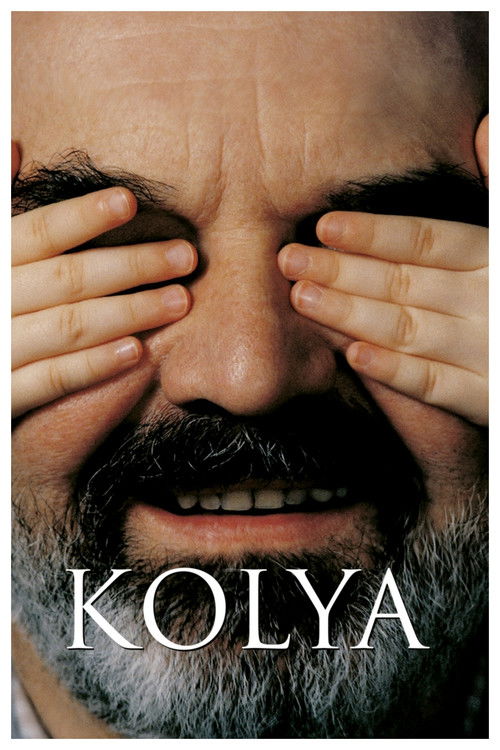
After a fictitious marriage with a Russian emigrant, Cellisten Louka, a Czech man, must suddenly take responsibility for her son. However, it’s not long before the communication barrier is broken between the two new family members.

Kolya

1996
My Companions in the Bleak House
5.4

No description available.

My Companions in the Bleak House

1992
Why?
6.3

Why? (Czech: Proč?) is a 1987 Czechoslovak drama film directed by Karel Smyczek. It was screened in the Un Certain Regard section at the 1988 Cannes Film Festival. The film deals with the hooliganism in Czechoslovakia, particularly with the fans of football club Sparta from Prague, whose supporters were the pioneers of the football fan riots in Czechoslovakia, starting with hooligan actions already in the 1960s, like breaking the trains in which they travelled when they went on Sparta's away games. The film deals with one of such episodes

Why?

1987
Loners
7.4

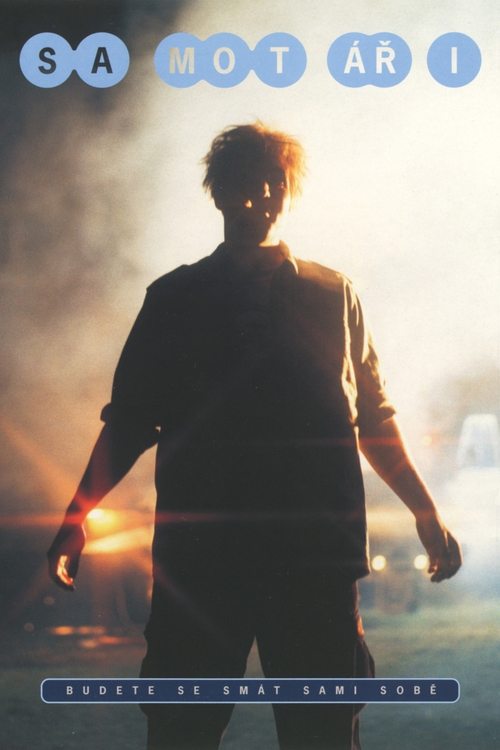
Robert works for a travel agency and helps to arrange scenes from the everyday lives of "ordinary" Czech families as an attraction for Japanese tourists. He also works as a kind of matchmaker and occasionally helps to put together some of his friends. He helps to separate his friend Hanka from Peter, an announcer for an independent radio station who tries to capture "real" life by recording the moments from "reality" and playing them over the air. Vesna, came to Prague from Macedonia because it is according to her the best place for UFOs to land, but her real reason for coming is somewhat different... Hanka is followed by the crazy Ondrej, until then a respected brain surgeon, and married with two kids. Through him she meets Jacob, who uses copious amounts of weed in order to be constructive in this gloomy world. On the other hand, this destroys his short-term memory - and he forgets that he already has a girlfriend...

Loners

2000
Adelheid
6.9

In the aftermath of World War II, a soldier takes charge of a manor formerly owned by a German family and falls in love with the daughter, now a maid. Their relationship forces him to confront the tension between his love and his conscience.

Adelheid

1970
The Damned House of Hajn
5.8

Sonya is the heiress to the riches of a Czech noble family—the Hajns. Petr, a social climber marries her, ignoring some shady goings-on—in particular, an insane uncle who prowls the mansion believing himself invisible, a peccadillo the family indulges. The uncle’s stalking every corner of the house, popping out of cupboards and out from behind curtains slowly takes its toll on the young bride.

The Damned House of Hajn

1989
Scalpel, Please
7.6

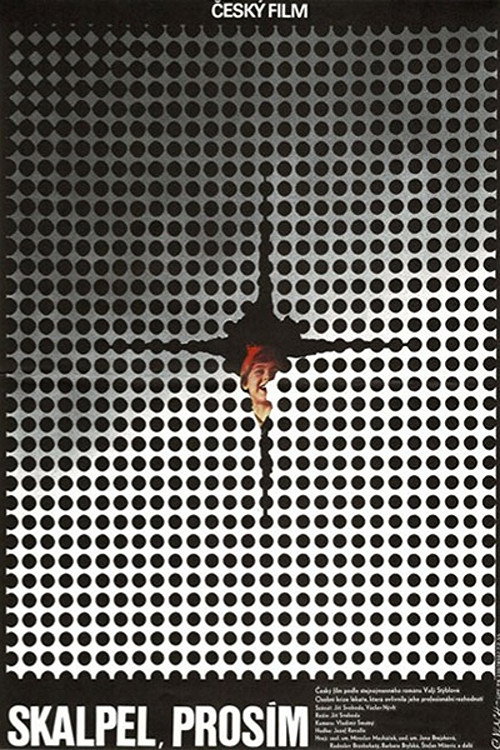
A psychological drama exploring the notion of the doctor as a moral authority, who within the framework of their everyday work must face questions of life and death. The film is adapted from a novel by Valja Stýblová, in which the author draws upon her personal experiences as a former neurosurgeon. The protagonist of this drama is an ageing professor, based at a Prague neurological clinic, who is haunted by issues concerning his own principles and values, and also by the case of a young patient, Víťa, afflicted with an inoperable tumour.

Scalpel, Please

1986
Guard No. 47
5.2

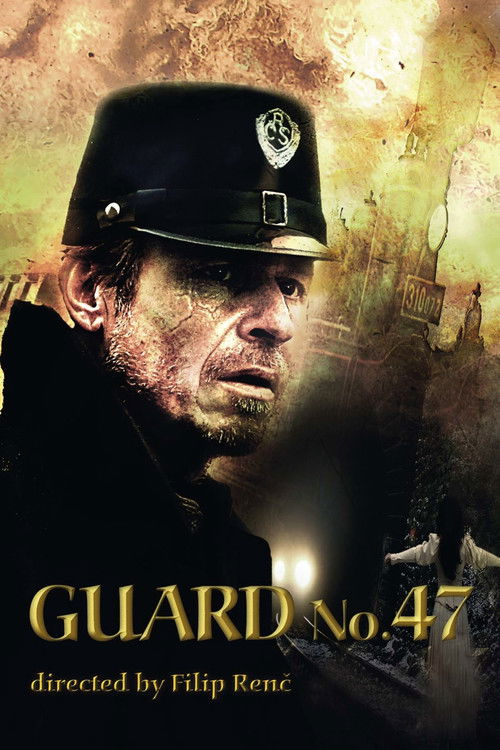
A WW I veteran still haunted by his time in the trenches settles in a small town to work for the railroad company. His pretty wife attracts the attention of the lonely young gravedigger.

Guard No. 47

2008
Prague Duet
6.4

Dr. Lauren is staying in Prague for a conference and falls in love with Czech writer Jiri Kolmar.

Prague Duet

1998
Panelstory or Birth of a Community
7.2

An old man is wandering round a badly signposted and as yet mostly under construction Prague housing estate looking for the high rise block into which he is supposed to be moving with his daughter's family. The old granddad from the countryside likes chatting, nothing escapes his eyes and he wants to give everyone a helping hand.

Panelstory or Birth of a Community

1981
Pleasant Moments
4.7

Hana is a psychologist and a thoroughly independent woman. Her unemployed husband, jealous of his wife, finds a younger girlfriend, but their teenage son Honzik is frustrated; everyone ignores him. Hana's patient Eva, an attractive middle-aged woman, is having problems with her 25-year-old son; she is in love with her son's friend and her son is offended by her behavior. To complete the circle, he falls in love with Hana and Honzik is utterly disgusted by their affair. Another of Hana's patients is Dub, a millionaire who can have pretty much anything, or anyone, he wants. He wants Hana. But he can't have her.

Pleasant Moments

2006
Smích se lepí na paty
6.7

Sixty-year-old Joska Platejz, a peculiar jack of all trades, lives in a cottage in the Giant Mountains. He cooks wonderfully for a group of woodcutters. He has brought a mountain stream to his cottage and set up a set of tanks (one of which he keeps trout in). He also has a wind turbine, a wood-burning cable car, air-conditioning in the cottage and a mannequin of a man called Albert, who scares away unknown visitors. Joska is a man who claims that it is best to be alone, yet he constantly tries not to be alone. He is friends with a gamekeeper, a teacher, he tries to get his children to visit him regularly and therefore easily succumbs to a middle-aged lady. She doesn't take long to persuade him and soon comes to his cottage. A great love seems to be born...

Smích se lepí na paty

1987
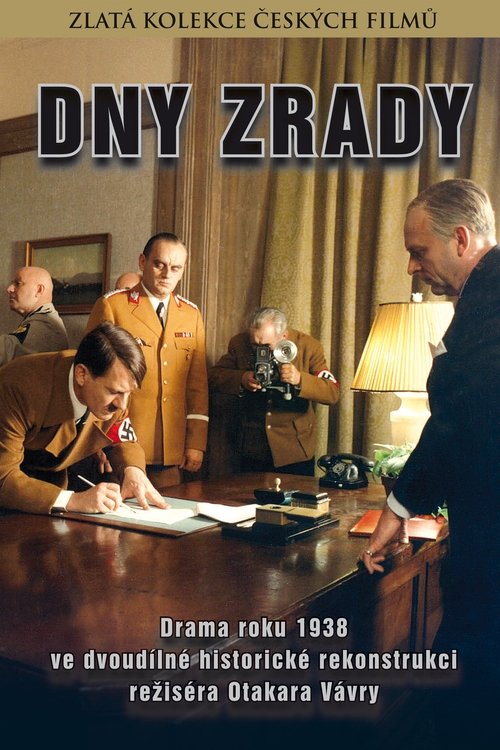
Days of Betrayal
5.6

This feature film based on the events of 1938 is a chronicle of the futile efforts of the Czechoslovak president Edvard Benes (Jirí Pleskot), politicians and ordinary citizens, to save the independence and the territorial integrity of the state from the advance of Hitler's Germany. On the 29th of March 1938 the leader of the Sudeten Germans Henlein (Werner Ehrlicher) has a meeting with Hitler (Gunnar Möller). Hitler orders him to intensify pressure on the Czechoslovak government. On the 24th of April in Carlsbad, the Sudetendeutsche Partei (Sudeten German Party) decides upon eight demands that are unacceptable to the Czechoslovak President, since they would ultimately lead to the break-up of the Republic. Benes still shows a certain willingness to negotiate, and Henlein resents this. The Germans are determined to make further negotiations impossible through incidents and violence.

Days of Betrayal

1973
No image
5.8

At the beginning was the Slovak television series Lekár umierajúceho czasu (Doctor of Dying Time), dedicated to the Rudolphine-era scientist Jan Jesenius. He ended up on the scaffold along with other gentlemen after losing the anti-Habsburg uprising. When director Miloslav Luther conceived the idea of making an abridged version of the footage for cinema, he had to not only rebuild the storyline but also dub it into Czech. However, the result was only an illustrative puzzle, describing the various stages of the hero's turbulent life.

Svědek umírajícího času

1991
The Wonderful Years That Sucked
5.9

Capturing the dark humor of Czech author Michal Viewegh's chronicle of life after the Velvet Revolution, this black comedy chronicles three decades in the life of a small Czech family. While the original novel centered on the protagonist Kvido from his conception through his adulthood, first time director Petr Nikolaev and screenwriter Jan Novak changed the focus to his parents Milena, an extremely self-effacing lawyer who acts on stage in her spare time, and Ales, a rather aimless government worker who tends to drift wherever the wind takes him. The lives of Ales and Milena change dramatically following the Russian invasion of Prague in 1968.

The Wonderful Years That Sucked

1997
Shades of Fern
4.8

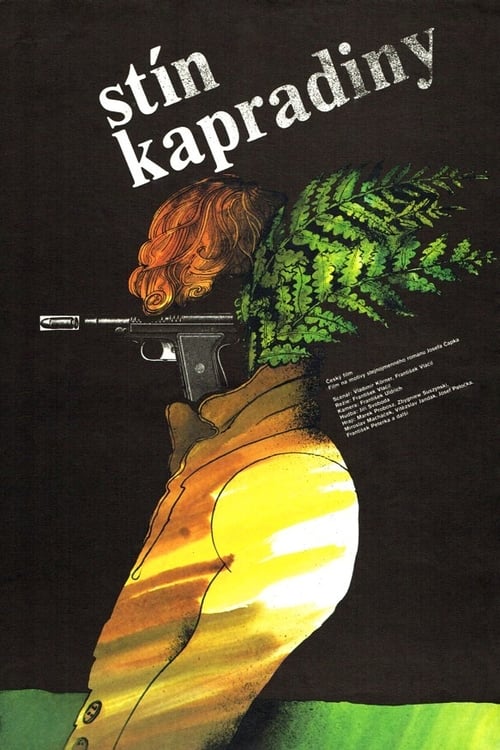
Based on the only extensive prose work by the surrealist painter Josef Capek, Shades of Fern most resembles the philosophical fairy tales and fables of Josef’s older brother, the legendary Czech novelist and playwright Karel Capek. Two young poachers, more boys than men, kill a gamekeeper when they are caught illegally hunting. Panicked, they retreat into a forest that grows steadily more forbidding and deadly as their fear for the future—and guilt over their action—mounts. Loosely based on hundreds of oral folk tales and legends that haunt the woods of Czechoslovakia, Vlácil’s contemporary updating artistically underscores the relationship between man and nature, crime and punishment, isolation and society, and guilt and memory.

Shades of Fern

1986