Christian Boltanski
Directing
Biography
Christian Liberté Boltanski was a French sculptor, photographer, painter, and film maker. He is best known for his photography installations and contemporary French conceptual style.
Known For
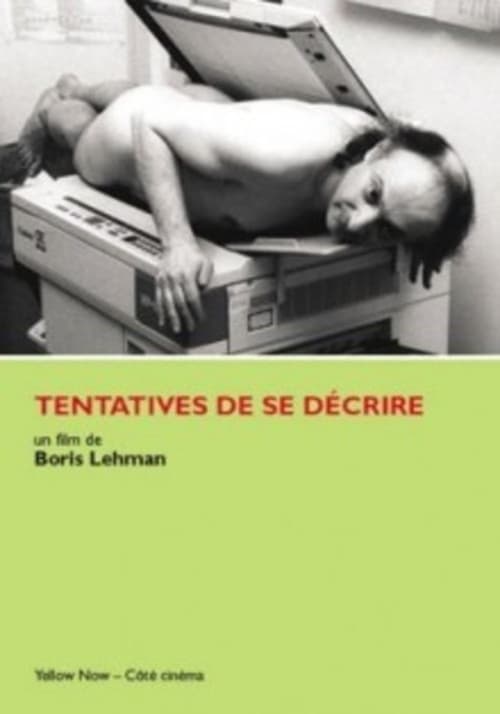
Trying to describe oneself is a movie about representation. How it is possible, through film, to describe oneself and describe others. With the camera as mirror and third eye. At first, a collage-like combination of letter-writing, investigation and journey, something between documentary and feature film. Finally, a portrait of Boris Lehman from 1989 to 1995, part II of BABEL.
Trying to Describe Oneself
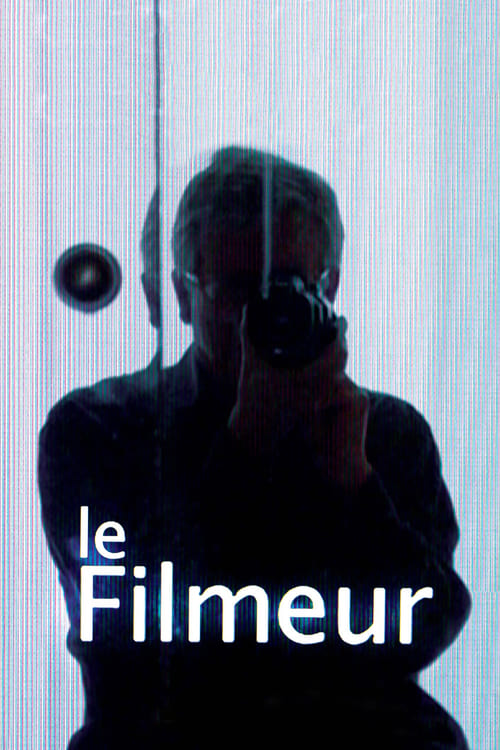
From his diary, filmed over ten years, filmmaker Alain Cavalier invites us to a meditation on old age, weakness and death. Made of moments of life, fragments of images, this film composes a mosaic where the spectator is invited to also find his place by himself...
Le Filmeur
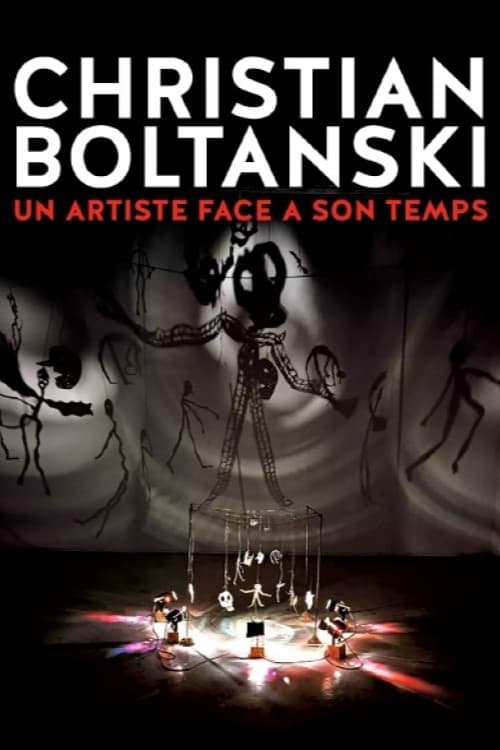
No description available.
J'ai retrouvé Christian B.
A crowd, seen from the back, slowly disappears. Boltanski created this work for the exhibition "Faire son temps" (Life in the making) at Centre Pompidou.
Le Passage
A man at the feet of a seated woman, who looks like a big doll, licking her whole body.
L'homme qui lèche
No description available.
Comment pouvons-nous le supporter?
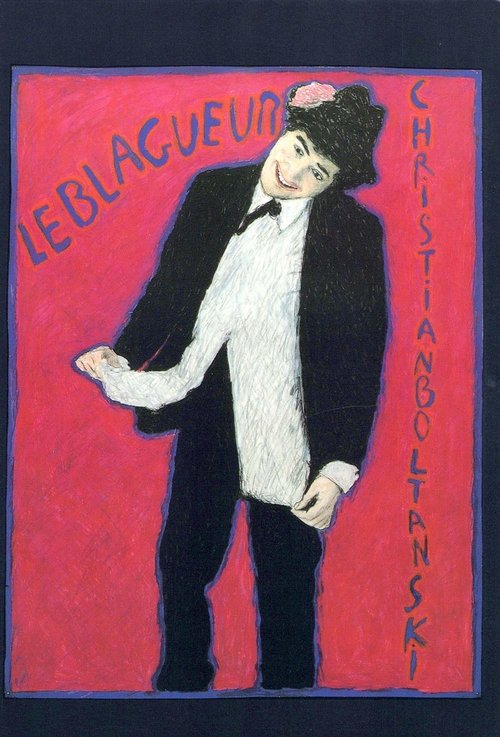
In his studio, in his car, Gérald Fox follows the elusive Boltanski who, in his installations, makes use of portraits, newspaper clippings, magazines, family albums. The photographic approach, endlessly recomposed, proceeds by juxtaposition and accumulation. Each shot, framed in black, is lit by visible bulbs, the mass effect restoring the individual: walls of votive images that question the memory, our dark side, the inevitable passage of time, the traces left behind. Between autofiction and reality, Boltanski: artist or maker (of beauty)?
Christian Boltanski: Dead or Alive?
A woman crawls on the floor of an empty room.
Derrière la porte
Initially created in the form of an installation in the Atacama Desert in Chile, Animitas pays homage to memorial altars. Filmed in a single static shot from sunrise to sunset, with a ground-level view of an expanse of fresh flowers, the work captures the sound of 800 small Japanese bells, chiming in the wind. Fixed to the ground, they reproduce the map of the stars on the night Boltanski was born. Their chimes evoke the “music of the stars and the voice of floating souls”. The same installation was created on the Japanese island of Teshima (La Forêt des murmures, 2016), on the island of Orléans in Quebec (Blanc, 2017) and near the Dead Sea (2017). A major figure on the international art scene, Boltanski has been weaving true and fictional stories together since the 1970s, inspired by individual and collective histories. The theme of memory, the obsession with not allowing people to forget, and the ability to revisit myths are central to his approach.
Animitas Chili
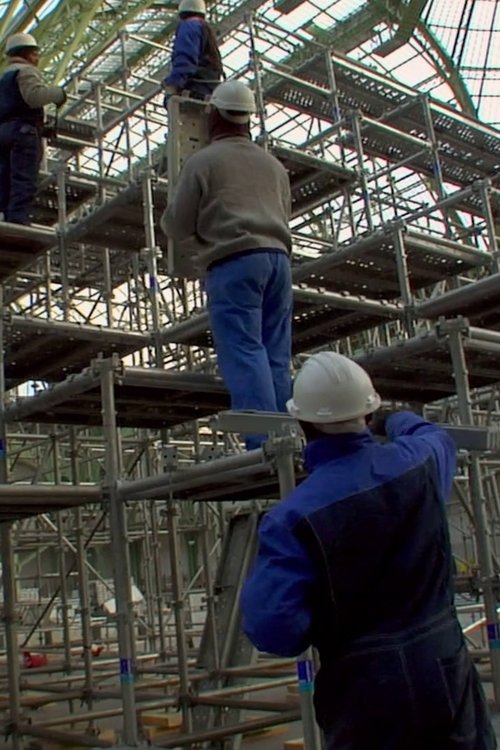
Robert Gardner has known Boltanski since the 1970s, when he invited him to the Carpenter Center for Visual Arts at Harvard as a visting artist, and the following years since Boltanski has become a major figure in the art world. Gardner and photographer Michael Hutcherson travelled to Paris to make a film about Boltanski and the PERSONNES installation process.
Deus Ex Boltanski
Sitting on the floor in a narrow room, a man coughing and spitting blood.
L'homme qui tousse
No description available.
Tout ce dont je me souviens
Christian Boltanski is one of the greatest contemporary French artists, known the world over. The narrator, who once knew Boltanski, attempts to reassemble the images of a friend he hasn't seen in twenty years. This is the starting point for a kind of investigation in which documents of varying sources are thrown into the file.
À la recherche de Christian B.
4 channel video installation, sound, continuous loop Dimensions variable
Subliminal
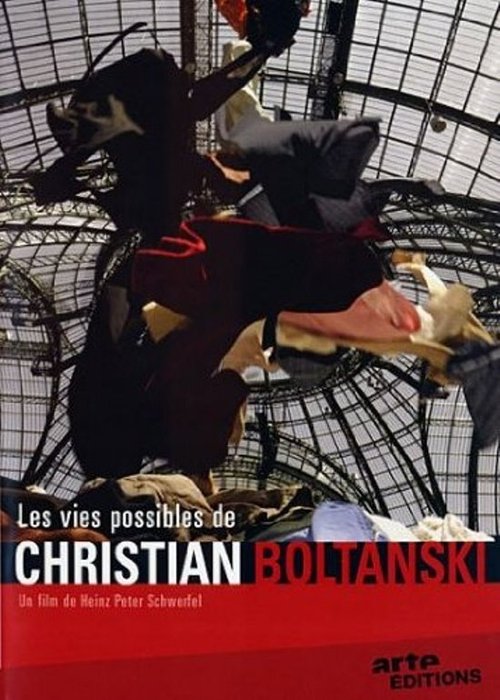
No description available.
Les vies possibles de Christian Boltanski
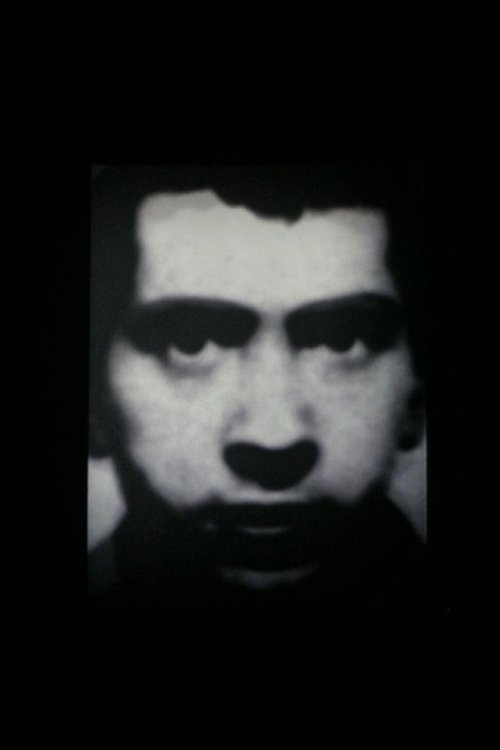
Entre-temps (Between-times) combines photos of Boltanski at different ages. Originally projected in a loop on a plastic curtain for its first exhibition at he Yvon Lambert gallery in 1996, it is presented now on a string curtain. We see the artist age and then returning to the childhood in a never-ending cycle.
Entre-temps
On his search to find an answer to the question of destiny, Boltanski travelled to the north of Patagonia, where whales gather at certain periods of the year. Legend has it that whales harbour the secrets of the universe. With the help of acoustic enginners, he installed horns that are specially designed to capture the wind and emit sounds very similar to whale song. These sound objects are located in the desert and destined to disappear ; only the tale will remain behind. The screens bring together three concepts : questioning (the whales), emptiness (the lack of a response), and the image of death (the carcass).
Misterios
A camera surveys an abandoned apartment, while the voiceover describes it inhabited.
L'appartement de la rue de Vaugirard
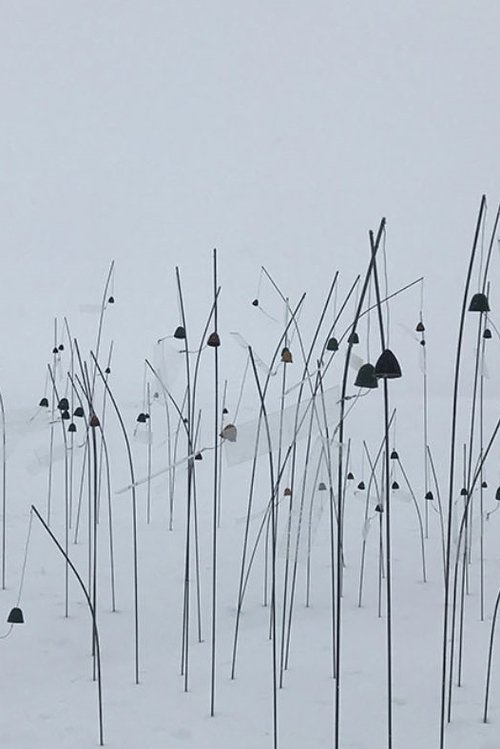
Boltanski created "Animitas" in the Atacama Desert, a location steeped in history. The title of the work comes from the name given by Chileans to the religious altars erected on roadsides to mark the spot where an accident occurred. Tiny bells attached to long rods sway and tinkle in the wind. The artist produced three other "Animitas", in locations that are symbolic to him : the north of Quebec, the Dead Sea and the Island of Teshima.
Animitas blanc
A young woman threatened with expropriation decides to shut herself in her apartment with her two children, until death ensues. Boltanski, following the logic of despair, shows us the unimaginable.